Tourist Info
Valencia guide: neighbourhoods, beaches and life in the city
Valencia for newcomers and visitors: neighbourhoods, the Turia park, beaches, Fallas, getting around, day trips and the city’s new holiday-let rules.









Updated: October 2026
Valencia is Spain’s third-largest city and one of the most popular with newcomers: big enough for good jobs and services, flat enough to cycle everywhere and close to long sandy beaches. This guide covers the neighbourhoods, getting around, culture and festivals, day trips and what to know about housing.
Valencia at a glance
Valencia (València in Valencian) is the capital of the Valencian Community. Founded by the Romans, it later became a Moorish city and then the capital of a medieval kingdom whose silk trade built the Gothic Lonja de la Seda, now a UNESCO World Heritage site. Spanish and Valencian are both official; daily life in the city is mainly in Spanish, but schools and the administration also use Valencian.








The city’s backbone is the Jardín del Turia, a long park built in the old riverbed after the river was diverted following a severe flood in 1957. It runs from the west of the city to the City of Arts and Sciences and is used daily by runners, cyclists and families.
Neighbourhoods to know
- Ciutat Vella (El Carmen, El Mercat, La Seu): the old town with the cathedral, the Central Market and the medieval towers of Serranos and Quart. Atmospheric but busy and touristy.
- Ruzafa (Russafa): creative, international and full of cafés and restaurants; lively at night.
- Eixample and Pla del Real: elegant residential streets close to the Turia park, popular with families and professionals.
- Benimaclet: village-like, with a strong student and community feel near the universities.
- El Cabanyal and the beach districts: the old fishermen’s quarter with tiled houses, near Malvarrosa beach. Changing fast, with rising prices.
- Campanar and Patraix: more modern or traditional residential areas, often more affordable than the centre.
Getting around
- Bike: Valencia is flat and has an extensive network of cycle lanes. The public Valenbisi bike-share system is popular with residents.
- Metro and tram: Metrovalencia lines cross the city and reach the airport, the beach and nearby towns.
- Buses: EMT city buses cover areas the metro does not.
- Trains: high-speed trains reach Madrid in under two hours, and Cercanías lines serve the metropolitan area. The national abono único pass, introduced in January 2026, covers Renfe commuter and regional trains, but not the metro or city buses.
Culture, food and festivals
The City of Arts and Sciences, designed largely by Santiago Calatrava, houses a science museum, a planetarium-cinema, an opera house and a large aquarium. In the old town, the cathedral keeps a chalice venerated as the Holy Grail, and the Central Market is one of the largest fresh food markets in Europe.
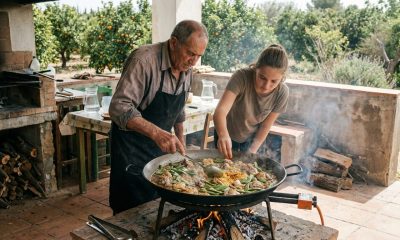
Valencia is the home of paella valenciana, traditionally made with chicken, rabbit and beans. Try it at lunchtime, as locals do, and visit a horchatería for horchata, a cold tiger-nut drink served with fartons (sweet pastries).
- Las Fallas (15–19 March): giant satirical sculptures, daily firecracker displays and the burning of the fallas on the last night. Recognised by UNESCO as intangible cultural heritage. Expect noise, crowds and street closures.
- Corpus Christi and the Feria de Julio: processions in spring and summer concerts and events in July.
- La Tomatina: the tomato fight in nearby Buñol on the last Wednesday of August, now with ticketed entry.
Beaches and day trips
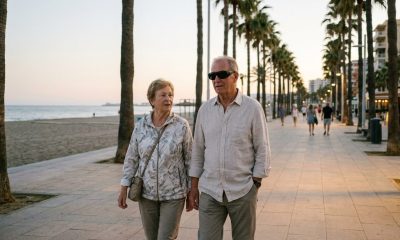
The city beaches, Las Arenas, Malvarrosa and Patacona, are easy to reach by tram or bike and have a long promenade. South of the city, the Albufera Natural Park protects a large freshwater lagoon surrounded by rice fields; take a boat trip at sunset and eat paella in the village of El Palmar. The dune beaches of El Saler and La Devesa are wilder and quieter.








Further afield, the castle town of Sagunto, the old town of Xàtiva, the hiking routes of the Sierra Calderona and the wine villages of Utiel-Requena are all good day trips.
Living in Valencia
Valencia has long been cheaper than Madrid or Barcelona, but rents have risen sharply as more people move there. Start your search early and read our guide to renting in Spain as a foreigner. The city is also popular with remote workers; see our digital nomad visa guide if that applies to you.
Holiday lets are tightly regulated. New city-wide rules took effect on 25 May 2026: a new tourist accommodation licence is only possible where tourist places stay below 8% of the registered population and 2% of the housing stock in the neighbourhood, and below 15% of ground-floor premises in the block. The old town has its own separate rules. If you are buying to let to tourists, check the specific address with the city council first.
In October 2024, severe flash floods (the DANA) devastated several towns south of the city. When choosing a home in the metropolitan area, it is worth checking the official flood-risk maps and your insurance cover.
Useful links
- Visit València: official tourism website (news)
- Tourist Info Valencia – Paz (regional tourism office)
- The Local: Valencia’s new holiday-let limits explained
- Renting in Spain as a foreigner
- Spain’s digital nomad visa
- Spanish festivals for expats
FAQ: Valencia
Is Valencia a good city for expats?
Many expats rate it highly for its size, climate, beaches and cycling culture. Rents have risen, but it is still generally more affordable than Madrid or Barcelona.
When are the Fallas?
The main days are 15 to 19 March, ending with the burning of the sculptures on the night of the 19th. Events and firecracker displays start earlier in March.
Can I open a tourist flat in Valencia?
Only where the new limits allow it. Since 25 May 2026, caps apply per neighbourhood and per block, and the old town has stricter rules, so many areas are effectively closed to new licences.
How do I get from the airport to the city?
Metrovalencia lines run from the airport to the city centre. Taxis and buses are also available.
Disclaimer: This article is general information only and is not legal advice. Housing rules, fares and event dates can change – always check with the official source before you act.