Tourist Info
Moving to Málaga city: neighbourhoods, transport and everyday life
A practical guide to Málaga city for newcomers: which barrios suit you, the city beaches, airport and train links, schools, healthcare and life after the move.









Updated: October 2026
Málaga is no longer just the airport you land at before heading down the coast. The provincial capital has close to 600,000 inhabitants, a busy tech and university scene and a year-round city life that the resort towns cannot match. This guide is for people planning to live in Málaga or spend a longer stay here: where to look for a home, how the transport fits together, and what daily life is really like.
Choosing a barrio
Málaga is a city of distinct neighbourhoods, and the one you choose will shape your days far more than the city as a whole. A rough way to think about it is east (seafront, older villas, quieter), centre (walkable, lively, touristy) and west (more local, flatter, better value).









- Centro histórico and Soho: everything on your doorstep, but noise, crowds and a high share of holiday flats. Good for a first few months, harder for families.
- La Malagueta and El Limonar: close to the centre and the beach, with some of the most sought-after addresses in the city.
- Pedregalejo and El Palo: former fishing districts in the east with a village feel, small coves and fish restaurants along the promenade.
- Huelin and Carretera de Cádiz: dense, very Spanish neighbourhoods west of the river, near La Misericordia beach.
- Teatinos: newer flats around the university campus and the Clínico hospital, popular with students and young families.
Rents in Málaga have risen sharply over the last few years and the city is now one of the more expensive places to rent in Andalucía. Expect strong competition for long-term flats, especially near the centre and the beach. Our guide to renting in Spain as a foreigner covers contracts, deposits and what agents may ask for.
City beaches
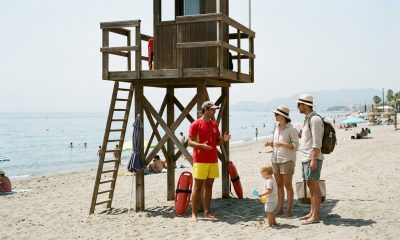
The city has around 14 km of coastline linked by promenades. Each stretch has its own crowd:
- La Malagueta and La Caleta: a short walk from the old town, busy in summer, with volleyball nets, joggers and cyclists along the paseo.
- Baños del Carmen and Pedregalejo: small sheltered coves, great sunsets and a long row of restaurants serving pescaíto frito.
- El Palo: over a kilometre of beach with fishing boats pulled up on the sand.
- La Misericordia and San Andrés: the western beaches near Huelin, with darker sand and more locals than visitors.
The city’s tourism office has a useful west-to-east tour of Málaga’s beaches if you want to compare them before choosing where to live.
Getting in and getting around
From the airport
Málaga-Costa del Sol airport is only a few kilometres from the centre. The Cercanías C1 train leaves from the airport station and reaches Málaga Centro-Alameda in about 12 minutes, according to Aena. EMT Málaga also runs an Express bus from Arrivals to the centre; Aena lists a single ticket at 4 euros with luggage included.








Daily transport
- Metro: lines 1 and 2 run from the western districts and Teatinos into the centre, now ending at Atarazanas next to the central market. An extension of line 2 towards the Hospital Civil is still under construction.
- EMT buses: the main way to reach the eastern neighbourhoods such as Pedregalejo and El Palo.
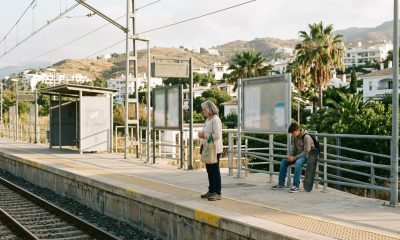
- Cercanías trains: C1 runs west along the coast to Torremolinos, Benalmádena and Fuengirola; C2 runs inland towards Álora.
- High-speed rail: AVE trains from María Zambrano station connect Málaga with Madrid, Córdoba and Seville.
Get the rechargeable Consorcio transport card. It gives reduced fares on EMT buses, interurban buses, the metro and Cercanías trains, and one card can pay for several travellers at once.
Schools and healthcare
Most children of residents attend local public schools, where teaching is in Spanish and places are allocated largely by address. The city also has several private and international schools, including British-curriculum options such as St George’s in the El Palo area and The British College of Málaga. Fees, waiting lists and admission dates vary, so contact schools early. Our overview of types of schools in Spain explains the options.
For public healthcare you are assigned a centro de salud (health centre) based on where you are registered on the padrón. The two big public hospitals are the Hospital Regional Universitario, still widely called Carlos Haya, and the Hospital Clínico Virgen de la Victoria in Teatinos. Read our guide to healthcare for foreign residents before you register.
What to do once you have settled in
Málaga’s old town packs a lot into a small area. The Alcazaba fortress and the Roman theatre sit side by side at the foot of Gibralfaro hill, and the climb up to the castle walls gives you the best view of the port. The art scene has grown a lot: the Picasso Museum, the Centre Pompidou Málaga by the port and the Carmen Thyssen Museum are the headline names, with smaller galleries in Soho.
Locals shop for fish, fruit and olives at the Atarazanas market. When the city gets too warm, the Montes de Málaga natural park just north of town has pine-forest walking routes. In the calendar, Semana Santa and the August Feria de Málaga are the two big moments, and the city’s film festival takes over cinemas each spring.
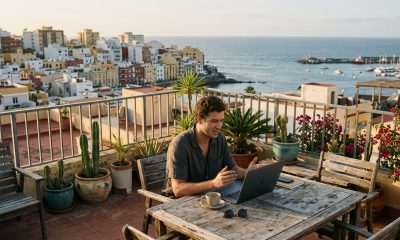
Remote workers will find plenty of coworking spaces and a large international community; see our guide to Málaga for digital nomads.
Practical tips for your first months
- Register on the padrón at the town hall as soon as you have an address. You will need it for healthcare, schools and many other procedures.
- Visit a barrio at night and on a weekend before signing a lease. The centre and the beach districts sound very different after 11 pm.
- A car is optional in the city, and parking near the centre is scarce and expensive.
- August is hot and crowded. If you can, arrive in autumn or spring, when flat hunting is easier.
If you prefer a smaller town with the same train line, look along the coast at Torremolinos, Benalmádena or Fuengirola.
Useful links
- Aena: Málaga airport by train
- Junta de Andalucía: Metro de Málaga
- Consorcio de Transporte: travel card
- Visita Málaga: beaches
- Málaga for digital nomads
- Renting in Spain as a foreigner
FAQ: living in Málaga city
Do I need a car to live in Málaga?
Not usually. The metro, EMT buses and Cercanías trains cover most daily needs, and the centre is easy to walk. A car helps if you live in the hills or want regular trips inland.
How long does it take from the airport to the centre?
About 12 minutes by Cercanías C1 to Centro-Alameda. The EMT Express bus takes longer depending on traffic.
Which areas are quietest for families?
Many families look east towards El Limonar, Pedregalejo and El Palo, or at Teatinos near the university. Visit at different times of day before you decide.
Is Málaga expensive to rent in?
Compared with most of Andalucía, yes. Long-term rentals are in high demand, so start looking early and be ready with your documents.
Disclaimer: This article is general information only. Transport routes, fares, school admissions and opening times can change – always check with the official source before you act.