Healthcare
Healthcare in Spain for foreign residents in 2026: how to get access

Updated: October 2026
Spain has one of the best public health systems in Europe – but as a foreign resident you only get access once you are registered in the right way. How you qualify depends on whether you work, receive a pension or live on your own income. Here is how it works in 2026, step by step.
Who can use the public health system?
- Employees and self-employed (autónomos): you are covered through your social security contributions, and so are your registered family members.
- EU pensioners: register your S1 form from your home country with the Spanish social security (INSS). Your home country then pays for your care in Spain.
- Residents without work or S1: you can join the public system by paying a monthly fee through the convenio especial – after at least one year of registration on the padrón. The national fee is around €60 per month under 65 and €157 from 65, and some regions run their own schemes.
- Visitors and new arrivals: EU citizens on a short stay can use their European Health Insurance Card (EHIC). Others need travel or private insurance.
How to register – step by step
- Get your NIE and padrón – you need both for almost everything. See how to get your NIE.
- Get your social security number – your employer usually arranges it, or you apply yourself at the social security office.
- Apply for recognition of your right to healthcare at the INSS (online or by appointment), with your S1 form if you are a pensioner.
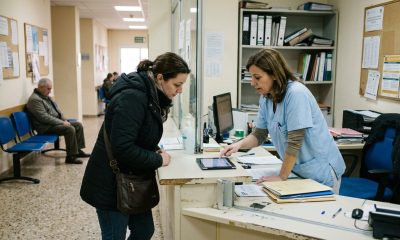
- Register at your local health centre (centro de salud) with your passport, NIE, padrón and INSS document. You will be given a family doctor.
- Receive your health card (tarjeta sanitaria individual) by post or at the health centre. Download your region’s health app to book appointments.
Public or private health insurance?
- Public: free at the point of use (prescriptions have a co-payment based on income). Waiting lists for specialists can be long.
- Private: faster access to specialists and English-speaking doctors. Many expats combine both. Policies typically cost €50–150 per month per adult, depending on age and cover.
- For visas: non-lucrative, digital nomad and student visas require private insurance with full cover and no co-payments (sin copagos) unless you are covered by social security.
Emergencies
Call 112 for any emergency – operators often speak English. Public hospital emergency departments (urgencias) treat everyone; if you are not covered, you may receive a bill afterwards.
FAQ: healthcare in Spain
Is healthcare free in Spain for foreigners?
It is free at the point of use if you are covered through work, an S1 form or the convenio especial. Otherwise you need private insurance.
Can I keep using my EHIC card when I live in Spain?
No. The EHIC is for temporary stays. Once you live in Spain you must register in the Spanish system or have private insurance.
How do I find an English-speaking doctor?
In tourist areas many public and private doctors speak English. Private insurers list English-speaking doctors in their apps.
Do I pay for medicines?
Yes, a share. Working-age patients pay 40–60% depending on income, and pensioners usually pay 10% with a monthly cap.
Useful links
- Spanish social security (INSS)
- Official directory of public health centres
- Mental health support for expats
Disclaimer: This article is general information only. Rules and fees differ between regions and can change – always check with the INSS or your regional health service.