Tourist Info
Estepona: living in the garden of the Costa del Sol
A newcomer’s guide to Estepona: the flower-filled old town, beaches, areas to live, transport, healthcare and who the town suits.








Updated: October 2026
Estepona sits on the western Costa del Sol, between Marbella and Manilva, and is often called the garden of the Costa del Sol because of its flower-filled old town. This guide is for newcomers thinking of living there or spending a long stay. You will learn what the town is like, which beaches and areas to know, how daily life works and what to check before you move.
Why Estepona is called the garden of the Costa del Sol
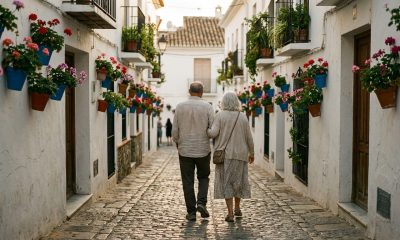
The nickname comes from the casco antiguo, the old town. Its whitewashed streets are lined with thousands of flowerpots hanging on walls and balconies, and the small Plaza de las Flores is the heart of it. The town has invested heavily in planting, street art and pedestrian streets over the last two decades, and it shows.







On top of the flowers, Estepona has three walking routes that make the town feel like an open-air gallery:
- Murals route: more than 40 large wall paintings, many covering whole apartment blocks.
- Sculpture route: more than 30 sculptures by different artists placed around the streets and the seafront.
- Poetry route: poems displayed on walls and tiles across the old town, in several languages.
Close to the centre you also find the Parque Botánico y Orquidario, a botanical park with a large glass orchid house that is a pleasant place to walk on a hot day.
What to see in and around town
Estepona is not a museum town, but it has more history than many visitors expect. Worth knowing:
- Torre del Reloj: the old clock tower, one of the landmarks of the old town.
- Iglesia de los Remedios: an 18th-century church at the edge of the historic centre.
- Castillo de San Luis: the remains of the old castle.
- Casa del Aljibe: home to the town’s archaeological museum.
- Necrópolis Megalítica de Corominas: a prehistoric burial site, a reminder that people lived here long before tourism.
- The port: the Puerto Deportivo has bars and restaurants, and a market with local products and crafts on Sundays.
Inland, the Sierra Bermeja rises steeply behind the town. It is a protected natural area with hiking trails, and from the Pico de los Reales (1,449 m) you can see the western Costa del Sol, the Rock of Gibraltar and, on a clear day, North Africa. Families with children also have the Selwo Aventura animal park in the municipality.








Beaches in Estepona
Estepona has around 21 km of coastline, so you can choose between busy town beaches and quiet stretches with dunes. A few to know:
| Beach | What it is like | Good for |
|---|---|---|
| La Rada | The long central beach (about 2.6 km) along the promenade, with full services | Daily swims, walks, living in town |
| El Cristo | A small sheltered bay by the port with calm, clear water | Families and small children |
| El Padrón | Lively beach west of town with beach bars and restaurants | Weekends and long lunches |
| Guadalmansa and Saladillo | Quieter beaches east of town, Saladillo with dunes and pines | Peace and space |
| Costa Natura | An established naturist beach | Naturists |
Several beaches have adapted access and assisted bathing for people with reduced mobility during the summer season. Before swimming, read up on flags, currents and jellyfish in our beach and sea safety guide.
Areas to live in
Estepona is spread out along the coast, and where you live changes your daily life a lot.
- Old town and centre: walkable, with shops, bars, the market and the beach on your doorstep. Apartments are older and parking can be hard.
- Seafront and port area: newer apartment blocks with sea views and easy access to the promenade.
- East towards Marbella (the “New Golden Mile”): urbanisations, villas and golf, popular with buyers who want space. You will need a car.
- West towards Manilva and Casares: quieter developments, often a little cheaper, with the historic village of Casares a short drive inland.
Prices have risen as more international buyers discover the town, and long-term rentals can be scarce in summer. Read our guide to renting in Spain as a foreigner before you sign anything, and compare with nearby Marbella if you are flexible on location.
Everyday life: transport, health and paperwork
Getting around
There is no train in Estepona – the coastal Cercanías line from Málaga ends in Fuengirola. Most residents drive, using the A-7 or the AP-7 toll motorway. Buses connect Estepona with Marbella, Málaga and Málaga airport, which is roughly an hour away by car depending on traffic. Gibraltar airport is another option for flights to the UK. See our airports guide for transfers.
Healthcare
Estepona has a public hospital, the Hospital de Alta Resolución de Estepona, run by the Andalusian health service, plus public health centres and several private clinics. For more serious cases patients may be referred to larger hospitals on the coast. Our guide to hospitals on the Costa del Sol explains how the system fits together.
First paperwork
- Register on the padrón at the town hall once you have an address – see our padrón guide.
- Sort your residency status and NIE.
- Register with a public health centre or arrange private insurance.
- Open a bank account and set up utilities in your name.
Who Estepona suits
Estepona suits people who want a real Spanish town with a lively centre, good beaches and a slower pace than Marbella. It is popular with families, retirees and remote workers who do not need to be in Málaga every day. Golfers are well served too, with many courses between Estepona and Marbella – see our golf guide.
It is less ideal if you depend on public transport, need a big city job market or want nightlife on the scale of Marbella or Málaga. Summer is busy, while winter is calm and some beach businesses close or reduce hours.
Useful links
- Estepona on Spain.info, the official Spanish tourism portal (Spanish)
- Marbella guide: areas, beaches and everyday life
- Renting in Spain as a foreigner
- How to register on the padrón
- Beach and sea safety in Spain
FAQ: living in Estepona
Why is Estepona called the garden of the Costa del Sol?
Because of the thousands of flowerpots and plants that decorate the whitewashed streets of the old town, together with its parks and the botanical garden with an orchid house.
Can I live in Estepona without a car?
In the old town and along the seafront, yes – shops, the beach and buses are within walking distance. In the urbanisations outside town a car is close to essential, as there is no train and bus routes are limited.
Is Estepona cheaper than Marbella?
In general it has been somewhat cheaper, but prices have risen fast. Compare current listings in both towns for the type of home you want before deciding.
Is there a hospital in Estepona?
Yes. The public Hospital de Alta Resolución de Estepona has an emergency department, and there are public health centres and private clinics in town.
Disclaimer: This article is general information only. Prices, services and opening times can change – always check with the town hall or the official source before you act.