





































Safety & Emergency
Staying safe in a Spanish heatwave: warnings, heat stroke and climate shelters
How AEMET heat warnings work, the signs of heat stroke, where to find climate shelters and the rules on outdoor work, pets and cars during a Spanish heatwave.




























Updated: October 2026
Spanish summers are getting longer and hotter, and a heatwave here can be far more intense than anything many newcomers have lived through. This guide explains how the official heat warnings work, how to recognise heat exhaustion and heat stroke, where to cool down for free, and what the rules say about outdoor work and leaving pets in cars. For emergency numbers and general safety, see our guide to safety and emergencies in Spain.
How AEMET heat warnings work
AEMET (Agencia Estatal de Meteorología) is Spain’s national weather agency. Under its Meteoalerta plan it issues warnings for adverse weather, including high temperatures, up to 72 hours ahead. Warnings use three colours:


 Vivid BusinessA business account for freelancers and companies in SpainOpen your account online, with sub-accounts and cards for your team.Learn more →(ad)

 Buying a home in Spain? Simulate your mortgageSee your monthly payment with Banco Sabadell’s mortgage simulator.Try the simulator →(ad)

 A bank account for autónomos in SpainCuenta Clara Autónomos: no commissions, free debit and credit cards, opened online.See the account →(ad)


 A European bank you open from your phonebunq: an EU-licensed bank with debit cards, managed fully in the app. Sign up in about five minutes.Get started →(ad)


 A mobile bank account with no commissionsB100, the mobile bank from Abanca: everyday account and free debit card, all in the app.Get the app →(ad)
 Online pharmacy & parapharmacySkincare, vitamins, baby care and more – delivered in SpainShop now



















 CAR INSURANCEInsure your car in Spain onlineGet your quote online with Prima Seguros.Get a quote →


| Level | What AEMET means | What you should do |
|---|---|---|
| Yellow | Low danger, but vulnerable people and those in exposed places may be affected | Stay alert, plan activities for cooler hours, keep an eye on older relatives and children |
| Orange | Significant danger with possible serious impacts | Take precautions, limit physical effort outdoors, follow updates |
| Red | Extraordinary danger with very severe impacts possible | Follow instructions from the authorities and avoid non-essential travel and outdoor activity |
Heat warnings are based on forecast maximum temperatures, and the thresholds are different for each warning zone. A temperature that triggers a yellow warning on the northern coast may be an ordinary summer day in inland Andalusia, so do not compare warnings between regions by the number alone. Check the warning for the zone where you actually are on the AEMET website or the official AEMET app.
Es-Alert messages on your phone
In serious situations, regional emergency services can send an Es-Alert message straight to every mobile phone in the affected area, with a loud tone even if your phone is on silent. You do not need to register. Read the message carefully: it may tell you to stay indoors in the hottest hours or avoid certain activities. How Es-Alert works is explained in more detail in our general safety guide.
Heat exhaustion and heat stroke: know the signs
Heat illness often builds up slowly. Heat exhaustion comes first: heavy sweating, tiredness, dizziness, headache, nausea, cramps and intense thirst. If you or someone else feels like this, move to a cool place, lie down, loosen clothing and sip water. Symptoms should improve within about half an hour.
Heat stroke (golpe de calor) is a medical emergency. According to Spain’s Ministry of Health, the warning signs include:
- Red, hot and dry skin
- A fast pulse
- An intense headache
- Confusion or strange behaviour
- Loss of consciousness
What to do:
- Call 112 straight away and say you suspect heat stroke (golpe de calor).
- Move the person to the coolest, shadiest place you can find.
- Cool the body with cold, wet cloths, a fan, or a cool shower if they are conscious and able to stand.
- Do not give drinks to someone who is confused or drowsy, as they may choke.
Everyday habits that make a difference
Locals have long lived with heat, and many of their habits are worth copying:
- Keep the house dark: close blinds (persianas) and shutters in the morning on the sunny side, and open windows only at night when the air outside is cooler.
- Shift your day: do errands, exercise and gardening early in the morning or after sunset. Avoid the sun from roughly midday to late afternoon.
- Drink before you are thirsty: water is best. Alcohol and very sugary drinks make dehydration worse.
- Eat light: salads, gazpacho and fruit are traditional for a reason.
- Dress for it: loose, light-coloured clothing, a hat and sunglasses.
- Check your medication: some medicines (for example certain blood pressure drugs and diuretics) affect how your body copes with heat. Ask your doctor or pharmacist before summer.
Climate shelters: free places to cool down
Many Spanish cities now run refugios climáticos (climate shelters): air-conditioned public buildings such as libraries, civic centres, museums and markets, plus shaded parks and outdoor spaces where anyone can rest without paying. They are aimed especially at people who cannot keep their homes cool.
- Barcelona has one of the largest networks, with several hundred municipal sites.
- Málaga publishes an interactive map of its climate comfort areas, shade corridors and shelters on the city’s environment website.
- Bilbao, Valencia, Zaragoza and other cities also run networks, but many smaller towns have none.
Opening hours vary, and some shelters close in August or at weekends. Search for “refugios climáticos” plus your town name on your ayuntamiento (town hall) website before the hot season starts. Shopping centres and public libraries are a good fallback.
Outdoor work, pets and cars
If you work outside
Since May 2023 Spanish workplace rules (Real Decreto-ley 4/2023, which amended the workplace safety regulation RD 486/1997) require employers to protect people who work outdoors from extreme heat. Measures must be based on the risk assessment and can include banning certain tasks during the hottest hours. When AEMET or the regional weather service issues an orange or red warning and other measures are not enough, the employer must adapt working conditions, including reducing or changing working hours. This applies to construction, agriculture, delivery, gardening and similar jobs. If you are self-employed, apply the same logic to your own schedule. Read more about your rights in our guide to the Spanish job market.
Pets
- Walk dogs early or late: pavements and sand can burn paws. Test the ground with the back of your hand for a few seconds.
- Water and shade at home: leave fresh water and a cool, shaded spot, and never leave animals on a sunny terrace.
- Watch for signs: heavy panting, drooling, weakness or vomiting need a vet quickly. Flat-faced breeds and older animals are most at risk.
Cars
A parked car in the Spanish sun heats up within minutes. Never leave a child or a pet inside, not even “just for a moment”. Spain’s animal welfare law (Ley 7/2023) forbids leaving animals alone in closed vehicles in conditions that put them at risk, and fines can be very high. See our guide to Spain’s animal welfare law. If you see a child or animal in distress in a locked car, call 112.
Look out for older neighbours
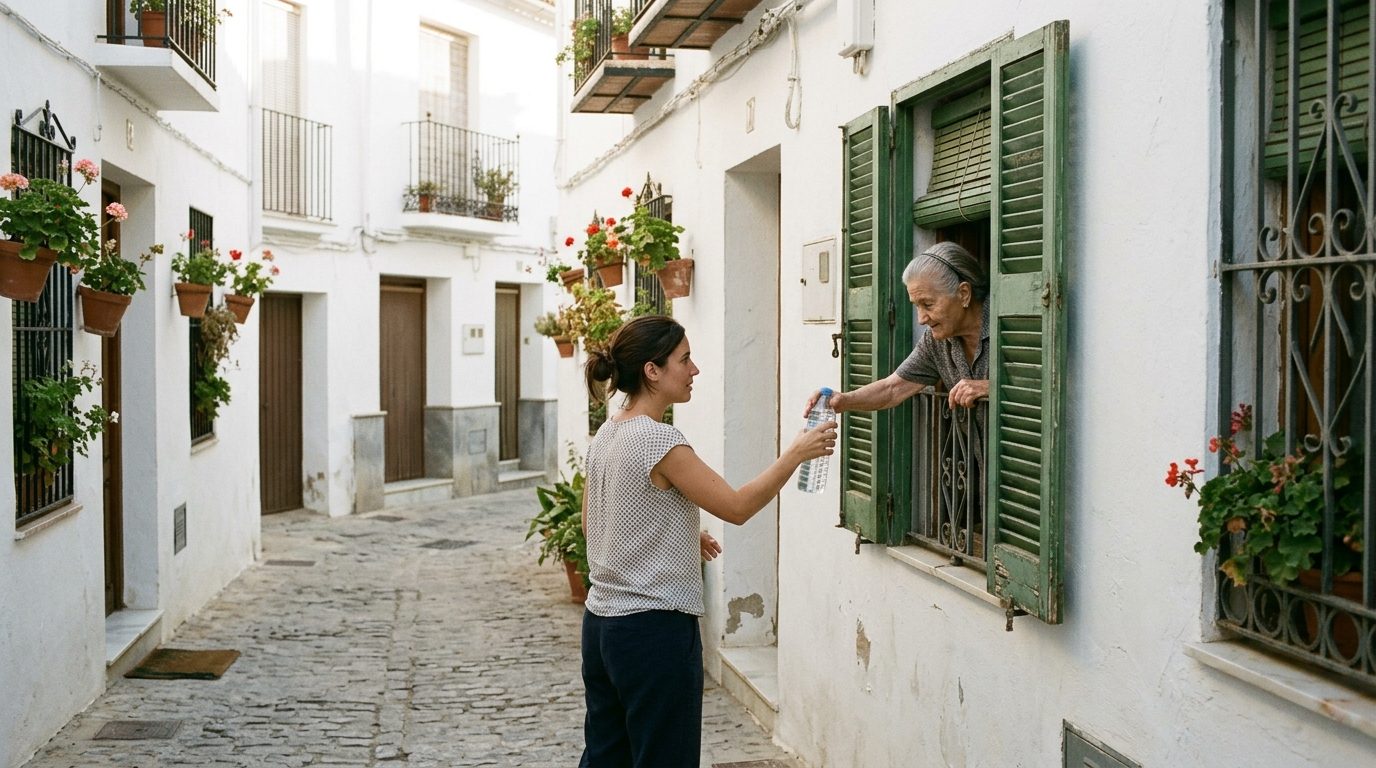
People over 75, babies, people with chronic illness and those living alone are the most vulnerable in a heatwave. Many older Spaniards live alone in flats on upper floors without air conditioning. A short knock on the door can save a life:
- Check in at least once a day during an orange or red warning.
- Make sure they have water, can keep blinds closed and know where the nearest climate shelter is.
- Offer to do their shopping so they do not have to go out at midday.
- If someone seems confused, very weak or does not answer, call 112.
Make sure you are registered with a health centre before summer; our guide to healthcare for foreign residents explains how.
Useful links
- AEMET: what the warning levels mean
- AEMET Meteoalerta: current weather warnings
- Ministry of Health: heat stroke symptoms and first aid (Spanish)
- Málaga City Council: map of climate comfort areas and shelters (Spanish)
- Safety and emergencies in Spain
- Hospitals in Spain
FAQ: heatwaves in Spain
What temperature triggers a heat warning in Spain?
There is no single national number. AEMET sets different thresholds for each warning zone, so the same temperature can mean a yellow warning in one region and a normal day in another.
What is a refugio climático?
A climate shelter is a public space, often an air-conditioned library, civic centre or shaded park, where anyone can cool down for free during hot weather. Check your town hall website for locations and opening hours.
Can my employer make me work outdoors during a red warning?
Employers must protect outdoor workers from extreme heat. During orange or red warnings, if other measures are not enough, they must adapt conditions, including reducing or changing working hours.
How do I tell heat exhaustion from heat stroke?
Heat exhaustion usually brings heavy sweating, tiredness and dizziness and improves with rest and cooling. Confusion, hot dry skin or loss of consciousness point to heat stroke: call 112 immediately.
Disclaimer: This article is general information only and is not medical or legal advice. Warning levels, rules and shelter opening times can change – always follow AEMET, the emergency services and your doctor.









 A European bank you open from your phoneSign up with bunq in about five minutes.Get started →(ad)





 Ad
 A sea-view escape in MallorcaThe Donna Portals – stay by the sea with views over the Mediterranean.See prices →
Vivid BusinessA business account for freelancers and companies in SpainOpen your account online, with sub-accounts and cards for your team.✓ For autónomos and companies
✓ Sub-accounts for budgets and taxes
✓ Cards for your teamLearn more →(ad)


















Free books in Spain: public libraries and eBiblio for expats

Cycling on the Costa del Sol: the rules, the helmet law and the 1.5 metre gap

How to order tapas in Andalucía: tapa, media ración or ración?

Andalucía guide: cities, culture and life in southern Spain

How the Spanish government works: state, regions, provinces and town halls

Living on a small salary in Spain in 2026








-

 Tourist Info2 years ago
Andalucía guide: cities, culture and life in southern Spain
-
Spanish System2 years ago
How the Spanish government works: state, regions, provinces and town halls
-
Cost of Living2 years ago
Living on a small salary in Spain in 2026
-
Cost of Living2 years ago
Family living costs in Spain in 2026: monthly budget and moving-in money
-
Tourist Info2 years ago
Marbella guide: areas, beaches and everyday life
-
Insurance2 years ago
Understanding insurance in Spain: a 2026 guide for expats
-
Banking & Finances2 years ago
Understanding the tax system in Spain
-
Tourist Info2 years ago
Benalmádena explained: Pueblo, Arroyo de la Miel and the coast