































































Safety & Emergency
Floods, DANA storms and weather warnings in Spain: how to prepare and stay safe
How AEMET warnings and ES-Alert phone alerts work in Spain, where to check official alerts, a flood safety checklist and how to claim via the Consorcio.

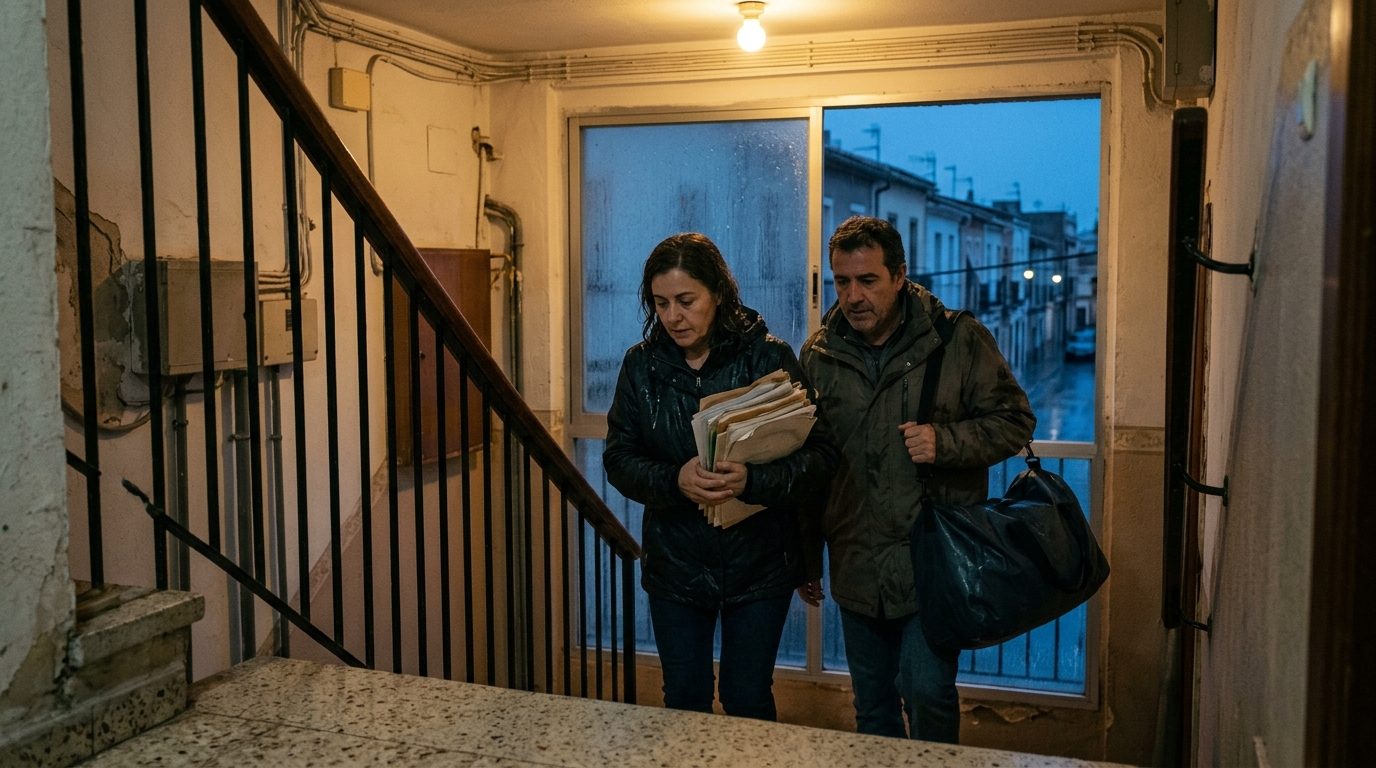



























Every autumn, parts of Spain face sudden torrential rain that can turn dry riverbeds into torrents within an hour. If you live on the Mediterranean coast, in the Balearics or near a river or ravine, it pays to understand the warnings and have a plan. This guide explains what a DANA is, what the Valencia floods of October 2024 taught everyone, what AEMET warning colours and ES-Alert phone messages mean, where to check official alerts, how to prepare, what to do during a flood and how to claim insurance afterwards. For emergency numbers in general, see our guide to safety and emergencies in Spain.
Updated: November 2026
What is a DANA?
DANA stands for depresión aislada en niveles altos, an isolated low-pressure system high in the atmosphere. Older Spaniards often call it gota fría (“cold drop”). It forms when a pocket of cold air breaks away from the main jet stream and sits over an area, sometimes for days. The cold air aloft makes the atmosphere unstable: warm, moist air rises from below and builds tall storm clouds. A warm Mediterranean Sea at the end of summer adds extra moisture, which is why the most damaging episodes tend to hit the east coast in autumn.


 A bank account for autónomos in SpainCuenta Clara Autónomos: no commissions, free debit and credit cards, opened online.See the account →(ad)


 A European bank you open from your phonebunq: an EU-licensed bank with debit cards, managed fully in the app. Sign up in about five minutes.Get started →(ad)


 A mobile bank account with no commissionsB100, the mobile bank from Abanca: everyday account and free debit card, all in the app.Get the app →(ad)
 Online pharmacy & parapharmacySkincare, vitamins, baby care and more – delivered in SpainShop now





 Vivid BusinessA business account for freelancers and companies in SpainOpen your account online, with sub-accounts and cards for your team.Learn more →(ad)

 Buying a home in Spain? Simulate your mortgageSee your monthly payment with Banco Sabadell’s mortgage simulator.Try the simulator →(ad)















 CAR INSURANCEInsure your car in Spain onlineGet your quote online with Prima Seguros.Get a quote →


Not every DANA is dangerous. Many bring only showers or cooler weather. Since October 2025, AEMET (Spain’s weather agency) gives a name to DANAs that are expected to cause high impact, using the same criteria as for named storms: orange or red warnings must be forecast. If you hear a DANA has a name, take it seriously.
AEMET weather warnings: what the colours mean
AEMET, Spain’s state weather agency, issues warnings for rain, storms, wind, snow, coastal conditions, heat and other weather up to 72 hours ahead. Warnings are given for specific zones within each province, so check the zone where you live, not just the province. There are three warning levels, yellow, orange and red; green on the map simply means no warning.
| Warning colour | What AEMET says it means | What you should do |
|---|---|---|
| Green (no warning) | No dangerous weather expected. | Nothing special. Check the forecast if you have outdoor plans. |
| Yellow | Low danger, but vulnerable people and property in exposed places could be affected. | Stay informed and follow the latest forecast. Avoid camping or parking in dry riverbeds. |
| Orange | Significant danger. Vulnerable people and property in exposed areas could suffer serious impacts. | Be prepared and take precautions: avoid unnecessary trips, keep away from riverbeds and ravines, move valuables and your car to safe, higher places early. |
| Red | Extraordinary danger. Very serious or catastrophic impacts are possible. | Take preventive measures, act on the authorities’ instructions and avoid travel unless it is strictly necessary. Stay out of garages and basements. |
The colour tells you how dangerous the weather is expected to be, not exactly how much rain will fall in your street. In a DANA, the worst rain can hit a small area very hard, so an orange or red warning anywhere upstream of you matters.
Your regional emergency service (for example 112 Comunitat Valenciana or 112 Andalucía) decides on civil protection measures such as school closures and sends Es-Alert messages to every phone in the area. Do not wait for an Es-Alert to act: a red AEMET warning on its own is reason enough to change your plans.
ES-Alert phone alerts: what they look like and what to do
ES-Alert is Spain’s public warning system for mobile phones. It is run by Protección Civil (Ministry of the Interior) together with the regional emergency services, such as 112 Andalucía or 112 Comunitat Valenciana, which decide when to send an alert for their area.
How ES-Alert works
- No app or sign-up needed. The message is sent through mobile phone masts (cell broadcast) to every compatible phone in the affected area. It is free.
- It is loud. You will hear a strong, unusual beeping sound and feel vibration for several seconds, even if your phone is on silent or do not disturb.
- It shows on your screen as an emergency alert, with a short text describing the danger and what to do. On Android it stays on screen until you tap to accept it.
- It does not track you. The system does not know who you are or where your phone is; it simply reaches all phones connected in that area.
- Check your settings. Make sure emergency alerts are switched on in your phone settings.
What to do when you receive an ES-Alert
- Stop what you are doing and read the whole message. Reading it is also what stops the beeping.
- Follow the instructions straight away, for example stay at home, move to a higher floor or avoid travelling.
- If the message is in Spanish and you are not sure what it says, use a translation app or check your regional 112 service on social media.
- Tell neighbours, older people and visitors who may not have understood it.
- Do not call 112 just to ask about the alert. Keep the line free for real emergencies.
Test messages are sometimes sent and are clearly marked as a test. You do not need to do anything with them. Remember that ES-Alert is a last line of warning: as Valencia showed in 2024, do not wait for your phone to beep if AEMET has already issued a red warning.
Where to check official alerts
Rumours spread fast during storms. Use these official sources instead of forwarded WhatsApp messages:
- AEMET weather warnings map: current warnings by province and zone, available in English. AEMET also has a free app.
- Meteoalarm: the European warning map run for EUMETNET, the network of national weather services. It shows the same colour system for Spain and the rest of Europe, useful if you travel.
- Protección Civil: national civil protection information and advice for floods, storms and other risks.
- Emergencias 112 Andalucía: the Junta de Andalucía’s emergency service, with advice on rain and floods and official accounts on X (@E112Andalucia), Facebook, Instagram and a WhatsApp channel.
- Your regional 112 service: every region has one (for example 112 Comunitat Valenciana or 112 Región de Murcia). Follow it on social media for civil protection alerts and school or road closures.
- Your town hall (ayuntamiento): many publish local closures and shelter locations on their website, social media or local app.
In an emergency, call 112. The call is free and works from any phone.
What Valencia’s October 2024 floods taught us
In late October 2024 a DANA dropped extreme rainfall on the province of Valencia. At Turís more than 700 litres per square metre fell in 24 hours, a Spanish record. Water from the inland hills poured down ravines such as the Rambla (barranco) del Poyo into the densely populated towns of L’Horta Sud, south of Valencia city, where in many places it had not rained much at all. The official death toll in the province is around 230 people, with further victims in Castilla-La Mancha and Andalusia.
The timeline matters. AEMET issued a red warning for parts of Valencia province early that morning and extended it to the whole province by mid-morning. The Es-Alert to phones was sent by the regional authorities only at 20:11 that evening, when water was already flooding many streets. The response is still being examined by the courts and a parliamentary inquiry, but the practical lessons for residents are clear:
- Danger can come from rain far away. A dry sky over your town does not mean you are safe if it is pouring upstream.
- Cars, garages and ground floors are traps. Many people died on roads, in underground car parks or on ground floors while trying to move their cars or belongings.
- Treat red warnings as a reason to act, even before an Es-Alert arrives.
How to prepare before the rainy season
- Check your flood risk. The national flood zone map (SNCZI) from the Ministry for the Ecological Transition shows mapped flood areas. Not every zone is mapped, so if you live near a river, ravine or rambla, assume some risk.
- Know your higher ground. Identify an upper floor, a neighbour on a higher storey or a nearby building you can reach on foot.
- Prepare a small emergency kit: torch, power bank, battery radio, drinking water, basic medicines, copies of your NIE/TIE, passport and insurance policy in a waterproof bag.
- Clear drains and gutters on roofs, terraces and patios, and keep rainwater channels free of rubbish.
- Do not store valuables or important papers in basements, storerooms or garages.
- Check your insurance covers your home, contents and car (see below).
- Install the AEMET app and follow your regional 112 service on social media.
- Make a family plan: agree on a meeting point, make sure everyone knows how to call 112, and check that emergency alerts are switched on in every phone.
Flood safety checklist
Save or print this short checklist. It is based on the self-protection advice from Emergencias 112 Andalucía and AEMET.
When an orange or red warning is issued
- Check the AEMET warning for your zone and follow your regional 112 service.
- Charge your phone and power bank and keep a battery radio to hand.
- Move your car out of underground garages and away from riverbeds early, before the rain starts. Do not go back later.
- Bring in or tie down terrace furniture, plant pots and awnings that water or wind could carry away.
- Move valuables, documents and toxic products (cleaning products, paint, fuel) to a high place.
- Have about three days of food that needs no cooking or fridge, plus drinking water and your regular medicines.
- Cancel or postpone trips by car. Check on older neighbours or anyone living alone.
If you have to leave home
- Take documents (NIE/TIE, passport, insurance policy), medicines, a small first-aid kit, warm clothing, a torch and your phone.
- Switch off electricity, gas and water at the mains if you have time.
- Close doors and windows, and go to the place the authorities indicate, on foot if the roads are flooded.
What to do during a flood
- Do not drive unless you must. Never drive or walk through flooded roads, fords or underpasses. Just a few tens of centimetres of moving water can sweep a car away.
- Do not go down to garages or basements to save your car or belongings. Go up, not down.
- Move to a higher floor if water enters the building, and take your phone, charger and documents with you.
- Keep away from riverbeds, ravines and bridges, even to take photos.
- Switch off electricity and gas at the mains if water is coming in and you can do it safely.
- Call 112 only for real emergencies so lines stay free, and follow instructions on the radio and official channels.
After the water goes down
Stay away from fallen power lines, do not eat food that has been in contact with floodwater, and only drink tap water once the authorities say it is safe (bottled water is the safer choice). If you are worried the building is damaged, call 112 before going back in. Wear gloves and boots when cleaning, as floodwater often carries sewage and debris.
Insurance and the Consorcio de Compensación de Seguros
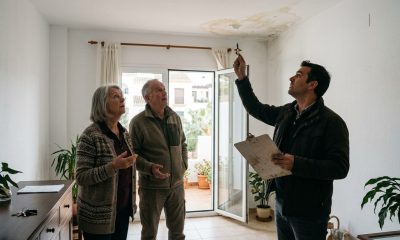
Ordinary insurers in Spain usually exclude so-called extraordinary risks such as floods, earthquakes and certain storms. Instead, these are covered by the Consorcio de Compensación de Seguros (CCS), a public body funded through a compulsory surcharge included in most home, business and car policies. You do not take out a separate policy, but you must have valid insurance on the damaged property when the event happens. Without a policy, the Consorcio will not pay.
A few conditions are worth knowing:
- What counts as a flood: the Consorcio covers extraordinary flooding of land by rain or melting snow, by rivers, lakes and natural watercourses overflowing, and by sea surges on the coast. Rain falling directly on your property, or water collected by its own roof, gutters or patio, is not covered by the Consorcio (check your ordinary policy for that).
- Your premiums must be paid up to date.
- There is a 7-day waiting period for property damage: a policy taken out the day before a storm will not cover it.
- Payment is made by the Consorcio directly to you by bank transfer.
How to claim:
- Take photos and videos of all damage before you clean up, and keep receipts for emergency repairs.
- File the claim as soon as possible on the Consorcio website, by phone on 900 222 665 (Monday to Friday, 9:00 to 18:00), or through your insurer or broker.
- Have your policy details ready. An assessor (perito) will then inspect the damage.
- Payment follows the limits of your original policy, so check your sums insured are realistic.
- You can follow your claim online or by phone on 900 222 665 or 952 367 042.
For an overview of home, car and other policies, read our guide to insurance in Spain. If you rent, ask your landlord what the building policy covers and consider your own contents insurance; see our guide to renting in Spain.
Useful links
- AEMET: what the warning levels mean
- Emergencias 112 Andalucía: flood advice (Spanish)
- Consumo Responde (Junta de Andalucía): how the Consorcio works (Spanish)
- AEMET blog: what is a DANA and how does it form? (Spanish)
- AEMET: high-impact DANAs will be named (Spanish)
- MITECO: how to check if you live in a flood zone (Spanish)
- RACE: what the Consorcio de Compensación de Seguros covers (Spanish)
- Understanding insurance in Spain
- Safety and emergencies in Spain
Frequently asked questions
When is flood season in Spain?
The highest risk on the Mediterranean coast is usually from September to November, when the sea is still warm. Flash floods can, however, happen in other months and regions too.
Is a DANA the same as gota fría?
Broadly yes. Gota fría is the traditional name; meteorologists prefer DANA, the term for an isolated low-pressure system high in the atmosphere.
What does an orange or red weather warning mean in Spain?
An orange AEMET warning means significant danger: take precautions and avoid unnecessary trips. A red warning means extraordinary danger with possibly catastrophic impacts: follow the authorities’ instructions and only travel if it is strictly necessary.
What should I do if I get an ES-Alert on my phone?
Read the whole message and follow its instructions straight away, for example stay indoors, go to a higher floor or avoid driving. You do not need an app or registration to receive ES-Alert, but check that emergency alerts are switched on in your phone settings.
Does my insurance cover flood damage?
If you have a valid home, business or car policy, flood damage from an extraordinary event is normally paid by the Consorcio de Compensación de Seguros, up to the limits of your policy. Without insurance there is no Consorcio cover.
Should I move my car out of the garage when a flood warning is issued?
Only well before the rain arrives. Once water is rising, never go down to a garage or basement: it is one of the most dangerous places to be.
Disclaimer: This article is general information only and is not legal or insurance advice. Warnings, procedures and insurance conditions can change – always follow AEMET, your regional emergency service and your insurer.









 A European bank you open from your phoneSign up with bunq in about five minutes.Get started →(ad)






 Ad
 A sea-view escape in MallorcaThe Donna Portals – stay by the sea with views over the Mediterranean.See prices →
Vivid BusinessA business account for freelancers and companies in SpainOpen your account online, with sub-accounts and cards for your team.✓ For autónomos and companies
✓ Sub-accounts for budgets and taxes
✓ Cards for your teamLearn more →(ad)


















December bank holidays in Andalucía 2026: the long weekend from 5 to 8 December

Homes of the week: for sale and to rent on the Costa del Sol (23 November)

Spain’s general election on 29 November: parties, polls and what expats need to know

Andalucía guide: cities, culture and life in southern Spain

How the Spanish government works: state, regions, provinces and town halls

Living on a small salary in Spain in 2026








-

 Tourist Info2 years ago
Andalucía guide: cities, culture and life in southern Spain
-
Spanish System2 years ago
How the Spanish government works: state, regions, provinces and town halls
-
Cost of Living2 years ago
Living on a small salary in Spain in 2026
-
Cost of Living2 years ago
Family living costs in Spain in 2026: monthly budget and moving-in money
-
Tourist Info2 years ago
Marbella guide: areas, beaches and everyday life
-
Insurance2 years ago
Understanding insurance in Spain: a 2026 guide for expats
-
Banking & Finances2 years ago
Understanding the tax system in Spain
-
Tourist Info2 years ago
Benalmádena explained: Pueblo, Arroyo de la Miel and the coast