Employment
Unemployment benefit (paro) in Spain: who can get it and how to apply
Who can claim paro in Spain, how much you get and for how long, the unemployment subsidy, and how foreign residents apply to SEPE.







Updated: October 2026
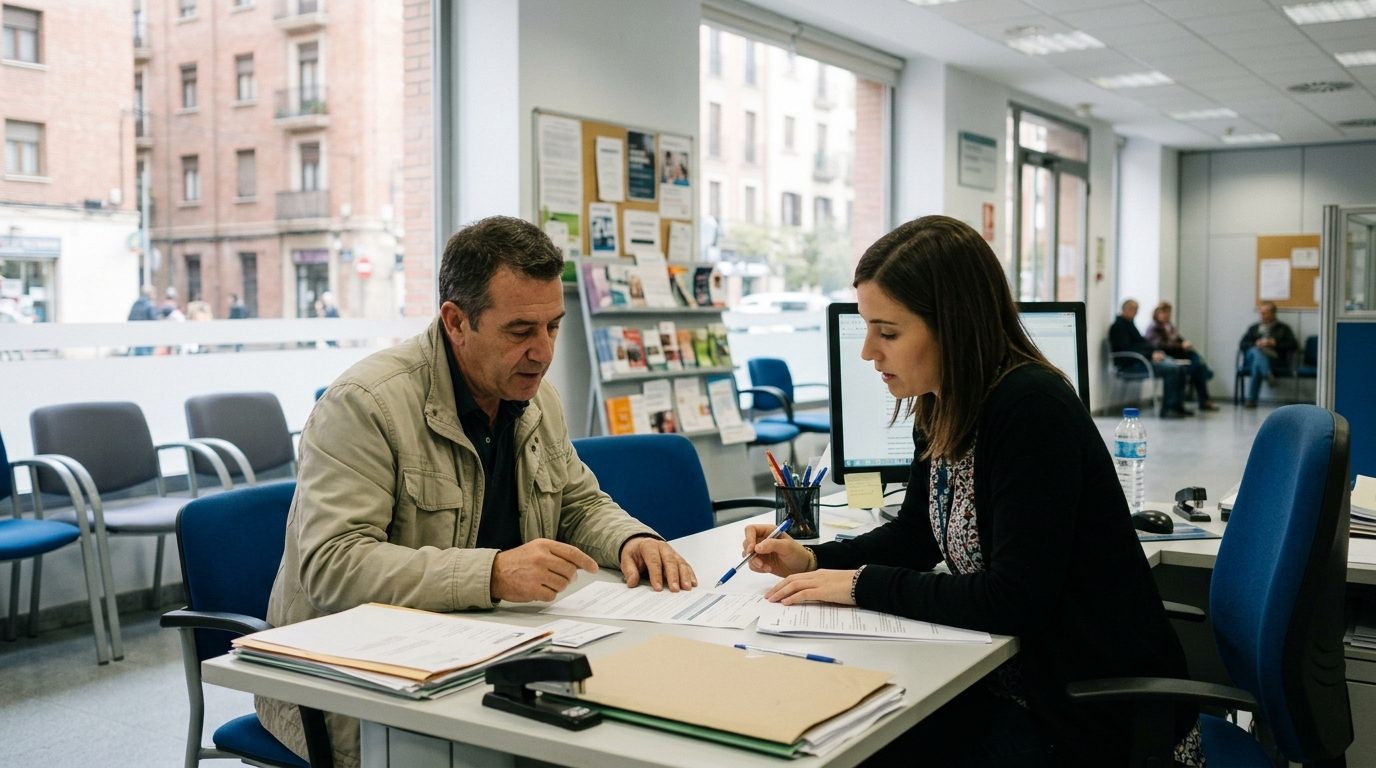
Lost your job in Spain? You may be entitled to unemployment benefit, known in everyday Spanish as el paro. Foreign residents qualify on the same terms as Spanish nationals, as long as they live legally in Spain and have paid enough Social Security contributions. This guide explains who can claim, how much and for how long, and how to apply to the public employment service, SEPE.
Two levels: contributory benefit and subsidy
Spain has two main types of unemployment support:






- Prestación contributiva: the “real” paro. It is based on what you have paid in, and the amount depends on your previous salary.
- Subsidio por desempleo: a lower, fixed assistance payment for people who have used up their contributory benefit or did not contribute long enough, and whose income is low. It was reformed in 2024 (Royal Decree-law 2/2024).
Who can get the contributory paro
According to SEPE, you generally need to meet all of these conditions:
- Legal unemployment situation: you lost your job through no choice of your own – dismissal, end of a temporary contract, a collective redundancy, or a reduction of working hours under an ERTE.
- Enough contributions: at least 360 days of unemployment contributions in the six years before you became unemployed.
- Registered as a jobseeker: you must sign up with your regional employment service and commit to actively looking for work (compromiso de actividad).
- Legal residence: foreign nationals – from the EU or elsewhere – must reside legally in Spain.
- Not retired: you must not have reached the age for an ordinary retirement pension, and not be in a situation incompatible with the benefit.
If you resigned
Voluntary resignation does not give a right to paro. SEPE also warns about a common trap: if you quit a job, start a new one and are let go during the probation period within three months, you are still not entitled. There are exceptions where resigning counts as involuntary – for example, after certain serious breaches by the employer recognised by a court – so get advice if that applies to you.
How much you get and for how long
The amount is calculated from your base reguladora: the average of your contribution bases in the last 180 days worked. SEPE pays:
- 70% of the base reguladora for the first 180 days.
- 60% from day 181 onwards.
There is a legal minimum and maximum. Both are linked to the IPREM (the public income reference index) and are higher if you have dependent children. SEPE’s online simulator gives you an estimate based on your own figures. Social Security contributions continue to be paid while you receive the benefit, and income tax may be withheld.






The duration depends on how long you contributed in the last six years:
| Days contributed | Days of benefit |
|---|---|
| 360 – 539 | 120 |
| 540 – 719 | 180 |
| 720 – 899 | 240 |
| …and so on in steps of 180 days | +60 days per step |
| 2,160 or more | 720 (maximum, two years) |
The unemployment subsidy (subsidio)
If you do not qualify for the contributory paro, or it has run out, you may be able to claim the subsidy. Since the 2024 reform, it is generally available to people whose own income is below 75% of the minimum wage (SMI), and it is paid as a percentage of the IPREM that decreases over time: 95% in the first six months, 90% for the next six, and 80% after that. Situations covered include having used up the contributory benefit, having contributed for less than 360 days, returning emigrants and people over 52 (with its own rules). The new Complemento de Apoyo al Empleo (CAE) lets many subsidy holders keep receiving part of the subsidy when they start working.
How to apply step by step
- Get your employer’s documents. Your employer sends the company certificate (certificado de empresa) to SEPE electronically. Keep your contract, dismissal letter and finiquito (final settlement).
- Register as a jobseeker with your regional employment service (for example, the SAE in Andalucía).
- Apply to SEPE – online with a digital certificate or Cl@ve, through the pre-application form, or at an office with an appointment (cita previa). Apply within 15 working days of losing your job; applying late shortens the benefit.
- Bring your ID: NIE/TIE and passport or EU ID, plus your bank account details.
- Wait for the decision. If documents are missing, SEPE gives you 15 days to provide them. Once the file is complete, it should decide within 15 days.
Rules while you receive paro
- Travel abroad: trips of up to 90 days a year are allowed if you inform SEPE and get authorisation beforehand – the benefit is paused and resumes afterwards. Leaving without telling SEPE, or staying abroad longer, can end your benefit.
- Job offers and training: you must accept suitable job offers and attend courses or appointments you are called to.
- Report changes: tell SEPE straight away if you start working, change address or your family situation changes.
- Starting a business: SEPE can, in some cases, pay the remaining contributory benefit as a lump sum (pago único) to help you become self-employed. Ask before you register – see how to become autónomo in Spain.
Self-employed? Autónomos do not get paro but have their own scheme, the cessation of activity benefit (cese de actividad), paid through their mutua. If you worked in another EU country before moving to Spain, your contributions there may count – ask SEPE about the EU form for transferring periods of insurance.
Looking for your next job? Read about the Spanish job market in 2026 and salaries in Spain.
Useful links
- SEPE: unemployment benefits overview
- SEPE: contributory benefit requirements
- SEPE: frequently asked questions on unemployment benefits
- The Spanish job market in 2026
- Becoming autónomo in Spain in 2026
FAQ: paro in Spain
Can foreigners claim paro in Spain?
Yes. Foreign workers who live legally in Spain get unemployment benefits on the same terms as Spanish nationals, provided they meet the contribution and jobseeker requirements.
Do I get paro if my temporary contract ends?
Yes, the end of a fixed-term contract counts as a legal unemployment situation, as long as you have enough contributions.
Can I go on holiday while on paro?
Within Spain you can travel freely as long as you stay reachable. Trips abroad of up to 90 days a year need prior notice and authorisation from SEPE.
What if I apply late?
You can still apply, but the days between the deadline and your application are usually deducted from the benefit. Apply as soon as you can.
Disclaimer: This article is general information only and is not legal advice. Benefit rules and amounts can change – always check with SEPE, a labour lawyer (abogado laboralista) or a gestor before you act.
Employment
Working remotely for a foreign company while living in Spain
Living in Spain and working for a company abroad? How residence, income tax, the Beckham regime and Social Security work for employees and freelancers.


Updated: October 2026
Keeping your job with a company in the UK, Germany, the US or elsewhere while living in Spain sounds simple: open the laptop and work. In practice it raises three questions – are you allowed to live here, where do you pay income tax, and who pays your Social Security? This guide explains how it works for employees and freelancers, and the mistakes that cause problems later.
First: your right to live in Spain
- EU, EEA and Swiss citizens: you can live and work in Spain freely, but if you stay more than three months you must register and get your registration certificate. See how to become a legal resident in Spain.
- Non-EU citizens: a tourist stay does not allow you to work, even remotely for a foreign employer. The usual route is the international teleworker permit, better known as the digital nomad visa, which has its own income and employment requirements.
Once you are living here, the practical questions below apply to everyone – EU and non-EU alike.
Income tax: when Spain taxes your salary
You generally become a Spanish tax resident if you spend more than 183 days in Spain in a calendar year, or if the main base of your business or economic interests is here. Spain also presumes residence if your spouse and minor children live here. As a tax resident, you pay Spanish income tax (IRPF) on your worldwide income – including the salary from your foreign employer – regardless of where the money is paid into.
- No Spanish withholding: a foreign employer with no permanent establishment in Spain is generally not obliged to withhold Spanish income tax from your salary. That means you declare the income and pay the tax yourself in your annual return – set money aside during the year.
- Stop paying in the old country: tell your employer and home tax office that you have moved. Double tax treaties decide which country can tax the salary; for full-time work physically done in Spain, it is usually Spain. If tax is still withheld abroad, you may need to claim it back there.
- Foreign assets: tax residents with accounts, investments or property abroad above certain thresholds must report them on the information return modelo 720.
The special regime for new arrivals (Beckham law)
Remote workers who move to Spain can often opt into the special tax regime for workers relocated to Spain, nicknamed the “Beckham law”. Since the 2022 Startup Law it explicitly covers international teleworkers. Main points:
- You must not have been tax resident in Spain in the five years before you move.
- Employment income is taxed at a flat 24% up to €600,000, and 47% above that.
- It applies for the year you become resident plus the following five years.
- You opt in with modelo 149, generally within six months of the start of your activity as shown in your Social Security registration. Miss that window and you lose the option.
Ordinary freelancers usually do not qualify; the entrepreneur route is limited to activities officially classed as innovative. For higher earners the regime can make a big difference, so discuss it with a tax adviser before you arrive.
Social Security: who pays and where
This is the part many remote workers overlook. If you work from Spain, Spanish Social Security registration is the starting point, and the options depend on whether you are an employee or a freelancer.
If you are an employee of the foreign company
- Employer registers in Spain: the foreign company registers with Spanish Social Security as an employer without an establishment in Spain, and enrols you in the general scheme. The employer pays its share and deducts yours from your salary.
- Keep home-country cover: possible only in specific cases – for example, a temporary posting within the EU with an A1 certificate, or under a bilateral social security agreement with a certificate confirming you are covered while in Spain. Permanent, full-time remote work from Spain normally means Spanish Social Security applies.
- Employer of record (EOR): some companies use a Spanish EOR provider that formally employs you, runs Spanish payroll and handles contributions and withholding.
If you work as a freelancer for the company
If you invoice the foreign company as a contractor, you register as autónomo in Spain: with the tax agency (modelo 036) and with Social Security (RETA), where you pay monthly contributions based on your income. You file quarterly VAT and income tax returns. Invoices to business clients in other EU countries are normally issued without Spanish VAT under the reverse charge, which requires registration in the EU VAT register (ROI/VIES). The government’s teleworker FAQ notes that, for the digital nomad permit, a self-employed teleworker needs a contract with the foreign company of at least three months. Full steps are in our guide to becoming autónomo in Spain in 2026.
Practical checklist before you start
- Check your residence status and register at your town hall (padrón).
- Tell your employer you live in Spain – HR needs to know for tax, Social Security and its own legal risk (a permanent establishment in Spain can create obligations for the company).
- Agree in writing whether you are an employee or a contractor, and who handles Spanish Social Security.
- Decide on the Beckham regime within the six-month window if you qualify.
- Arrange healthcare: Social Security registration gives you public healthcare; otherwise you need private insurance. See healthcare for foreign residents.
- Open a Spanish bank account for tax payments and direct debits.
Common mistakes to avoid
- “My salary is paid abroad, so Spain can’t tax it.” As a tax resident, Spain taxes your worldwide income.
- Staying “under the radar” on a tourist stay. For non-EU citizens this is not legal work, and it can damage future permit applications.
- Forgetting Social Security. For digital nomad permit holders, missing registration can lead to the permit being withdrawn.
- Missing the modelo 149 deadline. The six-month window is strict.
If you are still choosing where to settle, read why Málaga is popular with remote workers.
Useful links
- Agencia Tributaria: special regime for workers relocated to Spain
- Agencia Tributaria: modelo 149
- Ministry of Inclusion: FAQ for international teleworkers (Spanish)
- Spain’s digital nomad visa in 2026
- Understanding the tax system in Spain
FAQ: remote work from Spain
Does my foreign employer need a Spanish company to employ me?
No. It can register with Spanish Social Security as a foreign employer without an establishment in Spain, or use an employer of record. It should still check whether your work creates a permanent establishment.
I am an EU citizen. Can I keep paying social security at home?
Only in limited cases, such as a temporary posting covered by an A1 certificate. If you have moved to Spain and work from here permanently, Spanish Social Security normally applies.
Will I pay tax twice?
Double tax treaties are designed to prevent that, but you must tell your home country you have left and claim any credits or refunds. A cross-border tax adviser can sort out the first year.
Can I use the Beckham law as a freelancer?
Usually not. It is mainly for employees and certain directors, and for entrepreneurs whose activity is officially classed as innovative. Ordinary freelance work generally does not qualify.
Disclaimer: This article is general information only and is not legal or tax advice. Cross-border tax and Social Security depend on your nationality, contract and home country – speak to a tax adviser, gestor or immigration lawyer before you act.
Employment
Starting a business in Spain: autónomo or SL company?
Autónomo or limited company (SL)? Compare liability, tax and costs, and see how to set up an SL in Spain step by step.

Updated: October 2026
One of the first decisions when you start a business in Spain is the legal form: do you work as a self-employed sole trader (autónomo), or do you set up a limited company (sociedad limitada, SL)? This guide compares the two on liability, tax, costs and paperwork, and then explains how to set up an SL step by step. If you have already decided to go solo, our separate guide covers how to register and pay as autónomo in 2026.
The two options in plain terms
Autónomo: you and the business are the same legal person. You invoice in your own name, profits are taxed as your personal income, and you are personally liable for business debts. It is quick, cheap and the usual choice for freelancers, consultants, tradespeople and small one-person businesses.
Sociedad limitada (SL): the company is a separate legal person. It signs contracts, invoices clients and pays corporate tax on its own profits. Your liability as a shareholder is, in principle, limited to the capital you put in. The trade-off is more formality: a notary deed, registration in the Mercantile Register, annual accounts and higher running costs.
Autónomo vs SL: side-by-side comparison
| Point | Autónomo | Sociedad limitada (SL) |
|---|---|---|
| Set-up time | Same day, online | Usually days to a few weeks |
| Minimum capital | None | From €1 (with conditions until €3,000 is reached) |
| Liability | Unlimited, personal assets at risk | Generally limited to the company’s assets |
| Tax on profits | Progressive personal income tax (IRPF) | Corporate tax: 25% general, lower rates for small and new companies |
| Taking money out | Profit is yours directly | Salary or director’s pay, and dividends (taxed again) |
| Bookkeeping | Simple income and expense records | Full accounts, annual accounts filed with the register |
| Running costs | Low | Higher: notary, register, accountant |
| Image with clients | Fine for most freelancers | Often preferred by larger clients and investors |
Tax: when does an SL start to pay off?
This is the question most people really ask. As autónomo, your profit is added to your other income and taxed on the progressive IRPF scale, where the top rates are well above 40% (the exact figure depends on your region). An SL instead pays corporate tax (Impuesto sobre Sociedades). For tax periods starting in 2026, the Agencia Tributaria lists these rates:
- General rate: 25%.
- Micro-companies (turnover under €1 million): 19% on the first €50,000 of taxable profit and 21% on the rest.
- Small companies (entidades de reducida dimensión): 23%.
- Newly created companies: 15% in the first period with a profit and the following one.
The catch is that money only reaches you through a salary or dividends, and both are taxed again in your personal return. The SL becomes attractive mainly when profits are high enough that you can leave part of them in the company, when you want to limit personal risk, or when you plan to bring in partners. For a modest one-person business, the extra costs of an SL often outweigh the tax saving. A gestor or tax adviser can run the numbers on your real figures – this is worth paying for before you decide.
You may still pay autónomo contributions
Setting up an SL does not always free you from the self-employed scheme. A director-shareholder who controls the company is normally registered as an autónomo societario and pays monthly Social Security contributions in RETA, often at a higher minimum base than an ordinary sole trader. Check your case with Social Security or a gestor before you compare costs.
Liability: what is really protected
Limited liability is a major reason to choose an SL, but it is not absolute. Banks often ask directors to sign personal guarantees on loans, and directors can be held personally liable if they mismanage the company – for example, by not filing for insolvency in time or not keeping proper accounts. As autónomo, by contrast, all your personal assets are exposed to business debts, although some protections exist for the family home in specific cases. If your activity carries real risk (construction, hospitality with staff, importing goods), the SL’s protection counts for more.
How to set up an SL step by step
- Get your NIE and a digital certificate. Every shareholder and director needs an NIE. Non-resident shareholders can usually get one through a consulate or a representative.
- Reserve the company name. Request a certificate of name availability (certificación negativa de denominación) from the Central Mercantile Register.
- Open a company bank account and deposit the capital. Since the 2022 “Crea y Crece” law, the minimum capital can be as little as €1. Until the company reaches €3,000 of equity, it must set aside part of its profits as a legal reserve, and in case of liquidation the shareholders can be liable for the difference up to €3,000. See opening a bank account in Spain.
- Draft the bylaws (estatutos). They set out the activity, registered address, capital, shares and how the company is run. Standard model bylaws are available and speed things up.
- Sign the deed before a notary. The founders (or their representatives) sign the public deed of incorporation (escritura de constitución).
- Get the tax number (NIF) and register with the tax agency. The company receives a provisional NIF and files form 036 to register for its activity and VAT.
- Register with the Mercantile Register. Registration in the provincial Registro Mercantil is the moment the company acquires full legal personality. The NIF then becomes definitive.
- Social Security and licences. Register the director in RETA where required, register as an employer if you hire staff, and obtain any municipal licence for premises.
The online route: an SL can be incorporated electronically through the government’s CIRCE system using a single electronic document (DUE). A PAE office (Punto de Atención al Emprendimiento) can prepare it for you free of charge and coordinate the notary, register and tax steps. Notary and register fees still apply.
Which one should you choose?
- Choose autónomo if: you work alone, profits are modest or uncertain, you want to start quickly, and your activity carries little financial risk.
- Consider an SL if: profits are growing well beyond a normal salary, you have partners, you take on debt or risk, or clients and investors expect to deal with a company.
- Common path: start as autónomo, then convert to an SL once the business proves itself. Moving later is perfectly possible, though it involves its own paperwork.
Non-EU citizens should also check that their residence permit allows self-employment or running a company; see our guide to work visas and permits in Spain.
Useful links
- Spanish government: setting up a company (CIRCE and PAE)
- Agencia Tributaria: corporate tax rates
- Agencia Tributaria: modelo 036 census declaration
- Becoming autónomo in Spain in 2026: steps and fees
- Abogado, gestor or notario: who to use
FAQ: autónomo or SL
Can I really set up an SL with €1?
Yes, since the 2022 Crea y Crece law. But until equity reaches €3,000 the company must build up a legal reserve from profits, and shareholders can be liable for the shortfall if the company is wound up.
Is an SL always cheaper in tax?
No. The lower corporate tax rate only helps if you leave profits in the company or earn well above an average salary. Once you pay yourself a salary or dividends, personal tax applies too, and running costs are higher.
Can a foreigner who does not live in Spain own an SL?
Yes, foreigners can be shareholders and directors, but each needs an NIE. Living and working in Spain is a separate question that depends on your residence permit.
Can I switch from autónomo to an SL later?
Yes. Many people start as autónomo and set up an SL once the business grows. Plan the timing with a gestor, as contracts, licences and assets may need to move to the new company.
Disclaimer: This article is general information only and is not legal or tax advice. Tax rates and company rules can change and depend on your situation – speak to a gestor, tax adviser or lawyer before choosing a business structure.
Employment
Becoming autónomo in Spain in 2026: steps and fees
How to register as self-employed (autónomo) in Spain in 2026: tax and Social Security steps, monthly contributions, the €80 flat rate and quarterly returns.

Updated: October 2026
Want to freelance, open a small shop or offer a service in Spain on your own account? Then you will almost certainly need to register as autónomo (self-employed). This guide walks you through the registration steps with the tax office and Social Security, explains how the 2026 monthly contributions work, and lists the quarterly paperwork you will face once you are up and running.
Not sure yet whether to work as a sole trader or set up a limited company? Read our comparison autónomo or SL: which business structure suits you first, then come back here for the registration steps.
Before you start: what you need in place
Registering as autónomo is a two-part process – one registration with the tax agency (Agencia Tributaria) and one with Social Security. Before you can do either, a few basics must be sorted:
- NIE or TIE: your foreigner identity number. EU citizens need their registration certificate; non-EU citizens need a residence permit that allows self-employed work. See our guides to becoming a legal resident and work visas and permits.
- Social Security number: if you have never worked in Spain, you will need one (número de afiliación). It can usually be requested online through the Import@ss portal.
- Digital certificate or Cl@ve: almost every step is done online. A digital certificate (certificado digital) or Cl@ve PIN makes life far easier.
- Spanish bank account: Social Security collects your monthly contribution by direct debit. See how to open a bank account in Spain.
Step by step: how to register as autónomo
- Register with the tax agency (modelo 036). You file the census declaration on form 036, stating your start date, the activity code (epígrafe IAE) that matches what you do, your fiscal address and which VAT and income tax regimes apply. Since February 2025 the simplified form 037 no longer exists, so everyone uses 036. For simple cases the Agencia Tributaria offers a guided online assistant called Censos WEB.
- Register with Social Security (RETA). Through Import@ss you join the special scheme for self-employed workers (Régimen Especial de Trabajadores Autónomos). You choose your contribution base according to the net income you expect, select a mutual insurer (mutua) for sick leave and work accidents, and give your bank details.
- Ask for the flat rate at the same time. If you qualify for the tarifa plana (see below), request it when you register in RETA. The Social Security guide says it can also be requested within 30 days of registering.
- Check local licences. If you open premises (a shop, café or workshop), the town hall usually needs a licence or a responsible declaration (declaración responsable) before you open. Purely online or home-based work rarely needs one, but ask your ayuntamiento.
Timing matters. According to Social Security, you must register on the day you start your activity or up to 60 days before. The tax and Social Security start dates should match. Registering late means paying contributions from the start of the activity, possibly with a surcharge – and you lose the flat rate for that period.
Free help: a PAE office (Punto de Atención al Emprendimiento) can handle both registrations for you at no cost. Many people also use a gestor for the first year – see abogado, gestor or notario: who does what.
How much you pay to Social Security in 2026
Since 2023, autónomos pay according to their expected net income (rendimientos netos). There are 15 brackets: three in a reduced table for low earners and twelve in the general table. For 2026 the government kept the bracket table at the 2025 levels (Orden PJC/297/2026). The only increase is the intergenerational equity surcharge (MEI), which rose to 0.9%.
| Expected net income per month | Minimum contribution base (2026) |
|---|---|
| Up to €670 | €653.59 |
| €670 – €900 | €718.95 |
| €900 – €1,166.70 | €849.67 |
| €1,166.70 – €1,300 | €950.98 |
| €1,700 – €1,850 | €1,143.79 |
| €2,330 – €2,760 | €1,356.21 |
| €4,050 – €6,000 | €1,732.03 |
| Over €6,000 | €1,928.10 |
Your monthly payment is a percentage of the base you choose – a little over 31% in total once common contingencies, professional contingencies, cessation of activity, training and the MEI are added. In practice that means roughly €200 a month in the lowest bracket and close to €600 a month at the minimum base of the top bracket. The table above shows selected brackets; Social Security publishes the full list.
Adjusting your base and the annual regularisation
You can change your contribution base up to six times a year if your income changes. After the tax year closes, Social Security compares your real net income (from the tax agency’s data) with the bracket you chose. If you paid too little you receive a bill for the difference; if you paid too much you get a refund. Choosing a realistic bracket from the start avoids unpleasant surprises.
The tarifa plana: €80 a month for new autónomos
New autónomos can pay a reduced flat fee of €80 a month for the first 12 months (slightly more once the MEI is added). It can be extended for a further 12 months if your expected net income in that second year stays below the minimum wage (SMI). Key conditions:
- You must not have been registered as autónomo in the previous two years (three years if you already used a flat rate before).
- Family collaborators (autónomos colaboradores) are excluded.
- Longer periods apply to people with a disability of at least 33% and to victims of gender or terrorist violence.
- If you get the extension and your income turns out to be at or above the SMI, Social Security can claim back the difference.
Several regions add their own “cuota cero” grants that refund the flat fee in the first year or two. Programmes, deadlines and conditions vary, so check your regional government’s employment or business department before you register.
Your tax obligations once registered
Social Security is only half of it. As autónomo you also deal with VAT and income tax returns. The usual rhythm for most freelancers and small businesses is:
- Modelo 303 (quarterly): VAT you charged minus VAT you paid on business costs.
- Modelo 130 (quarterly): an income tax payment on account, generally 20% of your net profit so far in the year. Professionals who have tax withheld on most of their invoices may be exempt.
- Modelo 390 (annual): VAT summary for the year.
- Annual income tax return (renta): your business profit is taxed together with any other income.
Quarterly returns are normally due in the first 20 days of April, July and October, and by 30 January for the fourth quarter. Professionals invoicing Spanish businesses usually apply a 15% income tax withholding (retención) on their invoices, reduced to 7% in the year they start and the two following years. Keep all invoices and receipts, and be aware that new invoicing software rules (Verifactu) are due to apply to autónomos from mid-2027. For the bigger picture, see understanding the tax system in Spain.
What it costs to start: a quick summary
- Registration itself: filing form 036 and joining RETA is free.
- Social Security: €80 a month (plus MEI) with the flat rate, otherwise from around €200 a month depending on income.
- Gestor (optional): fees vary by region and workload; ask for a fixed monthly quote that includes quarterly returns.
- Licences and premises: only if you open a physical location; fees depend on the town hall.
Useful links
- Social Security: practical guide for self-employed workers (Import@ss)
- Social Security: the income-based contribution system
- Agencia Tributaria: modelo 036 census declaration
- Autónomo or SL: choosing your business structure
- Understanding the tax system in Spain
FAQ: becoming autónomo
Can I register as autónomo on my own without a gestor?
Yes. Both registrations can be done online with a digital certificate or Cl@ve, or for free at a PAE office. Many newcomers still use a gestor for the quarterly returns, especially in the first year.
Do I have to register if I only earn a little?
In general, anyone carrying out a regular economic activity on their own account must register, and the lowest bracket exists precisely for low earners. Occasional one-off income is assessed case by case, so ask a gestor before you start invoicing.
Can I be employed and autónomo at the same time?
Yes, this is called pluriactividad. You pay into both schemes, and Social Security may refund part of your contributions if the combined amount exceeds a yearly limit.
What happens if my income ends up higher than my bracket?
After the year ends, Social Security checks your real income and sends a bill for the difference. You can avoid this by changing your base during the year – up to six times.
Disclaimer: This article is general information only and is not legal or tax advice. Contribution rates, deadlines and regional grants can change – always check with Social Security, the Agencia Tributaria or a qualified gestor before you act.






Unemployment benefit (paro) in Spain: who can get it and how to apply

The community of owners (comunidad de propietarios) explained

Social security number in Spain: how to get your NUSS

Understanding the tax system in Spain

Andalucía guide: cities, culture and life in southern Spain

Marbella guide: areas, beaches and everyday life







-

 Banking & Finances2 years ago
Understanding the tax system in Spain
-
Tourist Info2 years ago
Andalucía guide: cities, culture and life in southern Spain
-
Tourist Info2 years ago
Marbella guide: areas, beaches and everyday life
-
Cost of Living2 years ago
Living on a small salary in Spain in 2026
-
Legal Requirements & Documentation2 years ago
How to get your Spanish NIE number in 2026 – step by step
-
Legal Requirements & Documentation2 years ago
Work visa and work permit in Spain 2026 – which one you need and how to apply
-
Legal Requirements & Documentation2 years ago
Residency in Spain 2026: how to become a legal resident – step by step
-
Tourist Info2 years ago
Benalmádena explained: Pueblo, Arroyo de la Miel and the coast