Cultural
Christmas in Spain: El Gordo, Three Kings and other traditions
How Christmas works in Spain: the El Gordo lottery on 22 December, Nochebuena, the twelve grapes, the Three Kings on 6 January and the key holiday dates.








Updated: October 2026
Christmas in Spain lasts longer than in most countries. It starts with the big lottery draw in December and ends with the Three Kings on 6 January. This guide is for newcomers spending their first Spanish Christmas. It explains the El Gordo lottery and how its prizes are taxed, the key dates, and the food and customs you will meet along the way.
The Christmas calendar at a glance
| Date (2026–27) | What happens | Public holiday? |
|---|---|---|
| Tue 8 December | Immaculate Conception; Christmas season gets going | Yes, national |
| Tue 22 December | El Gordo Christmas lottery draw | No |
| Thu 24 December | Nochebuena (Christmas Eve), the main family dinner | No, but many shops close early |
| Fri 25 December | Navidad (Christmas Day) | Yes, national |
| Sat 26 December | Sant Esteve / Boxing Day | Only in Catalonia and the Balearic Islands |
| Mon 28 December | Día de los Santos Inocentes, Spain’s day for pranks | No |
| Thu 31 December | Nochevieja (New Year’s Eve) and the twelve grapes | No |
| Fri 1 January | New Year’s Day | Yes, national |
| Tue 5 January | Three Kings parades (cabalgatas) in the evening | No |
| Wed 6 January | Epiphany (Reyes): presents and roscón | Yes, national |
In Andalusia and several other regions, early December also brings a four-day weekend, because Constitution Day (Sunday 6 December) moves to Monday 7 December in 2026. See our full guide to public holidays in Spain in 2026 for your region.







El Gordo: the Christmas lottery
For many Spaniards, Christmas really begins with the Sorteo Extraordinario de Navidad, the Christmas lottery whose top prize is called El Gordo (“the fat one”). It has been held since 1812. According to the official 2026 draw calendar of Loterías y Apuestas del Estado, this year’s draw takes place on Tuesday 22 December 2026 at the Teatro Real in Madrid. Children from the San Ildefonso school sing out the numbers and prizes, and the broadcast plays in homes, bars and offices across the country all morning.
How tickets work
- Décimo: most people buy a décimo, a tenth of a full ticket, which costs 20 €. A full ticket (billete) costs 200 €.
- Where to buy: official lottery shops (administraciones de lotería), authorised points of sale and the official Loterías y Apuestas del Estado website.
- Participaciones: workplaces, bars, clubs and associations often sell small shares of a number they hold. These are common and part of the fun, but the share is only as reliable as the person who holds the décimo, so buy from people you know and keep the paper safe.
- Sharing: buying the same number as your colleagues or neighbours is a strong tradition. Nobody wants to be the one who missed out if the office number wins.
Prizes and tax
In recent draws, the first prize has paid 400,000 € per décimo (4 million per full ticket), the second prize 125,000 € and the third 50,000 € per décimo, according to the official prize programme. There are also thousands of smaller prizes, and if your number ends in the same digit as El Gordo, you get your 20 € back (the reintegro).
The Spanish Tax Agency explains that lottery prizes up to 40,000 € per décimo are tax-free. Above that, a special tax of 20% applies to the part over 40,000 €, and it is withheld before you are paid. For El Gordo, that means 72,000 € in tax on a 400,000 € décimo, leaving 328,000 €. If a décimo is shared, the tax-free amount is split between the winners in proportion to their shares, and you must be able to show who owns what. Non-residents may be able to claim relief under a tax treaty.
Be wary of emails, messages or calls saying you have won a Spanish lottery you never entered. Official prizes are claimed with the physical or online ticket, and nobody legitimate asks you to pay a fee to release winnings.








Christmas Eve, Christmas Day and New Year
Nochebuena on 24 December is the big family evening. Dinner is late and long, often with seafood, roast lamb or other regional dishes, followed by turrón (nougat), polvorones and mantecados, crumbly shortbread sweets that Andalusia is famous for. Some families go to midnight Mass, the Misa del Gallo. Christmas Day itself is usually a relaxed lunch with leftovers or more family.
On 28 December, the Día de los Santos Inocentes, newspapers, TV and friends play jokes, similar to April Fool’s Day, so take surprising news with a pinch of salt.
On Nochevieja, 31 December, Spaniards eat twelve grapes, one for each stroke of midnight, for good luck in the new year. The chimes from the clock at Puerta del Sol in Madrid are broadcast live on TV. Supermarkets sell small tins of peeled, seedless grapes to make it easier. After midnight, the party goes on late in bars and in town squares.
The Three Kings: the real present day
Traditionally, Spanish children receive their main presents not from Father Christmas but from the Reyes Magos, the Three Wise Men, on the morning of 6 January. Today many families do both, with some gifts on 25 December and more on 6 January.
- Letters: children write to their favourite king, Melchor, Gaspar or Baltasar, and post the letter in special mailboxes in shopping centres and town halls.
- Cabalgata de Reyes: on the evening of 5 January almost every town holds a parade with floats, music and sweets thrown to the crowd. Bring a bag for the sweets and arrive early for a good spot.
- Shoes by the door: children leave their shoes out at night, sometimes with water or food for the camels.
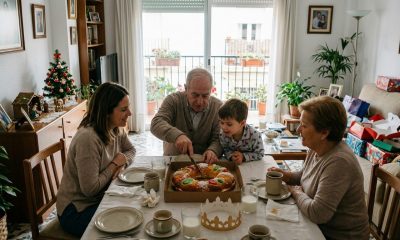
- Roscón de Reyes: a ring-shaped sweet bread, often filled with cream, eaten on 6 January. It hides a small figure and a dried bean. Find the figure and you are “crowned”; find the bean and you traditionally pay for next year’s roscón.
There is a second lottery, El Niño, traditionally drawn on 6 January, which gives people another chance after Christmas.
Practical tips for your first Spanish Christmas
- Book restaurants for Christmas Eve lunch, New Year’s Eve and the Christmas work dinner (cena de empresa) well in advance.
- Do your food shopping early. Supermarkets are packed on 23, 24, 30 and 31 December, and many close early on the evenings of the 24th and 31st.
- Visit a belén (nativity scene). Town halls, churches and associations set up large, detailed ones that are free to see.
- Check school holidays with your children’s school, as dates are set by each region.
- On the Costa del Sol, the Christmas lights on Calle Larios in Málaga draw huge crowds in the evening. Go on a weekday or early, and look at our events guide for the Costa del Sol for concerts and markets.
Want to meet people over the holidays? Our guide on building a social life in Spain has ideas, and the season is a good time to join in, as many clubs and associations hold Christmas events.
Useful links
- The Christmas lottery and its prizes (Loterías y Apuestas del Estado, Spanish)
- Official draw calendar for October–December 2026 (PDF)
- Tax on Christmas lottery prizes (Agencia Tributaria, Spanish)
- Public holidays in Spain 2026
- Understanding the tax system in Spain
FAQ: Christmas in Spain
When is the El Gordo draw in 2026?
On Tuesday 22 December 2026, at the Teatro Real in Madrid, according to the official draw calendar of Loterías y Apuestas del Estado.
How much is El Gordo worth per ticket?
In recent draws the first prize has been 400,000 € per 20 € décimo. After the 20% tax on the amount above 40,000 €, the winner receives 328,000 €.
Can foreigners play the Spanish Christmas lottery?
Yes. Anyone can buy a décimo from an official lottery shop or the official website. Prizes over 40,000 € are taxed in the same way, and non-residents may be able to claim treaty relief.
Is Christmas Eve a public holiday in Spain?
No. 24 and 31 December are normal working days, although many businesses close early. 25 December, 1 January and 6 January are national holidays.
When do Spanish children get their presents?
Traditionally on the morning of 6 January from the Three Kings, though many families now also give presents on 25 December.
Disclaimer: This article is general information only and is not tax or legal advice. Lottery rules, prizes and tax treatment can change – always check with Loterías y Apuestas del Estado and the Agencia Tributaria, and speak to a gestor or tax adviser about your own situation.