



























































Cultural
Christmas in Spain: El Gordo, Three Kings and other traditions
How Christmas works in Spain: the El Gordo lottery on 22 December, Nochebuena, the twelve grapes, the Three Kings on 6 January and the key holiday dates.







Updated: October 2026
Christmas in Spain lasts longer than in most countries. It starts with the big lottery draw in December and ends with the Three Kings on 6 January. This guide is for newcomers spending their first Spanish Christmas. It explains the El Gordo lottery and how its prizes are taxed, the key dates, and the food and customs you will meet along the way.
The Christmas calendar at a glance
| Date (2026–27) | What happens | Public holiday? |
|---|---|---|
| Tue 8 December | Immaculate Conception; Christmas season gets going | Yes, national |
| Tue 22 December | El Gordo Christmas lottery draw | No |
| Thu 24 December | Nochebuena (Christmas Eve), the main family dinner | No, but many shops close early |
| Fri 25 December | Navidad (Christmas Day) | Yes, national |
| Sat 26 December | Sant Esteve / Boxing Day | Only in Catalonia and the Balearic Islands |
| Mon 28 December | Día de los Santos Inocentes, Spain’s day for pranks | No |
| Thu 31 December | Nochevieja (New Year’s Eve) and the twelve grapes | No |
| Fri 1 January | New Year’s Day | Yes, national |
| Tue 5 January | Three Kings parades (cabalgatas) in the evening | No |
| Wed 6 January | Epiphany (Reyes): presents and roscón | Yes, national |
In Andalusia and several other regions, early December also brings a four-day weekend, because Constitution Day (Sunday 6 December) moves to Monday 7 December in 2026. See our full guide to public holidays in Spain in 2026 for your region.






El Gordo: the Christmas lottery
For many Spaniards, Christmas really begins with the Sorteo Extraordinario de Navidad, the Christmas lottery whose top prize is called El Gordo (“the fat one”). It has been held since 1812. According to the official 2026 draw calendar of Loterías y Apuestas del Estado, this year’s draw takes place on Tuesday 22 December 2026 at the Teatro Real in Madrid. Children from the San Ildefonso school sing out the numbers and prizes, and the broadcast plays in homes, bars and offices across the country all morning.
How tickets work
- Décimo: most people buy a décimo, a tenth of a full ticket, which costs 20 €. A full ticket (billete) costs 200 €.
- Where to buy: official lottery shops (administraciones de lotería), authorised points of sale and the official Loterías y Apuestas del Estado website.
- Participaciones: workplaces, bars, clubs and associations often sell small shares of a number they hold. These are common and part of the fun, but the share is only as reliable as the person who holds the décimo, so buy from people you know and keep the paper safe.
- Sharing: buying the same number as your colleagues or neighbours is a strong tradition. Nobody wants to be the one who missed out if the office number wins.
Prizes and tax
In recent draws, the first prize has paid 400,000 € per décimo (4 million per full ticket), the second prize 125,000 € and the third 50,000 € per décimo, according to the official prize programme. There are also thousands of smaller prizes, and if your number ends in the same digit as El Gordo, you get your 20 € back (the reintegro).
The Spanish Tax Agency explains that lottery prizes up to 40,000 € per décimo are tax-free. Above that, a special tax of 20% applies to the part over 40,000 €, and it is withheld before you are paid. For El Gordo, that means 72,000 € in tax on a 400,000 € décimo, leaving 328,000 €. If a décimo is shared, the tax-free amount is split between the winners in proportion to their shares, and you must be able to show who owns what. Non-residents may be able to claim relief under a tax treaty.
Be wary of emails, messages or calls saying you have won a Spanish lottery you never entered. Official prizes are claimed with the physical or online ticket, and nobody legitimate asks you to pay a fee to release winnings.





Christmas Eve, Christmas Day and New Year
Nochebuena on 24 December is the big family evening. Dinner is late and long, often with seafood, roast lamb or other regional dishes, followed by turrón (nougat), polvorones and mantecados, crumbly shortbread sweets that Andalusia is famous for. Some families go to midnight Mass, the Misa del Gallo. Christmas Day itself is usually a relaxed lunch with leftovers or more family.
On 28 December, the Día de los Santos Inocentes, newspapers, TV and friends play jokes, similar to April Fool’s Day, so take surprising news with a pinch of salt.
On Nochevieja, 31 December, Spaniards eat twelve grapes, one for each stroke of midnight, for good luck in the new year. The chimes from the clock at Puerta del Sol in Madrid are broadcast live on TV. Supermarkets sell small tins of peeled, seedless grapes to make it easier. After midnight, the party goes on late in bars and in town squares.
The Three Kings: the real present day
Traditionally, Spanish children receive their main presents not from Father Christmas but from the Reyes Magos, the Three Wise Men, on the morning of 6 January. Today many families do both, with some gifts on 25 December and more on 6 January.
- Letters: children write to their favourite king, Melchor, Gaspar or Baltasar, and post the letter in special mailboxes in shopping centres and town halls.
- Cabalgata de Reyes: on the evening of 5 January almost every town holds a parade with floats, music and sweets thrown to the crowd. Bring a bag for the sweets and arrive early for a good spot.
- Shoes by the door: children leave their shoes out at night, sometimes with water or food for the camels.
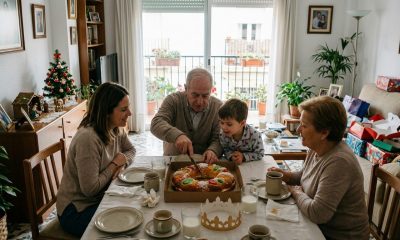
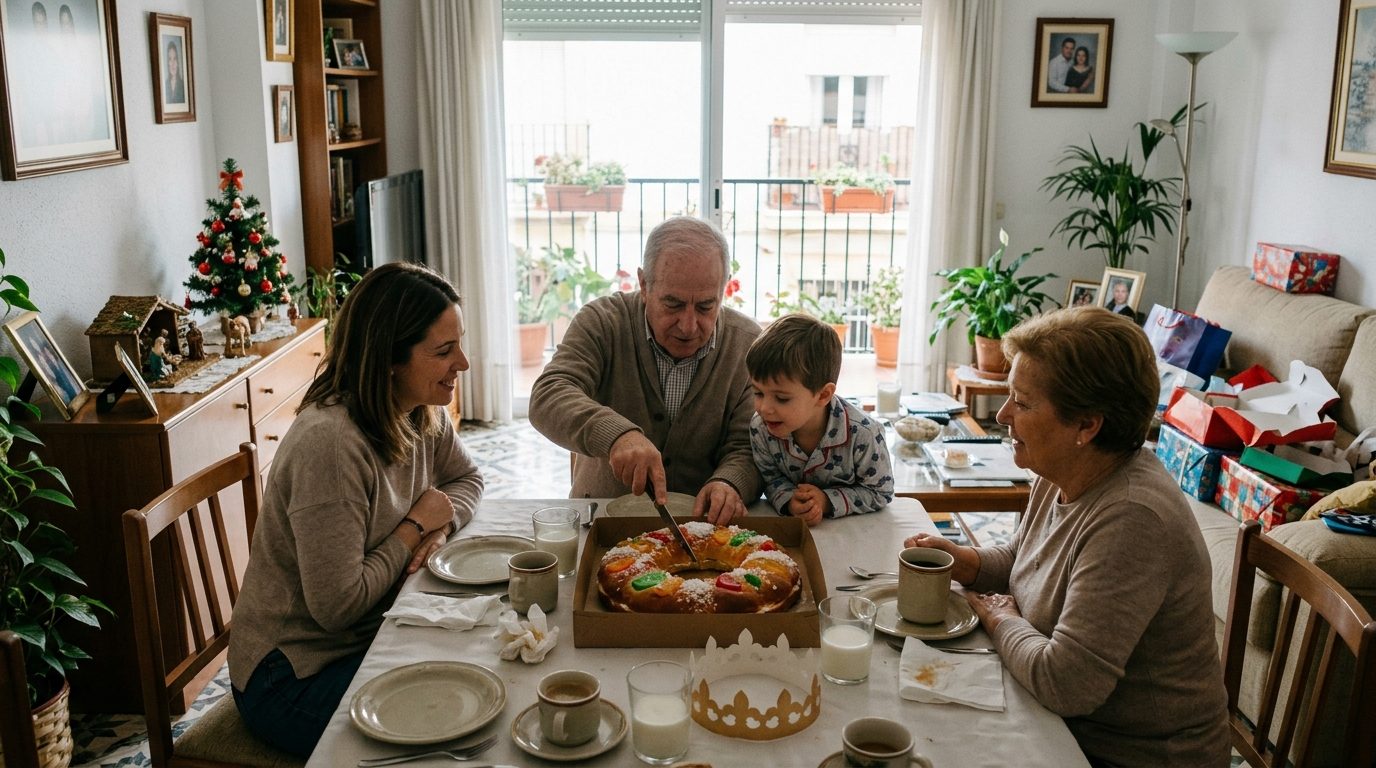
- Roscón de Reyes: a ring-shaped sweet bread, often filled with cream, eaten on 6 January. It hides a small figure and a dried bean. Find the figure and you are “crowned”; find the bean and you traditionally pay for next year’s roscón.
There is a second lottery, El Niño, traditionally drawn on 6 January, which gives people another chance after Christmas.
Practical tips for your first Spanish Christmas
- Book restaurants for Christmas Eve lunch, New Year’s Eve and the Christmas work dinner (cena de empresa) well in advance.
- Do your food shopping early. Supermarkets are packed on 23, 24, 30 and 31 December, and many close early on the evenings of the 24th and 31st.
- Visit a belén (nativity scene). Town halls, churches and associations set up large, detailed ones that are free to see.
- Check school holidays with your children’s school, as dates are set by each region.
- On the Costa del Sol, the Christmas lights on Calle Larios in Málaga draw huge crowds in the evening. Go on a weekday or early, and look at our events guide for the Costa del Sol for concerts and markets.
Want to meet people over the holidays? Our guide on building a social life in Spain has ideas, and the season is a good time to join in, as many clubs and associations hold Christmas events.
Useful links
- The Christmas lottery and its prizes (Loterías y Apuestas del Estado, Spanish)
- Official draw calendar for October–December 2026 (PDF)
- Tax on Christmas lottery prizes (Agencia Tributaria, Spanish)
- Public holidays in Spain 2026
- Understanding the tax system in Spain
FAQ: Christmas in Spain
When is the El Gordo draw in 2026?
On Tuesday 22 December 2026, at the Teatro Real in Madrid, according to the official draw calendar of Loterías y Apuestas del Estado.
How much is El Gordo worth per ticket?
In recent draws the first prize has been 400,000 € per 20 € décimo. After the 20% tax on the amount above 40,000 €, the winner receives 328,000 €.
Can foreigners play the Spanish Christmas lottery?
Yes. Anyone can buy a décimo from an official lottery shop or the official website. Prizes over 40,000 € are taxed in the same way, and non-residents may be able to claim treaty relief.
Is Christmas Eve a public holiday in Spain?
No. 24 and 31 December are normal working days, although many businesses close early. 25 December, 1 January and 6 January are national holidays.
When do Spanish children get their presents?
Traditionally on the morning of 6 January from the Three Kings, though many families now also give presents on 25 December.
Disclaimer: This article is general information only and is not tax or legal advice. Lottery rules, prizes and tax treatment can change – always check with Loterías y Apuestas del Estado and the Agencia Tributaria, and speak to a gestor or tax adviser about your own situation.
Cultural
Opening hours, siesta and mealtimes in Spain
When shops, banks and offices open in Spain, what is left of the siesta, typical mealtimes, Sunday trading rules and the August slowdown.

Updated: October 2026
Arriving at a shop at 3 pm to find the shutters down, or sitting in an empty restaurant at 8 pm, is a rite of passage for newcomers to Spain. This guide is for anyone settling in who wants to plan their day around the Spanish rhythm. It explains typical opening hours for shops, banks and offices, what is left of the siesta, when people eat, and how Sundays, summer and August change everything.
Why the Spanish day runs late
Geographically, most of Spain lies on the same longitude as the UK and Portugal, yet it uses Central European Time, the same clock as Berlin and Warsaw. Spain moved its clocks forward in 1940 and never moved them back. As a result, the sun rises and sets later by the clock than in neighbouring countries, and daily life follows: lunch at 2 pm in Spain happens at roughly the same “sun time” as lunch at 1 pm in London. Add hot afternoons in much of the country and a strong tradition of long family lunches, and you get the late schedule Spain is known for.
Typical mealtimes
| Meal | Usual time | What it looks like |
|---|---|---|
| Desayuno (breakfast) | 7:00–9:00 | Light: coffee, toast, maybe a pastry |
| Almuerzo or second breakfast | 10:30–12:00 | Coffee and a toasted roll or a small sandwich, often near work |
| Aperitivo | 12:30–14:00 | A drink and a tapa before lunch, especially at weekends |
| Comida (lunch) | 14:00–16:00 | The main meal of the day; many restaurants offer a set menú del día on weekdays |
| Merienda | 17:30–19:00 | Afternoon snack, especially for children after school |
| Cena (dinner) | 21:00–23:00 | Lighter than lunch, often later in summer and at weekends |
Spain’s official tourism site gives similar ranges in its guide to typical opening times, with lunch roughly from 13:00 to 16:00 and dinner from about 20:00, later in big cities and in summer. Note that “almuerzo” means lunch in some regions and a mid-morning snack in others, so ask if an invitation is unclear.
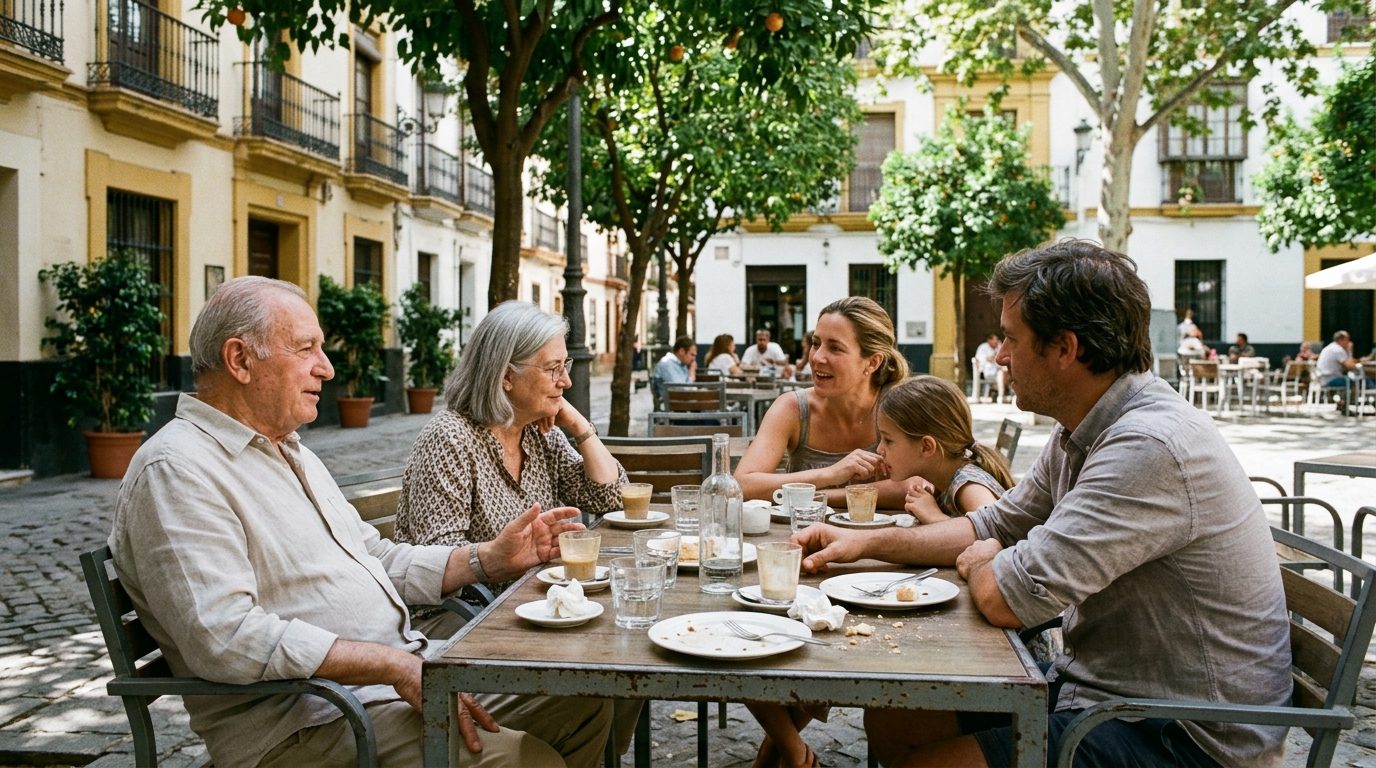
In practice, many restaurant kitchens close between about 16:00 and 20:00. Bars and cafés stay open and serve tapas or sandwiches, but a full hot meal at 18:00 can be hard to find outside tourist areas. After lunch, people linger at the table for the sobremesa, the unhurried conversation over coffee, and the bill only comes when you ask for it.
The siesta: myth and reality
Very few working Spaniards take an afternoon nap on a normal weekday, especially in cities with long commutes. What does survive is the split day (jornada partida): many small shops, family businesses and some offices close for two to three hours in the middle of the day and reopen in the evening. Some people use the break to eat at home, and yes, some nap, particularly in summer and at weekends.
The afternoon closure is more common in small towns, inland areas and the south, and in July and August, when the hottest hours make shopping unpleasant. In big cities and shopping centres, continuous opening is now the norm.
Opening hours by type of place
Hours vary by town and business, but these patterns hold in most of Spain:
- Small shops: often around 10:00–14:00 and 17:00–20:30 from Monday to Friday, with Saturday mornings only. Many close on Saturday afternoon.
- Supermarkets and chain stores: usually open all day, from about 9:00 to 21:00 or 21:30, Monday to Saturday.
- Shopping centres: shops typically open from 10:00 to 22:00, with restaurants and cinemas open later.
- Banks: branch counters are mostly open on weekday mornings only, and many services now need an appointment. Plan bank visits early in the day, or use online banking. See our guide to opening a bank account in Spain.
- Public offices: town halls, tax offices and immigration offices mainly attend the public in the morning, usually by appointment (cita previa). Afternoon opening is the exception.
- Pharmacies: standard pharmacies follow shop-style hours, but every area has a rota of on-duty pharmacies (farmacias de guardia) open at night, at weekends and on holidays. The rota is posted on every pharmacy door.
- Health centres: public health centres usually run morning and afternoon shifts for appointments, with urgent care available outside those hours. Our healthcare guide explains how to register.
- Museums: many close one day a week, often Monday, and some offer free entry at set times.
Sundays and public holidays
Sunday is still the main day off. Shop opening hours are governed by the national law on commercial opening hours, Ley 1/2004, which leaves most decisions to the regions. In short:
- Each region sets how many Sundays and public holidays larger shops may open each year, with a national baseline of 16 days that regions can lower to no fewer than 10. Most choose dates around Christmas, the sales and the summer season.
- Some regions are much more liberal: the Comunidad de Madrid, for example, lets shops open freely on Sundays.
- Small shops under 300 m² that do not belong to large groups, bakeries, petrol stations, convenience stores and shops in officially declared tourist zones may set their own hours. That is why many resort towns on the coast have plenty of shops open on Sundays.
On public holidays, expect most shops and all public offices to close. Spain has national, regional and local holidays, so the calendar varies from town to town. Our guide to Spanish festivals covers the main celebrations.
Summer hours and the August slowdown
- Jornada intensiva: many offices, public services and some businesses switch to a continuous morning schedule in summer, typically finishing around 14:00 or 15:00. Call in the morning if you need something done.
- August: many family-run shops, workshops, bars in inland cities and professional offices close for two to four weeks. Paperwork and repairs move slowly. On the coast it is the opposite: everything stays open and busy.
- Later evenings: in summer, shops in tourist areas and terraces stay open late, and concerts or shows often start at 22:00 or later. Our heatwave guide explains why the middle of the day is best avoided outdoors.
Tips for adjusting your routine
- Do errands, bank visits and official paperwork in the morning.
- Check Google Maps or the shop’s website for hours, but treat them as a guide: small businesses often change hours by season.
- Eat a mid-morning snack and a later lunch; it makes a 21:00 dinner feel natural.
- Do the weekly shop on Saturday or check your region’s Sunday opening calendar.
- Keep the August slowdown in mind when planning a move, a renovation or a contract.
For other everyday surprises, from greetings to noise, read our guide to cultural differences in Spain.
Useful links
- Spain.info: typical opening times and public holidays
- Spain.info: handy tips for your first time in Spain
- BOE: Ley 1/2004 on commercial opening hours (Spanish)
- Unexpected cultural differences in Spain
- Spanish culture: what newcomers should know
FAQ: opening hours and mealtimes in Spain
Do shops in Spain really close in the afternoon?
Many small shops do, usually from about 14:00 to 17:00. Supermarkets, chain stores and shopping centres generally stay open all day.
What time do Spaniards eat dinner?
Usually between 21:00 and 23:00, and later in summer. Restaurants that serve dinner from 19:30 or 20:00 are often aimed at tourists.
Are shops open on Sundays?
It depends on the region and the town. Small shops and shops in tourist zones may open, while larger stores only open on the Sundays and holidays authorised by the regional government each year.
How do I find a pharmacy open at night?
Look for the list of farmacias de guardia posted on any pharmacy door, or search online for “farmacia de guardia” plus your town name.
Disclaimer: This article is general information only. Opening hours vary by region, town, season and business and can change – always check with the shop, office or official source before you go.
Cultural
Concerts, festivals and events on the Costa del Sol: where to find them and buy tickets
The main concert venues, yearly highlights, free events and safe ticket channels on the Costa del Sol – from Starlite to the Feria de Málaga.
Updated: October 2026
The Costa del Sol has a packed events calendar all year round, from big-name summer concerts by the sea to Holy Week processions and free fairs that fill the streets. This guide is for newcomers who want to know where the main venues are, which events come round every year, how to find free things to do and where to buy tickets safely.
The main venues
Starlite, Marbella
Starlite is one of the best-known summer festivals in Spain. It is held in an open-air auditorium built into a former quarry, the Cantera de Nagüeles, in the hills above Marbella. The season runs from June to August with international and Spanish artists, plus restaurants and bars on site that make it a full night out. According to its official website, tickets are sold through its official ticketing partner and several authorised sellers. Prices range from standard seats to premium boxes, so compare before you buy.
Marenostrum, Fuengirola
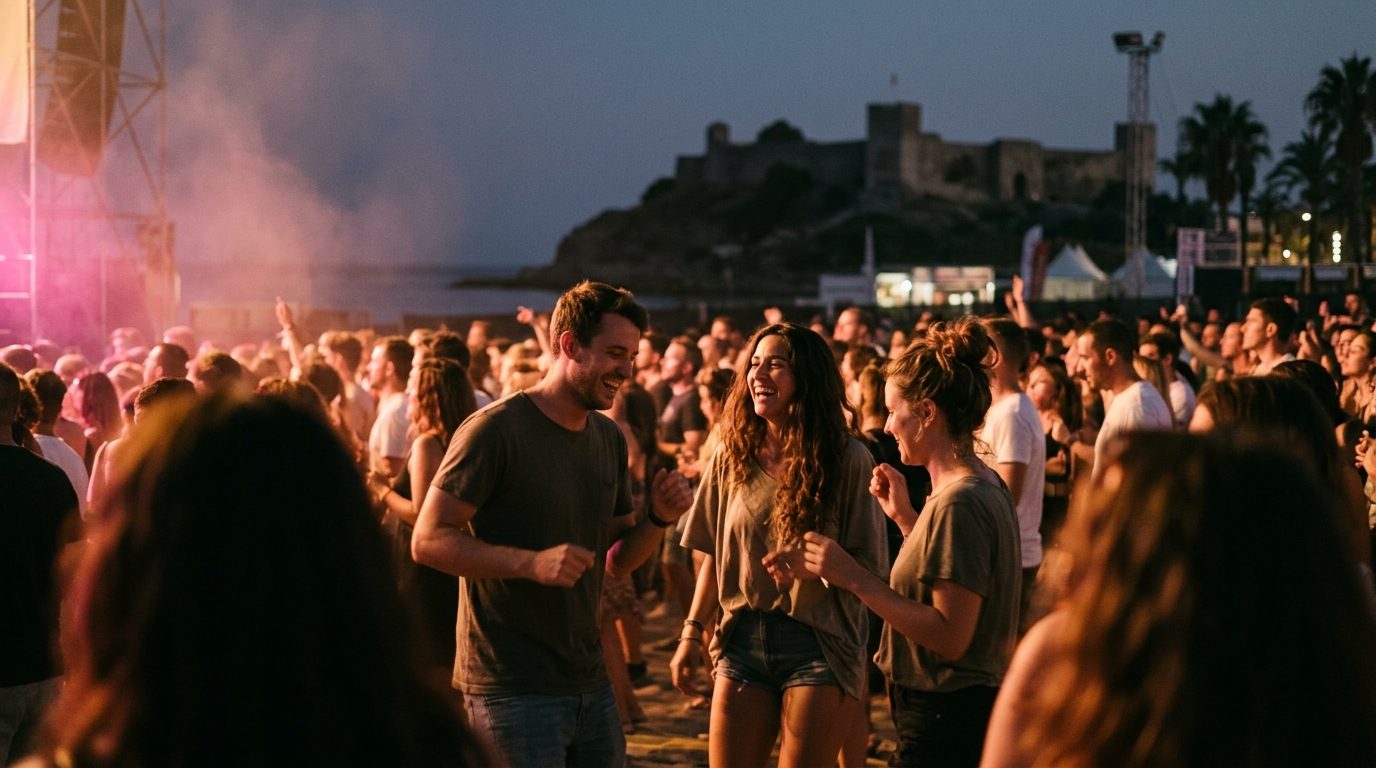
Marenostrum Fuengirola is an open-air concert venue beside Sohail Castle, right by the sea. Its season usually runs from spring to late summer and mixes pop, rock, flamenco and smaller festivals. The 2027 line-up is already taking shape: at the time of writing, the official site lists Take That on 11 July 2027, David Bisbal on 22 July 2027 and Bryan Adams on 22 August 2027, among others. Line-ups can change, so always check the venue’s own page before booking travel.
Teatro Cervantes, Málaga
Málaga’s main municipal theatre, in the historic centre, hosts theatre, opera, dance, classical and contemporary music. It is also the main venue of the Málaga Spanish Film Festival each spring and of a long-running theatre festival in winter. Tickets are sold through the theatre’s own website and at its box office.
Palacio de Deportes José María Martín Carpena, Málaga
Home to Málaga’s basketball team, this large indoor arena in the west of the city also hosts big concerts, shows and family events, especially in the cooler months when open-air venues are closed.
Cortijo de Torres, Málaga
Cortijo de Torres is the city’s fairground, south of the centre. It is best known as the home of the Feria de Málaga at night, with casetas, rides and a municipal auditorium where free concerts are held during the fair week. The site is also used for other large open-air events through the year.
Seasonal highlights through the year
| When | Event | What to expect |
|---|---|---|
| March or April | Semana Santa (Holy Week) | Processions through Málaga and every town; in 2027 Holy Week runs from Palm Sunday 21 March to Easter Sunday 28 March |
| Spring | Málaga Film Festival | Premieres and red carpets around Teatro Cervantes |
| Late April or early May | Feria Internacional de los Pueblos, Fuengirola | Food, music and dance from dozens of countries at the town’s fairground |
| Night of 23 June | Noche de San Juan | Beach bonfires, the burning of figures (júas) at midnight and a traditional dip in the sea |
| June to September | Summer concert seasons | Starlite, Marenostrum and many town-hall summer programmes |
| Mid-August | Feria de Málaga | A week-long fair starting around 15 August, with a day fair in the centre and a night fair at Cortijo de Torres |
| Late November to early January | Christmas lights on Calle Larios | Free light and music shows several times each evening |
The Feria de Málaga opens with fireworks over the beach on the night before 15 August. During the day, Calle Larios and the old town fill with flamenco, music and drinks; at night the party moves to Cortijo de Torres. Exact dates for 2027 had not been announced at the time of writing.
The Christmas lights on Calle Larios are among the most visited in Spain. In 2025 they were switched on on 28 November, with free shows at 18:30, 20:30 and 22:00. The 2026 switch-on date is usually confirmed in November, and weekends get very busy, so go early or on a weekday.
For more on traditional celebrations, read our guide to Spanish festivals and how expats can join in and our article on the International Feria de los Pueblos in Fuengirola.
Free events and how to find them
Many of the best events on the coast cost nothing. Town halls in Málaga, Fuengirola, Marbella, Benalmádena, Torremolinos and Mijas all run cultural programmes with free concerts, outdoor cinema, flamenco and children’s activities, especially in summer and around local fiestas.
- City hall agendas: check the culture or events section of your town hall’s website and its social media pages.
- Tourism offices: Málaga’s official tourism site, Visita Málaga, publishes an events agenda, and local tourist offices hand out monthly programmes.
- Beach and plaza concerts: many towns hold free summer concerts on the seafront or in the main square, often linked to their patron saint’s fiesta.
- Ferias and processions: attending local ferias, Semana Santa processions and the San Juan celebrations is free; you only pay for food and drinks.
- Museums: several museums in Málaga offer free entry at certain times, often on Sunday afternoons – check each museum’s own page.
Where to buy tickets safely
For paid events, start with the venue or festival’s own website. It will either sell tickets directly or link to its official ticketing partner. For larger concerts, tickets are also sold through major platforms such as Ticketmaster, El Corte Inglés, Entradas.com and Vivaticket, depending on the event.
- Find the event on the official venue or artist website.
- Follow the link to the official or authorised seller listed there.
- Sign up for newsletters if you want presale access – popular summer concerts can sell out within hours.
- Check whether tickets are named or digital, and what ID you need at the door.
- Keep your confirmation email until after the event.
Be careful with resale websites and social media sellers. Prices can be far above face value and fake tickets do circulate. If an event is sold out, check the official seller for returned tickets first.
Practical tips for event nights
- Getting there: the Cercanías train line between Málaga and Fuengirola is the easiest way to reach Marenostrum and many coastal events. For Starlite, plan taxis or shuttles in advance.
- Timing: concerts in Spain often start later than in northern Europe – 21:30 or 22:00 is common in summer.
- Heat: bring water and a light layer; summer nights are warm, but hill venues can cool down after midnight.
- Accommodation: prices rise sharply during Feria week and Semana Santa, so book early if friends are visiting.
Events are also one of the easiest ways to meet people. See our tips on building a social life in Spain.
Useful links
- Starlite Occident – official website
- Marenostrum Fuengirola – official website
- Best Spanish festivals and how expats can join in
- International Feria de los Pueblos in Fuengirola
- How to build a social life in Spain
FAQ: events on the Costa del Sol
When is the Feria de Málaga?
It takes place every August, starting around 15 August and lasting about a week. Check the city’s official announcements for the exact dates each year.
Are the Calle Larios Christmas lights free?
Yes. The lights and the music and light shows on Calle Larios are free to watch. Arrive early on weekends to get a good spot.
Is it safe to buy concert tickets on resale sites?
It is risky. Prices are often inflated and fake tickets exist. Buy from the venue’s official website or the authorised sellers it lists.
What happens on the Noche de San Juan?
On the night of 23 June, people gather on the beaches for bonfires, music and picnics. At midnight, figures called júas are burned and many people take a dip in the sea. Some towns set rules for bonfires, so check local notices.
Disclaimer: This article is general information only. Line-ups, dates, prices and ticket sellers can change – always check the official venue or organiser before you buy or travel.

Updated: October 2026
Spain is world-famous for its vibrant festivals – from wild street parties to solemn processions and everything in between. For expats, joining in these celebrations is one of the best ways to experience Spanish culture, meet locals, and make lifelong memories. Here’s your guide to the most popular Spanish festivals in 2026, plus tips on how foreigners can join the fun.
Why festivals matter in Spain
Festivals (fiestas) are at the heart of Spanish life. Each town, city, and region has its own unique celebrations, often rooted in history, religion, or local traditions. These events bring communities together, break down barriers, and create unforgettable experiences for everyone – locals and newcomers alike.
Top Spanish festivals in 2026
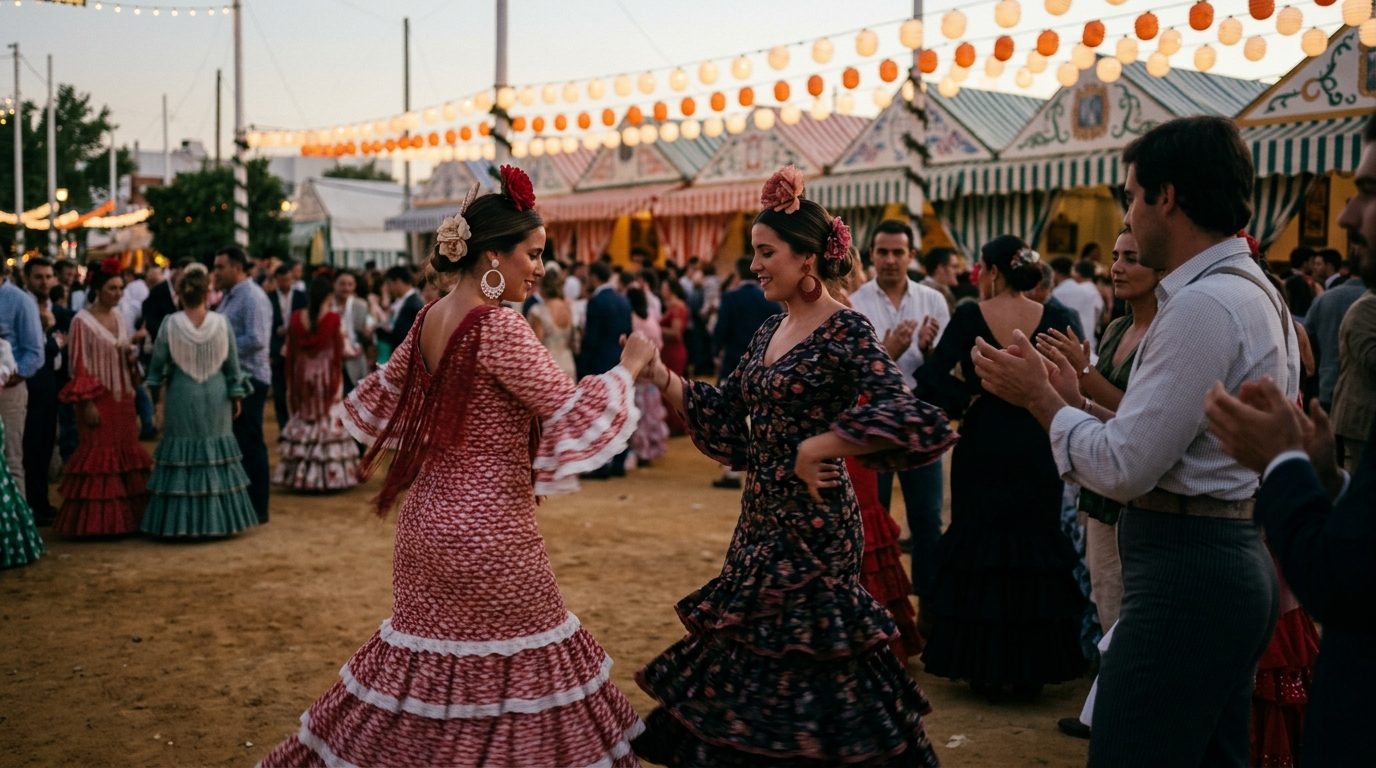
- La Feria de Abril (Seville): A week of flamenco, horses, and casetas. Join in by renting a traditional costume and dancing until dawn.
- San Fermín (Pamplona): Famous for the running of the bulls. Expats can watch safely from balconies or join the parades and concerts.
- La Tomatina (Buñol): The world’s biggest tomato fight! Tickets are required – book early – they sell out fast.
- Las Fallas (Valencia): Giant sculptures, fireworks, and street parties. Volunteer to help build a falla or join a local group.
- Semana Santa (nationwide): Dramatic Easter processions in cities like Málaga, Seville, and Granada. Respectful participation is welcome.
- Feria de los Países (Fuengirola): Celebrate global cultures with food, music, and dance – perfect for expats!
- Fiesta de San Juan (coastal towns): Bonfires and beach parties on the shortest night of the year. Bring friends and jump the flames for luck.
How expats can join in
- Check your local town hall or tourist office for festival dates and activities.
- Look for expat groups or language exchanges organizing group visits.
- Volunteer for setup or events – many festivals welcome extra hands.
- Respect local customs and dress codes, especially for religious events.
- Bring cash, comfortable shoes, and a sense of adventure!
Useful links
FAQ
Can foreigners participate in local festivals?
Yes! Most festivals are open to everyone, and locals love to welcome newcomers.
Do I need to buy tickets for festivals?
Some events are free, but big ones like La Tomatina require advance tickets.
What should I wear to a Spanish festival?
Dress comfortably, but check if traditional clothing is encouraged or required.
Are festivals family-friendly?
Most are, but some (like San Fermín) can be very crowded or wild.
How can I find out about festivals in my area?
Check your town hall’s website, local Facebook groups, or Spain.info.
Can I volunteer at festivals?
Yes, many festivals welcome volunteers for setup, parades, or food stalls.
Is it safe to join big festivals?
Generally yes, but always follow local advice and keep an eye on your belongings.
Do I need to speak Spanish to enjoy festivals?
Not necessarily, but learning a few phrases helps you join in.
Are there festivals all year round?
Yes, there’s something happening every month somewhere in Spain.
Where can I see photos and videos from festivals?
Search YouTube, Instagram, or Spain.info for galleries and highlights.
Disclaimer: This article is for informational purposes only. Always check official sources for dates and details before attending.






Christmas in Spain: El Gordo, Three Kings and other traditions

The ITV car inspection in Spain: what to expect

Opening hours, siesta and mealtimes in Spain

Andalucía guide: cities, culture and life in southern Spain

Understanding the tax system in Spain

Marbella guide: areas, beaches and everyday life






-
 Tourist Info2 years ago
Andalucía guide: cities, culture and life in southern Spain
-
 Banking & Finances2 years ago
Understanding the tax system in Spain
-
 Tourist Info2 years ago
Marbella guide: areas, beaches and everyday life
-

 Cost of Living2 years ago
Living on a small salary in Spain in 2026
-

 Legal Requirements & Documentation2 years ago
How to get your Spanish NIE number in 2026 – step by step
-

 Legal Requirements & Documentation2 years ago
Work visa and work permit in Spain 2026 – which one you need and how to apply
-

 Cost of Living2 years ago
Family living costs in Spain in 2026: monthly budget and moving-in money
-
 Tourist Info2 years ago
Benalmádena explained: Pueblo, Arroyo de la Miel and the coast