



































































Spanish System
Moving to Spain: checklist for your first 30 days
A week-by-week checklist for your first month in Spain: phone, bank, NIE, padrón, residency, Social Security, healthcare and the practical bits people forget.









Updated: October 2026
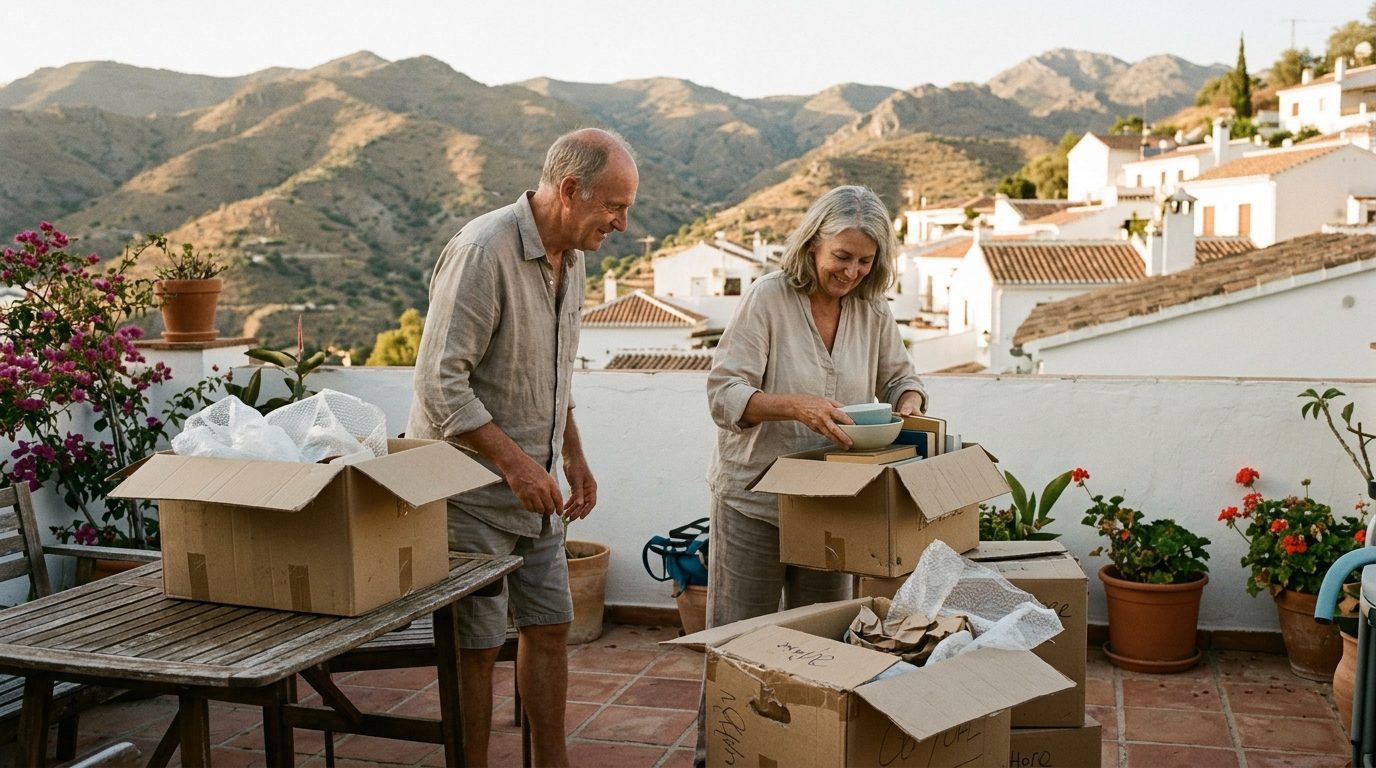
The first month in Spain is when paperwork piles up fastest. Many steps depend on each other – the bank wants your NIE, the padrón wants a rental contract, healthcare wants the padrón – so doing things in the right order saves weeks. This checklist is for anyone who has just arrived to live in Spain, whether you are an EU citizen, a visa holder or a digital nomad. It is organised week by week, with links to our detailed guides for each step.
Before you land: documents to have ready
Spanish offices love paper. Arrive with originals and copies of everything below, kept together in one folder:







- Passport (and national ID card for EU citizens), valid for the whole stay.
- Visa and approval letter if you are a non-EU citizen.
- Birth and marriage certificates, with an apostille and official translation where needed – especially if family members will join you.
- Proof of income or employment and private health insurance documents, if your residency route requires them.
- Passport photos – several. Many forms still ask for them.
- Your driving licence and any vehicle documents if you are bringing a car.
Days 1–7: get connected and find your feet
- Get a Spanish mobile number. A prepaid SIM is enough to start and you will need a Spanish number for banks, appointments and verification codes. Compare options in our guide to internet and mobile providers.
- Save the emergency number 112. It works across Spain for police, ambulance and fire, with operators who often speak English.
- Book your NIE or residency appointment. Appointments (cita previa) at the foreigners’ office or police station can be booked weeks ahead in busy areas, so do this first, even before you have everything else. See how to get your NIE.
- Secure a place to live. A signed rental contract is the key to the padrón, utilities and often the bank. Read our guide to renting as a foreigner before you pay a deposit.
- Keep using your home bank card for now, but check its foreign transaction fees.
Days 7–14: address, bank and utilities
- Register on the padrón at your town hall. The certificado de empadronamiento is asked for by healthcare, schools, residency and many other procedures. Our padrón guide explains the documents.
- Open a Spanish bank account. You will need it for rent, utilities, salary and direct debits, and it unlocks Bizum for quick payments. See how to open a bank account.
- Put utilities in your name – electricity, water, gas and internet – or confirm with your landlord which are included. Our utility bills guide covers contracts and typical pitfalls.
- Consider home contents insurance. Some landlords require it. See home insurance in Spain.
Days 14–30: residency, Social Security and healthcare
Residency documents
- Non-EU visa holders: apply for your TIE (foreigner identity card) – the fingerprinting appointment should be requested within one month of entering Spain.
- EU, EEA and Swiss citizens: if you are staying more than three months, register as an EU resident and get the registration certificate (the green certificate) that shows your NIE.
Requirements depend on your route, so read our residency guide and the 2026 immigration rules before your appointment.
Social Security number
If you will work as an employee or autónomo, request your Social Security number (NUSS). It can be done online through Import@ss, even without a digital certificate, by uploading your ID and a selfie. Employers often handle it, but having the number ready speeds up your first payroll.
Healthcare
Once you are registered with Social Security or have the right to public healthcare by another route, apply for your health card and register with a local health centre. Until then, keep your travel or private insurance active. Our guide to healthcare for foreign residents covers the options.
Digital identity
As soon as you have your NIE document, get the FNMT digital certificate and register in Cl@ve. They let you deal with tax, Social Security, traffic and town hall procedures online instead of queuing – and you will need them for your first tax return.







Quick checklist table
| Task | When | What you usually need |
|---|---|---|
| Spanish SIM card | Week 1 | Passport |
| NIE / residency appointment booked | Week 1 | Passport, visa if any |
| Rental contract signed | Week 1–2 | Passport or NIE, proof of income, deposit |
| Padrón registration | Week 2 | ID, rental contract or deeds |
| Bank account | Week 2 | ID, NIE (or NIE application), address |
| Utilities and internet | Week 2 | ID, bank account, contract |
| TIE or EU registration certificate | Weeks 2–4 | Depends on residency route |
| Social Security number | Weeks 2–4 | NIE or passport, form TA.1 |
| Health card | After Social Security / residency | Padrón, ID, Social Security details |
| Digital certificate and Cl@ve | After NIE document | NIE document, passport |
Things people often forget
- Tax residency: spending more than 183 days a year in Spain usually makes you tax resident, with worldwide income to declare. Read the Spanish tax system explained early and consider a gestor.
- Driving licence: rules on using or exchanging a foreign licence depend on where it was issued. Check our driving licence guide.
- Car insurance: if you bring or buy a car, it must be insured from day one – see car insurance for expats.
- Your consulate: many countries let citizens abroad register with their embassy or consulate, which helps in emergencies and with elections.
- Schools: if you have children, check enrolment dates with your town hall or regional education department straight away – places fill up.
- Your social life: paperwork can be draining. Join a club, class or language exchange early – our guide to building a social life in Spain has ideas.
Useful links
- administracion.gob.es – registering in Cl@ve
- FNMT – digital certificate identity check
- Import@ss – request your Social Security number (Spanish)
- Cost of living in Spain
- Family living costs and moving-in money
FAQ: your first month in Spain
What should I do first when I move to Spain?
Get a Spanish phone number and book your NIE or residency appointment straight away, because appointment waiting times are often the slowest part of the whole process.
Can I open a bank account before I have an NIE?
Some banks open non-resident accounts with just a passport, but terms and fees are often worse. Many people open one first and switch to a resident account once they have their NIE document.
Do I need the padrón if I am renting short term?
If you live in Spain, you should register at the address where you actually live. Short-term contracts can be accepted, but rules vary by town hall, so check locally.
Is everything really doable in 30 days?
Not always. Appointment availability varies a lot by city, so some steps may spill into your second or third month. The important thing is to start them in the right order.
Disclaimer: This article is general information only and is not legal or tax advice. Requirements depend on your nationality and residency route and can change – always check with the official source, and consider a gestor or immigration lawyer for your specific case.

Spanish System
Buying a car in Spain in 2026: new, used and the paperwork
New or second-hand, dealer or private seller: what to check, which taxes you pay and how to transfer a car into your name in Spain.

Updated: October 2026
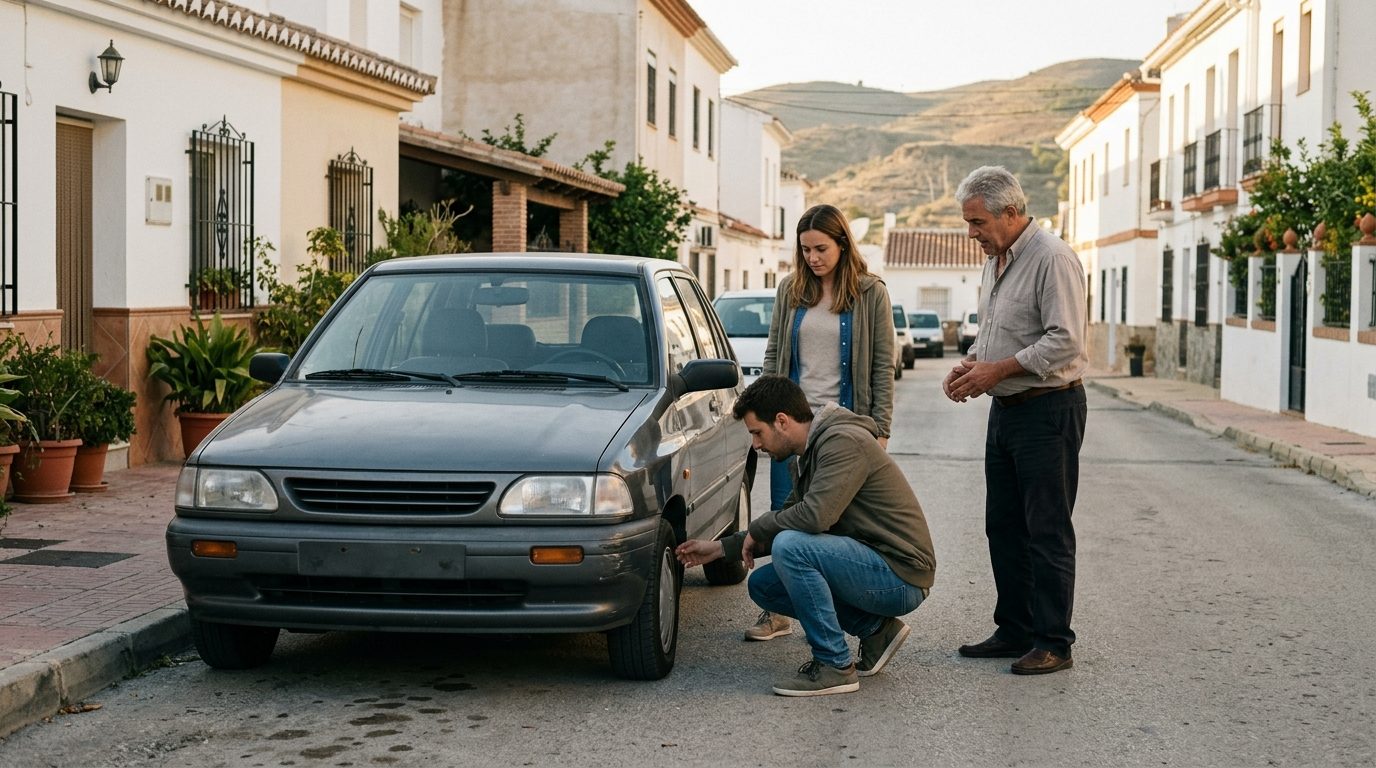
Sooner or later many newcomers in Spain decide to buy a car, especially outside the big cities. This guide explains what you need before you start, how buying new differs from buying used, which checks protect you from expensive surprises, and how the transfer of ownership works with Tráfico (the DGT).
What you need before you buy
- NIE or residence card: the DGT registers vehicles in the name of a person with a Spanish identification number. In person, a passport plus NIE is accepted.
- A Spanish address: the vehicle is registered to an address, and your identity document or supporting papers must show it. Registering on the padrón makes this, and the yearly road tax, much simpler.
- A valid driving licence: check whether you need to exchange your foreign licence in our driving licence guide.
- Insurance ready to start: a car cannot be driven on public roads without at least third-party insurance. See our guide to car insurance for expats.
- Digital access (optional but useful): a digital certificate or Cl@ve lets you do most DGT and tax steps online instead of booking appointments.
Buying a new car
Buying new from a dealer (concesionario) is the simplest route for paperwork. The dealer registers the car, gets the plates and the registration certificate (permiso de circulación) and the technical card (ficha técnica), and the price normally includes 21% VAT and the registration tax.
The registration tax (impuesto de matriculación) depends on the car’s official CO2 emissions. Cars with low emissions, up to 120 g/km, pay no registration tax, and the rate rises in bands for more polluting cars. Always ask for the full on-the-road price (precio final) including registration tax, transport and pre-delivery costs, because advertised prices often depend on financing or trade-in discounts.
- Guarantee: new goods sold to consumers in Spain carry a three-year legal guarantee, on top of any manufacturer warranty.
- Financing: dealer finance is common, but lenders usually ask for a Spanish bank account, payslips or tax returns. Newcomers without Spanish income history may need a larger deposit. An account with a Spanish bank helps.
- Electric and plug-in cars: government purchase incentives have changed several times. Ask the dealer which national or regional scheme is open when you buy, and how the payment works.
Buying a used car: dealer or private seller
Second-hand cars hold their value well in Spain, so prices can surprise people from other countries. You have two main options.
From a dealer
A professional seller must give consumers a legal guarantee on used cars, which can be shorter than for new goods but not less than one year. The dealer usually handles the transfer and includes it in the price, and the sale is invoiced with VAT, so you normally do not pay the transfer tax described below. Ask what is included: guarantee length, the transfer fee, a fresh ITV and a service.
From a private seller
Private sales are often cheaper, but you get no commercial guarantee, only limited protection against hidden defects. You also handle the paperwork and pay the transfer tax yourself. The checks in the next section matter most here.
Checks before you sign
The DGT’s own advice for buyers of used cars is worth following step by step.
- Order a DGT vehicle report (informe de vehículo). The full report shows ITV history and results, recorded mileage readings, number of previous owners, whether the car is insured, and any charges such as unpaid finance (reserva de dominio), seizure (embargo) or leasing. It costs a small fee and can be ordered online with the number plate.
- Check the ITV. The inspection must be valid. A car with an expired ITV may not be driven and has to be taken to the station on a tow truck. Read our guide to the ITV inspection.
- Confirm taxes and fines are paid. The DGT will not transfer a car with unpaid fines or unpaid municipal road tax (IVTM) from previous years.
- Inspect and test drive. Look at tyres (at least 1.6 mm tread), oil, bodywork, lights, brakes and steering. If you are not confident, pay a garage to inspect the car before you sign.
- Need new tyres? If the tread is low, or you want winter tyres for trips to the mountains, you can compare prices and order online from Neumaticos (ad) and have them fitted at a local garage.
- Match the documents to the car. The chassis number (bastidor) on the car must match the permiso de circulación and ficha técnica, and the seller must be the registered owner.
The paperwork: contract, tax and transfer
1. The sales contract
The contract (contrato de compraventa) must include both parties’ names and DNI/NIE numbers, the make, model and number plate, the price, and the date and time of signing. Both buyer and seller sign every page. Pay by bank transfer so there is a record.
2. The transfer tax (ITP)
In a private sale the buyer pays the Impuesto de Transmisiones Patrimoniales to the region where they are tax resident, using form 620 or 621. In Andalucía the general rate for used cars is 4%, with a higher rate for powerful cars measured in fiscal horsepower. The tax is calculated on the higher of the price you paid and the official value in the Hacienda price tables, which is reduced for the car’s age. In Andalucía the deadline is two months from the contract date, and you file with the Agencia Tributaria de Andalucía, usually online. Other regions have their own rates and deadlines.
3. The change of ownership at the DGT
The buyer must complete the transfer of ownership within 30 days of signing. The standard DGT fee in 2026 is €55.70 (lower for mopeds). You need the signed contract, proof that the ITP has been paid, your identity document showing your address, and the fee. You can do it online with a digital certificate or Cl@ve, or in person at a Tráfico office with an appointment.
Sellers should file a notificación de venta as soon as the sale is signed. It takes effect from the day it is filed and moves responsibility for fines to the buyer. If you are selling a car later, do this straight away.
| Cost | Who pays | Notes |
|---|---|---|
| DGT transfer fee | Buyer | €55.70 for cars in 2026 |
| ITP transfer tax | Buyer (private sales) | 4% in Andalucía on the higher of price or table value; varies by region |
| DGT vehicle report | Buyer, before buying | Small fee, ordered online |
| Insurance | Buyer | Must start before you drive |
| Road tax (IVTM) | Owner on 1 January | Paid yearly to the town hall |
Many buyers use a gestoría for the tax and DGT steps. It costs a fee, but they handle the forms in Spanish and know local deadlines. If you are bringing a car from abroad instead, read our guide to registering a foreign car in Spain.
Useful links
- DGT: buying a second-hand vehicle
- DGT: transfer of ownership
- DGT: seller’s sale notification
- DGT: how to read a vehicle report
- Car insurance in Spain for expats
- Registering a foreign car in Spain
FAQ: buying a car in Spain
Can I buy a car in Spain without being a resident?
You need an NIE and an address in Spain for the registration. Non-residents with an NIE can buy, but insurance and financing are usually easier once you are resident.
How long do I have to put the car in my name?
The buyer must complete the DGT transfer within 30 days of signing the contract. The transfer tax deadline in Andalucía is two months, but you need proof of payment for the DGT step, so pay it first.
Can I declare a lower price to pay less tax?
It does not help. The tax is based on the higher of the price and the official table value, and declaring less than the table value can trigger a check and extra payment.
What if the car still has finance on it?
The seller must get a cancellation letter from the lender and remove the reserva de dominio from the register before the transfer. Do not pay in full until this is done.
Disclaimer: This article is general information only and is not legal or tax advice. Fees, tax rates and procedures can change and differ between regions – check with the DGT, your regional tax office or a gestor or lawyer before you buy.
Spanish System
Retiring in Spain: pensions, healthcare and residency
Retiring in Spain? How your pension is paid and taxed, how to get healthcare with an S1 or the convenio especial, and what to plan for later.


Updated: October 2026
Spain is one of Europe’s favourite places to retire, and it is easy to see why: mild winters, good healthcare and a social life that does not stop at 65. But retiring here is more than buying a flat by the sea. This guide covers what changes for you as a retiree – how your pension is paid and taxed, how you get healthcare, and what to plan for in later life.
First: your right to live in Spain
How you get residency depends on your nationality:
- EU, EEA and Swiss citizens: register as residents at the police within three months. As a pensioner you show that you have enough income and health cover (often an S1 form). See our residency guide.
- Everyone else, including UK citizens arriving now: most retirees use the non-lucrative visa, which requires proof of a steady income and private health insurance. Our separate guide explains the income limits and the application step by step.
Whatever your route, register on the padrón at your town hall. You need it for healthcare, tax and almost every local service.
Getting your pension paid in Spain
Most foreign state and private pensions can be paid to you in Spain, either into a Spanish bank account or into an account at home. A few practical points make a big difference:
- Annual increases: the UK State Pension is only increased each year if you live in certain countries. The European Economic Area is one of them, so British pensioners in Spain keep their yearly increases.
- Life certificates: pension providers regularly send a “proof of life” form. Answer it on time, or your payments can be stopped.
- Keep your details updated: tell every pension provider when you change address or bank account.
- Currency: if your pension is paid in pounds, dollars or another currency, exchange rates affect your budget. Compare bank transfers with specialist currency services. Our bank account guide explains how to open a Spanish account.
If you have worked in more than one EU country, each country pays its own part of your pension. Periods worked in Spain count towards a Spanish pension, which you claim from the Spanish social security office (INSS).
Healthcare as a retiree
There are three main ways to get healthcare in Spain once you retire here.
The S1 form
If you receive a state pension from an EU country, or the UK State Pension, your home country may pay for your Spanish public healthcare through an S1 form. For UK pensioners the process is:
- Request the S1 from the NHS Overseas Healthcare Services.
- Register the S1 with the INSS, at your local office or online.
- Receive your Spanish social security number by post.
- Take it to your local health centre to register and get your health card.
Pensioners from EU countries follow a similar route through their own pension or health authority. With an S1 you use the public system much like a Spanish pensioner, including subsidised prescriptions.
Private health insurance
Non-lucrative visa holders need private insurance to get the visa, and many retirees keep it even after they have other options. Premiums rise with age, and some insurers will not take new customers above a certain age, so arrange cover early. Our guide to insurance in Spain explains what to look for.
Paying into the public system (convenio especial)
If you have no S1 and no other right to public care, you can join the public system through the convenio especial. You must have lived in Spain for at least one continuous year and be on the padrón. The monthly fee set by the Ministry of Health is €60 under 65 and €157 from 65. You apply to the health service of your region. Note that people whose healthcare is covered by an S1 cannot use the convenio especial.
More on how the public system works is in our guide to healthcare for foreign residents.
Tax residency and your pension
If you spend more than 183 days a year in Spain, or your main interests are here, you are normally a Spanish tax resident. As a tax resident you declare your worldwide income in Spain, including foreign pensions.
- Double taxation treaties: Spain has treaties with the UK and many other countries so you do not pay tax twice on the same income. Some pensions, typically government service pensions, may stay taxable only in the paying country – check the treaty for your country.
- Tell your home country: once you are tax resident in Spain, inform your pension provider and tax office so they can apply the treaty correctly.
- Foreign assets: tax residents may have to report assets held abroad, such as bank accounts, investments and property, above certain values (the Modelo 720 return).
- Regional differences: part of income tax, as well as wealth and inheritance tax, is set by the regions, so where you live affects what you pay.
Pension tax is where retirees make the most expensive mistakes. Read our guide to the Spanish tax system and get personal advice from a gestor or tax adviser before your first tax return.
Planning for later life
The first years of retirement in Spain are usually the easy part. Thinking ahead makes the later years easier for you and your family.
- Make a Spanish will: it helps your heirs avoid delays and extra costs. Make sure it does not conflict with any will you have at home, and state which country’s law should apply.
- Care is often family-based: in Spain families are generally expected to provide care. Public support under the dependency law (Ley de Dependencia) requires at least five years of residence, including the last two, and an assessment that can take a long time.
- Choose your home with the future in mind: a hillside villa is lovely at 65 but harder at 80. Being close to a health centre, shops and public transport matters more over time.
- Build a social circle: clubs, volunteering and Spanish classes help you settle. See our guide to building a social life in Spain.
Useful links
- Ministry of Health: convenio especial (paying into public healthcare)
- GOV.UK: healthcare for UK nationals living in Spain (S1)
- GOV.UK: State Pension if you retire abroad
- GOV.UK: planning for later life in Spain
- Spain’s non-lucrative visa in 2026
- Cost of living in Spain in 2026
FAQ: retiring in Spain
Will my UK State Pension increase every year if I live in Spain?
Yes. The UK government pays the annual increase to pensioners living in the European Economic Area, which includes Spain.
Do I get free healthcare as a retiree in Spain?
Only if you are covered by an S1 form or have another right to public care. Otherwise you need private insurance or, after one year of residence, the convenio especial at €60 a month under 65 or €157 from 65.
Is my foreign pension taxed in Spain?
If you are a Spanish tax resident, usually yes, but the double taxation treaty decides which country can tax each pension. Government service pensions are often taxed only in the paying country.
Which visa do non-EU retirees use?
Most use the non-lucrative visa. Our non-lucrative visa guide explains the income requirement and the application.
Disclaimer: This article is general information only and is not legal, tax or financial advice. Pension, tax and healthcare rules change and depend on your nationality – always check with the official source and speak to a gestor, lawyer or tax adviser about your own situation.
Spanish System
Child benefits and family support in Spain in 2026: what you can claim
Birth leave, the monthly child supplement, the maternity tax deduction and regional help: the family support you can claim in Spain in 2026.

Updated: October 2026
Spain does not have one universal monthly child benefit for every family. Instead, support comes from several sources: paid birth leave, a monthly child supplement for lower and middle-income households, tax deductions and help from your region and town hall. This guide explains the main types of family support in 2026, who can get them and where to apply.
Before you claim: the basics
Almost every family benefit in Spain assumes three things are in place:
- Legal residence: a residence certificate or TIE card. See our residency guide.
- Padrón registration: the whole family registered at your address. Our padrón guide shows how.
- A tax return or tax data in Spain: many benefits are means-tested using information from the tax agency, so filing your Spanish tax return matters even if your income is low.
Some benefits also require social security contributions, so the rules differ for employees, the self-employed and people who are not working.
Birth and childcare leave
Each working parent – mother and father or other parent – has their own paid leave for the birth, adoption or fostering of a child (prestación por nacimiento y cuidado de menor). After the extension approved in 2025, the leave is:
- 19 weeks per parent: 17 weeks in the child’s first year, plus 2 weeks that can be taken until the child turns 8.
- Single-parent families: 32 weeks in the first year plus 4 weeks until the child turns 8.
- Paid at 100%: Social Security pays the benefit based on your contribution base, not your employer.
The first weeks after birth are compulsory and must be taken straight away; the rest can be organised more flexibly in agreement with your employer. You apply to the Social Security (INSS), usually online. Self-employed parents (autónomos) are also covered if they are registered and up to date with their contributions.
If you are expecting a baby, read our guide to pregnancy and giving birth in Spain as well.
The child supplement (complemento de ayuda para la infancia)
The closest thing Spain has to a monthly child benefit is the complemento de ayuda para la infancia, often shortened to CAPI. It is linked to the minimum income scheme (ingreso mínimo vital), but families with incomes above the minimum income level can also get it if they stay under its own income and asset limits.
The monthly amounts per child in 2026, as listed by the Social Security, are:
| Age of the child | Per month |
|---|---|
| Under 3 | €115 |
| 3 to 5 | €80.50 |
| 6 to 17 | €57.50 |
The amounts add up for each child in the household. To qualify you must live legally in Spain, have children under 18 in your household and stay below the income and asset limits, which depend on the size of your household. You apply online at the Social Security electronic office or at an INSS office with an appointment. Social workers at your town hall can help you with the application for free.
Tax help for working mothers
The maternity deduction (deducción por maternidad) is a tax credit of up to €1,200 a year for each child under 3. It is for mothers who work and pay social security contributions, or who receive unemployment benefit, at the time of the birth or later.
- Monthly or yearly: you can claim it in your annual tax return or ask the tax agency to pay it in advance each month.
- Extra €150: mothers who start contributing after the birth get an extra €150 in the month they complete 30 days of contributions.
- Nursery costs: an additional amount is available for children in an authorised nursery (guardería or escuela infantil).
- Not combined with the CAPI: the deduction does not apply for the months in which either parent receives the child supplement for the same child.
There are further tax deductions for large families, single parents with two or more children and dependants with a disability, and many regions add their own family deductions to the regional part of income tax. Our guide to the Spanish tax system explains how the return works.
Large families and children with a disability
Familia numerosa
Families with three or more children – and in some cases two, for example when a child or parent has a disability – can apply for the official large family title (título de familia numerosa) from their regional government. It gives discounts on public transport, university and school fees and some public services, social rates on certain bills and access to extra tax deductions.
Children with a disability
Families with a child who has a recognised disability can apply to the Social Security for a monthly allowance for a dependent child with a disability (asignación económica por hijo o menor a cargo con discapacidad). You first need the official disability assessment from your region.
Help from your region and town hall
A lot of family support in Spain is regional or local, so it varies a great deal from place to place. Common types are:
- Nursery places: free or subsidised places for children under 3 in many regions, at least for part of that age range.
- School grants: help with school meals (becas de comedor), textbooks and transport.
- Birth payments: one-off “baby cheques” offered by some regions and town halls, often with a minimum residence period.
- Social services: emergency help for families in difficulty, through the social services of your ayuntamiento.
Check your regional government’s website and ask at your town hall – these offers change every year and often have short application windows. Public schooling is free, as explained in our guide to types of schools in Spain, and our breakdown of family living costs helps you plan the rest of the budget.
Useful links
- Social Security: minimum income and child supplement
- La Moncloa: extended birth and childcare leave (July 2026)
- Tax agency: maternity deduction
- Pregnancy and giving birth in Spain
- Types of schools in Spain
FAQ: child benefits in Spain
Is there a universal child benefit in Spain?
No. Spain does not pay a monthly benefit to every family. The main monthly payment, the child supplement (CAPI), is means-tested, and other support comes through tax deductions and regional schemes.
How long is paid birth leave in Spain?
Each working parent has 19 weeks paid at 100%: 17 in the child’s first year and 2 more until the child turns 8. Single parents get 32 weeks plus 4.
Can foreigners claim family benefits?
Yes, if you live in Spain legally and meet the conditions for each benefit, such as income limits or social security contributions. Being registered on the padrón is usually required too.
Can I get the maternity deduction and the child supplement together?
Not for the same child in the same months. The tax agency excludes the maternity deduction for months in which either parent receives the child supplement for that child.
Disclaimer: This article is general information only and is not legal or tax advice. Benefit amounts, income limits and regional schemes change – always check with the Social Security, the tax agency or your region before you apply, and ask a gestor if you are unsure.








Moving to Spain: checklist for your first 30 days

The best beaches on the Costa del Sol, from Manilva to Nerja

Buying a car in Spain in 2026: new, used and the paperwork

Andalucía guide: cities, culture and life in southern Spain

Understanding the tax system in Spain

Marbella guide: areas, beaches and everyday life







-

 Tourist Info2 years ago
Andalucía guide: cities, culture and life in southern Spain
-
Banking & Finances2 years ago
Understanding the tax system in Spain
-
Tourist Info2 years ago
Marbella guide: areas, beaches and everyday life
-
Cost of Living2 years ago
Living on a small salary in Spain in 2026
-
Legal Requirements & Documentation2 years ago
How to get your Spanish NIE number in 2026 – step by step
-
Legal Requirements & Documentation2 years ago
Work visa and work permit in Spain 2026 – which one you need and how to apply
-
Tourist Info2 years ago
Benalmádena explained: Pueblo, Arroyo de la Miel and the coast
-
Cost of Living2 years ago
Family living costs in Spain in 2026: monthly budget and moving-in money