Healthcare
Pharmacies in Spain: how they work and what they can help with
How Spanish pharmacies work: finding one open at night, prescriptions, what you pay after the 2026 co-payment reform and when to ask the pharmacist.








Updated: October 2026
The green cross of the farmacia is one of the first things newcomers notice in Spain – there seems to be one on every corner. Spanish pharmacies do much more than fill prescriptions, and for many small health problems they are the quickest place to get help. This guide explains how pharmacies work, how to find one at night, what you pay for medicines and when the pharmacist can help you without a doctor’s visit.
How pharmacies work in Spain
Pharmacies in Spain are privately owned, but they are tightly regulated and work closely with the public health system. Every pharmacy is run by a qualified pharmacist, and only pharmacies are allowed to sell medicines – including everyday painkillers such as paracetamol and ibuprofen. You will not find them on supermarket shelves.







- Farmacia: sells prescription and non-prescription medicines, plus health and baby products. Marked with a green cross, often lit up.
- Parafarmacia: sells skincare, supplements and hygiene products, but no medicines. Useful for sun cream or baby formula, not for treating an infection.
- Opening hours: many pharmacies follow normal shop hours, often with a midday break in smaller towns. Some in cities open 12 or 24 hours a day.
Finding a pharmacy at night or on a holiday
Every area has a rota of on-duty pharmacies (farmacias de guardia) that stay open at night, on Sundays and on public holidays. To find the nearest one:
- Look at the door or window of any pharmacy – closed pharmacies post the current on-duty list.
- Check the website or app of the official college of pharmacists for your province (Colegio Oficial de Farmacéuticos), which publishes the rota.
- Search for “farmacia de guardia” plus your town name, or check your town hall’s website or local newspaper.
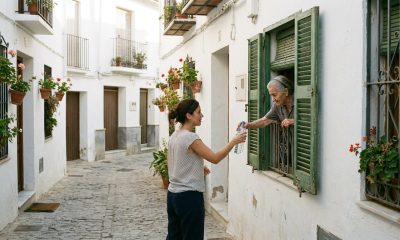
At night, on-duty pharmacies often serve customers through a small hatch or window rather than letting you inside. In a real emergency, call 112 or go to the emergency department (urgencias) – the pharmacy is not a substitute for urgent care.
Prescriptions: public, private and foreign
Public healthcare prescriptions
If you are in the public system, your doctor’s prescription is electronic (receta electrónica). You simply hand over your regional health card (tarjeta sanitaria) at any pharmacy in your region and the pharmacist sees what you can collect. For long-term treatment, repeat medicines are released automatically at set intervals. Our guide to healthcare for foreign residents explains how to get your health card.
Private prescriptions
A private doctor gives you a paper or digital private prescription. The pharmacy will dispense the medicine, but you pay the full price – private insurance does not usually cover pharmacy costs unless your policy says so.








Prescriptions from abroad
Spain takes part in the EU electronic prescription system, so pharmacies in participating regions can dispense e-prescriptions issued in several other EU countries, such as Portugal, Poland and Finland. The list of countries keeps growing, so check the Ministry of Health page below. A prescription from outside the EU, including the UK, normally needs to be rewritten by a doctor in Spain before you can get prescription-only medicines.
Brand names often differ between countries. Bring the packaging or write down the active ingredient (principio activo) and dose – this is what Spanish pharmacists work with.
What you pay for medicines
With a public prescription you pay a share of the price (copago) that depends on your income and whether you are working or a pensioner. A reform (Real Decreto-ley 11/2026) in force since 14 May 2026 changed the income bands:
| Annual income | Working age | Pensioners |
|---|---|---|
| Under €9,000 | 40%, max €8.23/month | 10%, max €8.23/month |
| €9,000–17,999 | 40%, max €18.52/month | 10%, max €8.23/month |
| €18,000–34,999 | 45%, max €61.75/month | 10%, max €13.37/month |
| €35,000–59,999 | 45%, no cap | 10%, max €13.37/month |
| €60,000–99,999 | 50%, no cap | 10%, max €18.52/month |
| €100,000 or more | 60%, no cap | 60%, max €61.75/month |
Some groups pay nothing, including people receiving the minimum income scheme (ingreso mínimo vital) or a non-contributory pension, unemployed people who no longer receive benefits and families receiving the child supplement. If you pay more than your monthly cap, your region refunds the difference. Without a public prescription you pay the full price, but prices of medicines funded by the public system are set nationally, so they are the same in every pharmacy.
What the pharmacist can help with
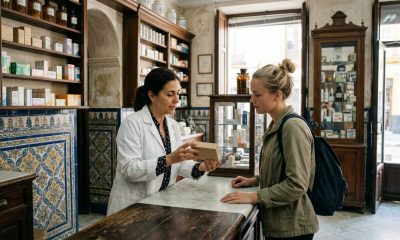
Spanish pharmacists are highly trained and used to giving advice. Before you book a doctor’s appointment, it is often worth asking at the counter about:
- Minor ailments: colds, sore throats, allergies, mild stomach problems, insect bites, sunburn and small skin issues.
- Health checks: many pharmacies measure blood pressure and some offer blood glucose or cholesterol tests.
- Emergency contraception: the morning-after pill is available without a prescription.
- Medicine questions: how to take a medicine, interactions, and Spanish equivalents of what you used at home.
- Disposing of old medicines: pharmacies have collection points for expired medicines and empty packaging.
What the pharmacist cannot do is sell you prescription-only medicines without a prescription. That includes antibiotics, which are strictly prescription-only in Spain. If the pharmacist thinks your symptoms need a doctor, they will tell you – and that advice is worth following. In summer, ask them about heat and sun protection too; our guide to staying safe in a heatwave has more tips.
For non-prescription products such as vitamins, skincare and everyday health items, you can also order online. Liki24 (ad) delivers health, wellbeing and personal care products from several countries in one order, which can help if you are looking for a brand you used at home.
Useful phrases at the pharmacy
- ¿Tiene algo para…? – Do you have something for…?
- Tengo dolor de cabeza / garganta / estómago – I have a headache / sore throat / stomach ache
- Soy alérgico/a a… – I am allergic to…
- ¿Necesito receta? – Do I need a prescription?
- ¿Cuántas veces al día? – How many times a day?
Useful links
- Ministry of Health: EU e-prescriptions in Spain
- OCU: the 2026 changes to prescription co-payments (Spanish)
- GOV.UK: healthcare for UK nationals living in Spain
- Healthcare in Spain for foreign residents
- Diabetes care in Spain for expats
FAQ: pharmacies in Spain
Can I buy antibiotics without a prescription in Spain?
No. Antibiotics are prescription-only, and pharmacies will not sell them without a valid prescription.
How do I find a pharmacy open at night?
Look for the list of on-duty pharmacies (farmacias de guardia) on the door of any pharmacy, or check the website of the college of pharmacists for your province.
Will a Spanish pharmacy accept my prescription from home?
E-prescriptions from some EU countries can be dispensed in participating regions. Prescriptions from outside the EU, including the UK, usually need to be rewritten by a doctor in Spain.
Do pensioners pay for medicines in Spain?
Most pay 10% of the price with a monthly cap that depends on income, from €8.23 to €18.52 for most pensioners. Some low-income pensioners pay nothing.
Disclaimer: This article is general information only and is not medical advice. Always follow the advice of your doctor or pharmacist, and in an emergency call 112. Prices and co-payment rules can change – check with your regional health service.