







































































Healthcare
Pharmacies in Spain: how they work and what they can help with
How Spanish pharmacies work: finding one open at night, prescriptions, what you pay after the 2026 co-payment reform and when to ask the pharmacist.







Updated: October 2026
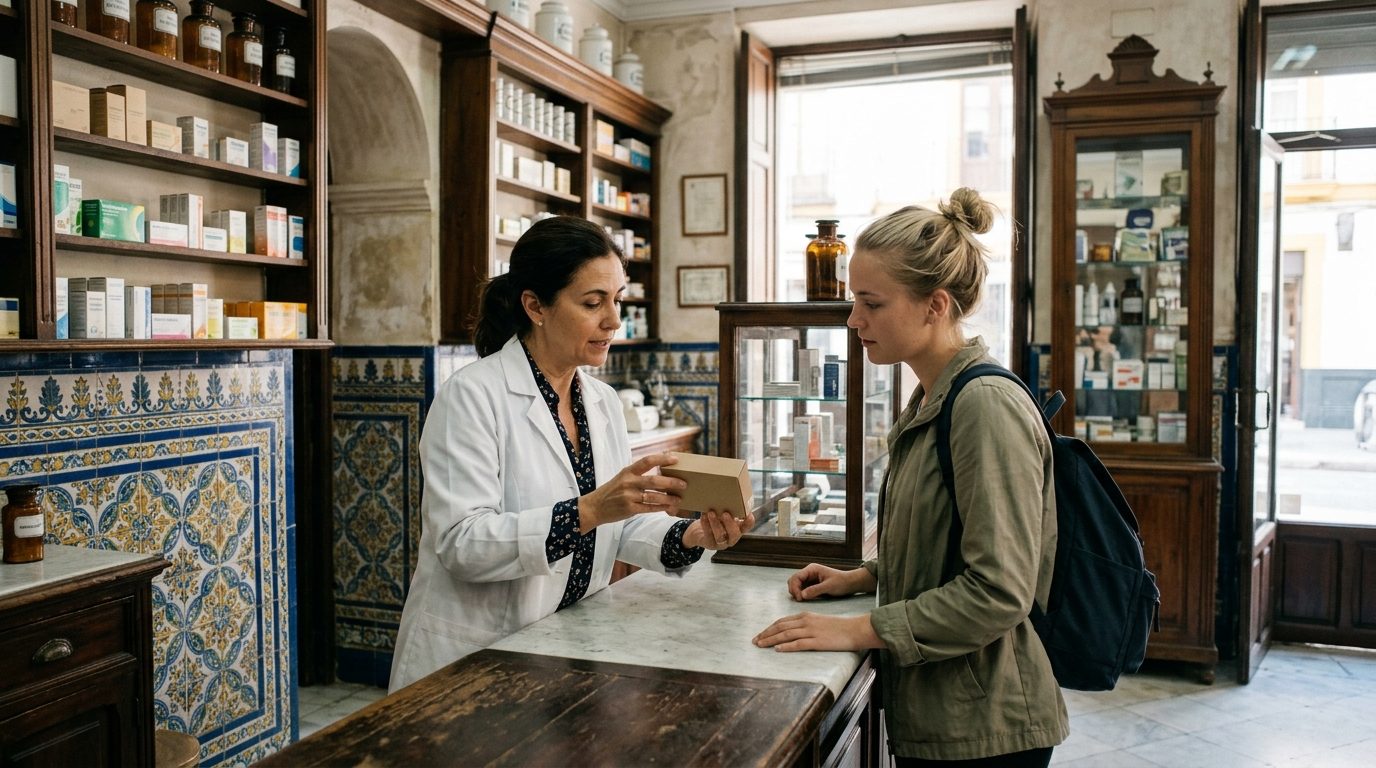
The green cross of the farmacia is one of the first things newcomers notice in Spain – there seems to be one on every corner. Spanish pharmacies do much more than fill prescriptions, and for many small health problems they are the quickest place to get help. This guide explains how pharmacies work, how to find one at night, what you pay for medicines and when the pharmacist can help you without a doctor’s visit.
How pharmacies work in Spain
Pharmacies in Spain are privately owned, but they are tightly regulated and work closely with the public health system. Every pharmacy is run by a qualified pharmacist, and only pharmacies are allowed to sell medicines – including everyday painkillers such as paracetamol and ibuprofen. You will not find them on supermarket shelves.






- Farmacia: sells prescription and non-prescription medicines, plus health and baby products. Marked with a green cross, often lit up.
- Parafarmacia: sells skincare, supplements and hygiene products, but no medicines. Useful for sun cream or baby formula, not for treating an infection.
- Opening hours: many pharmacies follow normal shop hours, often with a midday break in smaller towns. Some in cities open 12 or 24 hours a day.
Finding a pharmacy at night or on a holiday
Every area has a rota of on-duty pharmacies (farmacias de guardia) that stay open at night, on Sundays and on public holidays. To find the nearest one:
- Look at the door or window of any pharmacy – closed pharmacies post the current on-duty list.
- Check the website or app of the official college of pharmacists for your province (Colegio Oficial de Farmacéuticos), which publishes the rota.
- Search for “farmacia de guardia” plus your town name, or check your town hall’s website or local newspaper.
At night, on-duty pharmacies often serve customers through a small hatch or window rather than letting you inside. In a real emergency, call 112 or go to the emergency department (urgencias) – the pharmacy is not a substitute for urgent care.
Prescriptions: public, private and foreign
Public healthcare prescriptions
If you are in the public system, your doctor’s prescription is electronic (receta electrónica). You simply hand over your regional health card (tarjeta sanitaria) at any pharmacy in your region and the pharmacist sees what you can collect. For long-term treatment, repeat medicines are released automatically at set intervals. Our guide to healthcare for foreign residents explains how to get your health card.
Private prescriptions
A private doctor gives you a paper or digital private prescription. The pharmacy will dispense the medicine, but you pay the full price – private insurance does not usually cover pharmacy costs unless your policy says so.





Prescriptions from abroad
Spain takes part in the EU electronic prescription system, so pharmacies in participating regions can dispense e-prescriptions issued in several other EU countries, such as Portugal, Poland and Finland. The list of countries keeps growing, so check the Ministry of Health page below. A prescription from outside the EU, including the UK, normally needs to be rewritten by a doctor in Spain before you can get prescription-only medicines.
Brand names often differ between countries. Bring the packaging or write down the active ingredient (principio activo) and dose – this is what Spanish pharmacists work with.
What you pay for medicines
With a public prescription you pay a share of the price (copago) that depends on your income and whether you are working or a pensioner. A reform (Real Decreto-ley 11/2026) in force since 14 May 2026 changed the income bands:
| Annual income | Working age | Pensioners |
|---|---|---|
| Under €9,000 | 40%, max €8.23/month | 10%, max €8.23/month |
| €9,000–17,999 | 40%, max €18.52/month | 10%, max €8.23/month |
| €18,000–34,999 | 45%, max €61.75/month | 10%, max €13.37/month |
| €35,000–59,999 | 45%, no cap | 10%, max €13.37/month |
| €60,000–99,999 | 50%, no cap | 10%, max €18.52/month |
| €100,000 or more | 60%, no cap | 60%, max €61.75/month |
Some groups pay nothing, including people receiving the minimum income scheme (ingreso mínimo vital) or a non-contributory pension, unemployed people who no longer receive benefits and families receiving the child supplement. If you pay more than your monthly cap, your region refunds the difference. Without a public prescription you pay the full price, but prices of medicines funded by the public system are set nationally, so they are the same in every pharmacy.
What the pharmacist can help with
Spanish pharmacists are highly trained and used to giving advice. Before you book a doctor’s appointment, it is often worth asking at the counter about:
- Minor ailments: colds, sore throats, allergies, mild stomach problems, insect bites, sunburn and small skin issues.
- Health checks: many pharmacies measure blood pressure and some offer blood glucose or cholesterol tests.
- Emergency contraception: the morning-after pill is available without a prescription.
- Medicine questions: how to take a medicine, interactions, and Spanish equivalents of what you used at home.
- Disposing of old medicines: pharmacies have collection points for expired medicines and empty packaging.
What the pharmacist cannot do is sell you prescription-only medicines without a prescription. That includes antibiotics, which are strictly prescription-only in Spain. If the pharmacist thinks your symptoms need a doctor, they will tell you – and that advice is worth following. In summer, ask them about heat and sun protection too; our guide to staying safe in a heatwave has more tips.
For non-prescription products such as vitamins, skincare and everyday health items, you can also order online. Liki24 (ad) delivers health, wellbeing and personal care products from several countries in one order, which can help if you are looking for a brand you used at home.
Useful phrases at the pharmacy
- ¿Tiene algo para…? – Do you have something for…?
- Tengo dolor de cabeza / garganta / estómago – I have a headache / sore throat / stomach ache
- Soy alérgico/a a… – I am allergic to…
- ¿Necesito receta? – Do I need a prescription?
- ¿Cuántas veces al día? – How many times a day?
Useful links
- Ministry of Health: EU e-prescriptions in Spain
- OCU: the 2026 changes to prescription co-payments (Spanish)
- GOV.UK: healthcare for UK nationals living in Spain
- Healthcare in Spain for foreign residents
- Diabetes care in Spain for expats
FAQ: pharmacies in Spain
Can I buy antibiotics without a prescription in Spain?
No. Antibiotics are prescription-only, and pharmacies will not sell them without a valid prescription.
How do I find a pharmacy open at night?
Look for the list of on-duty pharmacies (farmacias de guardia) on the door of any pharmacy, or check the website of the college of pharmacists for your province.
Will a Spanish pharmacy accept my prescription from home?
E-prescriptions from some EU countries can be dispensed in participating regions. Prescriptions from outside the EU, including the UK, usually need to be rewritten by a doctor in Spain.
Do pensioners pay for medicines in Spain?
Most pay 10% of the price with a monthly cap that depends on income, from €8.23 to €18.52 for most pensioners. Some low-income pensioners pay nothing.
Disclaimer: This article is general information only and is not medical advice. Always follow the advice of your doctor or pharmacist, and in an emergency call 112. Prices and co-payment rules can change – check with your regional health service.
Updated: October 2026
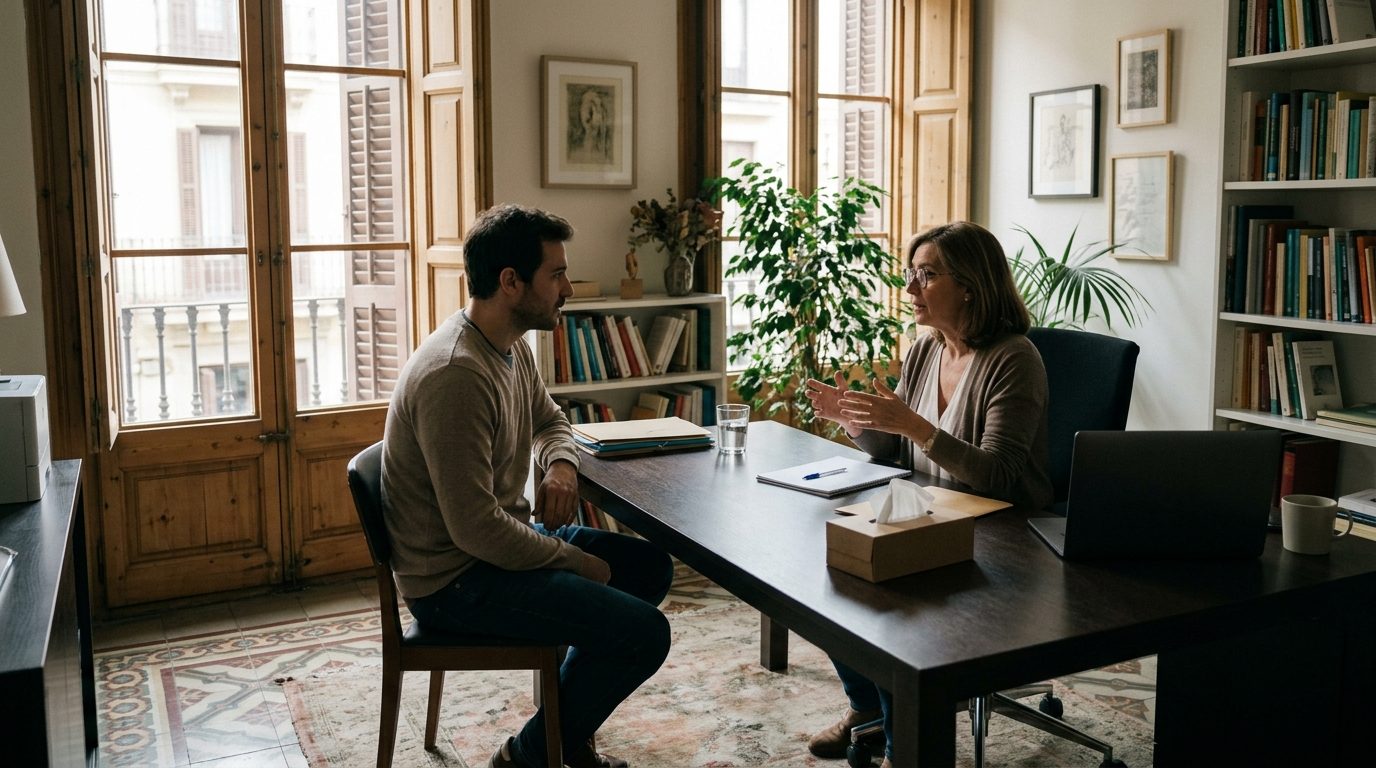
Moving to a new country can be exciting, but it also brings challenges that can affect your mental health. Many expats in Spain experience periods of loneliness, stress, or anxiety—especially during the first months. The good news is that Spain offers a growing range of mental health resources, both public and private, and there are many ways to get support as a foreigner. Here’s what you need to know about looking after your mental well-being in Spain.
Common mental health challenges for expats
- Loneliness and homesickness
- Culture shock and language barriers
- Stress from bureaucracy or job searches
- Relationship and family pressures
- Adjustment to new routines and environments
Where to find help in Spain
- Public health system: You can access a psychologist or psychiatrist through your local health center (centro de salud), though waiting times can be long.
- Private therapists: Many English-speaking psychologists work in major cities. Try menteAmente in Madrid or Therapy in Barcelona.
- Online therapy: Platforms like BetterHelp and Talkspace offer sessions in English and other languages.
- Support groups: Many expat communities run peer support groups, both in person and online (check Facebook or Meetup).
- Emergency help: For urgent mental health support, call 112 or visit the nearest hospital’s emergency department.
Tips for protecting your mental health as an expat
- Stay connected with friends and family back home.
- Join clubs, sports, or volunteering to build a local network.
- Learn Spanish—it helps you feel more in control and less isolated.
- Maintain healthy routines: eat well, sleep enough, and exercise.
- Don’t hesitate to seek professional help—mental health is just as important as physical health.
Useful links
- English-speaking psychiatrists and psychologists in Madrid (menteAmente)
- Therapy in Barcelona
- Spanish public health centers (official directory)
- BetterHelp – online therapy
- Talkspace – online therapy
FAQ: expat mental health in Spain
Can I see an English-speaking therapist in Spain?
Yes, especially in larger cities and online. Check the links above for options.
Is mental health care free in Spain?
Public health care covers basic mental health services, but waiting times can be long. Private care is faster but paid.
How do I find expat support groups?
Search Facebook or Meetup, or ask at international schools and expat centers.
What should I do in a mental health emergency?
Call 112 or go to the nearest hospital emergency department.
Are there therapists who speak other languages?
Yes, many private therapists offer sessions in English, French, German and other languages.
How can I reduce loneliness as an expat?
Get involved in local activities, join clubs and keep in touch with loved ones.
Can I use online therapy from Spain?
Yes – services like BetterHelp and Talkspace are available to residents in Spain.
How do I get a referral for public mental health care?
Visit your local health center (centro de salud) and ask your GP for a referral.
What if I don’t speak Spanish well?
Look for English-speaking professionals, or bring a friend to help with translation.
Disclaimer: This article is for informational purposes only. Always contact a professional for specific mental health advice.
Updated: October 2026
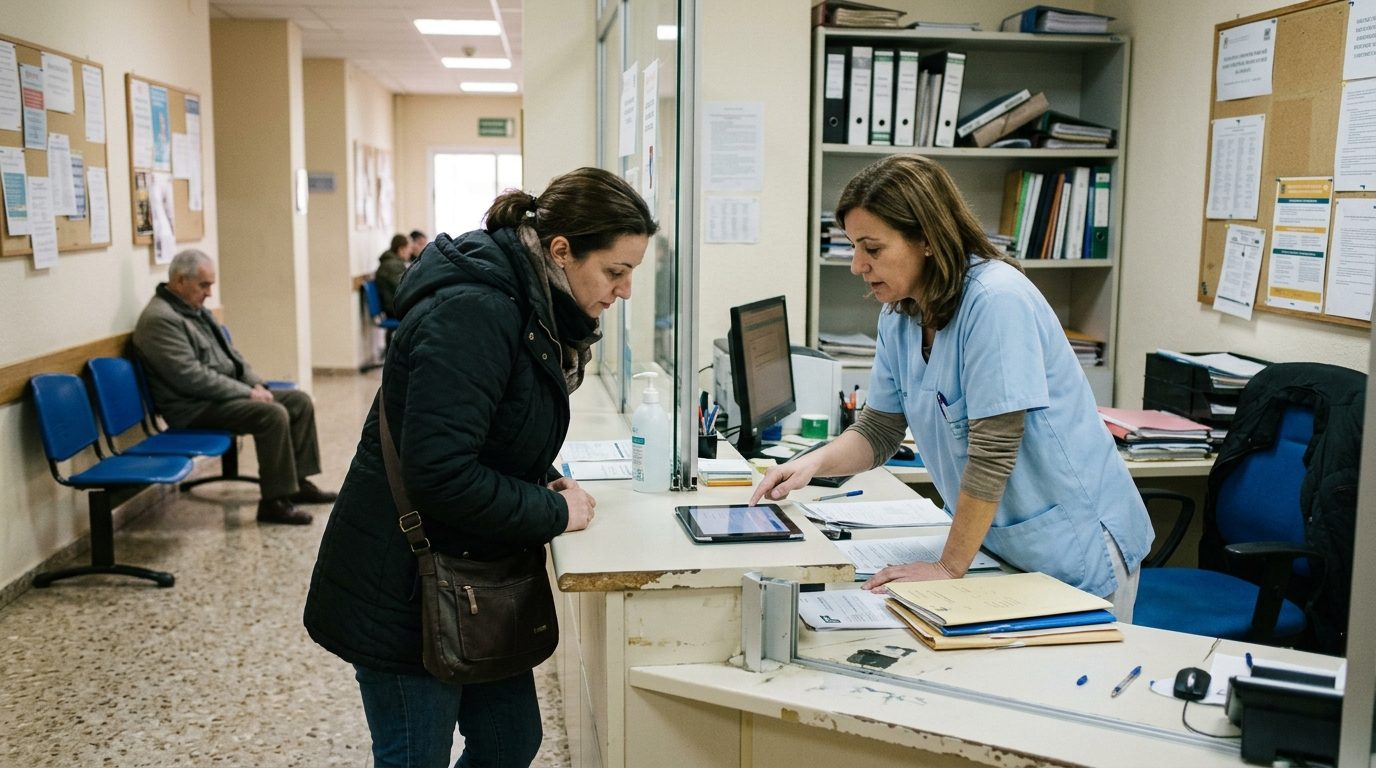
Spain has one of the best public health systems in Europe – but as a foreign resident you only get access once you are registered in the right way. How you qualify depends on whether you work, receive a pension or live on your own income. Here is how it works in 2026, step by step.
Who can use the public health system?
- Employees and self-employed (autónomos): you are covered through your social security contributions, and so are your registered family members.
- EU pensioners: register your S1 form from your home country with the Spanish social security (INSS). Your home country then pays for your care in Spain.
- Residents without work or S1: you can join the public system by paying a monthly fee through the convenio especial – after at least one year of registration on the padrón. The national fee is around €60 per month under 65 and €157 from 65, and some regions run their own schemes.
- Visitors and new arrivals: EU citizens on a short stay can use their European Health Insurance Card (EHIC). Others need travel or private insurance.
How to register – step by step
- Get your NIE and padrón – you need both for almost everything. See how to get your NIE.
- Get your social security number – your employer usually arranges it, or you apply yourself at the social security office.
- Apply for recognition of your right to healthcare at the INSS (online or by appointment), with your S1 form if you are a pensioner.
- Register at your local health centre (centro de salud) with your passport, NIE, padrón and INSS document. You will be given a family doctor.
- Receive your health card (tarjeta sanitaria individual) by post or at the health centre. Download your region’s health app to book appointments.
Public or private health insurance?
- Public: free at the point of use (prescriptions have a co-payment based on income). Waiting lists for specialists can be long.
- Private: faster access to specialists and English-speaking doctors. Many expats combine both. Policies typically cost €50–150 per month per adult, depending on age and cover.
- For visas: non-lucrative, digital nomad and student visas require private insurance with full cover and no co-payments (sin copagos) unless you are covered by social security.
Emergencies
Call 112 for any emergency – operators often speak English. Public hospital emergency departments (urgencias) treat everyone; if you are not covered, you may receive a bill afterwards.
FAQ: healthcare in Spain
Is healthcare free in Spain for foreigners?
It is free at the point of use if you are covered through work, an S1 form or the convenio especial. Otherwise you need private insurance.
Can I keep using my EHIC card when I live in Spain?
No. The EHIC is for temporary stays. Once you live in Spain you must register in the Spanish system or have private insurance.
How do I find an English-speaking doctor?
In tourist areas many public and private doctors speak English. Private insurers list English-speaking doctors in their apps.
Do I pay for medicines?
Yes, a share. Working-age patients pay 40–60% depending on income, and pensioners usually pay 10% with a monthly cap.
Useful links
- Spanish social security (INSS)
- Official directory of public health centres
- Mental health support for expats
Disclaimer: This article is general information only. Rules and fees differ between regions and can change – always check with the INSS or your regional health service.
Healthcare
Eye operations in Spain: cataract and laser surgery
Cataract and laser eye surgery in Spain: what the public system covers, waiting times, going private, choosing a clinic and recovery tips.

Updated: October 2026
Cataract surgery is one of the most common operations in Spain, and laser surgery to stop wearing glasses is widely offered by private clinics. This guide is for expats weighing up the public and private routes. You will learn what the public system covers, how long you may wait, what to ask a private clinic and how to prepare for recovery.
Cataract or glaucoma? Clearing up the terms
Some languages talk about “grey” and “green” cataracts, which causes confusion. A cataract (catarata) is a clouding of the eye’s natural lens, treated by replacing the lens with an artificial one. Glaucoma (sometimes called “green cataract” in Northern European languages) is a different disease that damages the optic nerve, usually linked to eye pressure. It is treated with eye drops, laser or surgery, but not by replacing the lens. Make sure you and your doctor are talking about the same condition.
Cataract surgery in the public system
If you are covered by the public health system (see our guide to healthcare for foreign residents), cataract surgery is included when your ophthalmologist decides it is needed. The route is:
- See your family doctor at the health centre about blurred vision, glare or trouble driving at night.
- Get referred to the hospital eye department (oftalmología) for a full examination.
- If surgery is recommended, you are added to the surgical waiting list and given pre-operative tests and lens measurements.
- The operation is normally done as day surgery under local anaesthetic, one eye at a time, with check-ups afterwards.
Waiting times vary by region and hospital. According to the Ministry of Health’s waiting list data, the average wait for cataract surgery across Spain was about 68 days at the end of 2025, shorter than the average for surgery overall. The wait for the first specialist appointment comes on top of that.
The public system generally implants a standard monofocal lens, which gives sharp vision at one distance, so most people still need reading glasses afterwards. Premium lenses that correct several distances or astigmatism are mostly offered privately.
Going private
Private eye clinics and hospitals are common in Spanish cities and along the Costa del Sol. You can book an ophthalmologist directly, without a GP referral, and surgery is usually scheduled within weeks. Many clinics have English-speaking staff.
- Costs: prices are set freely and depend on the clinic, technique and type of lens, so always ask for a written quote per eye that includes tests, lens, surgery and follow-up visits.
- Insurance: many private health policies cover cataract surgery with a standard lens, but premium lenses or laser-assisted techniques often cost extra. Ask for authorisation in writing before booking.
- Technique: standard surgery uses ultrasound (facoemulsificación). Some clinics offer femtosecond laser-assisted surgery. Ask your surgeon whether it brings a real benefit in your case.
- Who operates: check that the surgeon is a specialist in ophthalmology and how many of these operations they perform.
Laser eye surgery for glasses and contact lenses
Refractive surgery to correct short-sightedness, long-sightedness or astigmatism (such as LASIK, PRK or SMILE) is considered elective, so it is generally not covered by the public system and rarely by standard private health policies. It is done in private clinics, often with special financing offers.
- Not everyone is suitable: a thorough pre-surgery assessment checks corneal thickness, prescription stability and eye health. A good clinic will tell you if you are not a candidate.
- Compare offers carefully: low advertised prices may only apply to certain prescriptions or exclude follow-up visits and enhancements.
- Over 45 or so: age-related reading problems (presbyopia) are not solved by standard laser correction; ask about alternatives.
Before and after surgery
- Medical history: bring a list of your medicines, especially blood thinners and prostate medication, which can affect eye surgery.
- Diabetes: good blood sugar control matters before eye surgery; see our guide to diabetes care in Spain.
- Getting home: you cannot drive after the operation, so arrange a lift.
- Eye drops: you will be prescribed drops for several weeks. Follow the schedule carefully and keep the follow-up appointments.
- Sun, sea and pools: wear sunglasses, and avoid swimming and dusty environments until your surgeon says it is safe.
- Warning signs: sudden pain, worsening vision or increasing redness need urgent attention. Contact the clinic or go to hospital urgencias.
Your driving licence can also be affected: Spanish licence renewals include an eyesight check, and you must meet the minimum vision standard. See our driving licence guide.
Useful links
- Ministry of Health: waiting list summary, December 2025 (PDF, Spanish)
- Salud Andalucía app for health centre appointments
- European Commission: what the EHIC covers
- Healthcare in Spain for foreign residents
- Hospitals in Spain
FAQ: eye surgery in Spain
Is cataract surgery free in Spain?
Yes, if you are covered by the public health system and an ophthalmologist decides you need it. Premium lenses are usually only available privately.
Can I use my EHIC for cataract surgery?
No. The EHIC covers necessary care during a temporary stay, not planned treatment. Planned surgery abroad needs prior authorisation from your home health system.
Does the public system pay for laser surgery to remove glasses?
Generally not. Refractive laser surgery is treated as elective and is done privately.
Are both eyes done on the same day?
Cataracts are usually operated one eye at a time, a few weeks apart. Laser refractive surgery is often done on both eyes in one session.
Disclaimer: This article is general information only and is not medical advice. Treatment options, waiting times and prices change – always discuss your case with an ophthalmologist before you decide.




Retiring in Spain: pensions, healthcare and residency

Estepona: living in the garden of the Costa del Sol

Public transport on the Costa del Sol: trains, buses and travel cards

Andalucía guide: cities, culture and life in southern Spain

Understanding the tax system in Spain

Marbella guide: areas, beaches and everyday life





-
 Tourist Info2 years ago
Andalucía guide: cities, culture and life in southern Spain
-
 Banking & Finances2 years ago
Understanding the tax system in Spain
-
 Tourist Info2 years ago
Marbella guide: areas, beaches and everyday life
-

 Cost of Living2 years ago
Living on a small salary in Spain in 2026
-

 Legal Requirements & Documentation2 years ago
How to get your Spanish NIE number in 2026 – step by step
-

 Legal Requirements & Documentation2 years ago
Work visa and work permit in Spain 2026 – which one you need and how to apply
-

 Tourist Info2 years ago
Benalmádena explained: Pueblo, Arroyo de la Miel and the coast
-

 Cost of Living2 years ago
Family living costs in Spain in 2026: monthly budget and moving-in money