


























































Tourist Info
Seville for newcomers: neighbourhoods, sights and everyday life
A practical Seville guide for people moving to or visiting from the coast: neighbourhoods, getting there from Málaga, key sights and when to go.







Updated: October 2026
Seville is Andalucía’s capital and its largest city, and many people on the Costa del Sol end up going there for paperwork, hospital appointments, weekends away or a new job. This guide is for newcomers who are thinking of living in Seville or getting to know it properly. You will learn which neighbourhoods suit which lifestyle, how to get there from Málaga, what to see first and how to cope with the city’s famous heat.
Seville at a glance
Seville sits inland on the Guadalquivir river, so there is no beach, but there is a large, walkable old town, a lively bar culture and good transport links to the rest of Spain. It is a regional capital, which means many Junta de Andalucía offices, universities and hospitals are based here. Life runs late: lunch is often after 2 pm, and in summer the streets empty in the afternoon and fill up again after dark.





Compared with Málaga, Seville feels more traditional and less international. You will hear less English in shops and offices, so even basic Spanish makes daily life much easier. If you are starting from zero, our guide to language schools in Spain is a good place to begin.
Neighbourhoods: where to live in Seville
Seville’s barrios have very different characters. Visit at different times of day before you sign a contract, and check noise levels at night, especially near bars and procession routes.
- Santa Cruz and the Arenal: the historic heart around the cathedral. Beautiful, but busy with visitors, short on parking and full of holiday flats.
- Triana: across the river, with its own market, ceramics tradition and strong local identity. Popular with both families and young professionals.
- Alameda and Macarena: the alternative side of the centre, with bars, small shops and a younger crowd. Older buildings can be noisy and lack lifts.
- Los Remedios: a calmer, residential area on the Triana side, close to the Feria grounds, with wider streets and more apartment blocks.
- Nervión: modern and central, with shopping centres, offices and good transport. A practical choice if you commute or have children in school.
Air conditioning is not a luxury here, so ask about it before renting. Our guide to renting in Spain as a foreigner explains contracts, deposits and your rights as a tenant, and once you have an address you should register on the padrón at the town hall.
Getting to Seville from Málaga
- Train: Renfe runs direct high-speed trains from Málaga María Zambrano to Sevilla Santa Justa. The fastest take around two hours, and there are many departures a day. Book early for the best fares, especially on Fridays and Sundays.
- Car: the drive takes roughly two hours on the A-92 motorway. Parking in the old town is difficult and expensive, so many visitors leave the car in a public car park on the edge of the centre.
- Bus: long-distance coaches run between Málaga and Seville several times a day. They are usually cheaper than the train but slower.
- Plane: Seville has its own airport with European connections, which is useful if you live in the city and fly home often. See our overview of airports in Spain.
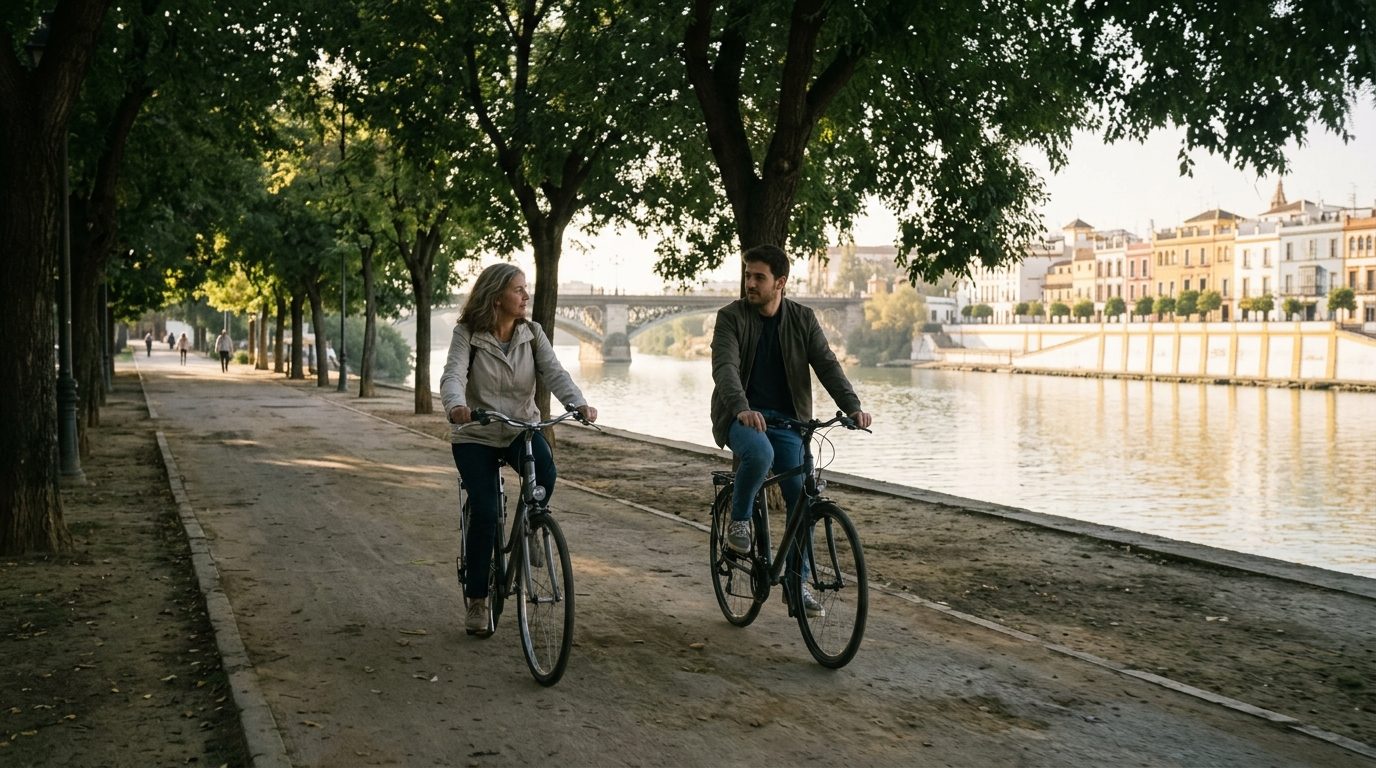
Inside the city you can get around on foot, by bus, on the single metro line, the short city-centre tram or by bike. Seville has a large network of bike lanes and is mostly flat, which makes cycling a realistic everyday option outside the hottest months.






What to see first
The cathedral and the Giralda
Seville’s Gothic cathedral is one of the largest in the world, and the Giralda bell tower, a former minaret, is the city’s symbol. You climb it by ramps rather than stairs. Buy tickets in advance in high season to avoid long queues.
The Real Alcázar
The royal palace next to the cathedral mixes Islamic, Gothic and Renaissance styles, with large gardens to wander in. Tickets are timed and sell out on busy days, so book on the official Real Alcázar website, which warns that it is the only authorised sales channel. The official site also lists free entry for people born in or registered as residents of Seville and a free Monday time slot, so check the current conditions there before you go.
Plaza de España and María Luisa Park
Built for the 1929 Ibero-American Exposition, Plaza de España is a huge semicircle of brick and painted tiles, with benches representing Spanish provinces. The shady María Luisa Park next door is one of the best places in the city for a walk on a warm day.
More to explore
- The Metropol Parasol (“Las Setas”), a wooden structure with a walkway over the rooftops.
- The Torre del Oro and the riverside walk along the Guadalquivir.
- Triana market and the ceramics workshops on and around Calle Alfarería.
- A flamenco performance in a small venue. Our guide to flamenco in Spain explains what to look for.
When to go and how to handle the heat
Spring and autumn are the best seasons. Spring brings orange blossom and the two biggest events of the year: Semana Santa, with its processions, and the Feria de Abril a couple of weeks later. Both fill hotels and raise prices, so plan early. Read our guide to Semana Santa in Spain for dates and etiquette.
Summer in Seville is very hot, and afternoon temperatures above 40°C are not unusual in July and August. If you live here, plan errands for the morning, keep blinds down during the day and follow official heat warnings. Our heatwave safety guide covers the basics. Winters are mild and mostly sunny, although older flats can feel cold inside.
Practical tips for living in Seville
- Paperwork: as a regional capital, Seville has many government offices, but appointments (cita previa) can still take time. Book online as early as possible.
- Social life: tapas bars are the centre of local life. Joining a sports club, language exchange or neighbourhood association is the quickest way to meet people.
- Costs: rents in the centre and Triana are higher than in outer districts. Compare areas with our guide to the cost of living in Spain.
- Day trips: Córdoba is easy to reach by high-speed train, and the white villages and Cádiz coast are within driving distance.
Useful links
- Real Alcázar de Sevilla (official website and tickets)
- Andalucía guide: cities, culture and life in southern Spain
- How to register on the padrón
- Spanish festivals and how expats can join in
FAQ: Seville for newcomers
Can I do Seville as a day trip from Málaga?
Yes. With a direct train of around two hours each way you can see the cathedral, the Alcázar and the old town in a long day, but one or two nights is much more relaxed.
Which area of Seville is best for families?
Los Remedios, Nervión and parts of Triana are popular with families thanks to schools, parks and quieter streets. The old town is charming but busy and harder for parking.
Do residents get free entry to the Real Alcázar?
The official Alcázar website lists free entry for people born in or registered in Seville, with ID. Conditions can change, so check the official site before your visit.
When is the worst time to visit Seville?
July and August are very hot, and Semana Santa and the Feria de Abril are crowded and expensive. Late October to early December and late February to March are usually more comfortable.
Disclaimer: This article is general information only. Timetables, ticket rules, prices and opening times can change – always check with the official source before you travel or book.
Tourist Info
Caminito del Rey: how to plan your visit
How to book Caminito del Rey tickets, get to the start, what you can and cannot bring, and what happens if the walkway closes on your day.

Updated: October 2026
The Caminito del Rey is a walkway bolted to the walls of the Gaitanes gorge, about an hour inland from Málaga, and one of the most popular outings in the province. This guide is for residents and visitors planning their first walk. It covers tickets, how to get to the start, the rules at the entrance and what to do if the path closes on the day you booked.
What the walk is like
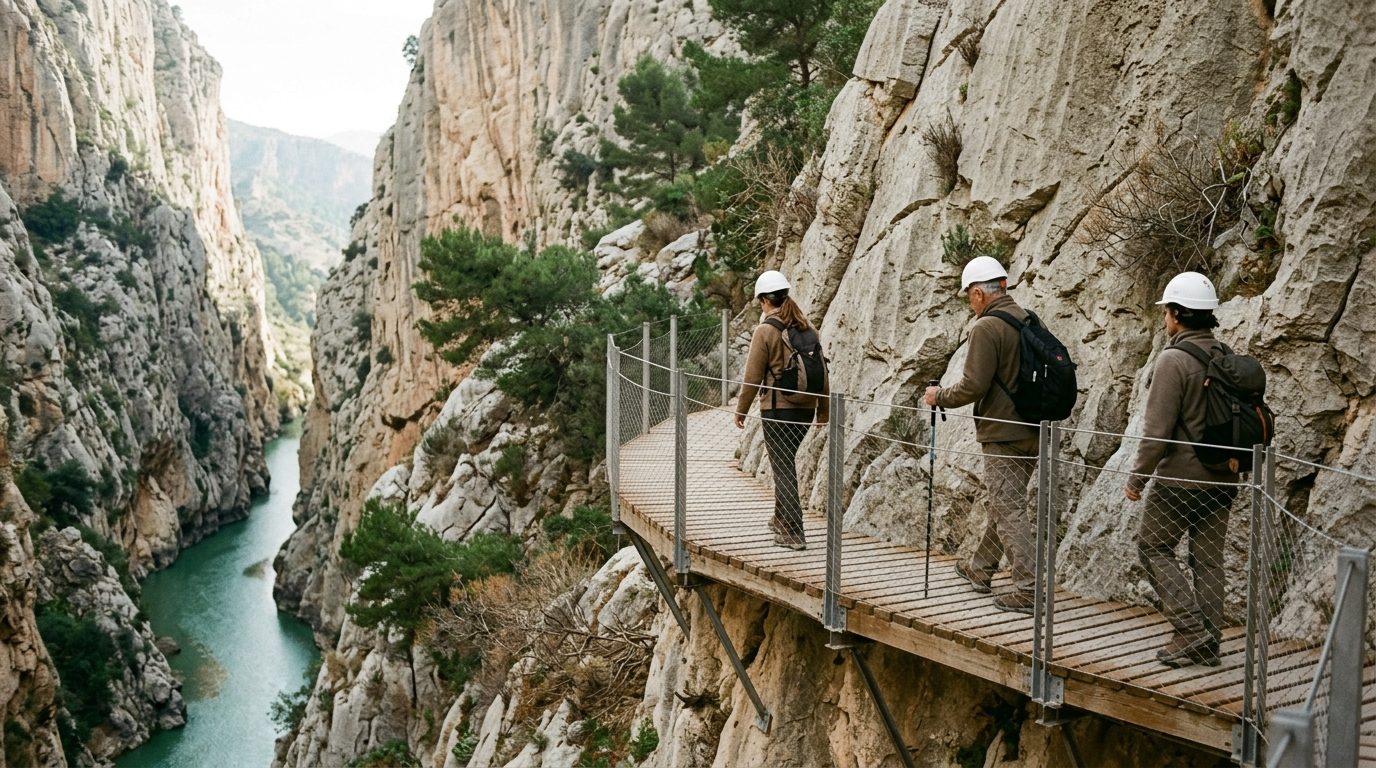
The route is linear and one-way. You start in the north, in the municipality of Ardales, and finish in the south at El Chorro, in the municipality of Álora. You cannot walk back through the gorge, so you need a plan for getting from the end to your car or train.
The official website describes the full route as about 8 km, taking 3 to 4 hours. That includes the approach to the control booth, the walkways themselves (the distance markers run up to about 3.2 km) and an exit path of around 2 km down to El Chorro, mostly downhill. Overall the trail drops about 150 metres, but there are stairs and some short climbs.
Most of the walkway is wide and protected by handrails, so you do not need climbing experience. You do need a reasonable level of fitness and no strong fear of heights. The official guidance advises people with vertigo or serious heart, breathing or mobility problems against doing the walk.
Tickets: prices and how to book
Buy tickets only on the official Caminito del Rey booking platform. Many resellers and tour companies offer packages, often at a higher price, so check the address in your browser before paying. The official prices are:
| Ticket | Price | What you get |
|---|---|---|
| General | 10 € | Walk the route on your own at your booked time |
| Official guided visit | 18 € | Group of up to 30 people with a certified guide |
| Shuttle bus | 1.55 € | Links the south end (El Chorro) with the north car park |
- No discounts: the official FAQ says there are no reduced prices for children, groups, seniors, unemployed or disabled visitors.
- Personalised tickets: you can buy up to 10 tickets per order, but you must add each visitor’s details in your personal area before you download or print them.
- Timed entry: each ticket is for a specific date and time slot. Arrive at the control point at least 30 minutes early so groups can be formed.
- Sell-outs: weekends, holidays and spring and autumn slots go fast. Tickets are released in sale periods, so check the calendar early. A limited number of tickets are sold at the box office from 9:00 on the day, while they last.
- Opening days: use the booking calendar to see which days and slots are available. The walk has traditionally been closed on Mondays and on a few dates around Christmas and New Year.
Rules at the entrance
Staff check tickets, ages and footwear at the control booth, and they do turn people away. These rules come from the official risk and safety information:
- Minimum age: children under 8 are not allowed. Bring an original ID, passport or Libro de Familia to prove a child’s age. Minors must be with an adult.
- Helmet: you are given a safety helmet at the start and must wear it for the whole route until the drop-off point.
- No bags: backpacks, bags and other bulky items are not allowed. Plan to carry only what fits in your pockets, and check the current rules if you are unsure.
- Footwear: wear proper walking shoes. Flip-flops and high heels are prohibited.
- Not allowed: pets, umbrellas, walking poles, crutches, prams, wheelchairs, selfie sticks and tripods that block the path, drones, alcohol, smoking and fire.
- On the route: no swimming in the river, no leaning over rails, no running and no stopping in sections marked as danger zones.
Getting there and back
By car
The drive from Málaga takes roughly an hour. The main car park is at the north end, near Ardales. From there you walk to the control booth either through a pedestrian tunnel and track (about 1.5 km, roughly 25 minutes) or along the longer Gaitanejo path (about 2.7 km). At the end of the walk, the shuttle bus takes you from El Chorro back to the north car park.
You can also park in the south at El Chorro and take the shuttle north before you start. Allow plenty of time: waiting for the bus, the ride and the walk to the control point can easily take more than an hour, and missing your slot can cost you your entry.
By train
Renfe runs trains from Málaga María Zambrano to El Chorro station, which is next to the end of the route. From El Chorro, take the shuttle bus to the north and walk to the control point. Train times are limited and change by season, so check the timetable on the Renfe Málaga page and make sure the last train back fits your slot.
Weather, closures and refunds
The Caminito can close at short notice because of strong wind, rain, extreme heat, rockfall or maintenance. According to the official FAQ, ticket holders are told by SMS the day before or on the day, as soon as a closure is decided.
- No changes or refunds: you cannot change the date or time, and the ticket price is not refunded if you simply cannot go.
- Exchange after a closure: if the route closes for safety reasons, you can exchange your ticket using the “Canjeo por cierre” option on the official site, entering each ticket’s barcode.
- Summer heat: the gorge can get very hot. Book an early slot and read our guide to staying safe in a heatwave.
- Autumn storms: heavy rain can close the walk and nearby roads. Check the warnings described in our guide to DANA storms and weather alerts.
Practical tips for the day
- Print your personalised tickets or have them ready on your phone, along with ID for any children.
- Carry at least 1.5 litres of water per person, as the official safety sheet recommends. There are no toilets or eating areas along the walkway.
- Eat before you start or plan lunch in El Chorro or near the north car park afterwards.
- Wear sun protection and a light layer. Mornings in the gorge can be cool even when the coast is warm.
- Use the official guided visit if you want the history of the gorge and the hydroelectric works explained along the way.
If you are combining the walk with other outings, see our guide to day trips from Málaga. If you plan to drive, check that your licence is valid in Spain with our driving licence guide.
Useful links
- Official Caminito del Rey ticket sales
- Official FAQ: closures, exchanges and shuttle bus
- Official risk and safety information (PDF, Spanish and English)
- Renfe trains in the Málaga area
- Day trips from Málaga
- Heatwave safety in Spain
FAQ: Caminito del Rey
How much does the Caminito del Rey cost?
On the official platform a general ticket costs 10 € and the official guided visit 18 €. The shuttle bus between the two ends costs 1.55 € per person.
Can children do the Caminito del Rey?
Only from the age of 8, and they must bring an original ID or the Libro de Familia to prove it. Minors must be accompanied by an adult.
How long does the walk take?
The official site estimates 3 to 4 hours for the full route of about 8 km, including the approach and the exit path to El Chorro.
What happens if the Caminito closes on my day?
If it closes for weather, rockfall or maintenance, you can exchange your ticket through the “Canjeo por cierre” option on the official site. Otherwise tickets cannot be changed or refunded.
Can I bring a backpack?
No. Backpacks, bags and other bulky items are not allowed on the walkway, so travel light.
Disclaimer: This article is general information only. Ticket prices, opening days and safety rules are set by the site’s management and can change – always check the official Caminito del Rey website before you book or travel.
Tourist Info
Day trips from Málaga: the best places to go by train, bus or car
The best day trips from Málaga: Granada, Córdoba, Ronda, Antequera, Nerja, the Caminito del Rey and Seville, with how to get there and what to book.
Updated: October 2026
One of the best things about living in or near Málaga is how much of Andalusia you can see in a day. This guide is for newcomers and visitors who want to plan an outing without a tour bus. For each place you get the rough travel time, the best way to get there and what you should book in advance.
Before you go: a few planning tips
- Train or car: Granada, Córdoba, Seville and Antequera are easy by train from Málaga María Zambrano. Ronda, El Torcal and the white villages are easier by car.
- Book the big sights: the Alhambra, the Nerja Cave and the Caminito del Rey use timed tickets that can sell out, especially at weekends and on bank holidays.
- Check the season: inland cities such as Córdoba and Seville get extremely hot in July and August. Spring and autumn are the best months for long walking days.
- Carry ID: some monuments ask for photo ID with your ticket, and you need it on trains if your ticket is in your name.
| Destination | Best way from Málaga | Rough travel time | Book ahead |
|---|---|---|---|
| Granada | Train or bus | About 1.5 hours | Alhambra tickets |
| Córdoba | High-speed train | About 1 hour | Train seats at peak times |
| Ronda | Car | About 1.5–2 hours | Not usually needed |
| Antequera and El Torcal | Car (or train to Antequera) | About 45 minutes by car | Not usually needed |
| Nerja and Frigiliana | Car or bus | About 1 hour | Nerja Cave tickets |
| Caminito del Rey | Car or train to El Chorro | About 1 hour | Timed walkway tickets |
| Seville | Train | About 2 hours | Train and monument tickets |
Travel times are approximate and depend on the service and traffic. Always check current timetables before you set off.
Granada and the Alhambra
Granada is the classic day trip, and for good reason. The Alhambra palace complex is the main draw, but the city itself rewards a slow afternoon: the steep lanes of the Albaicín, the viewpoint at San Nicolás facing the Alhambra, and the free tapas that still come with a drink in many bars.
Buy tickets only from the official Alhambra ticket shop. Entry to the Nasrid Palaces is at a fixed time printed on your ticket, tickets are personal and you must carry ID that matches the name. Purchases are final, so choose your slot carefully and allow time to walk up from the city centre.
Córdoba: the Mezquita and the patios
Thanks to the high-speed line, Córdoba is one of the easiest big trips from Málaga. The Mosque-Cathedral (Mezquita) is the highlight, with its forest of red-and-white arches. Nearby you can walk the old Jewish quarter, cross the Roman bridge and visit the gardens of the Alcázar de los Reyes Cristianos.
May is the busiest and most colourful month because of the patio festival, when private flower-filled courtyards open to visitors. In summer, plan indoor visits for the afternoon, as Córdoba is one of the hottest cities in Spain.
Ronda and the white villages
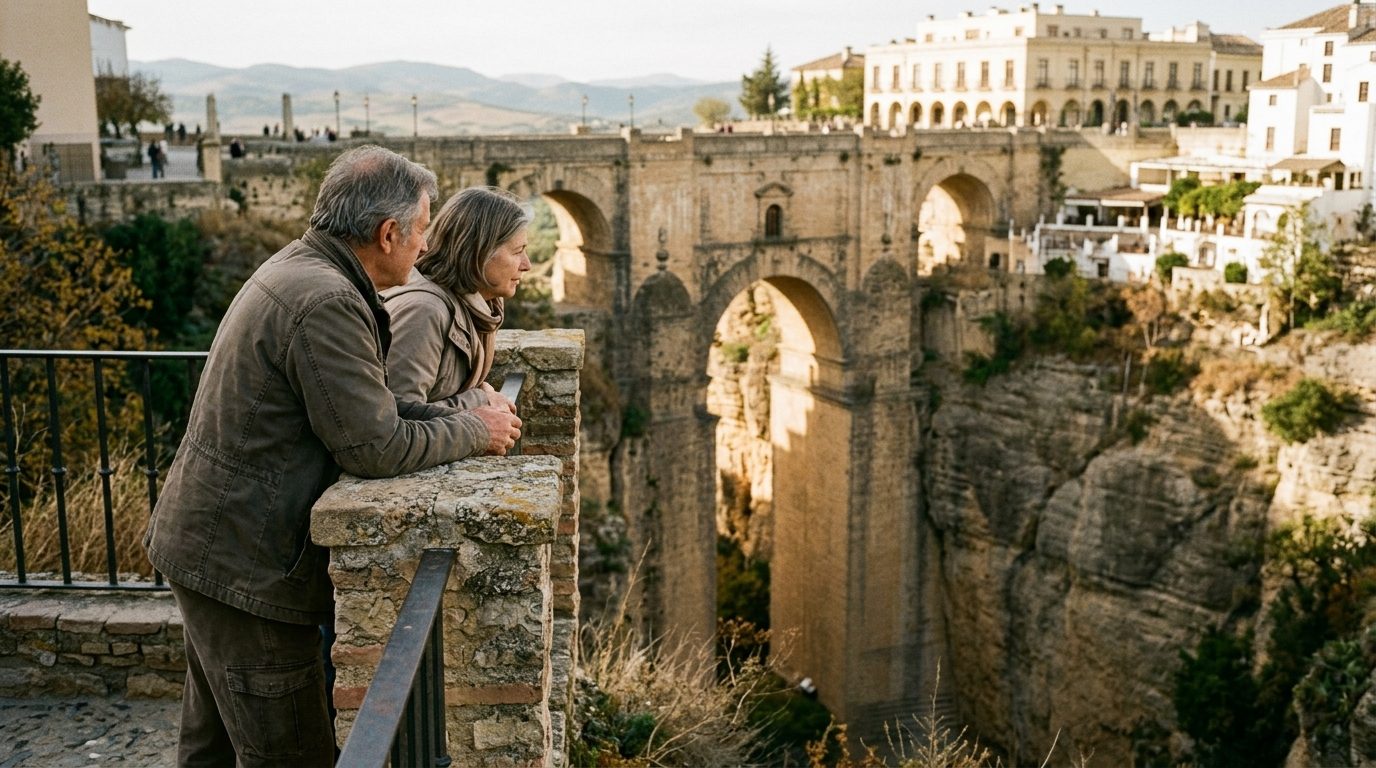
Ronda sits on top of a cliff split by the El Tajo gorge, crossed by the Puente Nuevo bridge. The views are the main reason to come, along with the old bullring and the walk down to the viewpoints below the bridge. A car makes the trip easier, as the train usually involves a change and takes longer.
With a car you can add one of the white villages (pueblos blancos) on the way, such as Setenil de las Bodegas, built into the rock, or the villages of the Serranía de Ronda. The mountain roads are winding, so allow extra time and avoid driving them tired after dark.
Closer to home: Antequera, Nerja and the Caminito
Antequera and El Torcal
Antequera, in the centre of Málaga province, is known for its prehistoric dolmens, which are a UNESCO World Heritage site together with the nearby Peña de los Enamorados and El Torcal. El Torcal is a nature reserve of strange limestone formations with marked walking trails. It is a short drive from town but there is no regular public transport to the top, so go by car.
Nerja and Frigiliana
East of Málaga, Nerja combines beaches, the Balcón de Europa viewpoint and the huge Nerja Cave. The official Nerja Cave website lists opening hours of 9:15 to 16:30 most of the year, with longer hours in summer, at Christmas and in Holy Week. It is closed on 1 and 6 January, 15 May and 25 December. Wear closed, non-slip shoes inside. Combine it with Frigiliana, a hillside white village a few kilometres inland. Our guide to East Málaga and the Axarquía has more ideas.
Caminito del Rey
The famous walkway through the Gaitanes gorge is only about an hour from the city. It needs more planning than most trips: timed tickets, a minimum age of 8, no bags and a one-way route with a shuttle bus back. Read our full guide on how to plan your Caminito del Rey visit before you book.
Seville: a long but rewarding day
Seville is the furthest of the classic trips, at around two hours each way by train, so start early. In one day you can see the cathedral and the Giralda tower, the Real Alcázar palace, the Santa Cruz quarter and the Plaza de España. Book monument tickets online in advance and do not try to see everything. Many people find it more relaxed to stay overnight.
Getting around without a car
- Check medium and long-distance trains from Málaga María Zambrano on the Renfe website. Fares are usually cheaper when booked early.
- Use the local trains (Cercanías) for the coast and for some services towards El Chorro. See the Renfe Málaga page.
- For Nerja, Ronda and many villages, intercity buses leave from Málaga’s main bus station next to the train station.
- If you hire a car, make sure your licence is valid in Spain. Our driving licence guide explains the rules for foreign licences.
New to the city itself? Start with our guide to moving to Málaga city, and in summer read our heatwave safety tips before heading inland.
Useful links
- Official Alhambra tickets
- Official Nerja Cave website
- Official Caminito del Rey tickets
- Renfe trains in the Málaga area
- How to plan your Caminito del Rey visit
- East Málaga guide: Nerja, Torrox and the Axarquía
FAQ: day trips from Málaga
What is the easiest day trip from Málaga without a car?
Córdoba is probably the easiest, as the high-speed train takes around an hour and the main sights are within walking distance of each other.
Do I need to book the Alhambra in advance?
Yes, in practice. Tickets are timed and often sell out, so book on the official Alhambra ticket website as early as you can and bring ID that matches the ticket.
Can I visit Seville in one day from Málaga?
Yes, but it is a long day with around four hours of travel in total. Start early, pre-book monuments and focus on two or three sights.
What is the best time of year for day trips inland?
Spring and autumn. In July and August inland cities such as Córdoba and Seville can be very hot, so plan early starts and indoor visits in the afternoon.
Disclaimer: This article is general information only. Travel times, timetables, prices and opening hours can change – always check with the official source before you travel.
Tourist Info
East Málaga guide: Nerja, Torrox and the Axarquía
A guide to the coast and villages east of Málaga city: Rincón, Torre del Mar, Torrox, Nerja, Frigiliana and the Axarquía hills, for visitors and new residents.
Updated: October 2026
East of Málaga city the Costa del Sol changes character. High-rise resorts give way to fishing towns, avocado terraces and white villages in the hills of the Axarquía. This guide walks you along the coast from Rincón de la Victoria to Nerja, then inland, with practical notes for visitors and people thinking of living there.
What and where is the Axarquía?
The Axarquía is the eastern district of Málaga province, running from the edge of Málaga city to the border with Granada province. Its capital is Vélez-Málaga. The area combines around 30 kilometres of coast with steep hills that rise to the Sierras of Tejeda, Almijara and Alhama, a natural park that is popular with hikers.
Agriculture still matters here. The hillsides are terraced for avocados and mangos, and the traditional sun-dried Málaga raisins from the area are recognised by the FAO as a globally important agricultural heritage system. Recent droughts have put pressure on water supplies, so be aware of possible restrictions in dry years.
Coastal towns from west to east
Rincón de la Victoria
Practically a suburb of Málaga, with a long promenade and family beaches. Many residents commute to the city. The Cueva del Tesoro, a cave formed by the sea, is one of the few of its kind in Europe that you can visit.
Torre del Mar and Vélez-Málaga
Torre del Mar is the beach town of Vélez-Málaga municipality, with a wide promenade, plenty of seafood restaurants and a large weekly market. A few kilometres inland, Vélez-Málaga has a hilltop Moorish fortress, a historic quarter and most of the district’s administrative services, including the hospital.
Torrox
Torrox is split in two: Torrox Costa, a resort area with a large Northern European community, and Torrox Pueblo, a traditional white village a few kilometres inland. Near the lighthouse you can see remains of a Roman settlement. The town promotes itself with the slogan “the best climate in Europe”.
Nerja and Maro
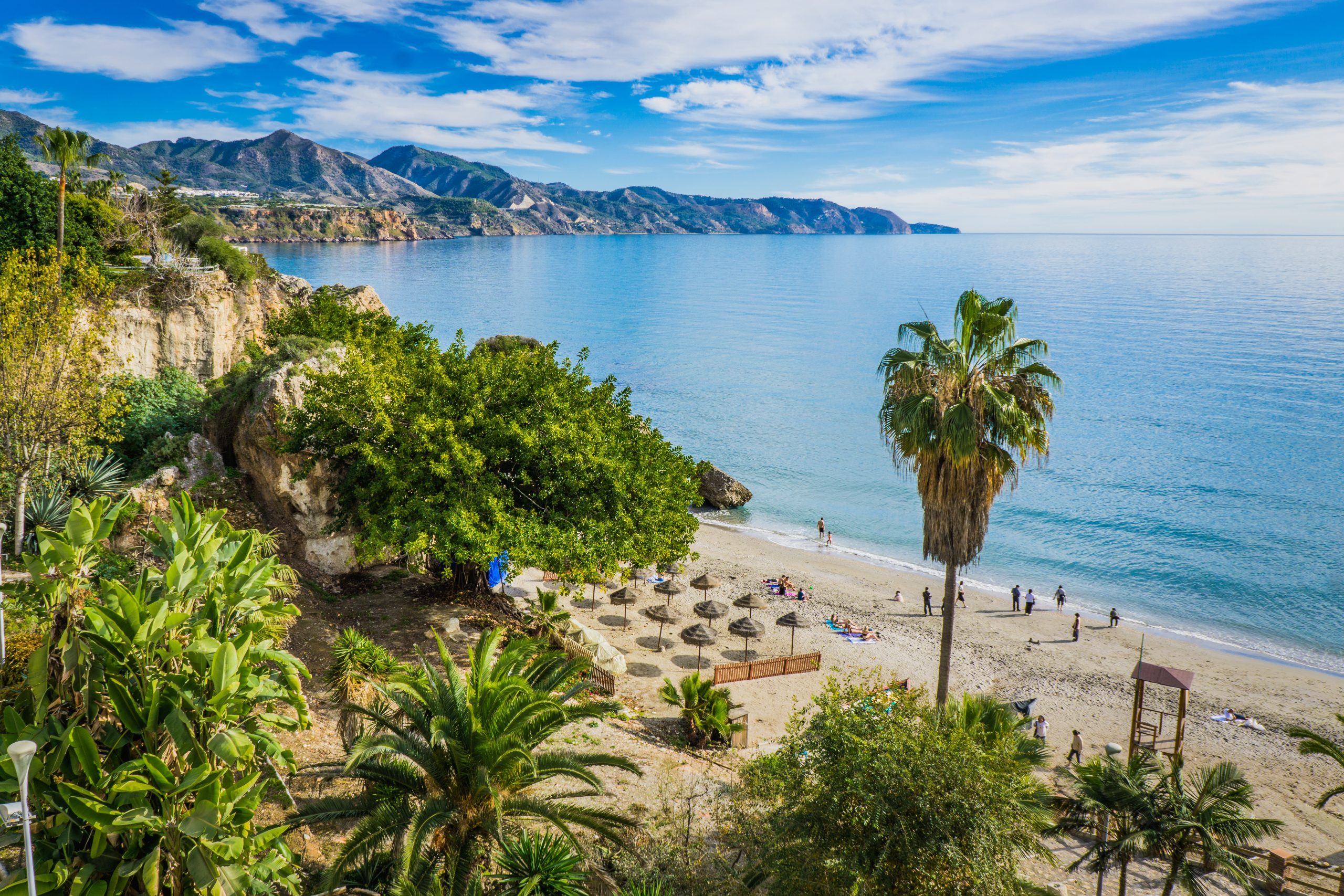
Nerja is the best-known town in the east. The Balcón de Europa viewpoint looks over small coves, and Burriana is the main family beach. The Cueva de Nerja, discovered in 1959, has huge caverns with prehistoric remains and hosts concerts in summer. Beyond the caves, the village of Maro gives access to the cliffs and coves of the Maro-Cerro Gordo protected area, best explored on foot or by kayak.
Inland villages worth knowing
- Frigiliana: a steep, beautifully kept Moorish village above Nerja. The Festival of the Three Cultures, usually in late summer, celebrates its Christian, Muslim and Jewish past.
- Cómpeta: a wine village at the foot of the sierra, known for sweet moscatel wine and its wine night in August.
- La Viñuela: set beside the area’s main reservoir, with walking routes around the lake.
- Sayalonga, Árchez and Canillas de Albaida: small villages with Mudéjar towers and quiet lanes, good for slow travel.
Just across the border in Granada province, Almuñécar and La Herradura on the Costa Tropical are easy day trips from Nerja.
Getting around
- No train: there is no railway east of Málaga city, so travel is by road.
- Buses: metropolitan consortium buses link Málaga with Rincón de la Victoria and Torre del Mar, and intercity buses continue to Torrox, Nerja and beyond. A rechargeable consortium card is cheaper than cash on many routes.
- Car: the A-7 motorway runs along the coast. For the inland villages a car is almost essential, as buses are infrequent.
- Airport: Málaga airport is roughly 45 minutes to an hour from Nerja by car, depending on traffic.
Living in East Málaga
Many newcomers choose this area for its slower pace and lower prices compared with the western Costa del Sol, although Nerja and the coast near Málaga have become expensive too. Torrox Costa and Nerja have strong international communities with clubs and English-speaking services, while Vélez-Málaga and the villages are much more Spanish.
- Housing: village houses and country properties (campos) can be good value, but check access roads, water supply and the legal status of any building before you buy.
- Healthcare: the district hospital is in Vélez-Málaga, with health centres in the larger towns. See our guide to healthcare for foreign residents.
- Connectivity: fibre is common on the coast but patchy in the hills. Check coverage before you rent; our guide to internet and mobile providers helps.
Food and local traditions
Try espetos (sardines grilled on canes), fried fish, ajoblanco (a cold almond and garlic soup) and local tropical fruit. Every town has its summer feria and a patron-saint festival, and Semana Santa processions are especially atmospheric in Vélez-Málaga. Inland villages hold small harvest and raisin festivals in late summer and autumn.
Useful links
- Málaga metropolitan transport consortium (buses and travel card)
- Andalucía Tourist Board (Turismo Andaluz)
- Alhambra visitor information (for a day trip to Granada)
- Málaga for digital nomads
- Healthcare for foreign residents
- Internet and mobile providers in Spain
FAQ: East Málaga
Is Nerja part of the Costa del Sol?
Yes. Nerja is the easternmost large town of the Costa del Sol in Málaga province. The Costa Tropical starts just beyond it, in Granada province.
Can I live in the Axarquía without a car?
On the coast, in Rincón, Torre del Mar or Nerja, it is possible with buses and taxis. In the inland villages and countryside, a car is close to essential.
When is the best time to visit?
Spring and autumn are ideal for walking and village visits. Summer is best for the beaches, but towns are busy and inland hills get very hot.
Is water a problem in the Axarquía?
The area has suffered serious droughts in recent years. Supply is normally reliable in towns, but restrictions can apply in dry periods, and rural properties may depend on wells or shared irrigation water.
Disclaimer: This article is general information only. Timetables, opening times and local rules can change – always check with the official source before you travel or make decisions.







Seville for newcomers: neighbourhoods, sights and everyday life

Working remotely for a foreign company while living in Spain

Holiday rental licence in Andalucía in 2026: rules for owners

Understanding the tax system in Spain

Andalucía guide: cities, culture and life in southern Spain

Marbella guide: areas, beaches and everyday life






-

 Banking & Finances2 years ago
Understanding the tax system in Spain
-
Tourist Info2 years ago
Andalucía guide: cities, culture and life in southern Spain
-
Tourist Info2 years ago
Marbella guide: areas, beaches and everyday life
-
Cost of Living2 years ago
Living on a small salary in Spain in 2026
-
Legal Requirements & Documentation2 years ago
How to get your Spanish NIE number in 2026 – step by step
-
Legal Requirements & Documentation2 years ago
Work visa and work permit in Spain 2026 – which one you need and how to apply
-
Legal Requirements & Documentation2 years ago
Residency in Spain 2026: how to become a legal resident – step by step
-
Tourist Info2 years ago
Benalmádena explained: Pueblo, Arroyo de la Miel and the coast