


















































Spanish System
How the Spanish government works: state, regions, provinces and town halls
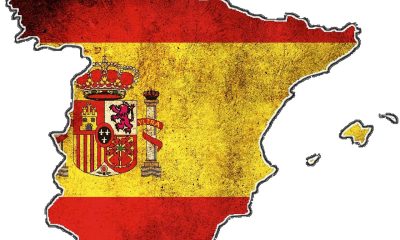
A newcomer’s guide to how Spain is governed: the King, parliament and government, the 17 regions, provinces and town halls – and who handles what.









Updated: October 2026
Why does your health card come from the region, your residence card from the national police and your rubbish collection from the town hall? Spain is one of Europe’s most decentralised countries, and knowing who does what saves newcomers a lot of time. This guide explains the four levels of government – state, autonomous communities, provinces and municipalities – and which one to contact for everyday matters.
The basics: a parliamentary monarchy
Spain’s political system is set out in the Constitution of 1978, approved after the end of the Franco dictatorship. It defines Spain as a parliamentary monarchy. The King – Felipe VI since 2014 – is head of state. His role is mainly symbolic and constitutional: he signs laws, formally proposes the candidate for prime minister and represents Spain abroad, but he does not govern.






 Online pharmacy & parapharmacySkincare, vitamins, baby care and more – delivered in SpainShop now
Vivid BusinessA business account for freelancers and companies in SpainOpen your account online, with sub-accounts and cards for your team.Learn more →(ad)
 Buying a home in Spain? Simulate your mortgageSee your monthly payment with Banco Sabadell’s mortgage simulator.Try the simulator →(ad)
 A bank account for autónomos in SpainCuenta Clara Autónomos: no commissions, free debit and credit cards, opened online.See the account →(ad)
 A European bank you open from your phonebunq: an EU-licensed bank with debit cards, managed fully in the app. Sign up in about five minutes.Get started →(ad)
 A mobile bank account with no commissionsB100, the mobile bank from Abanca: everyday account and free debit card, all in the app.Get the app →(ad)


Article 137 of the Constitution organises the country into municipalities, provinces and autonomous communities, each with self-government over its own affairs.
National level: parliament, government and courts
The Cortes Generales (parliament)
- Congreso de los Diputados: the lower and more powerful chamber. Its 350 deputies are elected by proportional representation, with each province as a constituency. Congress passes laws and chooses – and can remove – the prime minister.
- Senado: the upper chamber, meant to represent the territories. Most senators are elected directly (four per mainland province, with different numbers for the islands, Ceuta and Melilla), and the regional parliaments appoint the rest. The Senate can amend or veto bills, but Congress has the final word.
General elections are held at least every four years. The current legislature runs until 2027, and the prime minister has said the next general election will be held then.
The Government
The Presidente del Gobierno (prime minister) is elected by Congress after each general election, and then appoints the ministers who together form the Council of Ministers. At the time of writing, the prime minister is Pedro Sánchez of the Socialist party (PSOE). The national government is based at La Moncloa in Madrid.
In every province, the national government is represented by a Subdelegación del Gobierno. For foreigners this matters: the immigration offices (Oficinas de Extranjería) that handle residence and work permits depend on it. See our guides to becoming resident in Spain and immigration rules in 2026.







The courts
The judiciary is independent. The Tribunal Supremo is the highest court for ordinary cases, while the Tribunal Constitucional, a separate body, decides whether laws respect the Constitution. Each region also has a High Court of Justice (Tribunal Superior de Justicia).
Autonomous communities: the regions
Spain has 17 autonomous communities plus the two autonomous cities of Ceuta and Melilla. Each has its own parliament, president and government – in Andalucía, for example, the Junta de Andalucía. The regions run many of the services you use most:
- Public healthcare and health cards – see healthcare for foreign residents
- Schools, school admissions and nurseries
- Social services and many benefits
- Some taxes, such as inheritance, gift and property transfer tax, plus the regional part of income tax
- In some regions, their own police and co-official language
The State keeps powers such as foreign affairs, defence, immigration and nationality, the national police and Guardia Civil, and most of the tax system. Read more in understanding the tax system in Spain.
Provinces and town halls
Spain is divided into 50 provinces, such as Málaga, Alicante or Madrid. Each is governed by a provincial council (Diputación provincial), which mainly supports smaller towns with services and funding. In the Canary Islands each island has a Cabildo, and in the Balearics a Consell.
The level closest to you is the municipality. There are 8,132 of them, each run by an ayuntamiento (town hall) led by a mayor (alcalde or alcaldesa) and councillors. Town halls handle the padrón (register of residents), local police, rubbish collection, urban planning, building licences and local taxes such as the IBI property tax.
Municipal elections take place every four years, with the next ones due in May 2027. EU citizens registered on the padrón can vote and stand in them, and so can citizens of some non-EU countries with a reciprocity agreement, such as the UK and Norway, after a period of legal residence.
Who to contact for what
| Task | Level | Where |
|---|---|---|
| Register as a resident (padrón) | Municipal | Town hall |
| Residence card, NIE, TIE | State | Extranjería office / Policía Nacional |
| Health card, doctor | Regional | Regional health service |
| School place | Regional | Regional education department or the school |
| Income tax | State (with regional part) | Agencia Tributaria |
| Property tax (IBI), rubbish tax | Municipal | Town hall or provincial tax office |
| Driving licence | State | DGT (traffic department) |
Who to call when you need the police is a separate question – see our guide to the police in Spain. Applying for nationality? The CCSE exam tests exactly these topics; our guide to learning Spanish explains the exam.
Useful links
- BOE – Spanish Constitution (consolidated text)
- INE – number of municipalities by province and region
- Eurydice (EU) – Spain’s main executive and legislative bodies
- Becoming resident in Spain
- The police in Spain: who does what
FAQ: Spanish government
Who runs Spain, the King or the prime minister?
The prime minister and the government run the country. The King is head of state, with a largely ceremonial and constitutional role.
How many regions does Spain have?
Seventeen autonomous communities plus the autonomous cities of Ceuta and Melilla. Together they contain 50 provinces and 8,132 municipalities.
Can foreigners vote in Spain?
EU citizens can vote in municipal and European elections, and citizens of some countries with agreements can vote in municipal elections. Only Spanish citizens vote in general and regional elections.
What is the difference between the Junta and the Ayuntamiento?
The Junta (in Andalucía) is the regional government, responsible for health and education. The Ayuntamiento is your town hall, responsible for local services and the padrón.
Disclaimer: This article is general information only and is not legal advice. Political offices and responsibilities can change – always check with the official source before you act.


Pets
Adopting a dog or cat in Spain: shelters, rules and how it works
How to adopt a dog or cat from a Spanish shelter: the steps, what the animal welfare law requires and shelters on the Costa del Sol.

Updated: October 2026
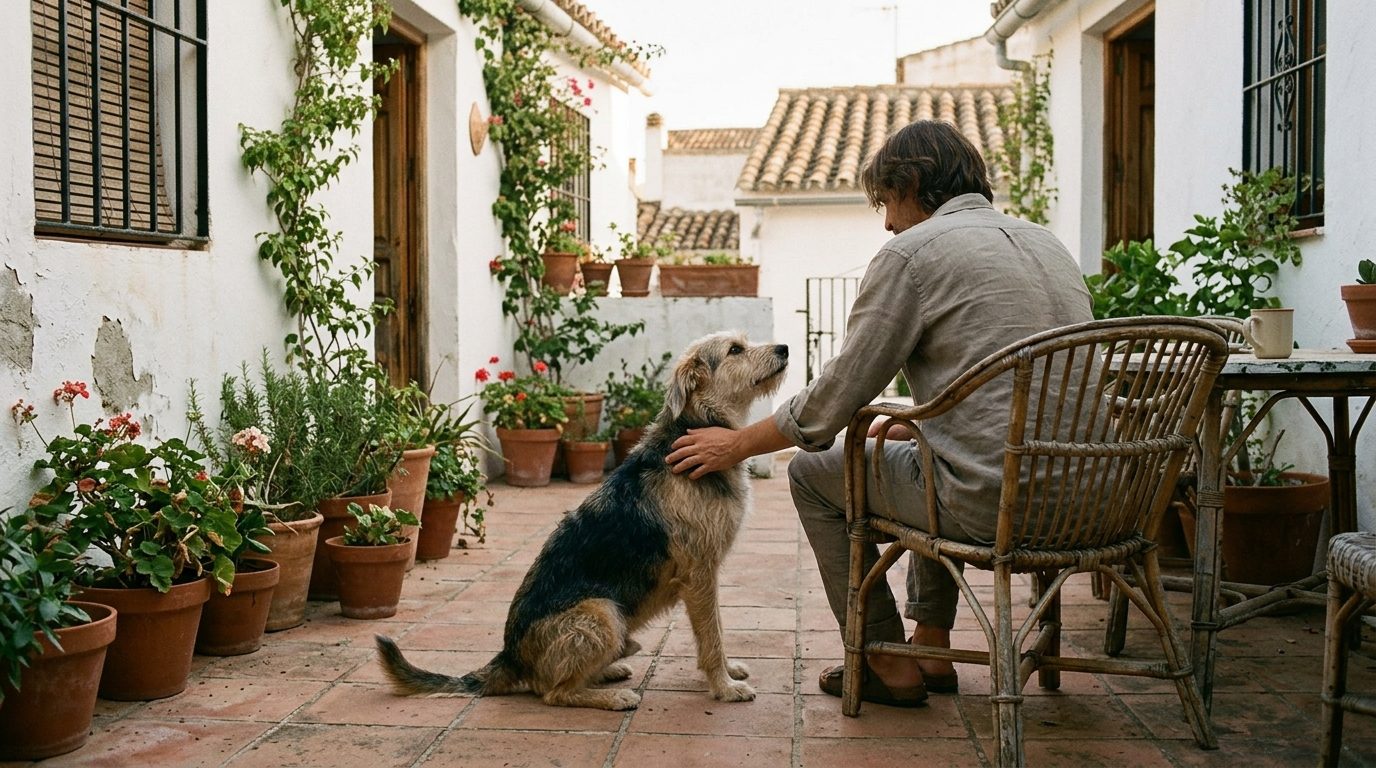
Spain’s animal shelters are full of dogs and cats waiting for a home, and many foreign residents adopt within months of arriving. Adopting is usually cheaper than buying, the animal comes vaccinated, microchipped and often sterilised, and you give a home to an animal that really needs one. This guide explains how adoption works in Spain, what the animal welfare law expects from you and where to start on the Costa del Sol.
Why adopt in Spain
- Many animals need homes. Abandonment is still a problem in Spain, especially after summer and the hunting season, when many hunting dogs (galgos and podencos) are left behind.
- Pet shops can no longer sell dogs and cats. Under the animal welfare law (Ley 7/2023), dogs, cats and ferrets may only be sold directly by registered breeders, so adoption from a shelter is one of the main routes to a new pet.
- The animal comes prepared. Shelters normally hand over animals with a microchip, the basic vaccinations, a health check and – depending on age – sterilisation.
How adoption works, step by step
- Look online first. Most shelters show their animals on their website or social media, with age, size and character. Many also have English-speaking volunteers.
- Fill in an adoption form. Expect questions about your home, garden, working hours, other pets, children and whether you rent (some shelters ask for the landlord’s permission).
- Meet the animal. You visit the shelter, walk the dog or meet the cat, often more than once. Bring the whole family and any dog you already have.
- Home check. Some shelters visit your home or ask for photos of the garden and fences.
- Contract and fee. You sign an adoption contract and pay an adoption fee that helps cover vaccines, microchip and sterilisation. The contract usually lets the shelter follow up and requires you to return the animal to them, not give it away, if things do not work out.
- Registration. The microchip is transferred to your name in the regional pet register – in Andalucía the RAIA. The shelter or your vet arranges this.
Fostering: try before you commit
If you are not sure you can adopt – for example because you may move again soon – consider fostering (acogida). You look after an animal at home for a few weeks or months while the shelter looks for a permanent family. Shelters usually cover food and vet costs. It is also a good way to find out whether a dog suits your lifestyle.
Online pharmacy & parapharmacySkincare, vitamins, baby care and more – delivered in SpainShop now
Vivid BusinessA business account for freelancers and companies in SpainOpen your account online, with sub-accounts and cards for your team.Learn more →(ad)
Buying a home in Spain? Simulate your mortgageSee your monthly payment with Banco Sabadell’s mortgage simulator.Try the simulator →(ad)
A bank account for autónomos in SpainCuenta Clara Autónomos: no commissions, free debit and credit cards, opened online.See the account →(ad)
A European bank you open from your phonebunq: an EU-licensed bank with debit cards, managed fully in the app. Sign up in about five minutes.Get started →(ad)
A mobile bank account with no commissionsB100, the mobile bank from Abanca: everyday account and free debit card, all in the app.Get the app →(ad)
What the animal welfare law expects from you
The national animal welfare law (Ley 7/2023) applies to every pet owner in Spain, foreign residents included. The main points:
- Dogs, cats and ferrets must be microchipped and registered.
- Animals may not be left alone for long periods – for dogs, not more than 24 hours in a row – and must not live permanently on a terrace, balcony or roof.
- Cats must be sterilised before six months of age, unless they are registered for breeding.
- The law also foresees a free course for dog owners and compulsory third-party liability insurance for dogs, but both still depend on a regulation that has not been approved yet. Until then, insurance is only compulsory for potentially dangerous dogs (PPP) and where regional or local rules require it. Many owners take it out anyway, because it is cheap protection if the dog causes an accident.
More detail in our guide to Spain’s animal welfare law and to pet insurance in Spain. If you want cover for vet bills and liability, providers such as Petplan (ad) offer pet insurance in Spain.
Shelters on the Costa del Sol and in Málaga province
These are some of the shelters and rescue groups in the area. Most welcome adopters, foster homes and volunteers – contact them first, as opening hours and needs change.
- Sociedad Protectora de Animales y Plantas de Málaga – Málaga city. protectoramalaga.com
- Suspiros de Cuatro Patas – Málaga. suspirosdecuatropatas.org
- Asociación Protectora Fidelio – Benalmádena. asociacionfidelio.org
- PAD (Protectora de Animales Domésticos) – Mijas. padmijas.org
- ACE / SHIN – Mijas. ace-charity.org
- Triple A Marbella – Marbella and San Pedro. tripleamarbella.org
- ADANA – Estepona. adana.es
- Galgos en Familia – greyhound rescue, Málaga. galgosenfamilia.org
- Axarquía Animal Rescue – east of Málaga. axarquiaanimalrescue.com
See all our pet guides and the full shelter list on Pets in Spain.
Before you bring your new pet home
- Register with a local vet and ask about vaccines, parasite protection and the leishmaniasis vaccine or collar for dogs – leishmaniasis is spread by sandflies and common in southern Spain.
- Check your rental contract or community rules on pets.
- Plan for summer: shade, water and walks early and late in the day.
- If you may travel, ask your vet for an EU pet passport.
Useful links
- BOE: Ley 7/2023 on animal rights and welfare (Spanish)
- Moving to Spain with a dog or cat
- Pet insurance in Spain
- Pets in Spain: all guides and shelters
FAQ: adopting a pet in Spain
Can foreigners adopt a dog or cat in Spain?
Yes. Shelters adopt to foreign residents all the time. You usually need ID (passport or NIE) and an address in Spain, and some shelters ask how long you plan to stay.
How much does it cost to adopt?
Shelters charge an adoption fee that covers part of the vaccines, microchip and sterilisation. The amount varies by shelter and animal – ask the shelter directly.
Can I adopt from Spain if I live abroad?
Some shelters rehome animals abroad with the right paperwork and transport. Ask the shelter, and check your home country’s import rules.
Is dog insurance compulsory in Spain?
The law foresees it, but the regulation that makes it compulsory for all dogs has not been approved yet. It is already compulsory for potentially dangerous dogs and where local rules require it.
Disclaimer: This article is general information, not legal or veterinary advice. Rules and shelter details change; check with the shelter, your vet or the town hall. Links marked “(ad)” are affiliate links – NewInSpain may earn a commission at no extra cost to you.
Spanish System
The ITV car inspection in Spain: what to expect
When your car needs the ITV, how to book in Andalucía, what inspectors check, what the results mean and how to avoid a fail.
Updated: October 2026
The ITV (Inspección Técnica de Vehículos) is Spain’s compulsory roadworthiness test, similar to the MOT in the UK or the TÜV in Germany. If you own a car in Spain, you will deal with it sooner or later. This guide explains when your car is due, how to book, what happens at the station and what to do if the car does not pass.
When does your car need the ITV?
All vehicles registered in Spain must pass periodic inspections to be driven on public roads. For a normal private car the schedule is:
Online pharmacy & parapharmacySkincare, vitamins, baby care and more – delivered in SpainShop now
Vivid BusinessA business account for freelancers and companies in SpainOpen your account online, with sub-accounts and cards for your team.Learn more →(ad)
Buying a home in Spain? Simulate your mortgageSee your monthly payment with Banco Sabadell’s mortgage simulator.Try the simulator →(ad)
A bank account for autónomos in SpainCuenta Clara Autónomos: no commissions, free debit and credit cards, opened online.See the account →(ad)
A European bank you open from your phonebunq: an EU-licensed bank with debit cards, managed fully in the app. Sign up in about five minutes.Get started →(ad)
A mobile bank account with no commissionsB100, the mobile bank from Abanca: everyday account and free debit card, all in the app.Get the app →(ad)
| Age of the car | How often |
|---|---|
| 0–4 years | No inspection |
| 4–10 years | Every 2 years |
| Over 10 years | Every year |
Motorcycles, vans, taxis, campers and classic cars have their own schedules. The due date is shown on your ITV card (tarjeta ITV) and on the sticker on the windscreen. You can also check it in the DGT vehicle report or in the miDGT app.
According to the DGT, you can pass the inspection up to 30 days before the deadline without losing your due date, so passing early does not shorten your next period. You are also free to use any ITV station in Spain, not only one in your province.
Booking the ITV in Andalucía
In Andalucía the ITV stations are run by VEIASA, a public company owned by the Junta de Andalucía. On the Costa del Sol you should book an appointment (cita previa), because walk-ins are rarely possible and stations get busy, especially before summer and at the end of the year.
- Go to VEIASA’s booking site (itvcita.com) or use its app.
- Enter the number plate and either the first registration date or the chassis number.
- Choose a station, date and time. Book at least a week or two ahead if your deadline is close.
- Pay online when you book or at the station by card.
Prices are set regionally and depend on the type of vehicle and fuel. For a normal car in Andalucía the fee is usually below €50, and a re-inspection after a fail costs less. Check the current price list when you book. In other regions prices can be noticeably higher or lower, and some regions have private stations competing on price.
What to bring and what happens at the station
- Permiso de circulación: the vehicle registration certificate.
- Tarjeta ITV / ficha técnica: the technical card where previous inspections are recorded.
- Proof of insurance: usually not checked on paper, but the car must be insured.
- Booking confirmation: on your phone or printed.
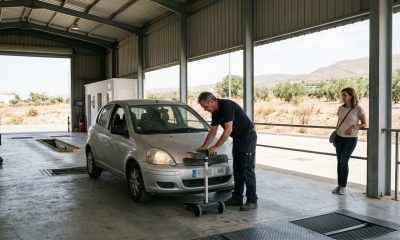
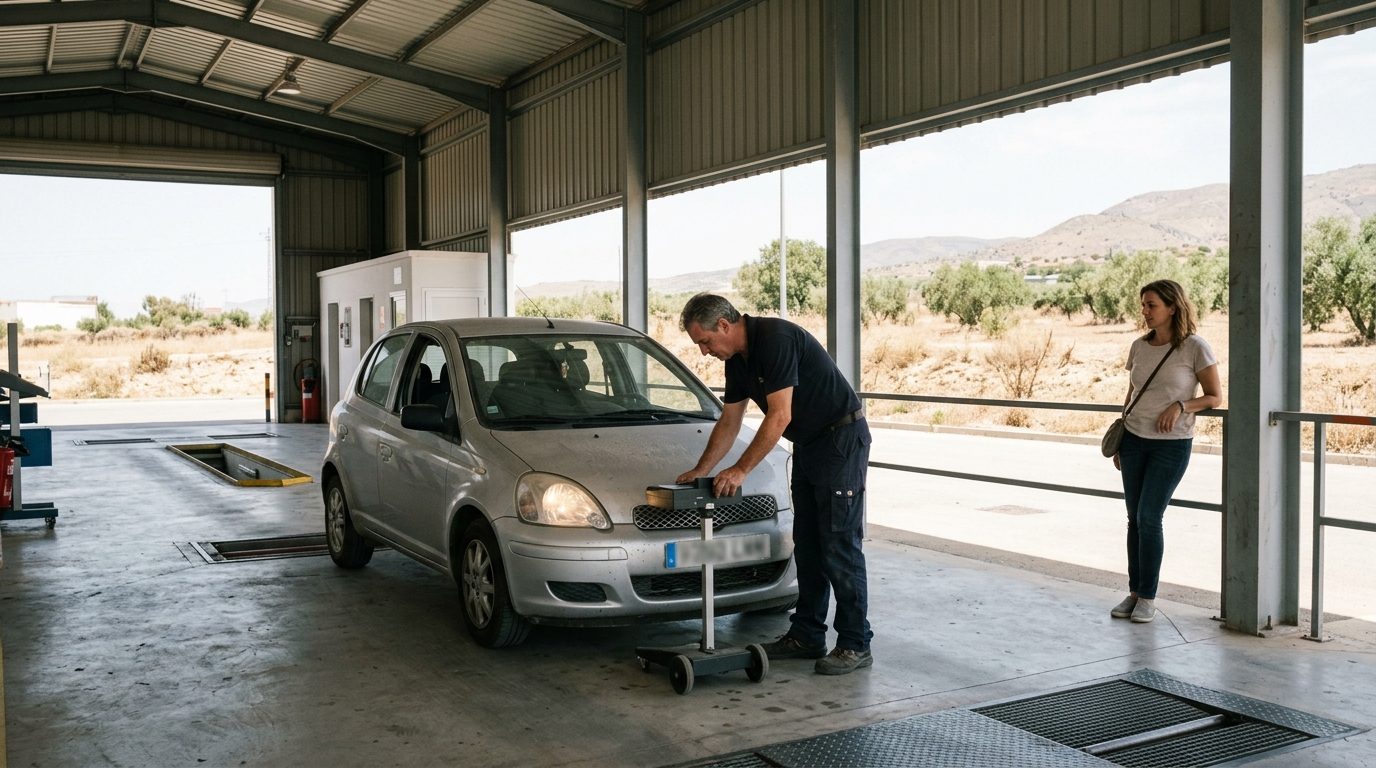
Anyone can take the car to the inspection; it does not have to be the owner. At the station you drive into an inspection lane, and the inspector usually asks you to stay in the car to work lights, indicators, horn and wipers, and to brake on the rollers. The whole test normally takes around 20 to 30 minutes.
What the inspectors check
The DGT’s overview of the ITV lists the main areas:
- Identification: plate and chassis number must match the documents.
- Bodywork and glass: no dangerous rust or sharp edges, intact windscreen, working wipers and mirrors.
- Interior: seats firmly fixed, seatbelts working, demisting and speedometer working.
- Lights: all lights working and headlights correctly aimed.
- Emissions and noise: measured against limits for the car’s age and fuel.
- Brakes, steering, suspension and tyres: braking force and balance, play in the steering, worn shock absorbers, approved tyres with enough tread.
- Engine and underside: oil and fuel leaks, exhaust condition and mountings.
The results: favourable, unfavourable or negative
- Favorable (pass): you get a new stamp on the ITV card and a new sticker. Minor defects may be noted, and you should fix them, but you can drive until the next inspection.
- Desfavorable (fail): the car has serious defects. You may only drive it to a workshop and back to the station, and you must return for a re-inspection within the period stated on the report, normally two months.
- Negativa (dangerous): very serious defects. The car may not be driven at all and must be taken away on a tow truck.
The result is recorded in the DGT register, so it appears in the vehicle report together with the mileage at each inspection. That is one reason buyers of used cars check the ITV history first; see our guide to buying a car in Spain.
The windscreen sticker
After a pass you receive a sticker (distintivo) showing the month and year of the next inspection. It goes on the inside of the windscreen, in the top corner on the passenger side. Remove the old one first.
Tips to pass first time
- Walk around the car with someone and check every bulb, including number plate, brake and fog lights.
- Check tyre tread and look for cracks or bulges. All tyres must match the sizes allowed for the car.
- Make sure no warning lights are on, especially engine, airbag and ABS lights.
- Top up washer fluid and replace worn wiper blades.
- Drive for a while before the test so the engine is warm for the emissions check.
- If you have changed anything on the car, such as a tow bar, larger wheels or a camper conversion, check whether it needed approval (homologación). Unapproved modifications are a common reason to fail.
Since January 2026, cars in Spain must carry a connected V16 warning beacon instead of warning triangles. It is not part of the classic ITV test list, but make sure you have one in the car.
What if your ITV has expired?
There is no grace period. Driving with an expired ITV can lead to a fine, commonly €200 and reduced if paid early, and your insurer may refuse to cover damage to your own car after an accident. If your ITV has expired, book the earliest appointment you can. Strictly, the car should only be moved to the station, and many owners use a tow service to be on the safe side.
If you are bringing a foreign-registered car to Spain, the first Spanish ITV is part of the registration process and is more detailed. Read our guide to registering a foreign car in Spain, and make sure your car insurance is valid in Spain.
Useful links
- DGT: common questions about the ITV
- DGT: everything checked at the ITV
- DGT: understanding the vehicle report
- Buying a car in Spain
- Driving licence rules in Spain
FAQ: the ITV in Spain
Can I take my car to an ITV station in another province?
Yes. You can choose any ITV station in Spain, both for the main inspection and for a re-inspection after a fail.
Does the owner have to be present?
No. Anyone with the car’s documents can take it to the inspection.
If I pass a month early, do I lose that month?
No. If you pass within 30 days before the due date, the next deadline is counted from the original due date.
Is the inspection done in English?
Usually in Spanish, though staff on the coast are used to foreign drivers. Inspectors mostly use simple instructions such as luces (lights), freno (brake) and intermitente (indicator).
Disclaimer: This article is general information only and is not legal advice. Inspection rules, prices and fines can change – always check with the DGT or your regional ITV operator before you act.
Spanish System
Moving to Spain: checklist for your first 30 days
A week-by-week checklist for your first month in Spain: phone, bank, NIE, padrón, residency, Social Security, healthcare and the practical bits people forget.
Updated: October 2026
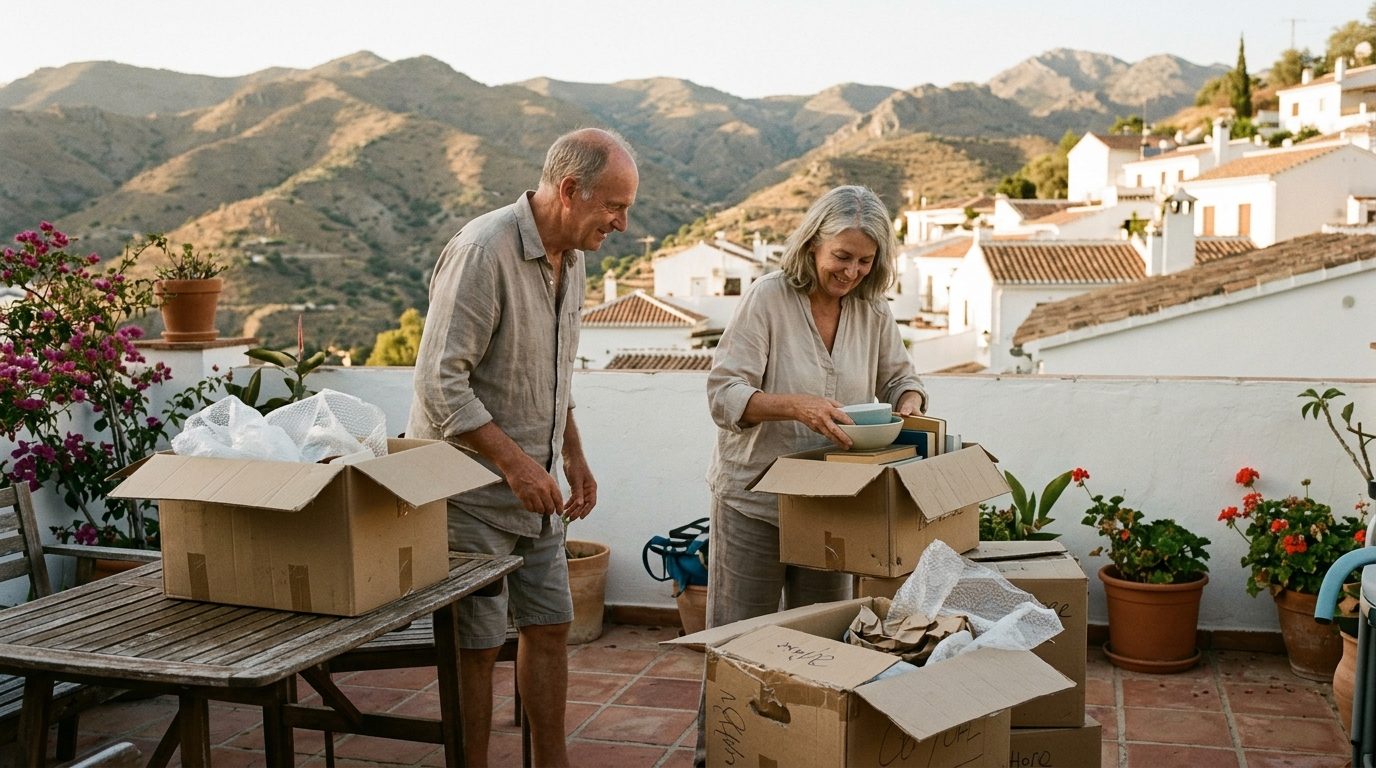
The first month in Spain is when paperwork piles up fastest. Many steps depend on each other – the bank wants your NIE, the padrón wants a rental contract, healthcare wants the padrón – so doing things in the right order saves weeks. This checklist is for anyone who has just arrived to live in Spain, whether you are an EU citizen, a visa holder or a digital nomad. It is organised week by week, with links to our detailed guides for each step.
Before you land: documents to have ready
Spanish offices love paper. Arrive with originals and copies of everything below, kept together in one folder:
Online pharmacy & parapharmacySkincare, vitamins, baby care and more – delivered in SpainShop now
Vivid BusinessA business account for freelancers and companies in SpainOpen your account online, with sub-accounts and cards for your team.Learn more →(ad)
Buying a home in Spain? Simulate your mortgageSee your monthly payment with Banco Sabadell’s mortgage simulator.Try the simulator →(ad)
A bank account for autónomos in SpainCuenta Clara Autónomos: no commissions, free debit and credit cards, opened online.See the account →(ad)
A European bank you open from your phonebunq: an EU-licensed bank with debit cards, managed fully in the app. Sign up in about five minutes.Get started →(ad)
A mobile bank account with no commissionsB100, the mobile bank from Abanca: everyday account and free debit card, all in the app.Get the app →(ad)
- Passport (and national ID card for EU citizens), valid for the whole stay.
- Visa and approval letter if you are a non-EU citizen.
- Birth and marriage certificates, with an apostille and official translation where needed – especially if family members will join you.
- Proof of income or employment and private health insurance documents, if your residency route requires them.
- Passport photos – several. Many forms still ask for them.
- Your driving licence and any vehicle documents if you are bringing a car.
Days 1–7: get connected and find your feet
- Get a Spanish mobile number. A prepaid SIM is enough to start and you will need a Spanish number for banks, appointments and verification codes. Compare options in our guide to internet and mobile providers.
- Save the emergency number 112. It works across Spain for police, ambulance and fire, with operators who often speak English.
- Book your NIE or residency appointment. Appointments (cita previa) at the foreigners’ office or police station can be booked weeks ahead in busy areas, so do this first, even before you have everything else. See how to get your NIE.
- Secure a place to live. A signed rental contract is the key to the padrón, utilities and often the bank. Read our guide to renting as a foreigner before you pay a deposit.
- Keep using your home bank card for now, but check its foreign transaction fees.
Days 7–14: address, bank and utilities
- Register on the padrón at your town hall. The certificado de empadronamiento is asked for by healthcare, schools, residency and many other procedures. Our padrón guide explains the documents.
- Open a Spanish bank account. You will need it for rent, utilities, salary and direct debits, and it unlocks Bizum for quick payments. See how to open a bank account.
- Put utilities in your name – electricity, water, gas and internet – or confirm with your landlord which are included. Our utility bills guide covers contracts and typical pitfalls.
- Consider home contents insurance. Some landlords require it. See home insurance in Spain.
Days 14–30: residency, Social Security and healthcare
Residency documents
- Non-EU visa holders: apply for your TIE (foreigner identity card) – the fingerprinting appointment should be requested within one month of entering Spain.
- EU, EEA and Swiss citizens: if you are staying more than three months, register as an EU resident and get the registration certificate (the green certificate) that shows your NIE.
Requirements depend on your route, so read our residency guide and the 2026 immigration rules before your appointment.
Social Security number
If you will work as an employee or autónomo, request your Social Security number (NUSS). It can be done online through Import@ss, even without a digital certificate, by uploading your ID and a selfie. Employers often handle it, but having the number ready speeds up your first payroll.
Healthcare
Once you are registered with Social Security or have the right to public healthcare by another route, apply for your health card and register with a local health centre. Until then, keep your travel or private insurance active. Our guide to healthcare for foreign residents covers the options.
Digital identity
As soon as you have your NIE document, get the FNMT digital certificate and register in Cl@ve. They let you deal with tax, Social Security, traffic and town hall procedures online instead of queuing – and you will need them for your first tax return.
Quick checklist table
| Task | When | What you usually need |
|---|---|---|
| Spanish SIM card | Week 1 | Passport |
| NIE / residency appointment booked | Week 1 | Passport, visa if any |
| Rental contract signed | Week 1–2 | Passport or NIE, proof of income, deposit |
| Padrón registration | Week 2 | ID, rental contract or deeds |
| Bank account | Week 2 | ID, NIE (or NIE application), address |
| Utilities and internet | Week 2 | ID, bank account, contract |
| TIE or EU registration certificate | Weeks 2–4 | Depends on residency route |
| Social Security number | Weeks 2–4 | NIE or passport, form TA.1 |
| Health card | After Social Security / residency | Padrón, ID, Social Security details |
| Digital certificate and Cl@ve | After NIE document | NIE document, passport |
Things people often forget
- Tax residency: spending more than 183 days a year in Spain usually makes you tax resident, with worldwide income to declare. Read the Spanish tax system explained early and consider a gestor.
- Driving licence: rules on using or exchanging a foreign licence depend on where it was issued. Check our driving licence guide.
- Car insurance: if you bring or buy a car, it must be insured from day one – see car insurance for expats.
- Your consulate: many countries let citizens abroad register with their embassy or consulate, which helps in emergencies and with elections.
- Schools: if you have children, check enrolment dates with your town hall or regional education department straight away – places fill up.
- Your social life: paperwork can be draining. Join a club, class or language exchange early – our guide to building a social life in Spain has ideas.
Useful links
- administracion.gob.es – registering in Cl@ve
- FNMT – digital certificate identity check
- Import@ss – request your Social Security number (Spanish)
- Cost of living in Spain
- Family living costs and moving-in money
FAQ: your first month in Spain
What should I do first when I move to Spain?
Get a Spanish phone number and book your NIE or residency appointment straight away, because appointment waiting times are often the slowest part of the whole process.
Can I open a bank account before I have an NIE?
Some banks open non-resident accounts with just a passport, but terms and fees are often worse. Many people open one first and switch to a resident account once they have their NIE document.
Do I need the padrón if I am renting short term?
If you live in Spain, you should register at the address where you actually live. Short-term contracts can be accepted, but rules vary by town hall, so check locally.
Is everything really doable in 30 days?
Not always. Appointment availability varies a lot by city, so some steps may spill into your second or third month. The important thing is to start them in the right order.
Disclaimer: This article is general information only and is not legal or tax advice. Requirements depend on your nationality and residency route and can change – always check with the official source, and consider a gestor or immigration lawyer for your specific case.




 Ad
 A sea-view escape in MallorcaThe Donna Portals – stay by the sea with views over the Mediterranean.See prices →

 Vivid BusinessA business account for freelancers and companies in SpainOpen your account online, with sub-accounts and cards for your team.✓ For autónomos and companies
✓ Sub-accounts for budgets and taxes
✓ Cards for your teamLearn more →(ad)
 A European bank you open from your phoneSign up with bunq in about five minutes.Get started →(ad)


Private blood tests and health check-ups in Spain: how they work

Renting a car in Spain: what to check before you sign

Rebajas: when the sales start in Spain and your rights

Andalucía guide: cities, culture and life in southern Spain

Understanding the tax system in Spain

Marbella guide: areas, beaches and everyday life






-

 Tourist Info2 years ago
Andalucía guide: cities, culture and life in southern Spain
-
Banking & Finances2 years ago
Understanding the tax system in Spain
-
Tourist Info2 years ago
Marbella guide: areas, beaches and everyday life
-
Cost of Living2 years ago
Living on a small salary in Spain in 2026
-
Tourist Info2 years ago
Benalmádena explained: Pueblo, Arroyo de la Miel and the coast
-
Cost of Living2 years ago
Family living costs in Spain in 2026: monthly budget and moving-in money
-
Insurance2 years ago
Understanding insurance in Spain: a 2026 guide for expats
-
Legal Requirements & Documentation2 years ago
How to get your Spanish NIE number in 2026 – step by step