






















































Sport
Padel in Spain: how to get started, find courts and choose your gear
How padel works, how to find courts and players in Spain, what gear beginners need and the etiquette to know.









Updated: October 2026
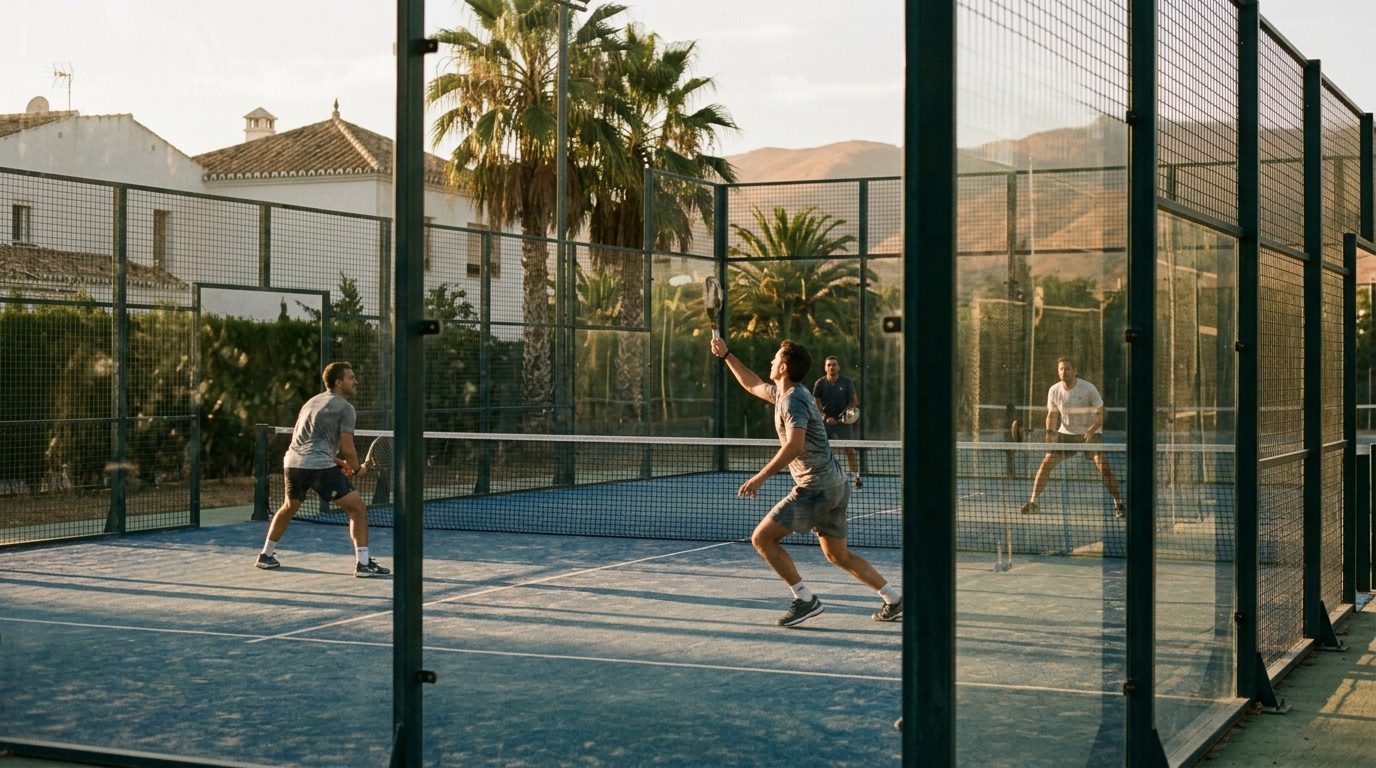
If you want to meet people quickly after moving to Spain, few things work as well as padel. It is the country’s fastest-growing sport, almost every town has courts, and games are played in fours, so you are never short of company. This guide explains how padel works, how to find courts and other players, and what gear you need to get started.
Why padel is so big in Spain
According to the International Padel Federation, Spain had around 17,000 padel courts and close to 4,500 clubs and facilities in 2024, and the Spanish Padel Federation issued a record 109,040 player licences. That is one court for roughly every 2,800 people. Andalucía and Catalonia have the most courts, so on the Costa del Sol you will rarely be far from one.







Padel is easy to pick up. The court is smaller than a tennis court, the ball is slower, and the walls keep the ball in play, so even beginners have long rallies in their first game. It is also very social: matches are almost always doubles, and many clubs organise mixed games, leagues and tournaments for every level.
The basic rules in one minute
- Padel is played in pairs on an enclosed court of 20 × 10 metres with glass and mesh walls.
- The serve is underarm and must bounce once on the ground before you hit it, diagonally into the opponent’s service box.
- The ball may bounce once on the ground and can then hit the walls, like in squash. You can also play it off your own walls back over the net.
- Scoring is the same as in tennis: 15, 30, 40, game, and sets of six games.
How to find courts and players
- Booking apps: most clubs let you book courts online, and apps such as Playtomic also let you join open matches with players of your level. It is the easiest way to play when you do not know anyone yet.
- Clubs and sports centres: private clubs offer classes, social mornings and leagues. Many municipal sports centres (polideportivos) have cheaper courts for residents registered on the padrón.
- Classes: a few group lessons help you learn the walls and positioning, and they are a good way to meet regular players.
- Expat groups: many international communities on the coast have padel groups on WhatsApp or Facebook. See also our guide to joining a sports team in Spain.
Court hire is paid per court for 60 or 90 minutes and usually split between the four players, which makes padel one of the cheaper ways to play sport regularly.
What you need to get started
- Racket (pala): clubs rent rackets, so you do not need to buy one for your first games. When you do, beginners usually do best with a round, lighter racket with a soft core, which is easier to control than the diamond-shaped rackets the professionals use.
- Shoes: padel or clay-court shoes with a herringbone sole grip the artificial grass and sand of the courts. Running shoes are slippery and can lead to injuries.
- Balls: padel balls look like tennis balls but have slightly less pressure. Bring a new tin for each match or two.
- Sun protection and water: many courts are outdoors. In summer, book early mornings or evenings.
Specialist shops have the widest choice of rackets, shoes and bags for every level. You can compare beginner and intermediate rackets at Padel ProShop (ad).
Etiquette worth knowing
- Arrive on time: courts are booked by the hour and the next group will be waiting.
- Bring a new tin of balls if it is your turn, and offer to split the court fee.
- Be honest about your level when you join open matches. A mixed-level game is less fun for everyone.
- Greet the other players and shake hands or say “buen partido” at the end. Padel is a social game.
Useful links
- International Padel Federation: padel in Spain in 2024 (courts and licences)
- Federación Española de Pádel (Spanish Padel Federation)
FAQ: padel in Spain
Do I need a licence to play padel in Spain?
No. You only need a federation licence if you want to play official federation competitions. For social games, classes and club leagues, you just book a court.
Can I play padel if I have never played tennis?
Yes. Padel is easier to learn than tennis because the court is smaller, the serve is underarm and the walls keep the ball in play. Many players start with no racket sport experience.
How do I find other players at my level?
Booking apps and clubs let you join open matches by level. Group classes and expat padel groups are also good ways to find regular partners.
What kind of racket should a beginner buy?
A round, relatively light racket with a soft core gives more control and is kinder on the arm. Try a few rental rackets at the club before you buy.
Disclaimer: This article is general information only. Prices, club rules and booking systems vary – check with the club or sports centre before you play.







Sport
Joining a sports team in Spain: a guide for expats
How to find a sports team or club in Spain, from municipal sports centres and padel to running groups, plus what to expect with registration, licences and fees.
Updated: October 2026
Joining a team is one of the easiest ways to build a routine and a circle of friends in a new country. This guide is for expats of any level, from former competitive players to complete beginners, who want to get active in Spain. You will learn which sports are easiest to join, how municipal sports centres work, what paperwork clubs ask for and how to choose a team that suits you.
Why sport is a shortcut to Spanish life
Sport in Spain is strongly local. Teams are tied to a neighbourhood or town, training sessions are followed by a drink in the bar next to the pitch, and the same group often meets for meals and trips. Because you see the same people every week, friendships form naturally, and you pick up Spanish in a relaxed setting where nobody minds mistakes.
Popular sports and how to get into them
- Padel: hugely popular across Spain, easy to learn and played in fours, which makes it very social. Clubs run beginner classes, mixed leagues and “americanas” (social tournaments where partners rotate).
- Football: almost every town has amateur teams, including veteran teams for over-35s, five-a-side (fútbol sala) leagues and women’s teams.
- Running: running clubs meet several times a week and train for the many popular races held across the country. Most welcome all paces.
- Cycling and hiking: clubs organise weekend road rides, mountain bike routes and walks. Hiking clubs (clubes de montaña) are a great way to discover the area.
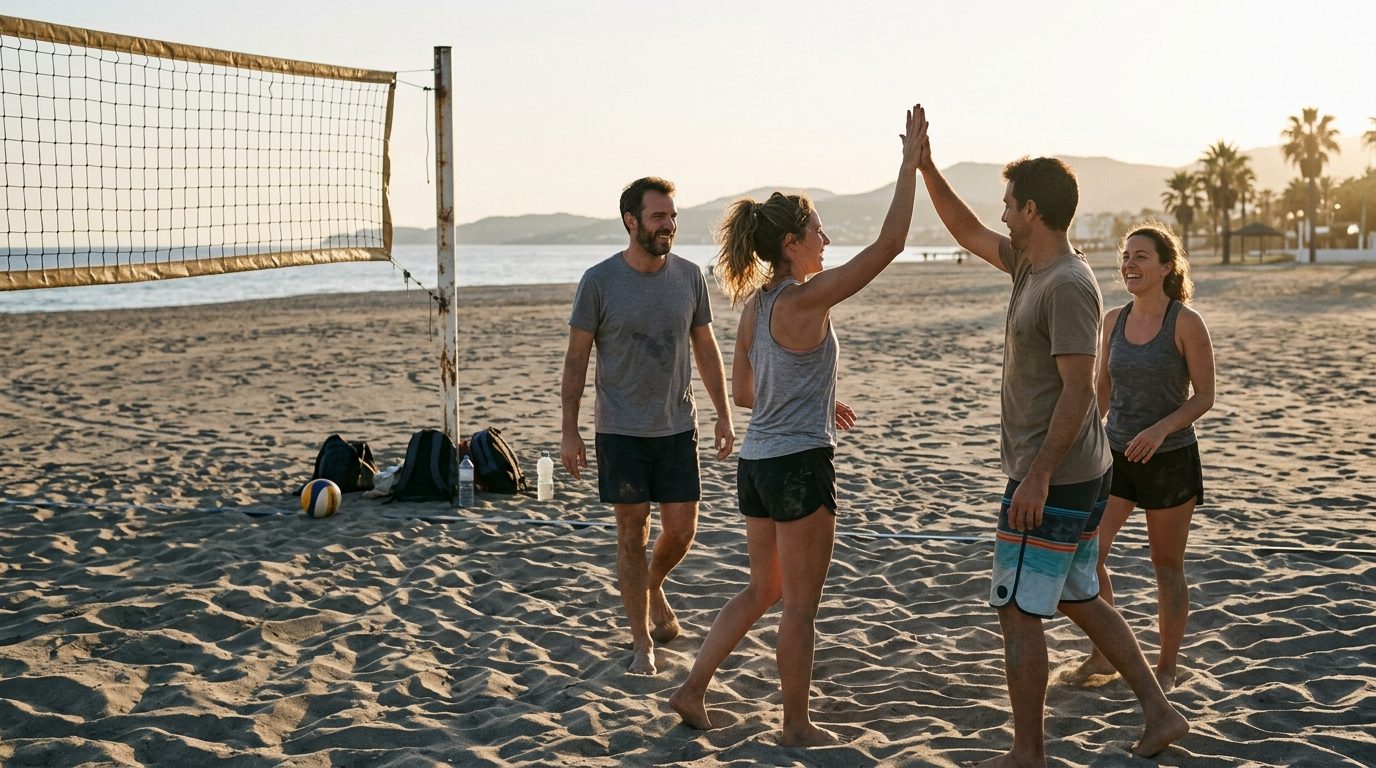
- Basketball and volleyball: municipal leagues and beach volleyball groups exist in most medium-sized towns.
- Sports with international roots: rugby, cricket, ultimate frisbee and hockey clubs often have a mix of Spanish and foreign players and are especially welcoming to newcomers.
- Water sports: on the coast, rowing, sailing, kayaking and swimming clubs offer courses and group outings.
Start at your municipal sports centre
Most towns run public sports facilities (polideportivos or centros deportivos municipales) with pools, courts, gyms and classes. They usually offer a membership card or per-activity fees, and residents registered on the padrón often pay lower prices than non-residents. The sports department (área de deportes) of your town hall also organises local leagues and can tell you which clubs train in its facilities.
New seasons and course registration usually open in September, with a second intake in January, so these are good moments to sign up.
How to join a team step by step
- Find options: ask at the polideportivo, check the town hall’s sports page, search social media for “club” plus the sport and your town, or look on Meetup for informal groups.
- Ask for a trial: most clubs let you join a session or two before committing.
- Register: bring your NIE, TIE or passport. Some clubs ask for a photo and bank details for monthly fees.
- Check the licence: if the team plays in official competitions, you will need a federation licence (licencia federativa), which normally includes sports accident insurance. The club usually arranges it for you.
- Medical check: some federations or clubs ask for a medical certificate, especially for older players or demanding sports.
Costs and what to expect
Fees vary widely by sport, town and club. Municipal activities and informal running groups tend to be the cheapest, while private padel or tennis clubs and sports with travel to away games cost more. Ask clearly what the fee covers: training, kit, competition fees, the federation licence and insurance are not always included.
- Training times: amateur sessions are often in the evening, sometimes starting at 9 or 10 pm in summer to avoid the heat.
- Season: most team sports run from September to June, with a quieter summer.
- Language: coaching is usually in Spanish (or a regional language), but the basics are easy to follow and teammates often help.
- Social side: expect dinners, end-of-season parties and group trips. Saying yes to these is half the point.
Health cover for sports injuries
A federation licence usually covers injuries during official training and matches through the federation’s insurance, often at specific clinics. For informal sport, your public health cover or private insurance applies. Make sure you are registered with a health centre; our guide to healthcare for foreign residents in Spain explains how.
Sport is just one route to a social life. See our guides on how to build a social life in Spain and joining local clubs and associations.
Useful links
- Meetup – informal sports and running groups in Spanish cities
- Healthcare for foreign residents in Spain
- Joining local clubs and associations
- Mental health support for expats in Spain
FAQ: sports teams in Spain
Can I join as a complete beginner?
Yes. Many clubs have beginner groups, and sports such as padel, running and hiking are easy to start at any age.
What is a licencia federativa?
It is a licence issued by the sports federation that lets you play in official competitions. It normally includes accident insurance, and your club usually handles the application.
Do I need to be a resident to join?
Not for most clubs, although some municipal prices are reserved for residents on the padrón. For official competitions, you need an identity document and sometimes an NIE.
When is the best time to sign up?
September, when most seasons and courses start, and January, when many centres open new places.
Disclaimer: This article is general information only. Fees, licence rules and schedules vary by club, federation and town – always check with the club or your local sports centre before you sign up.
Sport
How Spain won Euro 2024
A look back at Spain’s Euro 2024 title: seven wins out of seven, the 2–1 final against England in Berlin and the party in Madrid.
Updated: October 2026
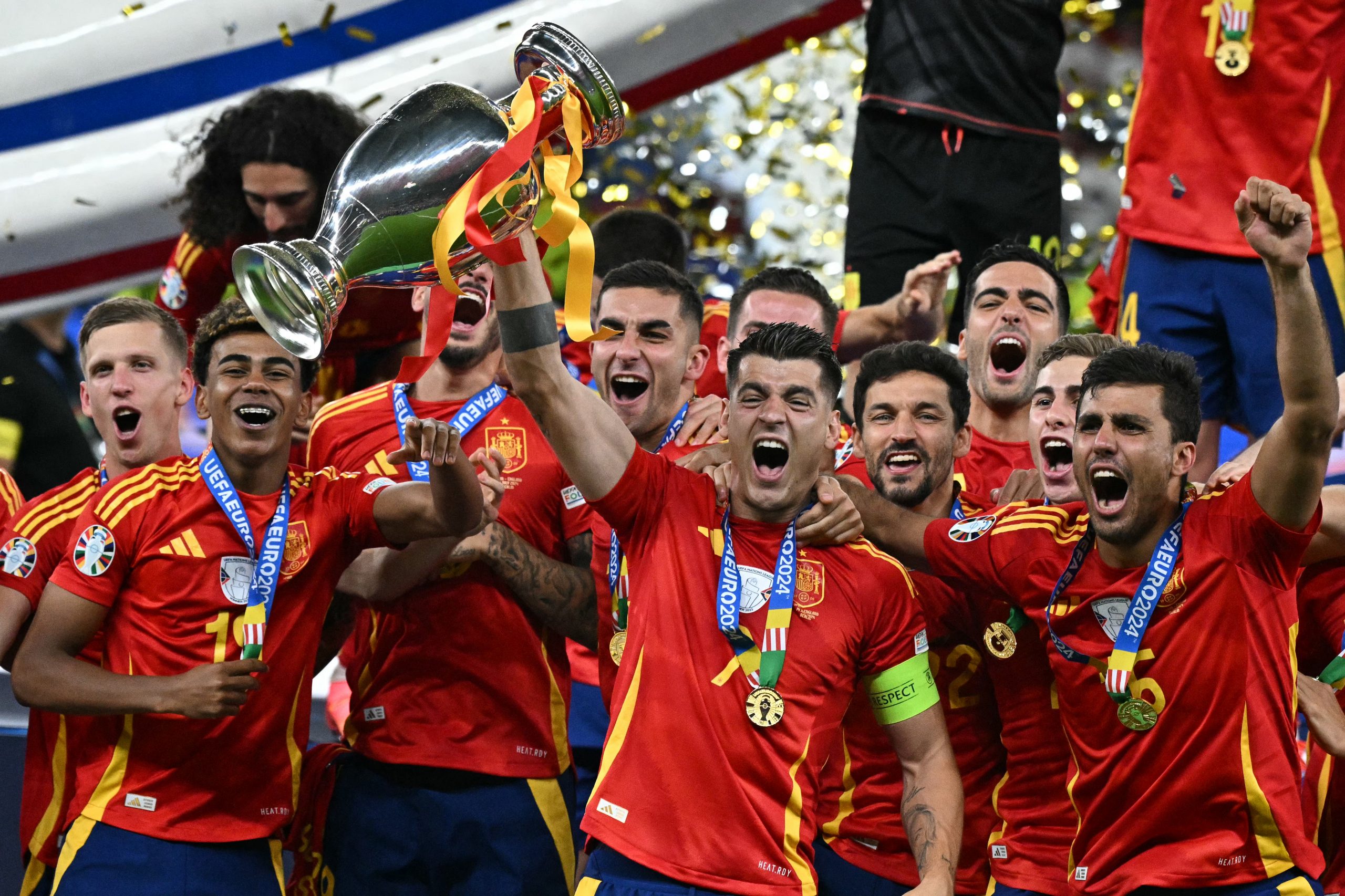
On 14 July 2024 Spain beat England 2–1 in Berlin to become European champions for a record fourth time. This article looks back at how Luis de la Fuente’s young team won Euro 2024, the players who stood out and how the country celebrated – useful background if you want to understand why football means so much in your new home.
The road to the final
Euro 2024 was played in Germany from 14 June to 14 July. Spain were not among the clear favourites at the start, but they won every single match:
| Round | Opponent | Result |
|---|---|---|
| Group stage | Croatia | 3–0 |
| Group stage | Italy | 1–0 |
| Group stage | Albania | 1–0 |
| Round of 16 | Georgia | 4–1 |
| Quarter-final | Germany | 2–1 (after extra time) |
| Semi-final | France | 2–1 |
| Final | England | 2–1 |
Spain became the first team to win all seven matches at a European Championship, and their 15 goals were a record for a single tournament. The quarter-final against the hosts in Stuttgart was the toughest test, settled by a Mikel Merino header at the very end of extra time.
The final in Berlin
The final at Berlin’s Olympiastadion was tight for an hour. Nico Williams put Spain ahead just after half-time, set up by Lamine Yamal. England substitute Cole Palmer equalised in the 73rd minute, but four minutes from the end Mikel Oyarzabal turned in a cross from Marc Cucurella to make it 2–1. Late saves and a goal-line header from Dani Olmo kept the lead.
The win added to Spain’s earlier European titles in 1964, 2008 and 2012, making them the only country with four.
The players who made the difference
- Rodri: the Manchester City midfielder was named player of the tournament, even though injury forced him off at half-time in the final.
- Lamine Yamal: the Barcelona winger scored a spectacular goal against France at 16, becoming the youngest scorer in the tournament’s history, and turned 17 the day before the final. He was named young player of the tournament.
- Nico Williams: Athletic Club’s winger formed a fast, direct partnership with Yamal on the other flank and scored in the final.
- Dani Olmo: came in after an injury to Pedri and finished as one of the tournament’s joint top scorers with three goals.
- Álvaro Morata: the captain led a squad that mixed experienced players with a new generation.
Coach Luis de la Fuente, who had earlier won youth titles with Spain’s under-age teams, moved the team away from slow possession towards quicker wing play while keeping control in midfield.
How Spain celebrated
Fans packed squares and bars across the country on the night of the final, from big screens in Madrid to beach bars on the Costa del Sol. The next day, 15 July, the squad returned to Madrid, where they were received by King Felipe VI and by Prime Minister Pedro Sánchez at La Moncloa. An open-top bus then carried the players through crowded streets to Plaza de Cibeles, the traditional place where Madrid celebrates national team titles, for a party on stage in front of tens of thousands of fans.
Why the title mattered
Between 2008 and 2012 Spain won two European Championships and the 2010 World Cup with the famous passing style known as tiki-taka. The following years brought early exits and a sense that the golden generation had gone. Euro 2024 showed that a new group, many of them in their early twenties, could win again with a different, faster style.
The squad also reflected modern Spain. Lamine Yamal, born in Catalonia to a Moroccan father and an Equatorial Guinean mother, and Nico Williams, born in Pamplona to Ghanaian parents, became the faces of the tournament, and their success was widely discussed as a sign of a more diverse country.
Watching the national team as an expat
Big Spain matches are usually shown on free-to-air television, and bars fill up early, so arrive in good time if you want a seat. Watching a match is one of the easiest ways to join in local life and talk to neighbours. If you want to play or follow a club yourself, see our guides to joining sports teams in Spain and building a social life through clubs and events.
Useful links
- Get active with sports teams: a guide for expats in Spain
- How to build a social life in Spain
- Spanish festivals for expats
FAQ: Spain at Euro 2024
Who did Spain beat in the Euro 2024 final?
England, 2–1, at the Olympiastadion in Berlin on 14 July 2024. Nico Williams and Mikel Oyarzabal scored for Spain; Cole Palmer scored for England.
How many European Championships has Spain won?
Four: 1964, 2008, 2012 and 2024. That is more than any other country.
Who was the best player of Euro 2024?
Spain’s Rodri was named player of the tournament, and Lamine Yamal won the young player award.
Where did Madrid celebrate the title?
At Plaza de Cibeles, after an open-top bus parade through the city on 15 July 2024.
Disclaimer: This article is a historical overview for general information. TV channels and match arrangements for future games change – check the official broadcaster or club for current details.
Sport
Golf on the Costa del Sol: courses and tips for newcomers
Where to play golf on the Costa del Sol, from famous championship courses to friendly local clubs, plus licences, handicaps and booking tips.
Updated: October 2026
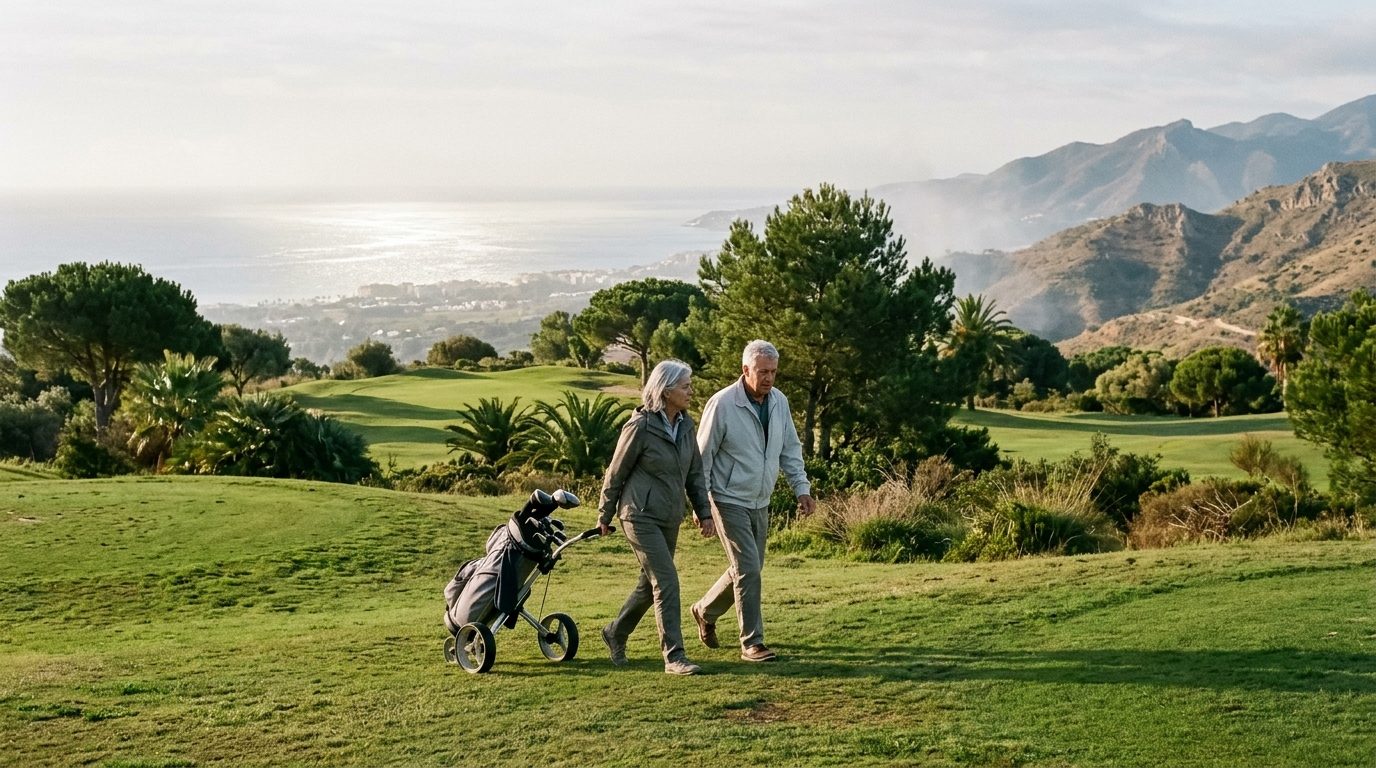
The Costa del Sol is often nicknamed the “Costa del Golf”, and for good reason. Whether you have just moved to Málaga province or spend the winter here, this guide explains where the best-known courses are, what you need to play, and how to get good value out of golf as a resident.
Why the Costa del Sol is so popular with golfers
According to Andalucía Golf, the Costa del Sol has around 70 golf courses, and roughly two-thirds of all courses in Andalucía are on this coast. Marbella alone has about fifteen, Mijas around twelve and Benahavís about a dozen spread over eight clubs.
The mild winters are the main draw. While northern Europe is frozen or waterlogged, most courses here are playable all year. Golf is also a big sport in Spain overall: it is one of the largest federated sports in the country, with more than 317,000 licences in 2025 according to the Spanish government’s federated sport statistics.
The famous names
Real Club Valderrama (Sotogrande)
Valderrama, at the western end of the coast in Sotogrande, is the most famous club in the region. It hosted the 1997 Ryder Cup, the first held in continental Europe, as well as the Volvo Masters and a World Golf Championship event. Its narrow, cork oak-lined fairways are a serious test. Green fees are at the very top of the market and tee times for visitors are limited, so book well ahead.
Finca Cortesín (Casares)
Finca Cortesín, between Estepona and Sotogrande, hosted the World Match Play Championship in 2009, 2011 and 2012 and the Solheim Cup in 2023, when Europe kept the trophy. It is a long, beautifully kept course in a luxury resort setting.
Real Club de Golf Málaga
Founded in 1925, this is one of the oldest courses in Spain and the pioneer of golf on the coast. It sits by the sea next to the airport and is easy to reach from Málaga city and Torremolinos.
Courses by area
Most newcomers end up playing close to home, so it helps to think in terms of areas rather than a “top ten” list.
| Area | Examples | Good to know |
|---|---|---|
| Marbella and Benahavís | Villa Padierna (54 holes), La Quinta, Marbella Club, Los Arqueros | Highest density of courses; many resort courses with hilly layouts |
| Mijas and Fuengirola | Santana Golf and many others in the Mijas area | Around a dozen courses; popular with residents |
| Estepona and Manilva | El Paraíso (Gary Player design), La Duquesa (Robert Trent Jones design) | Often quieter and better value than Marbella |
| Sotogrande and San Roque | Valderrama, La Cañada | La Cañada was the coast’s first municipal public course |
| Axarquía (east of Málaga) | Añoreta, Baviera | Both designed by José María Cañizares; relaxed atmosphere |
| Inland | Antequera Golf | 18-hole course near the town centre; cooler in summer evenings |
What you need to play
- Handicap certificate: most courses ask for proof of an official handicap. Visitors can usually show the one from their home club.
- Insurance: clubs expect you to be insured for accidents on the course. For residents, the usual route is a Spanish federation licence.
- Dress code: collared shirts and golf shoes are standard. Some clubs do not allow jeans or sports shorts.
- Buggies: many hilly resort courses are hard to walk, so a buggy is often recommended or included.
The Spanish golf federation licence
If you live here and play regularly, it is worth getting a licence from the Real Federación Española de Golf (RFEG) through a local club. It runs for one calendar year, includes accident cover while playing at federated clubs and lets your handicap be managed in Spain. As an example, Los Naranjos Golf Club lists it at around €77 a year; check the current price with your own club.
Practical tips for residents
- Play in summer, early or late. High season for golf is autumn to spring, when green fees peak. Summer rates are often much lower, but tee off at dawn or late afternoon to avoid the midday heat.
- Ask about resident rates. Many clubs offer cheaper green fees, twilight rates or annual memberships for locals. You may need to show proof of address.
- Join a society. Golf societies and club competitions are an easy way to meet people and play different courses at group prices.
- Book direct. Compare the club’s own website with booking platforms; direct bookings sometimes include a buggy or range balls.
- Bring water and sun protection. Even in winter the sun is strong, and some courses have few shaded areas.
Golf is also a good way to settle into a new community. If you are building a network after the move, read our guide on how to build a social life in Spain.
Useful links
- Andalucía Golf: Costa del Sol as a golf destination
- Los Naranjos: about the Spanish golf federation licence
- Spanish federated sport statistics 2025 (PDF)
- Málaga city guide for newcomers
- East Málaga: Nerja, Torrox and the Axarquía coast
- The biggest sports in Spain
FAQ: golf on the Costa del Sol
How many golf courses are there on the Costa del Sol?
Around 70, most of them between Málaga and Sotogrande, with the highest concentration in Marbella, Mijas and Benahavís.
Do I need a handicap to play?
Most courses ask for an official handicap certificate. If you are a beginner, start at a driving range, pitch and putt or a club with an academy.
When is the cheapest time to play?
Summer and twilight slots are usually the cheapest. Autumn, winter and spring are high season, when green fees are highest and tee times fill quickly.
Can non-members play at Valderrama?
Visitors can play at limited times, subject to availability and a handicap requirement. Contact the club directly for current green fees and slots.
Disclaimer: This article is general information only. Green fees, licence prices and booking rules can change – always check with the golf club or federation before you play.




Padel in Spain: how to get started, find courts and choose your gear

Winter tyres in Spain: when you need them and where to buy

All Saints’ Day (Todos los Santos) in Spain: traditions and what to expect

Andalucía guide: cities, culture and life in southern Spain

Understanding the tax system in Spain

Marbella guide: areas, beaches and everyday life





-

 Tourist Info2 years ago
Andalucía guide: cities, culture and life in southern Spain
-
Banking & Finances2 years ago
Understanding the tax system in Spain
-
Tourist Info2 years ago
Marbella guide: areas, beaches and everyday life
-
Cost of Living2 years ago
Living on a small salary in Spain in 2026
-
Legal Requirements & Documentation2 years ago
How to get your Spanish NIE number in 2026 – step by step
-
Cost of Living2 years ago
Family living costs in Spain in 2026: monthly budget and moving-in money
-
Tourist Info2 years ago
Benalmádena explained: Pueblo, Arroyo de la Miel and the coast
-
Legal Requirements & Documentation2 years ago
Work visa and work permit in Spain 2026 – which one you need and how to apply