Sport
Joining a sports team in Spain: a guide for expats
How to find a sports team or club in Spain, from municipal sports centres and padel to running groups, plus what to expect with registration, licences and fees.








Updated: October 2026
Joining a team is one of the easiest ways to build a routine and a circle of friends in a new country. This guide is for expats of any level, from former competitive players to complete beginners, who want to get active in Spain. You will learn which sports are easiest to join, how municipal sports centres work, what paperwork clubs ask for and how to choose a team that suits you.
Why sport is a shortcut to Spanish life
Sport in Spain is strongly local. Teams are tied to a neighbourhood or town, training sessions are followed by a drink in the bar next to the pitch, and the same group often meets for meals and trips. Because you see the same people every week, friendships form naturally, and you pick up Spanish in a relaxed setting where nobody minds mistakes.









Popular sports and how to get into them
- Padel: hugely popular across Spain, easy to learn and played in fours, which makes it very social. Clubs run beginner classes, mixed leagues and “americanas” (social tournaments where partners rotate).
- Football: almost every town has amateur teams, including veteran teams for over-35s, five-a-side (fútbol sala) leagues and women’s teams.
- Running: running clubs meet several times a week and train for the many popular races held across the country. Most welcome all paces.
- Cycling and hiking: clubs organise weekend road rides, mountain bike routes and walks. Hiking clubs (clubes de montaña) are a great way to discover the area.
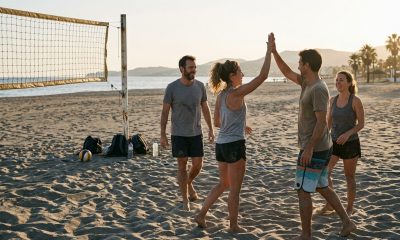
- Basketball and volleyball: municipal leagues and beach volleyball groups exist in most medium-sized towns.
- Sports with international roots: rugby, cricket, ultimate frisbee and hockey clubs often have a mix of Spanish and foreign players and are especially welcoming to newcomers.
- Water sports: on the coast, rowing, sailing, kayaking and swimming clubs offer courses and group outings.
Start at your municipal sports centre
Most towns run public sports facilities (polideportivos or centros deportivos municipales) with pools, courts, gyms and classes. They usually offer a membership card or per-activity fees, and residents registered on the padrón often pay lower prices than non-residents. The sports department (área de deportes) of your town hall also organises local leagues and can tell you which clubs train in its facilities.
New seasons and course registration usually open in September, with a second intake in January, so these are good moments to sign up.
How to join a team step by step
- Find options: ask at the polideportivo, check the town hall’s sports page, search social media for “club” plus the sport and your town, or look on Meetup for informal groups.
- Ask for a trial: most clubs let you join a session or two before committing.
- Register: bring your NIE, TIE or passport. Some clubs ask for a photo and bank details for monthly fees.
- Check the licence: if the team plays in official competitions, you will need a federation licence (licencia federativa), which normally includes sports accident insurance. The club usually arranges it for you.
- Medical check: some federations or clubs ask for a medical certificate, especially for older players or demanding sports.
Costs and what to expect
Fees vary widely by sport, town and club. Municipal activities and informal running groups tend to be the cheapest, while private padel or tennis clubs and sports with travel to away games cost more. Ask clearly what the fee covers: training, kit, competition fees, the federation licence and insurance are not always included.
- Training times: amateur sessions are often in the evening, sometimes starting at 9 or 10 pm in summer to avoid the heat.
- Season: most team sports run from September to June, with a quieter summer.
- Language: coaching is usually in Spanish (or a regional language), but the basics are easy to follow and teammates often help.
- Social side: expect dinners, end-of-season parties and group trips. Saying yes to these is half the point.
Health cover for sports injuries
A federation licence usually covers injuries during official training and matches through the federation’s insurance, often at specific clinics. For informal sport, your public health cover or private insurance applies. Make sure you are registered with a health centre; our guide to healthcare for foreign residents in Spain explains how.








Sport is just one route to a social life. See our guides on how to build a social life in Spain and joining local clubs and associations.
Useful links
- Meetup – informal sports and running groups in Spanish cities
- Healthcare for foreign residents in Spain
- Joining local clubs and associations
- Mental health support for expats in Spain
FAQ: sports teams in Spain
Can I join as a complete beginner?
Yes. Many clubs have beginner groups, and sports such as padel, running and hiking are easy to start at any age.
What is a licencia federativa?
It is a licence issued by the sports federation that lets you play in official competitions. It normally includes accident insurance, and your club usually handles the application.
Do I need to be a resident to join?
Not for most clubs, although some municipal prices are reserved for residents on the padrón. For official competitions, you need an identity document and sometimes an NIE.
When is the best time to sign up?
September, when most seasons and courses start, and January, when many centres open new places.
Disclaimer: This article is general information only. Fees, licence rules and schedules vary by club, federation and town – always check with the club or your local sports centre before you sign up.