
































































Co-working office
Why so many people work remotely from Spain
Climate, fibre, time zone, the digital nomad visa and the Beckham law – why Spain attracts remote workers, and the downsides to know before you move.









Updated: October 2026
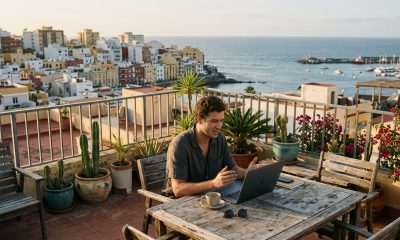
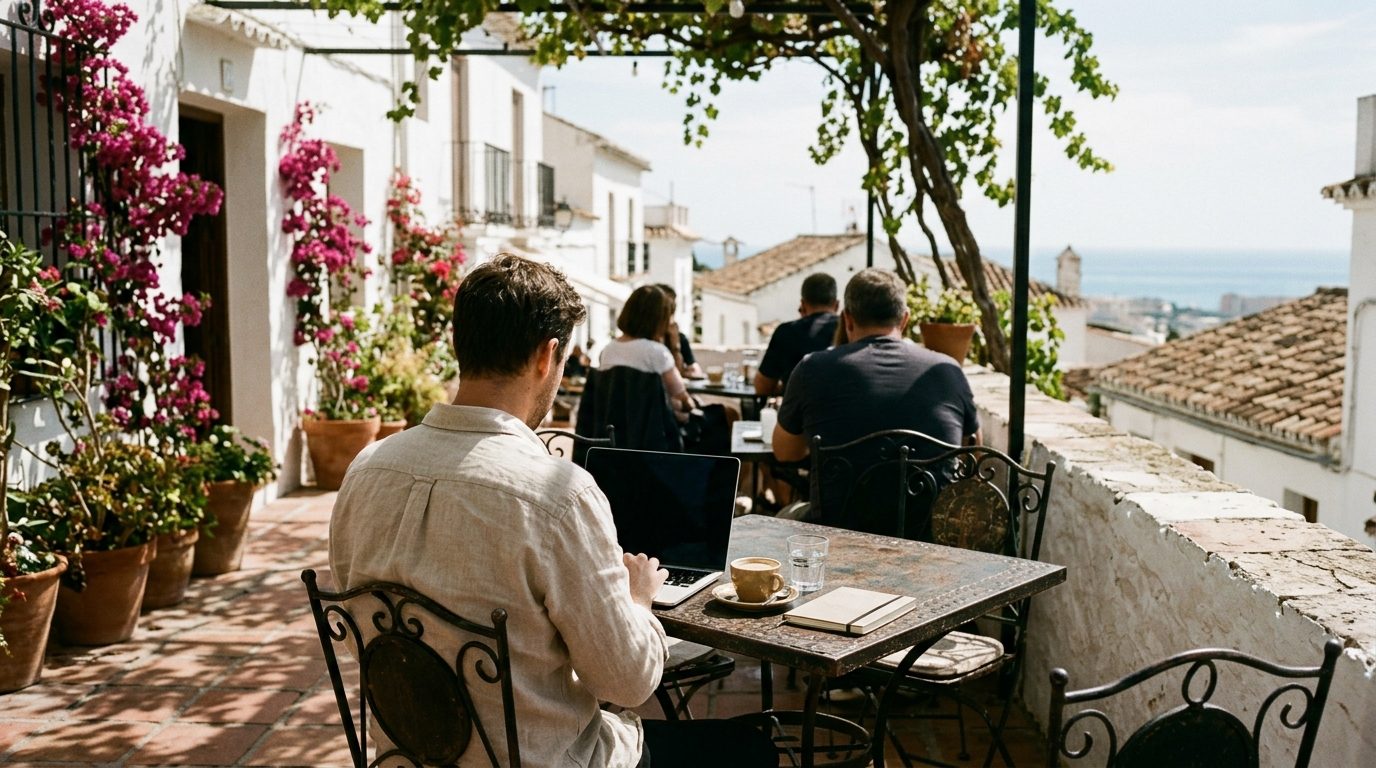
Walk into a café in Málaga, Valencia or Las Palmas on a weekday morning and you will see laptops at half the tables. Spain has become one of Europe’s favourite bases for remote workers – employees of foreign companies, freelancers and founders who can do their job from anywhere and choose to do it here. This article looks at why, and at the less sunny side you should know about before you move.
1. Climate and quality of life
The obvious reason is still the main one. Long, light days and mild winters along the Mediterranean and in the Canary Islands make it easy to fit a walk, a swim or a padel game around the working day. Outdoor life, long lunches and a strong café culture make working alone feel less isolating than in a dark northern winter.







2. Fast, widely available fibre
Spain has one of the most extensive fibre-to-the-home networks in Europe. In most towns and cities, symmetric fibre is standard and affordable, which is exactly what video calls and large uploads need. Check coverage at the exact address before signing a rental, especially for rural homes. See our guide to internet and mobile providers.
3. Cost of living compared with northern Europe
For someone paid a northern European, British or American salary, everyday costs – eating out, groceries, public transport, gyms – are often lower. Housing is the big exception: rents in Madrid, Barcelona, Málaga, the Balearics and popular coastal towns have risen sharply. Our cost of living guide breaks it down by region.
4. A time zone that works
Mainland Spain and the Balearics are on Central European Time, the same as Paris, Berlin and Stockholm, so working for a European employer needs no adjustment. The Canary Islands are one hour behind, on the same time as the UK and Portugal. For US companies, Spanish afternoons overlap with the East Coast morning.
5. A legal route for non-EU remote workers
EU, EEA and Swiss citizens can live and work in Spain freely, but must register if they stay more than three months. For everyone else, Spain created a specific permit for international teleworkers in 2023 – the digital nomad visa. Key points in 2026:







- You work remotely for companies outside Spain. If you are self-employed, up to 20% of your work may be for Spanish clients.
- The employer has been operating for at least one year, and you have worked with it for at least three months.
- You have a university degree or at least three years of relevant professional experience.
- Minimum income is 200% of the Spanish minimum wage. With the 2026 minimum wage (€1,221 a month in 14 payments), that is about €2,849 a month for the main applicant, plus about €1,068 for the first family member and €356 for each additional one.
- The residence permit can be granted for up to three years and renewed, and time in Spain counts towards long-term residence.
6. Tax: the Beckham law
Remote workers who move to Spain can often opt into the special tax regime for people relocated to Spain, known as the Beckham law. It taxes Spanish employment income at a flat 24% up to €600,000 for the year you arrive and the next five years, instead of the normal progressive rates. You must not have been tax resident in Spain in the previous five years, and you must apply within six months of registering with Social Security. Read more in our Beckham law guide.
7. Healthcare, safety and infrastructure
Spain combines a good public health system, affordable private health insurance, a large high-speed rail network and many international airports. That makes it easy to fly home for a meeting or have family visit. See healthcare for foreign residents.
8. Co-working spaces and communities
Every larger Spanish city – and many smaller coastal towns – now has co-working spaces, often with day passes and monthly memberships. They give you a desk, reliable internet and, just as important, colleagues to have lunch with. Meet-ups, sports clubs and language exchanges make it easier to build a social life. Málaga in particular has built a reputation as a tech hub; read why Málaga is a top destination for digital nomads.
The other side: what remote workers struggle with
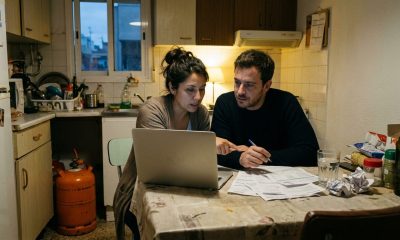
- Bureaucracy. NIE, padrón, Social Security, bank account, tax returns – each step takes time and usually some Spanish. Start with how to get your NIE.
- Tax residence. Spend more than 183 days a year in Spain and you are normally tax resident here, taxed on your worldwide income. Many people find out too late.
- Social Security. Working from Spain usually means paying Spanish Social Security, either through your employer or as autónomo. See working remotely for a foreign company while living in Spain.
- Housing. Long-term rentals are scarce and expensive in the most popular areas, and landlords often ask for several months’ deposit.
- Summer heat. Without air conditioning, July and August can make concentration hard.
- Loneliness. Remote work plus a new country can be isolating. Co-working spaces and local clubs help.
Getting set up
- Sort out your legal status first: EU registration certificate or the digital nomad permit.
- Talk to your employer about Social Security and tax before you move.
- Decide on the Beckham law within the six-month window, if you qualify.
- Find a home with confirmed fibre coverage and a room you can work in.
- Set up your work equipment – see our guide to buying a laptop and home office equipment in Spain.
- If you freelance, give clients a professional address: providers such as Nominalia (ad) offer domains and business email with Spanish support.
Useful links
- Ministry of Inclusion: FAQ for international teleworkers (Spanish)
- Agencia Tributaria: special regime for workers relocated to Spain
- Spain’s digital nomad visa in 2026
- Residency in Spain: step by step
FAQ: working remotely from Spain
Can I work remotely from Spain on a tourist stay?
EU, EEA and Swiss citizens can. Non-EU citizens cannot legally work, even for a foreign employer, without a permit such as the digital nomad visa.
How much do I need to earn for the digital nomad visa in 2026?
About €2,849 a month for the main applicant, based on 200% of the 2026 Spanish minimum wage, plus extra for each family member. Check the current figure when you apply.
Do I pay tax in Spain if my salary is paid abroad?
If you are tax resident in Spain – usually after 183 days in a year – Spain taxes your worldwide income, wherever it is paid. Double tax treaties help avoid paying twice.
Which Spanish cities are most popular with remote workers?
Madrid, Barcelona, Valencia and Málaga are the big hubs, while the Canary Islands are popular for their year-round climate. Smaller towns offer lower rents if the internet connection is good.
Disclaimer: This article is general information only and is not legal or tax advice. Immigration and tax rules change and depend on your situation – speak to an immigration lawyer, gestor or tax adviser before you act. Links marked “(ad)” are affiliate links – NewInSpain may earn a commission at no extra cost to you.








Why so many people work remotely from Spain

Buying a laptop and home office equipment in Spain

Christmas gift ideas from Spanish shops, and when to give them

Andalucía guide: cities, culture and life in southern Spain

Understanding the tax system in Spain

Marbella guide: areas, beaches and everyday life








-

 Tourist Info2 years ago
Andalucía guide: cities, culture and life in southern Spain
-
Banking & Finances2 years ago
Understanding the tax system in Spain
-
Tourist Info2 years ago
Marbella guide: areas, beaches and everyday life
-
Cost of Living2 years ago
Living on a small salary in Spain in 2026
-
Legal Requirements & Documentation2 years ago
How to get your Spanish NIE number in 2026 – step by step
-
Cost of Living2 years ago
Family living costs in Spain in 2026: monthly budget and moving-in money
-
Tourist Info2 years ago
Benalmádena explained: Pueblo, Arroyo de la Miel and the coast
-
Legal Requirements & Documentation2 years ago
Work visa and work permit in Spain 2026 – which one you need and how to apply