








































































Pets
Adopting a dog or cat in Spain: shelters, rules and how it works
How to adopt a dog or cat from a Spanish shelter: the steps, what the animal welfare law requires and shelters on the Costa del Sol.








Updated: October 2026
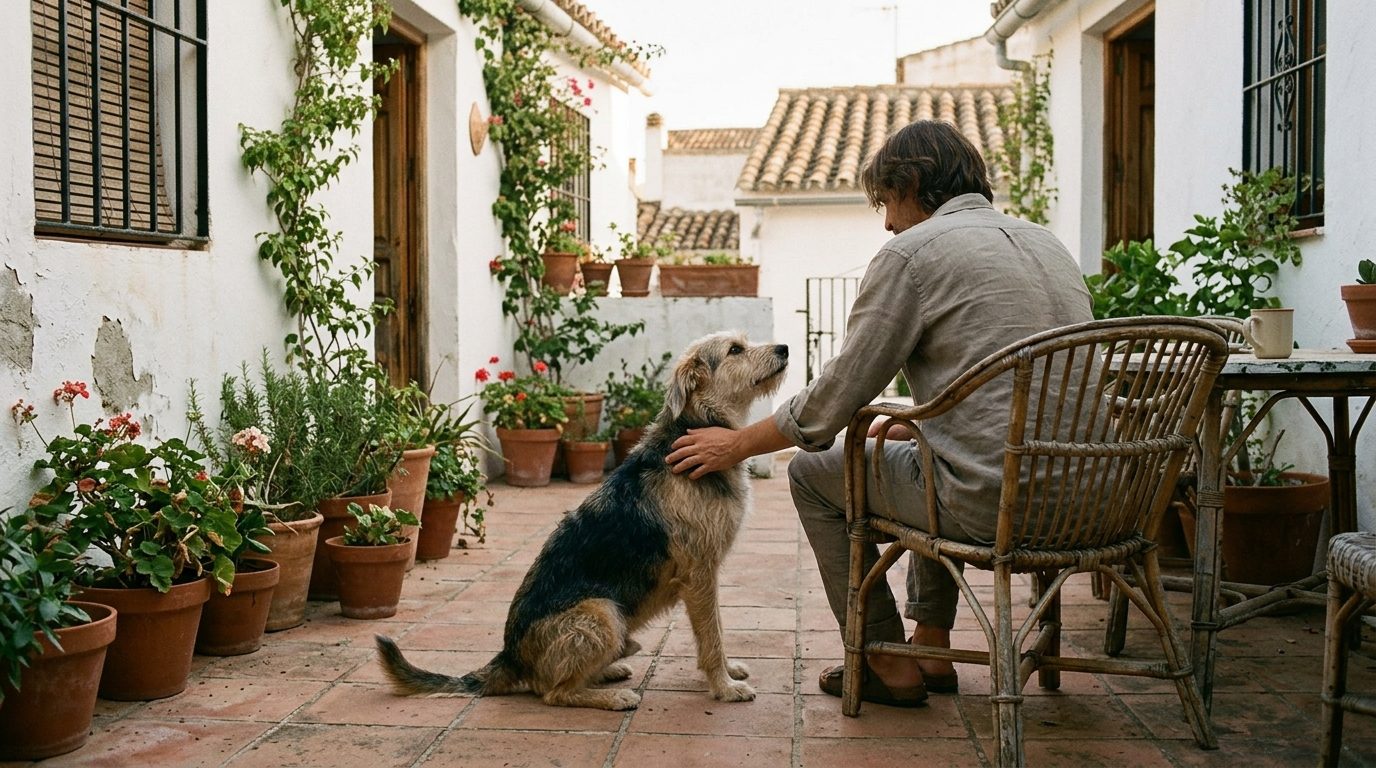
Spain’s animal shelters are full of dogs and cats waiting for a home, and many foreign residents adopt within months of arriving. Adopting is usually cheaper than buying, the animal comes vaccinated, microchipped and often sterilised, and you give a home to an animal that really needs one. This guide explains how adoption works in Spain, what the animal welfare law expects from you and where to start on the Costa del Sol.
Why adopt in Spain
- Many animals need homes. Abandonment is still a problem in Spain, especially after summer and the hunting season, when many hunting dogs (galgos and podencos) are left behind.
- Pet shops can no longer sell dogs and cats. Under the animal welfare law (Ley 7/2023), dogs, cats and ferrets may only be sold directly by registered breeders, so adoption from a shelter is one of the main routes to a new pet.
- The animal comes prepared. Shelters normally hand over animals with a microchip, the basic vaccinations, a health check and – depending on age – sterilisation.
How adoption works, step by step
- Look online first. Most shelters show their animals on their website or social media, with age, size and character. Many also have English-speaking volunteers.
- Fill in an adoption form. Expect questions about your home, garden, working hours, other pets, children and whether you rent (some shelters ask for the landlord’s permission).
- Meet the animal. You visit the shelter, walk the dog or meet the cat, often more than once. Bring the whole family and any dog you already have.
- Home check. Some shelters visit your home or ask for photos of the garden and fences.
- Contract and fee. You sign an adoption contract and pay an adoption fee that helps cover vaccines, microchip and sterilisation. The contract usually lets the shelter follow up and requires you to return the animal to them, not give it away, if things do not work out.
- Registration. The microchip is transferred to your name in the regional pet register – in Andalucía the RAIA. The shelter or your vet arranges this.
Fostering: try before you commit
If you are not sure you can adopt – for example because you may move again soon – consider fostering (acogida). You look after an animal at home for a few weeks or months while the shelter looks for a permanent family. Shelters usually cover food and vet costs. It is also a good way to find out whether a dog suits your lifestyle.







 Online pharmacy & parapharmacySkincare, vitamins, baby care and more – delivered in SpainShop now
Vivid BusinessA business account for freelancers and companies in SpainOpen your account online, with sub-accounts and cards for your team.Learn more →(ad)
 Buying a home in Spain? Simulate your mortgageSee your monthly payment with Banco Sabadell’s mortgage simulator.Try the simulator →(ad)
 A bank account for autónomos in SpainCuenta Clara Autónomos: no commissions, free debit and credit cards, opened online.See the account →(ad)
 A European bank you open from your phonebunq: an EU-licensed bank with debit cards, managed fully in the app. Sign up in about five minutes.Get started →(ad)
 A mobile bank account with no commissionsB100, the mobile bank from Abanca: everyday account and free debit card, all in the app.Get the app →(ad)

What the animal welfare law expects from you
The national animal welfare law (Ley 7/2023) applies to every pet owner in Spain, foreign residents included. The main points:
- Dogs, cats and ferrets must be microchipped and registered.
- Animals may not be left alone for long periods – for dogs, not more than 24 hours in a row – and must not live permanently on a terrace, balcony or roof.
- Cats must be sterilised before six months of age, unless they are registered for breeding.
- The law also foresees a free course for dog owners and compulsory third-party liability insurance for dogs, but both still depend on a regulation that has not been approved yet. Until then, insurance is only compulsory for potentially dangerous dogs (PPP) and where regional or local rules require it. Many owners take it out anyway, because it is cheap protection if the dog causes an accident.
More detail in our guide to Spain’s animal welfare law and to pet insurance in Spain. If you want cover for vet bills and liability, providers such as Petplan (ad) offer pet insurance in Spain.
Shelters on the Costa del Sol and in Málaga province
These are some of the shelters and rescue groups in the area. Most welcome adopters, foster homes and volunteers – contact them first, as opening hours and needs change.
- Sociedad Protectora de Animales y Plantas de Málaga – Málaga city. protectoramalaga.com
- Suspiros de Cuatro Patas – Málaga. suspirosdecuatropatas.org
- Asociación Protectora Fidelio – Benalmádena. asociacionfidelio.org
- PAD (Protectora de Animales Domésticos) – Mijas. padmijas.org
- ACE / SHIN – Mijas. ace-charity.org
- Triple A Marbella – Marbella and San Pedro. tripleamarbella.org
- ADANA – Estepona. adana.es
- Galgos en Familia – greyhound rescue, Málaga. galgosenfamilia.org
- Axarquía Animal Rescue – east of Málaga. axarquiaanimalrescue.com
See all our pet guides and the full shelter list on Pets in Spain.







Before you bring your new pet home
- Register with a local vet and ask about vaccines, parasite protection and the leishmaniasis vaccine or collar for dogs – leishmaniasis is spread by sandflies and common in southern Spain.
- Check your rental contract or community rules on pets.
- Plan for summer: shade, water and walks early and late in the day.
- If you may travel, ask your vet for an EU pet passport.
Useful links
- BOE: Ley 7/2023 on animal rights and welfare (Spanish)
- Moving to Spain with a dog or cat
- Pet insurance in Spain
- Pets in Spain: all guides and shelters
FAQ: adopting a pet in Spain
Can foreigners adopt a dog or cat in Spain?
Yes. Shelters adopt to foreign residents all the time. You usually need ID (passport or NIE) and an address in Spain, and some shelters ask how long you plan to stay.
How much does it cost to adopt?
Shelters charge an adoption fee that covers part of the vaccines, microchip and sterilisation. The amount varies by shelter and animal – ask the shelter directly.
Can I adopt from Spain if I live abroad?
Some shelters rehome animals abroad with the right paperwork and transport. Ask the shelter, and check your home country’s import rules.
Is dog insurance compulsory in Spain?
The law foresees it, but the regulation that makes it compulsory for all dogs has not been approved yet. It is already compulsory for potentially dangerous dogs and where local rules require it.
Disclaimer: This article is general information, not legal or veterinary advice. Rules and shelter details change; check with the shelter, your vet or the town hall. Links marked “(ad)” are affiliate links – NewInSpain may earn a commission at no extra cost to you.


Insurance
Pet insurance in Spain: what is compulsory and what is worth having
Liability insurance for dogs, vet health insurance and accident cover in Spain: what the law says and what to check before you sign.

Updated: October 2026
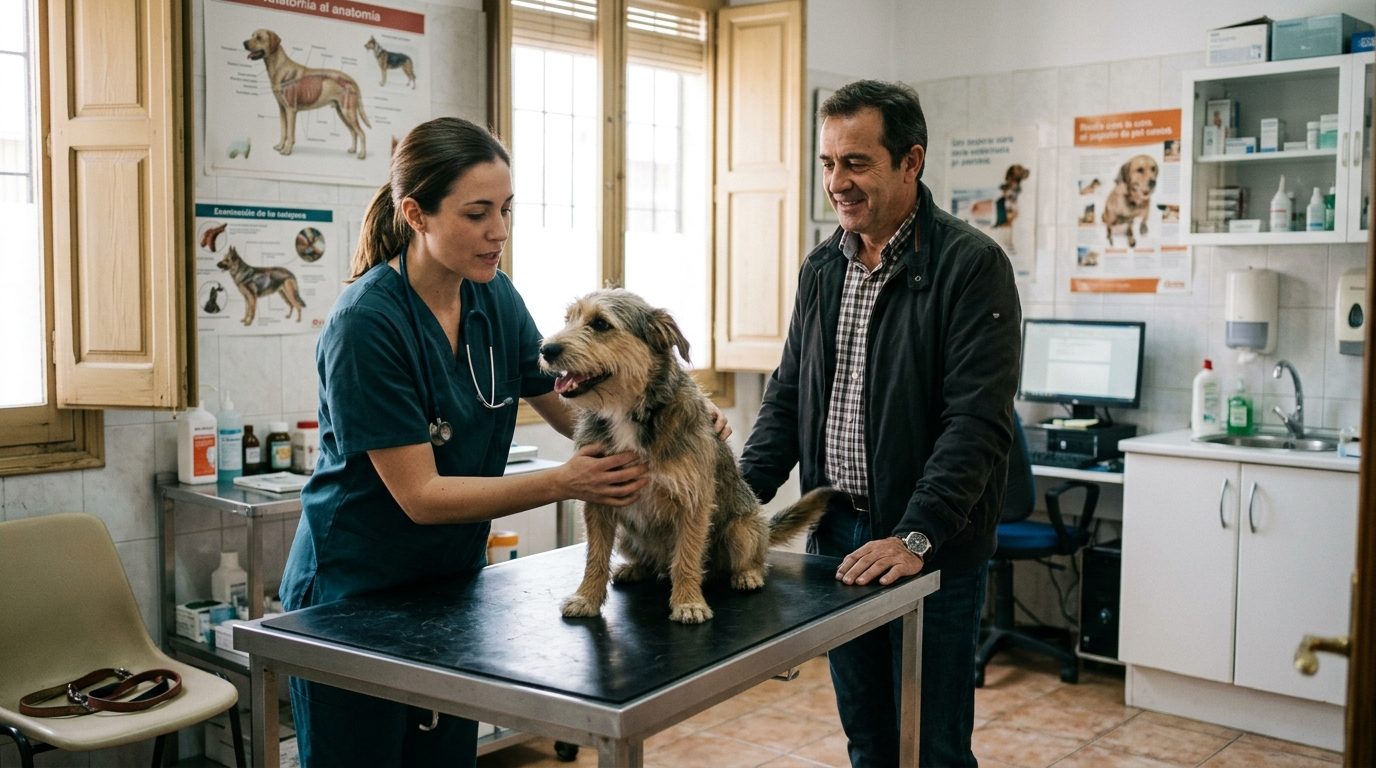
Vets in Spain are generally good value compared with northern Europe, but an operation, a broken leg or a long illness can still cost several thousand euros. At the same time, Spain’s animal welfare law has made liability insurance for dogs a topic every owner should know about. This guide explains the different types of pet insurance in Spain, what is and is not compulsory, and what to check before you sign.
Is pet insurance compulsory in Spain?
The animal welfare law, Ley 7/2023, says that dog owners must have third-party liability insurance (seguro de responsabilidad civil) covering damage their dog causes to other people. However, the obligation depends on an implementing regulation that sets the minimum cover, and that regulation is still pending. Until it is approved, the general obligation is not yet enforced.
Online pharmacy & parapharmacySkincare, vitamins, baby care and more – delivered in SpainShop now
Vivid BusinessA business account for freelancers and companies in SpainOpen your account online, with sub-accounts and cards for your team.Learn more →(ad)
Buying a home in Spain? Simulate your mortgageSee your monthly payment with Banco Sabadell’s mortgage simulator.Try the simulator →(ad)
A bank account for autónomos in SpainCuenta Clara Autónomos: no commissions, free debit and credit cards, opened online.See the account →(ad)
A European bank you open from your phonebunq: an EU-licensed bank with debit cards, managed fully in the app. Sign up in about five minutes.Get started →(ad)
A mobile bank account with no commissionsB100, the mobile bank from Abanca: everyday account and free debit card, all in the app.Get the app →(ad)
There are two important exceptions. Owners of potentially dangerous dogs (perros potencialmente peligrosos, such as certain breeds and large, powerful dogs) already need a municipal licence and liability insurance under the older law on dangerous animals. Some regions and town halls also have their own rules, so ask at your ayuntamiento when you register your dog.
Health insurance for vet bills is never compulsory. It is a personal choice, and for many owners it is about peace of mind.
The three types of cover
- Liability insurance (responsabilidad civil): pays if your dog bites someone, causes a traffic accident or damages property. It is often cheap and can sometimes be added to your home insurance – check whether your policy already includes pets.
- Vet health insurance (seguro de salud): pays part of your vet bills for illness and accidents, for example operations, hospital stays, tests and medicines. This is what most people mean by pet insurance.
- Accident-only cover: a cheaper option that only pays for injuries from accidents, not for illness.
What to check before you sign
- Age limits: many insurers only accept new pets up to a certain age, and premiums rise as the animal gets older. Insuring a young animal is usually easier and cheaper.
- Waiting periods (carencia): cover for illness often starts only after a few weeks. Accidents are usually covered sooner.
- Pre-existing conditions: illnesses your pet already has are normally excluded.
- Excess and co-payment: check how much you pay yourself per claim or per year.
- Annual limit: some policies cap what they pay per year or per condition.
- Choice of vet: some policies let you use any vet and claim the money back; others only work with partner clinics.
- Language: make sure you understand the policy and claims process. Ask for documents in English if your Spanish is not strong.
Health risks that make cover worth considering
Spain’s warm climate brings diseases that pets from northern Europe may never have met, such as leishmaniasis (spread by sandflies) and processionary caterpillars in pine areas. Treatment can be long and expensive. Our guide to moving to Spain with a dog or cat explains the main risks and how to prevent them.
Where to compare pet insurance
Ask your vet which insurers their clinic works with, and compare at least two or three quotes. For dogs, Petplan (ad) offers health and accident policies in Spain, and you can get a price online in a few minutes. Spanish banks and home insurers also sell pet cover, often as an add-on.
Useful links
- Ley 7/2023 on animal welfare (BOE, Spanish)
- Legal Today: why the dog insurance obligation depends on a regulation (Spanish)
FAQ: pet insurance in Spain
Do I have to insure my dog in Spain?
The animal welfare law requires liability insurance for dogs, but the obligation depends on a regulation that has not yet been approved. Owners of potentially dangerous dogs already need a licence and insurance. Check local rules at your town hall.
Do I need insurance for my cat?
No. The liability insurance in the animal welfare law is for dogs. Health insurance for cats is optional.
Does my home insurance cover my pet?
Some home insurance policies include liability for damage caused by pets, or let you add it. Vet bills are usually not included. Check your policy or ask your insurer.
Can I insure an older pet?
Often yes, but many insurers have a maximum age for new policies and charge more for older animals. Pre-existing conditions are usually excluded.
Disclaimer: This article is general information only and is not legal or insurance advice. Rules and policy terms change – check the conditions with the insurer and local rules with your town hall before you decide.
Housing & Utilities
Moving to Spain with a dog or cat: paperwork, travel and settling in
How to move to Spain with a dog or cat: microchip and rabies timeline, travel options, pet-friendly rentals, registering and local health risks.
Updated: October 2026
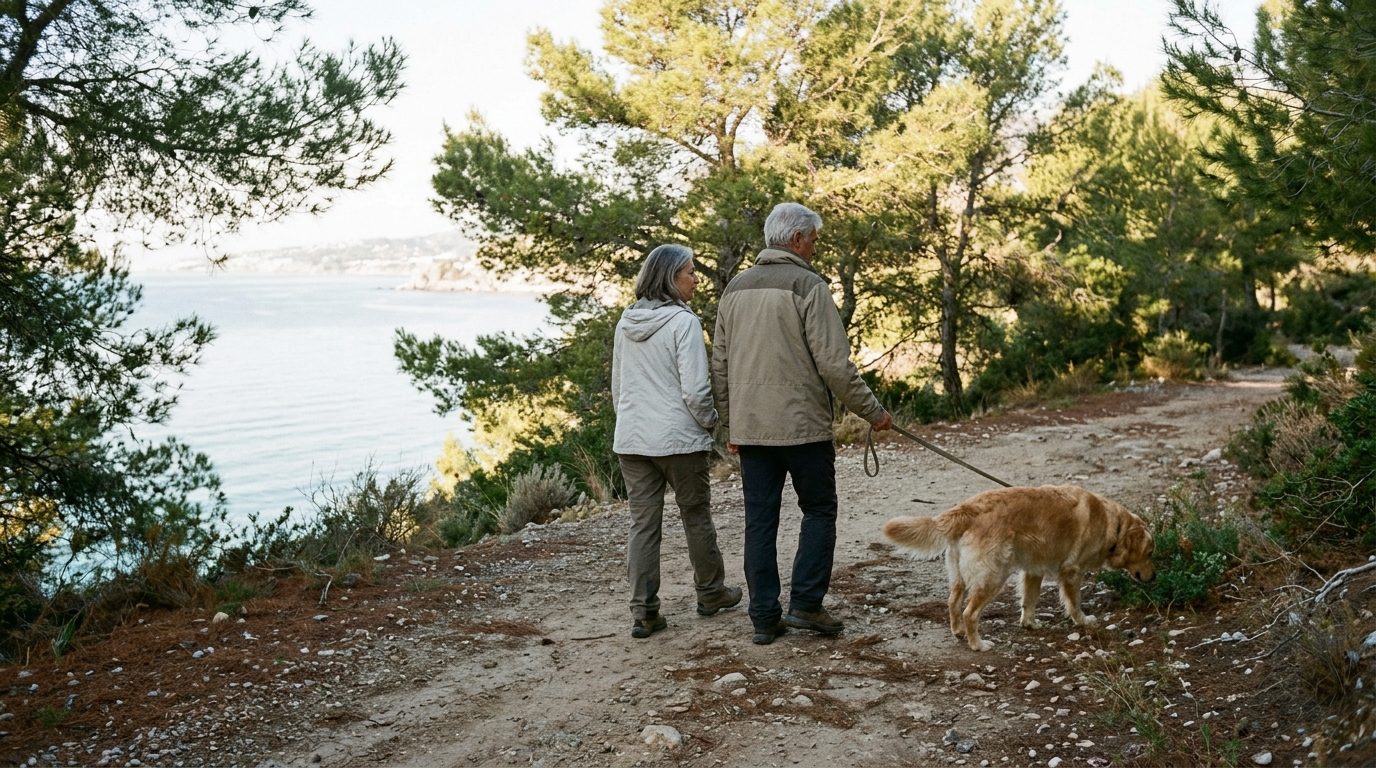
Bringing a dog or cat to Spain takes more planning than booking your own flight. This guide is for anyone moving with a pet, whether from another EU country, the UK or further afield. It walks you through the timeline, the travel options, your first weeks after arrival and the health risks that are specific to the Spanish climate. For the legal side of owning a pet here, see our separate guide to Spain’s animal welfare law.
Start with the paperwork timeline
The entry rules for dogs, cats and ferrets are set at EU level, so they are the same whether you land in Málaga, Madrid or Barcelona. What changes is how long the preparation takes, and that depends on where you are coming from.
Online pharmacy & parapharmacySkincare, vitamins, baby care and more – delivered in SpainShop now
Vivid BusinessA business account for freelancers and companies in SpainOpen your account online, with sub-accounts and cards for your team.Learn more →(ad)
Buying a home in Spain? Simulate your mortgageSee your monthly payment with Banco Sabadell’s mortgage simulator.Try the simulator →(ad)
A bank account for autónomos in SpainCuenta Clara Autónomos: no commissions, free debit and credit cards, opened online.See the account →(ad)
A European bank you open from your phonebunq: an EU-licensed bank with debit cards, managed fully in the app. Sign up in about five minutes.Get started →(ad)
A mobile bank account with no commissionsB100, the mobile bank from Abanca: everyday account and free debit card, all in the app.Get the app →(ad)
| Coming from | Document | Plan ahead |
|---|---|---|
| Another EU country | EU pet passport | At least 3–4 weeks if the rabies vaccine is new |
| UK and other “listed” countries | Animal health certificate | At least 3–4 weeks, certificate issued within 10 days of arrival |
| Countries that need a rabies blood test | Animal health certificate plus lab report | 4 months or more |
The basic sequence is the same for everyone:
- Microchip: an ISO-standard microchip must be implanted before, or on the same day as, the rabies vaccination. A vaccine given before the chip does not count.
- Rabies vaccine: the animal must be at least 12 weeks old. After the first vaccination you wait at least 21 days before travelling. Spain does not accept unvaccinated puppies or kittens.
- Blood test (some countries only): if you come from a country with a higher rabies risk, a blood sample is taken at least 30 days after vaccination, tested in an EU-approved laboratory, and you then wait three months before entry.
- Travel document: an EU pet passport for EU residents, or an animal health certificate from an official vet for everyone else, together with a signed declaration that the move is not commercial.
You can bring up to five dogs, cats or ferrets per person on a non-commercial move. Spain does not require tapeworm treatment for dogs on arrival, but other countries on your route might. The Spanish agriculture ministry answers common questions in its pet travel FAQ (in Spanish), and the European Commission explains the rules for bringing a pet into the EU from a non-EU country.
Moving from the UK
Pet passports issued in Great Britain are no longer valid for travel to the EU. Each trip needs an animal health certificate, which your vet in the UK issues and which must be used within 10 days. Check the latest details on GOV.UK’s pet travel page before you book, as the rules have changed several times since Brexit. Once you live in Spain, a Spanish vet can issue an EU pet passport, which makes future trips much easier.
Choosing how to travel
- By car: often the least stressful option for larger dogs and multi-pet households. Plan breaks every few hours, never leave the animal in a parked car in warm weather and book pet-friendly hotels along the route in advance.
- By ferry: routes from the UK and Italy to Spain usually offer kennels or pet-friendly cabins, but these sell out early in summer. Ask exactly where the animal stays during the crossing.
- By plane in the cabin: many airlines allow a small dog or cat in an approved soft carrier under the seat. Each airline sets its own weight limit and number of pets per flight, so reserve the pet place when you book.
- By plane in the hold: larger animals travel as checked baggage or cargo in an IATA-approved crate. Some airlines restrict snub-nosed breeds such as pugs, bulldogs and Persian cats, and some limit hold transport in hot months.
- Pet relocation companies: useful for long-haul moves. Get a written quote that lists what is included.
Pets arriving from outside the EU must come through a designated travellers’ point of entry, where documents and the microchip can be checked. Not every Spanish airport or port is one, so confirm your arrival point with your airline or ferry company. Keep the original documents in your hand luggage, not in a suitcase.
Finding a home that accepts pets
The rental market is the biggest practical hurdle for many pet owners. Many landlords exclude animals in the contract, and the rules of a building’s community of owners can limit pets in shared areas such as gardens and pools. Mention your pet from the first contact, offer references from a previous landlord and expect that some landlords will ask for a higher deposit or additional guarantee. Read the pet clause carefully before signing. Our guide to renting in Spain as a foreigner covers contracts and deposits in more detail.
For dogs, a ground-floor flat with a terrace or a house with a fenced garden makes daily life easier. Check where the nearest green space is: many town centres have few parks, and dogs are generally banned from beaches outside designated dog beaches.
Your first weeks in Spain
- Register with a local vet. Bring all vaccination records. The vet can enter your pet’s microchip in the regional animal registry, which every autonomous community runs (in Andalucía it is the RAIA).
- Check your town hall. Many ayuntamientos keep a municipal pet census and have by-laws on leads, dog mess and beaches. Ask about it when you sign up for the padrón, since you will be at the town hall anyway.
- Get liability cover. Third-party insurance for dogs is written into national law but still awaits its implementing regulation. Owners of potentially dangerous breeds already need a licence and insurance. Even if it is not compulsory for your dog yet, cover is sensible and often cheap to add to home insurance. Vet bills are a separate matter: pet health insurance is worth comparing, and Petplan (ad) offers policies for dogs in Spain.
- Ask about an EU pet passport. If you arrived with a non-EU certificate, your new vet can issue one once your pet’s details are registered.
Health risks to know about
Spain’s warm climate brings parasites and hazards that pets from northern Europe may never have met. Talk to your new vet about a prevention plan in the first weeks.
- Leishmaniasis: a serious disease spread to dogs by sandflies, common in much of Spain. Vets usually recommend repellent collars or spot-ons during the warm months, and there are vaccines. Ask whether an annual blood test makes sense.
- Pine processionary caterpillars: in late winter and spring, these caterpillars walk in lines near pine trees. Their hairs can cause severe reactions in a dog’s mouth and tongue. Keep dogs away and see a vet immediately if your dog touches one.
- Ticks, fleas and heartworm: year-round protection is common in southern Spain, where winters are mild.
- Heat: walk dogs early in the morning and late in the evening in summer, test pavement temperature with your hand and always carry water. Our heatwave safety guide explains Spain’s heat warnings.
- Foxtails: dry grass seeds (espigas) can work their way into ears, paws and noses in late spring and summer. Check your dog after walks in the countryside.
Everyday life with a pet in Spain
Spain is increasingly pet-friendly. Many terraces welcome dogs, some shopping centres and shops allow them inside, and dog beaches are spreading along the coast. Public transport rules vary: small pets in carriers are usually allowed on buses and trains, while larger dogs face more restrictions depending on the operator and city. Dogs must be on a lead in most urban areas, and owners are expected to pick up after their dog and, in many towns, rinse urine with water. Fines for ignoring local rules can be significant.
Useful links
- Your Europe: travelling with pets – EU pet passport and the five-pet limit
- European Commission: bringing a pet from a non-EU country
- Spanish agriculture ministry: pet travel FAQ (Spanish)
- GOV.UK: taking your pet abroad
- Spain’s animal welfare law: what pet owners must know
- Renting in Spain as a foreigner
- Home insurance in Spain
FAQ: moving to Spain with a pet
Can I bring a puppy or kitten under 12 weeks to Spain?
No. Spain does not allow unvaccinated dogs, cats or ferrets to enter. The animal must be at least 12 weeks old when vaccinated against rabies and then wait 21 days, so the minimum age on arrival is about 15 weeks.
Is my UK pet passport still valid?
Not for entering the EU. Pets from Great Britain need an animal health certificate for each trip. After you move, a Spanish vet can issue an EU pet passport.
How many pets can I bring?
Up to five dogs, cats or ferrets per person on a non-commercial move. More than five is only allowed for registered competitions, shows or sporting events.
Do I need to register my pet after moving?
Yes. Ask a local vet to record the microchip in your region’s animal registry, and check whether your town hall also runs a pet census.
Disclaimer: This article is general information only and is not veterinary or legal advice. Pet travel rules, airline policies and local by-laws can change – always check with your vet, carrier and the official sources before you travel.
Pets
Spain’s animal welfare law in 2026: what pet owners must know
Spain’s animal welfare law for pet owners in 2026: microchips, time-alone limits, dog insurance status, Andalucía rules and bringing pets to Spain.


Updated: October 2026
Moving to Spain with a dog or cat, or thinking of adopting one once you are settled? Spain’s national animal welfare law has applied since 2023, and in Andalucía older regional rules still sit on top of it. This guide explains what owners must do today, which headline rules are still waiting for regulations, and how to bring a pet into Spain from the EU, the UK or elsewhere.
Ley 7/2023 in a nutshell
Ley 7/2023 on the protection of the rights and welfare of animals took effect on 29 September 2023. It sets minimum standards across Spain for companion animals, while regional laws continue to apply alongside it. The Ministry of Social Rights publishes a questions-and-answers guide to the law (in Spanish) that is worth keeping to hand.
Online pharmacy & parapharmacySkincare, vitamins, baby care and more – delivered in SpainShop now
Vivid BusinessA business account for freelancers and companies in SpainOpen your account online, with sub-accounts and cards for your team.Learn more →(ad)
Buying a home in Spain? Simulate your mortgageSee your monthly payment with Banco Sabadell’s mortgage simulator.Try the simulator →(ad)
A bank account for autónomos in SpainCuenta Clara Autónomos: no commissions, free debit and credit cards, opened online.See the account →(ad)
A European bank you open from your phonebunq: an EU-licensed bank with debit cards, managed fully in the app. Sign up in about five minutes.Get started →(ad)
A mobile bank account with no commissionsB100, the mobile bank from Abanca: everyday account and free debit card, all in the app.Get the app →(ad)
Not every animal is treated the same. Bullfighting falls outside the law, and dogs used for hunting and certain other working activities were excluded from its scope after a long political debate, so they remain mainly under regional rules.
Everyday obligations for owners
- Microchip: dogs, cats and ferrets must be identified with a microchip by a vet and registered to you. Pet birds must be ringed.
- Time alone: a dog may not be left without supervision for more than 24 consecutive hours; for other companion animals, including cats, the limit is three consecutive days. A relative, neighbour or paid pet sitter can provide the supervision.
- Cats: cats must be sterilised before six months of age, unless a vet gives a justified reason not to. Cats kept for registered breeding are treated differently.
- Breeding at home: anyone breeding, even occasionally, has to be registered as a breeder and record the breeding animal in the official register.
- Buying a pet: online purchases from unregistered sellers are not allowed. Since the transition period ended on 29 September 2024, pet shops can no longer sell dogs, cats and ferrets – buy from a registered breeder or adopt from a shelter.
- Town hall rules: many ayuntamientos also run a municipal pet census and set by-laws on leads, mess and beaches. Some coastal towns, especially on the Costa del Sol, have designated dog beaches.
Dog insurance and the owner course: status in October 2026
These are the two points that cause most confusion. Both are written into the law, but both depend on an implementing regulation (reglamento) that sets the details.
- Third-party liability insurance: the law says dog owners must hold insurance for damage their dog causes to others, with the minimum cover to be fixed by regulation. Shortly before the law took effect in September 2023, the ministry stated that the insurance would not be compulsory until that regulation is developed. As of early October 2026, three years later, it still has not been published, so there is no general fine for not having it.
- Free dog-owner course: the law foresees a free online course, with no expiry date, for anyone who wants to own a dog. A draft royal decree proposes a minimum of four hours on an online platform, with six months to complete it once the platform launches. The decree has not been approved yet, so the course cannot be demanded in practice.
Our advice is still to have cover. A regional or local rule can require it, many rental contracts and communities ask for it, and an accident without insurance can be expensive. Many home insurance policies already include pet liability or can add it for a small extra cost – ask your insurer to confirm in writing. See our guide to insurance in Spain.
Andalucía: registry and dangerous dogs
Andalucía still has its own animal protection law, Ley 11/2003, which applies together with the national law. A new regional law has been discussed for years but has not replaced it.
The RAIA pet register
In Andalucía, pets are registered in the RAIA, the regional companion animal register run with the Andalusian council of veterinary colleges. Any authorised vet can microchip your dog, cat or ferret and enter it in the RAIA. Puppies must be chipped before they are three months old. If you move to Andalucía with a pet chipped in another region or country, ask a local vet to add it to the RAIA, and update your details whenever you change address or phone number.
Potentially dangerous dogs (PPP)
Owners of dogs classed as potentially dangerous (perros potencialmente peligrosos) need a licence from their town hall under Decreto 42/2008. Unlike the general dog insurance, these rules are fully in force:
- Who can apply: adults with no relevant criminal record or recent sanctions, and a psychological and physical fitness report from an authorised medical centre.
- Insurance: third-party liability insurance with at least 175,000 euros of cover per incident.
- Validity: the licence lasts five years and can be renewed.
- In public: a suitable muzzle and a non-extendable lead of no more than one metre, one dog per person, and the handler must carry the licence and registration document.
Fines and offences
The national law sets three levels of administrative fines:
| Level | Fine | Example |
|---|---|---|
| Minor (leve) | Warning or 500 – 10,000 euros | Leaving a cat alone for more than three days without harm |
| Serious (grave) | 10,001 – 50,000 euros | The same, if the animal suffers harm |
| Very serious (muy grave) | 50,001 – 200,000 euros | The most serious breaches of the law |
Regional and municipal fines can apply on top, and serious cruelty is a criminal offence that can lead to prison. If you see an animal being mistreated or in danger, call 112 or contact the local police or the Guardia Civil’s SEPRONA unit.
Bringing a pet to Spain
From another EU country
Dogs, cats and ferrets need a microchip, a valid rabies vaccination and an EU pet passport issued by a vet. You can travel with up to five pets; more than that is only allowed for competitions or shows. If someone else travels with your pet, you must authorise them in writing and be reunited with the animal within five days. The European Consumer Centre in Spain has a short guide to travelling with pets.
From the UK or outside the EU
Pet passports issued to people living in Great Britain have not been valid for entering the EU since 2021. Instead you need an animal health certificate from your vet for each trip. According to the UK government’s pet travel guidance:
- Have your pet microchipped before or at the same time as the rabies vaccine.
- Vaccinate against rabies from 12 weeks of age, then wait at least 21 days after the first vaccination before travelling.
- Get the animal health certificate. It must be used to enter the EU within 10 days of issue and is then valid for onward travel within the EU, and for returning to Great Britain, for up to six months.
- Enter through a travellers’ point of entry and carry the certificate and vaccination records.
Arriving from other non-EU countries works in a similar way: an official EU health certificate issued within 10 days before arrival and a written declaration that the move is not commercial. Some countries also require a rabies antibody blood test months in advance, so start planning early. Once you live here, register your pet with a local vet and ask about a Spanish or EU pet passport.
Useful links
- Ministry FAQ on Ley 7/2023 (Spanish, PDF)
- Decreto 42/2008 on potentially dangerous animals in Andalucía (BOJA, PDF)
- GOV.UK: taking your pet dog, cat or ferret abroad
- European Consumer Centre Spain: travelling with pets (Spanish, PDF)
- Renting in Spain as a foreigner (check the pet clause)
- How to become resident in Spain
- Volunteering in Spain – animal shelters always need help
FAQ: pets and the animal welfare law
Is dog insurance compulsory in Spain in 2026?
The law requires it, but the regulation setting the minimum cover had still not been published in October 2026, and the ministry has said it is not compulsory until then. Insurance is already mandatory for potentially dangerous dogs and may be required by local rules.
Do I have to take a course before getting a dog?
Not yet in practice. The free course is in the law, but the decree defining it is still a draft. Once the online platform launches, owners are expected to get a period to complete it.
How long can I leave my dog or cat alone?
No more than 24 consecutive hours for a dog and three consecutive days for a cat or other pet. Someone can check on the animal for you.
Can I use my UK pet passport to bring my dog to Spain?
No, if you live in Great Britain. You need an animal health certificate from your vet, issued no more than 10 days before you enter the EU.
Disclaimer: This article is general information only and is not legal or veterinary advice. Animal welfare rules vary by region and town, and parts of the national law still depend on regulations – always check with your vet, town hall or the official source before you act.




 Ad
 A sea-view escape in MallorcaThe Donna Portals – stay by the sea with views over the Mediterranean.See prices →

 Vivid BusinessA business account for freelancers and companies in SpainOpen your account online, with sub-accounts and cards for your team.✓ For autónomos and companies
✓ Sub-accounts for budgets and taxes
✓ Cards for your teamLearn more →(ad)
 A European bank you open from your phoneSign up with bunq in about five minutes.Get started →(ad)

Adopting a dog or cat in Spain: shelters, rules and how it works

Why so many people work remotely from Spain

Buying a laptop and home office equipment in Spain

Andalucía guide: cities, culture and life in southern Spain

Understanding the tax system in Spain

Marbella guide: areas, beaches and everyday life








-

 Tourist Info2 years ago
Andalucía guide: cities, culture and life in southern Spain
-
Banking & Finances2 years ago
Understanding the tax system in Spain
-
Tourist Info2 years ago
Marbella guide: areas, beaches and everyday life
-
Cost of Living2 years ago
Living on a small salary in Spain in 2026
-
Spanish System2 years ago
How the Spanish government works: state, regions, provinces and town halls
-
Tourist Info2 years ago
Benalmádena explained: Pueblo, Arroyo de la Miel and the coast
-
Cost of Living2 years ago
Family living costs in Spain in 2026: monthly budget and moving-in money
-
Legal Requirements & Documentation2 years ago
How to get your Spanish NIE number in 2026 – step by step