






































































Pets
Processionary caterpillars in Spain: a danger to dogs
Pine processionary caterpillars can seriously injure dogs. When the risk is highest, the symptoms and what to do if your dog touches one.








Updated: October 2026
Every year Spanish vets warn dog owners about the pine processionary caterpillar (oruga procesionaria). The caterpillars live in pine trees all over Spain, including parks, gardens and urbanisations on the Costa del Sol, and their hairs can cause serious injuries to dogs – and rashes in people. Here is what to look for, when the risk is highest and what to do if your dog touches one.
What is the processionary caterpillar?
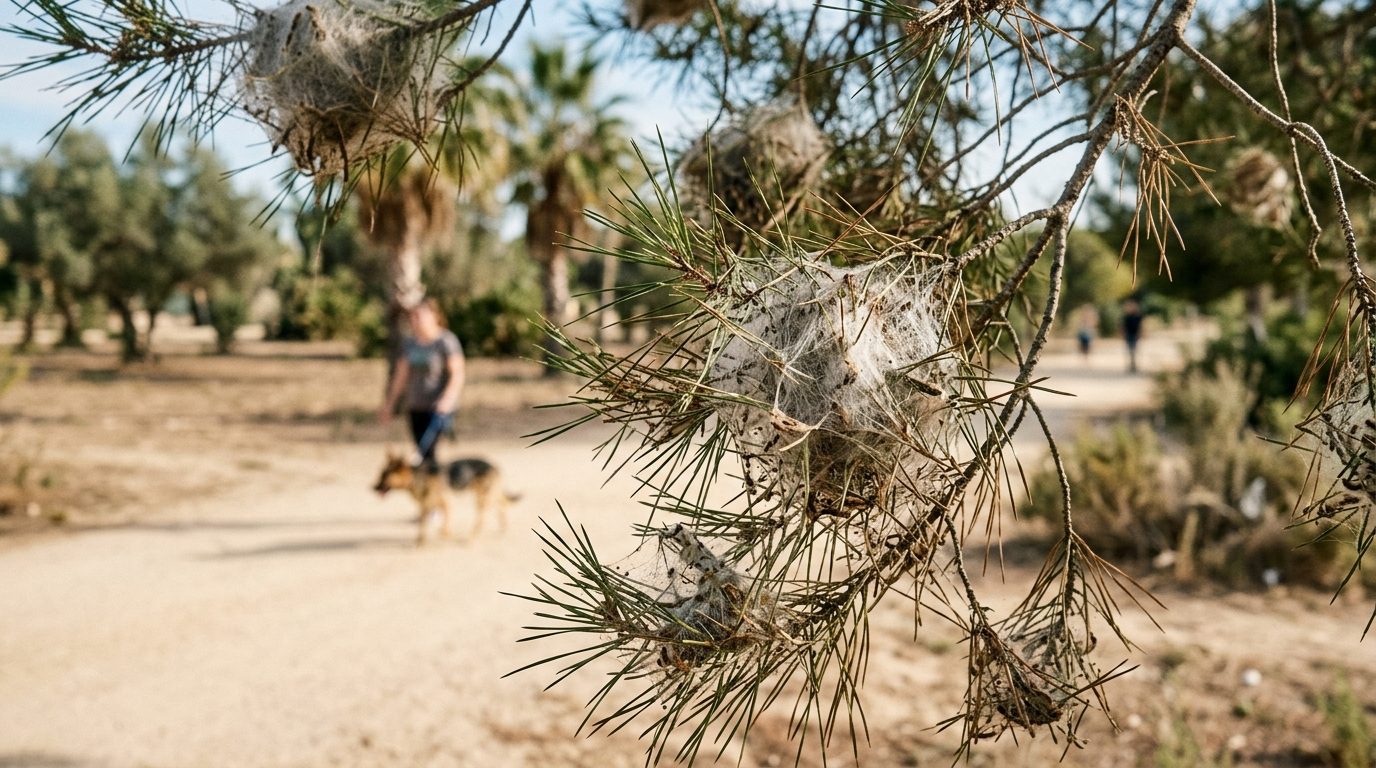
The pine processionary (Thaumetopoea pityocampa) is a moth whose caterpillars spend the winter in white, silky nests in pine trees, and sometimes cedars. When they are ready to bury themselves in the ground, they leave the tree and walk nose-to-tail in long lines – the “procession” that gives them their name.







 Online pharmacy & parapharmacySkincare, vitamins, baby care and more – delivered in SpainShop now
Vivid BusinessA business account for freelancers and companies in SpainOpen your account online, with sub-accounts and cards for your team.Learn more →(ad)
 Buying a home in Spain? Simulate your mortgageSee your monthly payment with Banco Sabadell’s mortgage simulator.Try the simulator →(ad)
 A bank account for autónomos in SpainCuenta Clara Autónomos: no commissions, free debit and credit cards, opened online.See the account →(ad)
 A European bank you open from your phonebunq: an EU-licensed bank with debit cards, managed fully in the app. Sign up in about five minutes.Get started →(ad)
 A mobile bank account with no commissionsB100, the mobile bank from Abanca: everyday account and free debit card, all in the app.Get the app →(ad)


When is the risk highest?
The nests appear in pine trees in autumn and winter. The dangerous period is when the caterpillars come down to the ground, usually from late winter into spring. In warm areas such as the Costa del Sol this can start as early as January, and a mild winter can bring it forward. Keep an eye out from the turn of the year until the end of spring.
Why it is dangerous for dogs
Each caterpillar is covered in thousands of tiny hairs containing a toxin. Dogs are curious and sniff, lick or pick up the caterpillars, and the hairs break off and stick to the mouth, tongue and eyes. Even dead caterpillars and empty nests can be harmful.
Signs to watch for:
- Heavy drooling and pawing at the mouth
- A swollen or discoloured tongue or lips
- Vomiting
- Red, itchy skin or eyes
- Restlessness or difficulty breathing
What to do if your dog touches one
- Go to a vet straight away. This is an emergency – the tongue can be permanently damaged within hours.
- Rinse, do not rub. On the way, rinse the mouth and affected area gently with plenty of water. Rubbing breaks the hairs and releases more toxin.
- Protect yourself. Use gloves if you can, so the hairs do not get on your skin.
- Keep the dog calm and stop it licking or rubbing its face.
How to prevent it
- Walk your dog on a lead near pine trees from January to spring, and avoid pine woods and parks with nests.
- Look up: white silk “bags” in pine branches mean nests.
- Never touch nests or caterpillars, and teach children not to either.
- If you have pines in your garden, ask a gardening or pest-control company to remove nests safely in autumn or early winter. Some town halls treat trees in public areas – report nests in parks to the town hall.
Looking for a gardener on the Costa del Sol? Find local companies in our Find a Business directory. More pet guides: Pets in Spain.







FAQ: processionary caterpillars
Are processionary caterpillars dangerous to people?
The hairs can cause itchy rashes, eye irritation and, rarely, allergic reactions. Wash the skin with water and see a doctor if symptoms are strong or affect the eyes.
Can cats be affected?
Yes, although cats are usually more careful than dogs. The symptoms and the first aid are the same.
Should I remove nests myself?
No. Let a professional do it with protective equipment. Disturbing a nest can spread the hairs.
Disclaimer: This article is general information, not veterinary advice. If your pet shows symptoms, contact a vet immediately.


Pets
Dog beaches on the Costa del Sol: where your dog is allowed
Where dogs are allowed on beaches in Málaga province, the rules on dog beaches and how to keep your dog safe by the sea.

Updated: October 2026
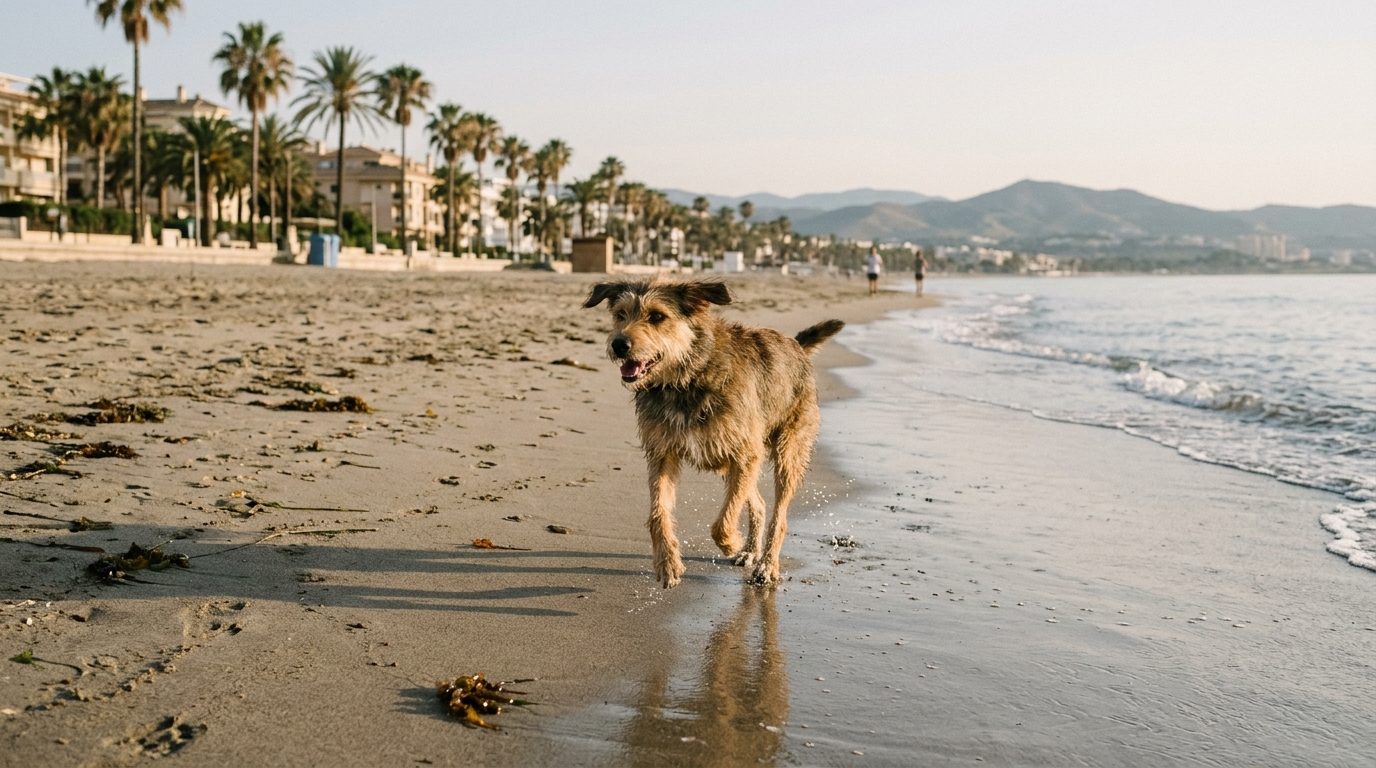
Taking your dog to the beach is one of the joys of living on the Costa del Sol – but on most Spanish beaches dogs are not allowed, at least not in the bathing season. The good news: several towns have designated dog beaches (playas caninas), and outside the summer some local rules are more relaxed. Here is where you can go and what the rules are.
The basic rule: no dogs on normal bathing beaches
Town halls set the beach rules through local bylaws (ordenanzas). On almost every beach in Málaga province, dogs are banned during the bathing season, which usually runs from around June to September, and many towns keep the ban all year. Fines can be issued by the local police. Always check the signs at the beach entrance – they show the local rule.
Online pharmacy & parapharmacySkincare, vitamins, baby care and more – delivered in SpainShop now
Vivid BusinessA business account for freelancers and companies in SpainOpen your account online, with sub-accounts and cards for your team.Learn more →(ad)
Buying a home in Spain? Simulate your mortgageSee your monthly payment with Banco Sabadell’s mortgage simulator.Try the simulator →(ad)
A bank account for autónomos in SpainCuenta Clara Autónomos: no commissions, free debit and credit cards, opened online.See the account →(ad)
A European bank you open from your phonebunq: an EU-licensed bank with debit cards, managed fully in the app. Sign up in about five minutes.Get started →(ad)
A mobile bank account with no commissionsB100, the mobile bank from Abanca: everyday account and free debit card, all in the app.Get the app →(ad)
Dog beaches in Málaga province
These dog beaches were listed as operating in 2026. Rules, opening periods and even locations change from year to year, so check the town hall’s website before you go.
- Málaga / Rincón de la Victoria – Arroyo Totalán, near La Araña, east of Málaga city.
- Vélez-Málaga – dog beach in Torre del Mar.
- Torrox – Torrox dog beach.
- Benalmádena – El Carvajal area. The former Arroyo Hondo dog beach has been closed.
- Fuengirola – next to Sohail Castle.
- Marbella – El Pinillo and Ventura del Mar.
- Casares – Piedra Paloma.
Mijas’ former dog beach has been closed for years, so dog owners in Mijas usually go to Fuengirola or Benalmádena.
Rules on dog beaches
- Your dog must be microchipped, vaccinated and registered – carry the documents or the pet passport.
- Keep the dog under control at all times; some beaches require a lead, and many require a muzzle for dogs over 20 kg or classed as potentially dangerous.
- Pick up after your dog – bags and bins are usually provided.
- Sick, aggressive or female dogs in heat are not allowed.
- Many dog beaches are marked as not suitable for human bathing.
Keeping your dog safe at the beach
- Heat: sand and promenades get very hot in summer. Go early in the morning or in the evening, bring shade and fresh water.
- Salt water: stop your dog drinking sea water and rinse the coat with fresh water afterwards.
- Jellyfish and weever fish: both sting. If your dog yelps after stepping in shallow water or picking something up, rinse with sea water and call a vet.
- Leishmaniasis: sandflies are most active at dusk in the warm months. Ask your vet about a vaccine or a repellent collar.
If your dog causes damage or an accident, third-party liability insurance helps. Providers such as Petplan (ad) offer pet insurance in Spain – see our guide to pet insurance.
Dog-friendly alternatives
- Dog parks (parques caninos) in most towns, often with fenced areas for off-lead play.
- Riverbeds and paths inland, for example in the hills above Mijas, Benalmádena and Marbella.
- Many beach bars (chiringuitos) and terraces welcome well-behaved dogs – ask first.
More pet guides and a list of local shelters: Pets in Spain.
FAQ: dogs on Costa del Sol beaches
Can I take my dog on the beach in winter?
It depends on the town. Some allow dogs outside the bathing season, many ban them all year. Check the sign at the beach entrance or the town hall’s bylaw.
Is there a dog beach in Málaga city?
The nearest is at Arroyo Totalán, on the border between Málaga and Rincón de la Victoria, east of the city.
Do I need a muzzle on a dog beach?
For potentially dangerous breeds, yes. Many dog beaches also require a muzzle for dogs over 20 kg. Follow the rules on the sign.
Disclaimer: Beach rules are set by each town hall and change. This article is general information – check the current rules with the town hall before you go. Links marked “(ad)” are affiliate links – NewInSpain may earn a commission at no extra cost to you.
Pets
Adopting a dog or cat in Spain: shelters, rules and how it works
How to adopt a dog or cat from a Spanish shelter: the steps, what the animal welfare law requires and shelters on the Costa del Sol.

Updated: October 2026
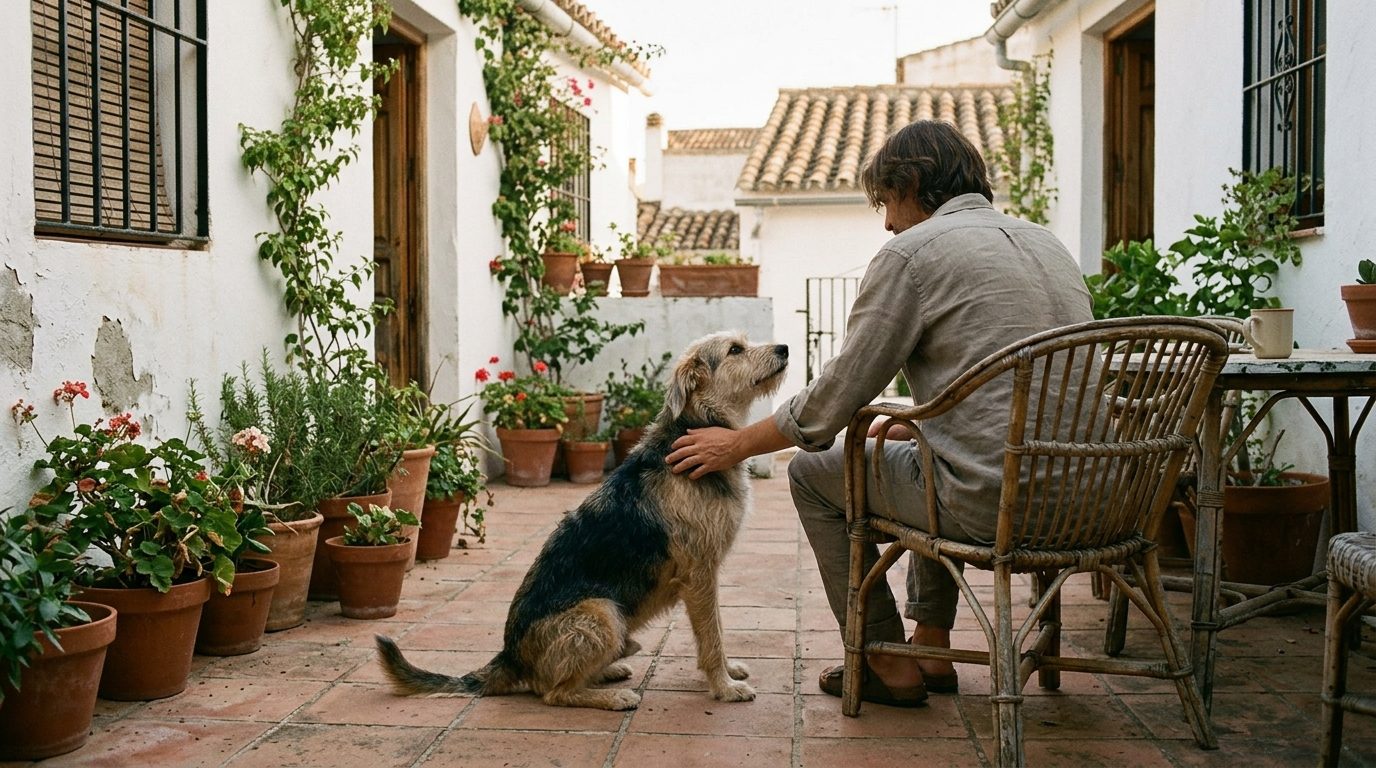
Spain’s animal shelters are full of dogs and cats waiting for a home, and many foreign residents adopt within months of arriving. Adopting is usually cheaper than buying, the animal comes vaccinated, microchipped and often sterilised, and you give a home to an animal that really needs one. This guide explains how adoption works in Spain, what the animal welfare law expects from you and where to start on the Costa del Sol.
Why adopt in Spain
- Many animals need homes. Abandonment is still a problem in Spain, especially after summer and the hunting season, when many hunting dogs (galgos and podencos) are left behind.
- Pet shops can no longer sell dogs and cats. Under the animal welfare law (Ley 7/2023), dogs, cats and ferrets may only be sold directly by registered breeders, so adoption from a shelter is one of the main routes to a new pet.
- The animal comes prepared. Shelters normally hand over animals with a microchip, the basic vaccinations, a health check and – depending on age – sterilisation.
How adoption works, step by step
- Look online first. Most shelters show their animals on their website or social media, with age, size and character. Many also have English-speaking volunteers.
- Fill in an adoption form. Expect questions about your home, garden, working hours, other pets, children and whether you rent (some shelters ask for the landlord’s permission).
- Meet the animal. You visit the shelter, walk the dog or meet the cat, often more than once. Bring the whole family and any dog you already have.
- Home check. Some shelters visit your home or ask for photos of the garden and fences.
- Contract and fee. You sign an adoption contract and pay an adoption fee that helps cover vaccines, microchip and sterilisation. The contract usually lets the shelter follow up and requires you to return the animal to them, not give it away, if things do not work out.
- Registration. The microchip is transferred to your name in the regional pet register – in Andalucía the RAIA. The shelter or your vet arranges this.
Fostering: try before you commit
If you are not sure you can adopt – for example because you may move again soon – consider fostering (acogida). You look after an animal at home for a few weeks or months while the shelter looks for a permanent family. Shelters usually cover food and vet costs. It is also a good way to find out whether a dog suits your lifestyle.
Online pharmacy & parapharmacySkincare, vitamins, baby care and more – delivered in SpainShop now
Vivid BusinessA business account for freelancers and companies in SpainOpen your account online, with sub-accounts and cards for your team.Learn more →(ad)
Buying a home in Spain? Simulate your mortgageSee your monthly payment with Banco Sabadell’s mortgage simulator.Try the simulator →(ad)
A bank account for autónomos in SpainCuenta Clara Autónomos: no commissions, free debit and credit cards, opened online.See the account →(ad)
A European bank you open from your phonebunq: an EU-licensed bank with debit cards, managed fully in the app. Sign up in about five minutes.Get started →(ad)
A mobile bank account with no commissionsB100, the mobile bank from Abanca: everyday account and free debit card, all in the app.Get the app →(ad)
What the animal welfare law expects from you
The national animal welfare law (Ley 7/2023) applies to every pet owner in Spain, foreign residents included. The main points:
- Dogs, cats and ferrets must be microchipped and registered.
- Animals may not be left alone for long periods – for dogs, not more than 24 hours in a row – and must not live permanently on a terrace, balcony or roof.
- Cats must be sterilised before six months of age, unless they are registered for breeding.
- The law also foresees a free course for dog owners and compulsory third-party liability insurance for dogs, but both still depend on a regulation that has not been approved yet. Until then, insurance is only compulsory for potentially dangerous dogs (PPP) and where regional or local rules require it. Many owners take it out anyway, because it is cheap protection if the dog causes an accident.
More detail in our guide to Spain’s animal welfare law and to pet insurance in Spain. If you want cover for vet bills and liability, providers such as Petplan (ad) offer pet insurance in Spain.
Shelters on the Costa del Sol and in Málaga province
These are some of the shelters and rescue groups in the area. Most welcome adopters, foster homes and volunteers – contact them first, as opening hours and needs change.
- Sociedad Protectora de Animales y Plantas de Málaga – Málaga city. protectoramalaga.com
- Suspiros de Cuatro Patas – Málaga. suspirosdecuatropatas.org
- Asociación Protectora Fidelio – Benalmádena. asociacionfidelio.org
- PAD (Protectora de Animales Domésticos) – Mijas. padmijas.org
- ACE / SHIN – Mijas. ace-charity.org
- Triple A Marbella – Marbella and San Pedro. tripleamarbella.org
- ADANA – Estepona. adana.es
- Galgos en Familia – greyhound rescue, Málaga. galgosenfamilia.org
- Axarquía Animal Rescue – east of Málaga. axarquiaanimalrescue.com
See all our pet guides and the full shelter list on Pets in Spain.
Before you bring your new pet home
- Register with a local vet and ask about vaccines, parasite protection and the leishmaniasis vaccine or collar for dogs – leishmaniasis is spread by sandflies and common in southern Spain.
- Check your rental contract or community rules on pets.
- Plan for summer: shade, water and walks early and late in the day.
- If you may travel, ask your vet for an EU pet passport.
Useful links
- BOE: Ley 7/2023 on animal rights and welfare (Spanish)
- Moving to Spain with a dog or cat
- Pet insurance in Spain
- Pets in Spain: all guides and shelters
FAQ: adopting a pet in Spain
Can foreigners adopt a dog or cat in Spain?
Yes. Shelters adopt to foreign residents all the time. You usually need ID (passport or NIE) and an address in Spain, and some shelters ask how long you plan to stay.
How much does it cost to adopt?
Shelters charge an adoption fee that covers part of the vaccines, microchip and sterilisation. The amount varies by shelter and animal – ask the shelter directly.
Can I adopt from Spain if I live abroad?
Some shelters rehome animals abroad with the right paperwork and transport. Ask the shelter, and check your home country’s import rules.
Is dog insurance compulsory in Spain?
The law foresees it, but the regulation that makes it compulsory for all dogs has not been approved yet. It is already compulsory for potentially dangerous dogs and where local rules require it.
Disclaimer: This article is general information, not legal or veterinary advice. Rules and shelter details change; check with the shelter, your vet or the town hall. Links marked “(ad)” are affiliate links – NewInSpain may earn a commission at no extra cost to you.
Insurance
Pet insurance in Spain: what is compulsory and what is worth having
Liability insurance for dogs, vet health insurance and accident cover in Spain: what the law says and what to check before you sign.
Updated: October 2026
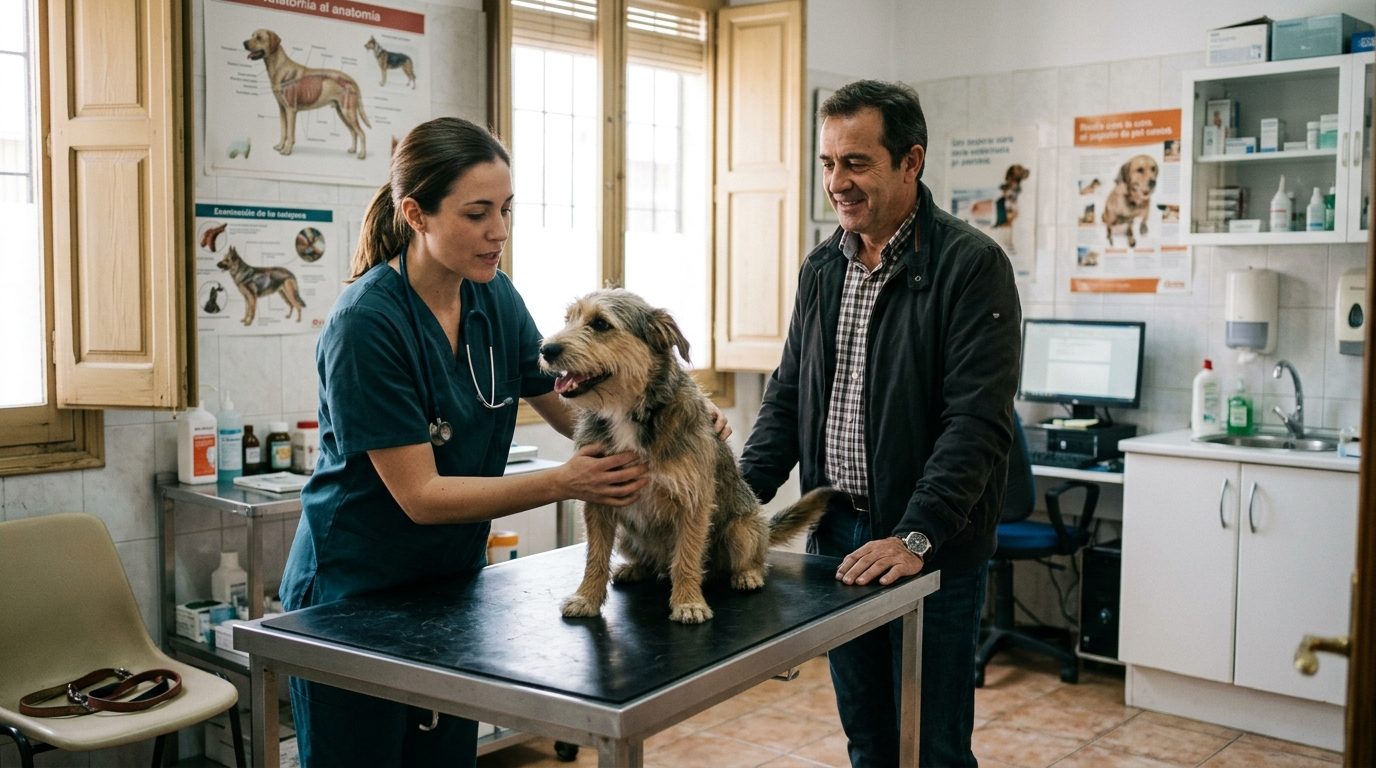
Vets in Spain are generally good value compared with northern Europe, but an operation, a broken leg or a long illness can still cost several thousand euros. At the same time, Spain’s animal welfare law has made liability insurance for dogs a topic every owner should know about. This guide explains the different types of pet insurance in Spain, what is and is not compulsory, and what to check before you sign.
Is pet insurance compulsory in Spain?
The animal welfare law, Ley 7/2023, says that dog owners must have third-party liability insurance (seguro de responsabilidad civil) covering damage their dog causes to other people. However, the obligation depends on an implementing regulation that sets the minimum cover, and that regulation is still pending. Until it is approved, the general obligation is not yet enforced.
Online pharmacy & parapharmacySkincare, vitamins, baby care and more – delivered in SpainShop now
Vivid BusinessA business account for freelancers and companies in SpainOpen your account online, with sub-accounts and cards for your team.Learn more →(ad)
Buying a home in Spain? Simulate your mortgageSee your monthly payment with Banco Sabadell’s mortgage simulator.Try the simulator →(ad)
A bank account for autónomos in SpainCuenta Clara Autónomos: no commissions, free debit and credit cards, opened online.See the account →(ad)
A European bank you open from your phonebunq: an EU-licensed bank with debit cards, managed fully in the app. Sign up in about five minutes.Get started →(ad)
A mobile bank account with no commissionsB100, the mobile bank from Abanca: everyday account and free debit card, all in the app.Get the app →(ad)
There are two important exceptions. Owners of potentially dangerous dogs (perros potencialmente peligrosos, such as certain breeds and large, powerful dogs) already need a municipal licence and liability insurance under the older law on dangerous animals. Some regions and town halls also have their own rules, so ask at your ayuntamiento when you register your dog.
Health insurance for vet bills is never compulsory. It is a personal choice, and for many owners it is about peace of mind.
The three types of cover
- Liability insurance (responsabilidad civil): pays if your dog bites someone, causes a traffic accident or damages property. It is often cheap and can sometimes be added to your home insurance – check whether your policy already includes pets.
- Vet health insurance (seguro de salud): pays part of your vet bills for illness and accidents, for example operations, hospital stays, tests and medicines. This is what most people mean by pet insurance.
- Accident-only cover: a cheaper option that only pays for injuries from accidents, not for illness.
What to check before you sign
- Age limits: many insurers only accept new pets up to a certain age, and premiums rise as the animal gets older. Insuring a young animal is usually easier and cheaper.
- Waiting periods (carencia): cover for illness often starts only after a few weeks. Accidents are usually covered sooner.
- Pre-existing conditions: illnesses your pet already has are normally excluded.
- Excess and co-payment: check how much you pay yourself per claim or per year.
- Annual limit: some policies cap what they pay per year or per condition.
- Choice of vet: some policies let you use any vet and claim the money back; others only work with partner clinics.
- Language: make sure you understand the policy and claims process. Ask for documents in English if your Spanish is not strong.
Health risks that make cover worth considering
Spain’s warm climate brings diseases that pets from northern Europe may never have met, such as leishmaniasis (spread by sandflies) and processionary caterpillars in pine areas. Treatment can be long and expensive. Our guide to moving to Spain with a dog or cat explains the main risks and how to prevent them.
Where to compare pet insurance
Ask your vet which insurers their clinic works with, and compare at least two or three quotes. For dogs, Petplan (ad) offers health and accident policies in Spain, and you can get a price online in a few minutes. Spanish banks and home insurers also sell pet cover, often as an add-on.
Useful links
- Ley 7/2023 on animal welfare (BOE, Spanish)
- Legal Today: why the dog insurance obligation depends on a regulation (Spanish)
FAQ: pet insurance in Spain
Do I have to insure my dog in Spain?
The animal welfare law requires liability insurance for dogs, but the obligation depends on a regulation that has not yet been approved. Owners of potentially dangerous dogs already need a licence and insurance. Check local rules at your town hall.
Do I need insurance for my cat?
No. The liability insurance in the animal welfare law is for dogs. Health insurance for cats is optional.
Does my home insurance cover my pet?
Some home insurance policies include liability for damage caused by pets, or let you add it. Vet bills are usually not included. Check your policy or ask your insurer.
Can I insure an older pet?
Often yes, but many insurers have a maximum age for new policies and charge more for older animals. Pre-existing conditions are usually excluded.
Disclaimer: This article is general information only and is not legal or insurance advice. Rules and policy terms change – check the conditions with the insurer and local rules with your town hall before you decide.




 Ad
 A sea-view escape in MallorcaThe Donna Portals – stay by the sea with views over the Mediterranean.See prices →

 Vivid BusinessA business account for freelancers and companies in SpainOpen your account online, with sub-accounts and cards for your team.✓ For autónomos and companies
✓ Sub-accounts for budgets and taxes
✓ Cards for your teamLearn more →(ad)
 A European bank you open from your phoneSign up with bunq in about five minutes.Get started →(ad)


Processionary caterpillars in Spain: a danger to dogs

Smart home gadgets that cut your electricity bill in Spain

Dog beaches on the Costa del Sol: where your dog is allowed

Andalucía guide: cities, culture and life in southern Spain

Understanding the tax system in Spain

Marbella guide: areas, beaches and everyday life








-

 Tourist Info2 years ago
Andalucía guide: cities, culture and life in southern Spain
-
Banking & Finances2 years ago
Understanding the tax system in Spain
-
Tourist Info2 years ago
Marbella guide: areas, beaches and everyday life
-
Cost of Living2 years ago
Living on a small salary in Spain in 2026
-
Tourist Info2 years ago
Benalmádena explained: Pueblo, Arroyo de la Miel and the coast
-
Spanish System2 years ago
How the Spanish government works: state, regions, provinces and town halls
-
Cost of Living2 years ago
Family living costs in Spain in 2026: monthly budget and moving-in money
-
Legal Requirements & Documentation2 years ago
How to get your Spanish NIE number in 2026 – step by step