Safety & Emergency
Power cuts in Spain: how to be prepared at home
What the April 2025 blackout taught us: what to keep at home, fridge and food safety, medical devices and how to report a power fault in Spain.









Most power cuts in Spain are short and local: a storm brings down a line, a transformer fails, or the main switch in your flat trips. But on 28 April 2025 the whole of mainland Spain and Portugal lost power at the same moment, and many households realised they had no torch, no cash and no idea how long the food in the fridge would last. This guide explains what happened that day, what is worth keeping at home, how to handle food and medical equipment, and who to call when the lights go out.
What happened in the April 2025 blackout
At 12:33 (Spanish time) on Monday 28 April 2025, the electricity system of continental Spain and Portugal collapsed. According to ENTSO-E, the association of European grid operators, the rest of the European network saw no significant disturbance, and only a small area of south-west France near the border was briefly affected.
Power came back region by region during the afternoon and night. Red Eléctrica reported that by 06:00 the next morning all transmission substations were back in service and more than 99% of demand on the mainland had been restored. Trains stopped, traffic lights went dark, and many people found that card terminals, lifts, internet and mobile coverage stopped working as well.











ENTSO-E’s final report, published on 20 March 2026, found no single cause. It describes a combination of interacting factors, including power oscillations, gaps in voltage control and generators disconnecting in Spain, which led to fast voltage rises and a cascade of further disconnections. The lesson for households: a nationwide blackout is rare, but it can happen without warning.
What to keep at home
In March 2025 the European Commission advised households across the EU to be able to manage on their own for at least 72 hours in a crisis. For a power cut, that means a small kit you can find in the dark:
- Light: a torch or headlamp for each adult and spare batteries. Avoid candles where possible, as they are a fire risk.
- A battery or wind-up radio: when mobile data and the internet fail, radio is often the easiest way to follow official updates.
- Charged power banks: enough to keep your phones going for a day or two.
- Cash in small notes: card machines and cash machines do not work without power.
- Water and food that needs no cooking: bottled water, tinned food, bread, nuts, a manual tin opener. Buildings that rely on electric water pumps can lose tap water when the power goes.
- Medicines and a first-aid kit: plus a printed list of important phone numbers, in case your phone dies.
- A full tank or charged car: fuel pumps need electricity too.
If you want to keep a fridge, a router or medical equipment running for longer, a portable power station is a practical option. These are large rechargeable batteries with normal sockets, and some can be charged from a solar panel. ALLPOWERS (ad) sells portable power stations and solar generators. Check the capacity against what you want to power.
Never run a petrol generator, barbecue or camping stove indoors or on a closed balcony. They produce carbon monoxide, which you cannot see or smell.









Fridge, freezer and food safety
The most important rule is to keep the doors closed. Food safety guidance from the US government’s FoodSafety.gov, which is widely used as a reference, says:
- Fridge: keeps food cold for about 4 hours if the door stays shut.
- Full freezer: holds its temperature for about 48 hours, or about 24 hours if it is half full.
- After more than 4 hours without power: throw away perishable fridge food such as meat, fish, eggs, milk and leftovers.
- Frozen food: can be refrozen if it still has ice crystals or is at 4°C or below.
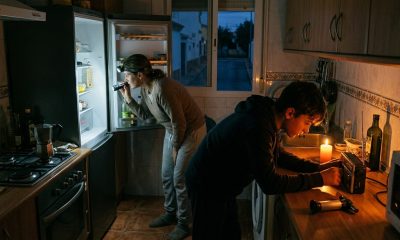
In summer on the Costa del Sol, kitchens warm up quickly, so be stricter rather than more relaxed. A cheap fridge thermometer helps you decide. If in doubt, throw it out. Our guide to staying safe in a Spanish heatwave also covers keeping cool without air conditioning.
Medical devices and vulnerable people
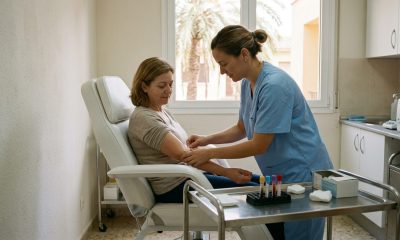
If someone in your home depends on electrical medical equipment, such as an oxygen concentrator, home ventilation or a powered wheelchair, plan ahead:
- Ask the doctor or equipment supplier how long the device runs on its own battery and whether a backup battery or oxygen cylinder is available.
- Keep the supplier’s 24-hour phone number written down, not only in your phone.
- Medicines that must be kept cold, such as insulin, need a plan too. Ask your pharmacist how long they can stay out of the fridge.
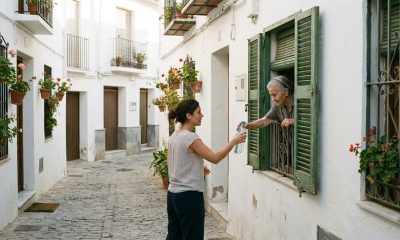
- Check on elderly neighbours, especially those living alone on upper floors where the lift will not work.
After the 2025 blackout, Spain’s Ministry of Health started work on a royal decree to define “electro-dependent” people and create a national register. As of October 2026 it is still a draft and not in force, so do not rely on anyone knowing about your situation automatically. If life is at risk, call 112.
Is it just you, or the whole street?
Before you call anyone, check whether the street lights, the stairwell or your neighbours have power. The distribution company e-distribución, which runs the grid in most of Andalucía, gives this advice:
- The street has no power either: it is probably a general fault or a planned cut. Check the outage map on your distributor’s website.
- Only your home is affected: switch off your appliances, switch off the main switch (ICP) in your fuse box, wait a few seconds and switch it on again. Smart meters can also cut supply if you exceed your contracted power.
- Still nothing: the problem may be in your own installation, and you need an authorised electrician (instalador autorizado).
Who to call and how to report a fault
In Spain the company you pay for electricity (the retailer, or comercializadora) is often not the company that owns the cables (the distributor, or distribuidora). Faults on the network are the distributor’s job. Its name and 24-hour fault number are printed on your electricity bill. In most of Málaga province the distributor is e-distribución, which lets you report faults by phone and through the chat on its website.
If you are still learning how Spanish bills work, see our guide to electricity, water, gas and internet bills in Spain.
Call 112 only for emergencies: fallen cables, fire, someone trapped in a lift or a person whose life depends on power. During a large blackout, keep calls short so the network stays free for emergencies.
After the power comes back
- Switch appliances back on one by one, so you do not trip the main switch.
- Check fridge and freezer food using the rules above.
- If appliances were damaged by a power surge, take photos and keep the receipts. Your home insurance may cover electrical damage, so check your policy.
Power cuts often come with storms. Our guide to floods, DANA storms and weather warnings explains how to follow AEMET warnings and prepare your home.
FAQ: power cuts in Spain
How long did the April 2025 blackout last?
It started at 12:33 on 28 April 2025. Power returned gradually over the afternoon and night, and by 06:00 the next morning Red Eléctrica reported that more than 99% of mainland demand was back.
Is food in the fridge still safe after a power cut?
If the door stayed closed and the cut lasted less than about 4 hours, it is usually fine. After that, throw away perishable food such as meat, fish, eggs and dairy. A full freezer keeps food frozen for about 48 hours if you keep it shut.
Who do I call when my electricity goes off?
Call the distribution company, not the company you pay. Its name and fault number are on your electricity bill. Call 112 only if there is danger to people.
Can I use a generator in my flat?
Not a fuel-powered one. Petrol and gas generators must only be used outdoors, well away from windows, because of carbon monoxide. Battery-based portable power stations do not have this problem.
Useful links
- ENTSO-E: 28 April 2025 Iberian blackout reports
- e-distribución: power faults and what to check (Spanish)
- FoodSafety.gov: keeping food safe when you lose power
Disclaimer: This article is general information, not legal or financial advice. Rules and prices change, so check with the official source before you decide. Links marked “(ad)” are affiliate links – NewInSpain may earn a commission at no extra cost to you.