










































Safety & Emergency
Power cuts in Spain: how to be prepared at home
What the April 2025 blackout taught us: what to keep at home, fridge and food safety, medical devices and how to report a power fault in Spain.

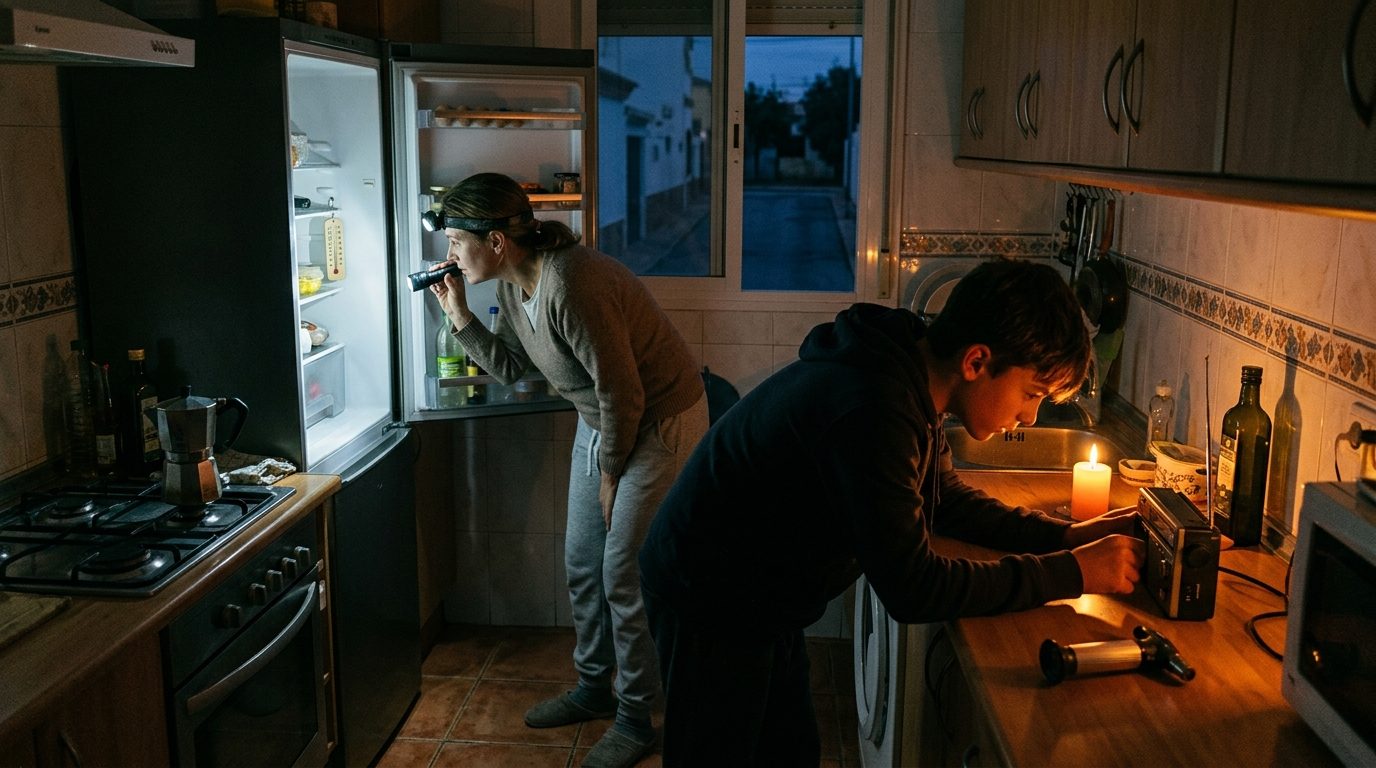








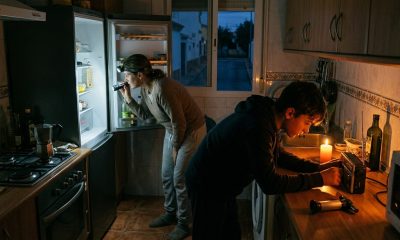
Most power cuts in Spain are short and local: a storm brings down a line, a transformer fails, or the main switch in your flat trips. But on 28 April 2025 the whole of mainland Spain and Portugal lost power at the same moment, and many households realised they had no torch, no cash and no idea how long the food in the fridge would last. This guide explains what happened that day, what is worth keeping at home, how to handle food and medical equipment, and who to call when the lights go out.
What happened in the April 2025 blackout
At 12:33 (Spanish time) on Monday 28 April 2025, the electricity system of continental Spain and Portugal collapsed. According to ENTSO-E, the association of European grid operators, the rest of the European network saw no significant disturbance, and only a small area of south-west France near the border was briefly affected.
Power came back region by region during the afternoon and night. Red Eléctrica reported that by 06:00 the next morning all transmission substations were back in service and more than 99% of demand on the mainland had been restored. Trains stopped, traffic lights went dark, and many people found that card terminals, lifts, internet and mobile coverage stopped working as well.








 Online pharmacy & parapharmacySkincare, vitamins, baby care and more – delivered in SpainShop now
Vivid BusinessA business account for freelancers and companies in SpainOpen your account online, with sub-accounts and cards for your team.Learn more →(ad)
 Buying a home in Spain? Simulate your mortgageSee your monthly payment with Banco Sabadell’s mortgage simulator.Try the simulator →(ad)
 A bank account for autónomos in SpainCuenta Clara Autónomos: no commissions, free debit and credit cards, opened online.See the account →(ad)
 A European bank you open from your phonebunq: an EU-licensed bank with debit cards, managed fully in the app. Sign up in about five minutes.Get started →(ad)
 A mobile bank account with no commissionsB100, the mobile bank from Abanca: everyday account and free debit card, all in the app.Get the app →(ad)


ENTSO-E’s final report, published on 20 March 2026, found no single cause. It describes a combination of interacting factors, including power oscillations, gaps in voltage control and generators disconnecting in Spain, which led to fast voltage rises and a cascade of further disconnections. The lesson for households: a nationwide blackout is rare, but it can happen without warning.
What to keep at home
In March 2025 the European Commission advised households across the EU to be able to manage on their own for at least 72 hours in a crisis. For a power cut, that means a small kit you can find in the dark:
- Light: a torch or headlamp for each adult and spare batteries. Avoid candles where possible, as they are a fire risk.
- A battery or wind-up radio: when mobile data and the internet fail, radio is often the easiest way to follow official updates.
- Charged power banks: enough to keep your phones going for a day or two.
- Cash in small notes: card machines and cash machines do not work without power.
- Water and food that needs no cooking: bottled water, tinned food, bread, nuts, a manual tin opener. Buildings that rely on electric water pumps can lose tap water when the power goes.
- Medicines and a first-aid kit: plus a printed list of important phone numbers, in case your phone dies.
- A full tank or charged car: fuel pumps need electricity too.
If you want to keep a fridge, a router or medical equipment running for longer, a portable power station is a practical option. These are large rechargeable batteries with normal sockets, and some can be charged from a solar panel. ALLPOWERS (ad) sells portable power stations and solar generators. Check the capacity against what you want to power.
Never run a petrol generator, barbecue or camping stove indoors or on a closed balcony. They produce carbon monoxide, which you cannot see or smell.








Fridge, freezer and food safety
The most important rule is to keep the doors closed. Food safety guidance from the US government’s FoodSafety.gov, which is widely used as a reference, says:
- Fridge: keeps food cold for about 4 hours if the door stays shut.
- Full freezer: holds its temperature for about 48 hours, or about 24 hours if it is half full.
- After more than 4 hours without power: throw away perishable fridge food such as meat, fish, eggs, milk and leftovers.
- Frozen food: can be refrozen if it still has ice crystals or is at 4°C or below.
In summer on the Costa del Sol, kitchens warm up quickly, so be stricter rather than more relaxed. A cheap fridge thermometer helps you decide. If in doubt, throw it out. Our guide to staying safe in a Spanish heatwave also covers keeping cool without air conditioning.
Medical devices and vulnerable people
If someone in your home depends on electrical medical equipment, such as an oxygen concentrator, home ventilation or a powered wheelchair, plan ahead:
- Ask the doctor or equipment supplier how long the device runs on its own battery and whether a backup battery or oxygen cylinder is available.
- Keep the supplier’s 24-hour phone number written down, not only in your phone.
- Medicines that must be kept cold, such as insulin, need a plan too. Ask your pharmacist how long they can stay out of the fridge.
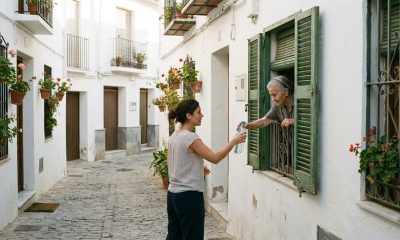
- Check on elderly neighbours, especially those living alone on upper floors where the lift will not work.
After the 2025 blackout, Spain’s Ministry of Health started work on a royal decree to define “electro-dependent” people and create a national register. As of October 2026 it is still a draft and not in force, so do not rely on anyone knowing about your situation automatically. If life is at risk, call 112.
Is it just you, or the whole street?
Before you call anyone, check whether the street lights, the stairwell or your neighbours have power. The distribution company e-distribución, which runs the grid in most of Andalucía, gives this advice:
- The street has no power either: it is probably a general fault or a planned cut. Check the outage map on your distributor’s website.
- Only your home is affected: switch off your appliances, switch off the main switch (ICP) in your fuse box, wait a few seconds and switch it on again. Smart meters can also cut supply if you exceed your contracted power.
- Still nothing: the problem may be in your own installation, and you need an authorised electrician (instalador autorizado).
Who to call and how to report a fault
In Spain the company you pay for electricity (the retailer, or comercializadora) is often not the company that owns the cables (the distributor, or distribuidora). Faults on the network are the distributor’s job. Its name and 24-hour fault number are printed on your electricity bill. In most of Málaga province the distributor is e-distribución, which lets you report faults by phone and through the chat on its website.
If you are still learning how Spanish bills work, see our guide to electricity, water, gas and internet bills in Spain.
Call 112 only for emergencies: fallen cables, fire, someone trapped in a lift or a person whose life depends on power. During a large blackout, keep calls short so the network stays free for emergencies.
After the power comes back
- Switch appliances back on one by one, so you do not trip the main switch.
- Check fridge and freezer food using the rules above.
- If appliances were damaged by a power surge, take photos and keep the receipts. Your home insurance may cover electrical damage, so check your policy.
Power cuts often come with storms. Our guide to floods, DANA storms and weather warnings explains how to follow AEMET warnings and prepare your home.
FAQ: power cuts in Spain
How long did the April 2025 blackout last?
It started at 12:33 on 28 April 2025. Power returned gradually over the afternoon and night, and by 06:00 the next morning Red Eléctrica reported that more than 99% of mainland demand was back.
Is food in the fridge still safe after a power cut?
If the door stayed closed and the cut lasted less than about 4 hours, it is usually fine. After that, throw away perishable food such as meat, fish, eggs and dairy. A full freezer keeps food frozen for about 48 hours if you keep it shut.
Who do I call when my electricity goes off?
Call the distribution company, not the company you pay. Its name and fault number are on your electricity bill. Call 112 only if there is danger to people.
Can I use a generator in my flat?
Not a fuel-powered one. Petrol and gas generators must only be used outdoors, well away from windows, because of carbon monoxide. Battery-based portable power stations do not have this problem.
Useful links
- ENTSO-E: 28 April 2025 Iberian blackout reports
- e-distribución: power faults and what to check (Spanish)
- FoodSafety.gov: keeping food safe when you lose power
Disclaimer: This article is general information, not legal or financial advice. Rules and prices change, so check with the official source before you decide. Links marked “(ad)” are affiliate links – NewInSpain may earn a commission at no extra cost to you.


Pets
Processionary caterpillars in Spain: a danger to dogs
Pine processionary caterpillars can seriously injure dogs. When the risk is highest, the symptoms and what to do if your dog touches one.

Updated: October 2026
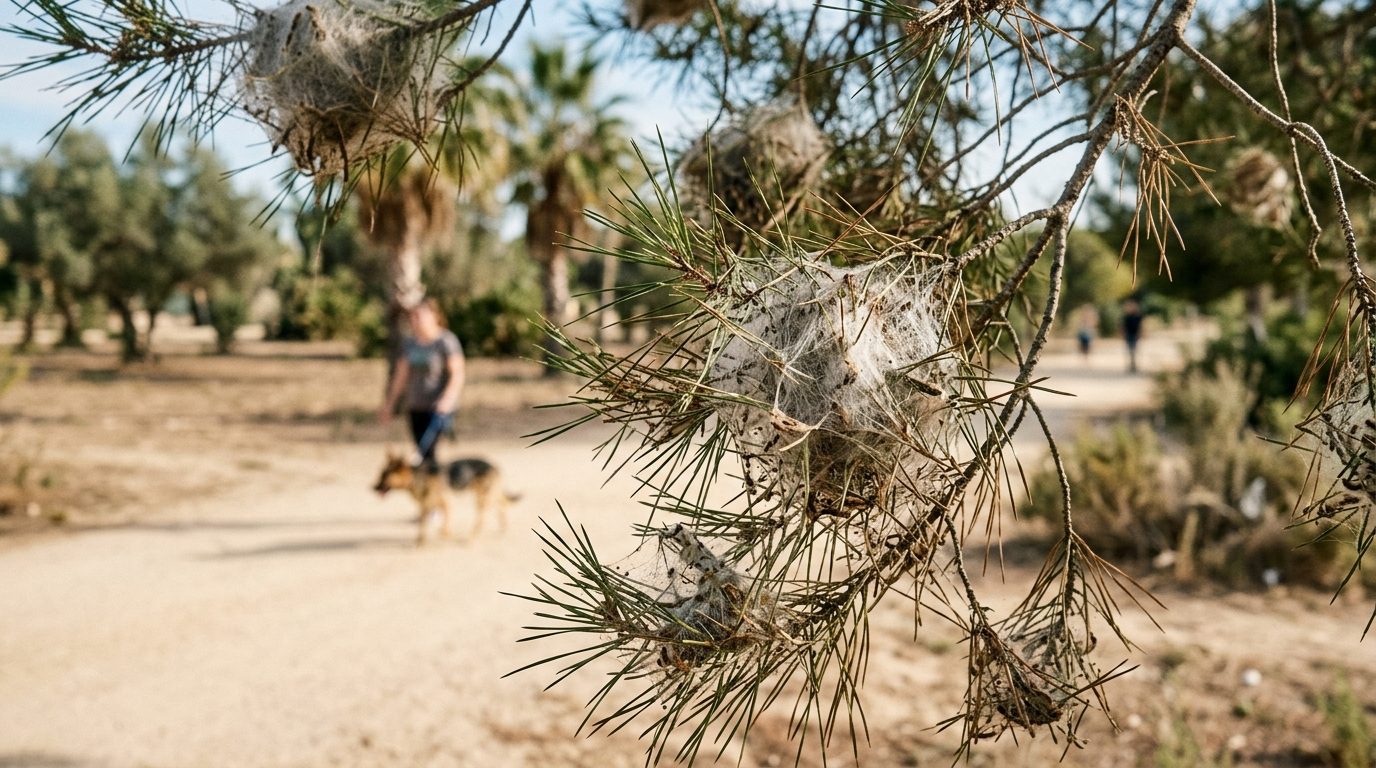
Every year Spanish vets warn dog owners about the pine processionary caterpillar (oruga procesionaria). The caterpillars live in pine trees all over Spain, including parks, gardens and urbanisations on the Costa del Sol, and their hairs can cause serious injuries to dogs – and rashes in people. Here is what to look for, when the risk is highest and what to do if your dog touches one.
What is the processionary caterpillar?
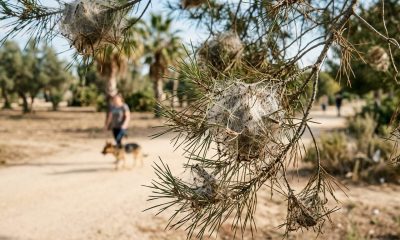
The pine processionary (Thaumetopoea pityocampa) is a moth whose caterpillars spend the winter in white, silky nests in pine trees, and sometimes cedars. When they are ready to bury themselves in the ground, they leave the tree and walk nose-to-tail in long lines – the “procession” that gives them their name.
Online pharmacy & parapharmacySkincare, vitamins, baby care and more – delivered in SpainShop now
Vivid BusinessA business account for freelancers and companies in SpainOpen your account online, with sub-accounts and cards for your team.Learn more →(ad)
Buying a home in Spain? Simulate your mortgageSee your monthly payment with Banco Sabadell’s mortgage simulator.Try the simulator →(ad)
A bank account for autónomos in SpainCuenta Clara Autónomos: no commissions, free debit and credit cards, opened online.See the account →(ad)
A European bank you open from your phonebunq: an EU-licensed bank with debit cards, managed fully in the app. Sign up in about five minutes.Get started →(ad)
A mobile bank account with no commissionsB100, the mobile bank from Abanca: everyday account and free debit card, all in the app.Get the app →(ad)
When is the risk highest?
The nests appear in pine trees in autumn and winter. The dangerous period is when the caterpillars come down to the ground, usually from late winter into spring. In warm areas such as the Costa del Sol this can start as early as January, and a mild winter can bring it forward. Keep an eye out from the turn of the year until the end of spring.
Why it is dangerous for dogs
Each caterpillar is covered in thousands of tiny hairs containing a toxin. Dogs are curious and sniff, lick or pick up the caterpillars, and the hairs break off and stick to the mouth, tongue and eyes. Even dead caterpillars and empty nests can be harmful.
Signs to watch for:
- Heavy drooling and pawing at the mouth
- A swollen or discoloured tongue or lips
- Vomiting
- Red, itchy skin or eyes
- Restlessness or difficulty breathing
What to do if your dog touches one
- Go to a vet straight away. This is an emergency – the tongue can be permanently damaged within hours.
- Rinse, do not rub. On the way, rinse the mouth and affected area gently with plenty of water. Rubbing breaks the hairs and releases more toxin.
- Protect yourself. Use gloves if you can, so the hairs do not get on your skin.
- Keep the dog calm and stop it licking or rubbing its face.
How to prevent it
- Walk your dog on a lead near pine trees from January to spring, and avoid pine woods and parks with nests.
- Look up: white silk “bags” in pine branches mean nests.
- Never touch nests or caterpillars, and teach children not to either.
- If you have pines in your garden, ask a gardening or pest-control company to remove nests safely in autumn or early winter. Some town halls treat trees in public areas – report nests in parks to the town hall.
Looking for a gardener on the Costa del Sol? Find local companies in our Find a Business directory. More pet guides: Pets in Spain.
FAQ: processionary caterpillars
Are processionary caterpillars dangerous to people?
The hairs can cause itchy rashes, eye irritation and, rarely, allergic reactions. Wash the skin with water and see a doctor if symptoms are strong or affect the eyes.
Can cats be affected?
Yes, although cats are usually more careful than dogs. The symptoms and the first aid are the same.
Should I remove nests myself?
No. Let a professional do it with protective equipment. Disturbing a nest can spread the hairs.
Disclaimer: This article is general information, not veterinary advice. If your pet shows symptoms, contact a vet immediately.
Safety & Emergency
Staying safe in a Spanish heatwave: warnings, heat stroke and climate shelters
How AEMET heat warnings work, the signs of heat stroke, where to find climate shelters and the rules on outdoor work, pets and cars during a Spanish heatwave.

Updated: October 2026
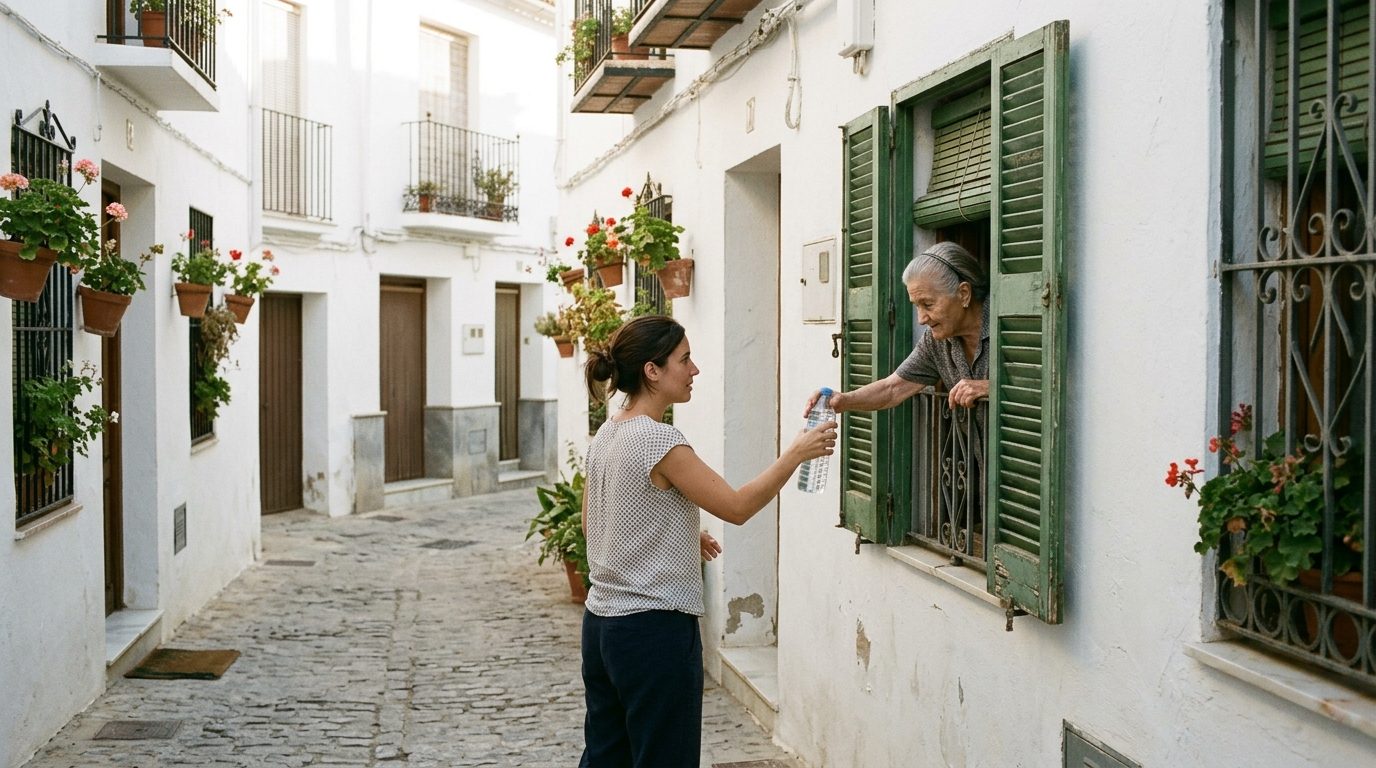
Spanish summers are getting longer and hotter, and a heatwave here can be far more intense than anything many newcomers have lived through. This guide explains how the official heat warnings work, how to recognise heat exhaustion and heat stroke, where to cool down for free, and what the rules say about outdoor work and leaving pets in cars. For emergency numbers and general safety, see our guide to safety and emergencies in Spain.
How AEMET heat warnings work
AEMET (Agencia Estatal de Meteorología) is Spain’s national weather agency. Under its Meteoalerta plan it issues warnings for adverse weather, including high temperatures, up to 72 hours ahead. Warnings use three colours:
Online pharmacy & parapharmacySkincare, vitamins, baby care and more – delivered in SpainShop now
Vivid BusinessA business account for freelancers and companies in SpainOpen your account online, with sub-accounts and cards for your team.Learn more →(ad)
Buying a home in Spain? Simulate your mortgageSee your monthly payment with Banco Sabadell’s mortgage simulator.Try the simulator →(ad)
A bank account for autónomos in SpainCuenta Clara Autónomos: no commissions, free debit and credit cards, opened online.See the account →(ad)
A European bank you open from your phonebunq: an EU-licensed bank with debit cards, managed fully in the app. Sign up in about five minutes.Get started →(ad)
A mobile bank account with no commissionsB100, the mobile bank from Abanca: everyday account and free debit card, all in the app.Get the app →(ad)
| Level | What AEMET means | What you should do |
|---|---|---|
| Yellow | Low danger, but vulnerable people and those in exposed places may be affected | Stay alert, plan activities for cooler hours, keep an eye on older relatives and children |
| Orange | Significant danger with possible serious impacts | Take precautions, limit physical effort outdoors, follow updates |
| Red | Extraordinary danger with very severe impacts possible | Follow instructions from the authorities and avoid non-essential travel and outdoor activity |
Heat warnings are based on forecast maximum temperatures, and the thresholds are different for each warning zone. A temperature that triggers a yellow warning on the northern coast may be an ordinary summer day in inland Andalusia, so do not compare warnings between regions by the number alone. Check the warning for the zone where you actually are on the AEMET website or the official AEMET app.
Es-Alert messages on your phone
In serious situations, regional emergency services can send an Es-Alert message straight to every mobile phone in the affected area, with a loud tone even if your phone is on silent. You do not need to register. Read the message carefully: it may tell you to stay indoors in the hottest hours or avoid certain activities. How Es-Alert works is explained in more detail in our general safety guide.
Heat exhaustion and heat stroke: know the signs
Heat illness often builds up slowly. Heat exhaustion comes first: heavy sweating, tiredness, dizziness, headache, nausea, cramps and intense thirst. If you or someone else feels like this, move to a cool place, lie down, loosen clothing and sip water. Symptoms should improve within about half an hour.
Heat stroke (golpe de calor) is a medical emergency. According to Spain’s Ministry of Health, the warning signs include:
- Red, hot and dry skin
- A fast pulse
- An intense headache
- Confusion or strange behaviour
- Loss of consciousness
What to do:
- Call 112 straight away and say you suspect heat stroke (golpe de calor).
- Move the person to the coolest, shadiest place you can find.
- Cool the body with cold, wet cloths, a fan, or a cool shower if they are conscious and able to stand.
- Do not give drinks to someone who is confused or drowsy, as they may choke.
Everyday habits that make a difference
Locals have long lived with heat, and many of their habits are worth copying:
- Keep the house dark: close blinds (persianas) and shutters in the morning on the sunny side, and open windows only at night when the air outside is cooler.
- Shift your day: do errands, exercise and gardening early in the morning or after sunset. Avoid the sun from roughly midday to late afternoon.
- Drink before you are thirsty: water is best. Alcohol and very sugary drinks make dehydration worse.
- Eat light: salads, gazpacho and fruit are traditional for a reason.
- Dress for it: loose, light-coloured clothing, a hat and sunglasses.
- Check your medication: some medicines (for example certain blood pressure drugs and diuretics) affect how your body copes with heat. Ask your doctor or pharmacist before summer.
Climate shelters: free places to cool down
Many Spanish cities now run refugios climáticos (climate shelters): air-conditioned public buildings such as libraries, civic centres, museums and markets, plus shaded parks and outdoor spaces where anyone can rest without paying. They are aimed especially at people who cannot keep their homes cool.
- Barcelona has one of the largest networks, with several hundred municipal sites.
- Málaga publishes an interactive map of its climate comfort areas, shade corridors and shelters on the city’s environment website.
- Bilbao, Valencia, Zaragoza and other cities also run networks, but many smaller towns have none.
Opening hours vary, and some shelters close in August or at weekends. Search for “refugios climáticos” plus your town name on your ayuntamiento (town hall) website before the hot season starts. Shopping centres and public libraries are a good fallback.
Outdoor work, pets and cars
If you work outside
Since May 2023 Spanish workplace rules (Real Decreto-ley 4/2023, which amended the workplace safety regulation RD 486/1997) require employers to protect people who work outdoors from extreme heat. Measures must be based on the risk assessment and can include banning certain tasks during the hottest hours. When AEMET or the regional weather service issues an orange or red warning and other measures are not enough, the employer must adapt working conditions, including reducing or changing working hours. This applies to construction, agriculture, delivery, gardening and similar jobs. If you are self-employed, apply the same logic to your own schedule. Read more about your rights in our guide to the Spanish job market.
Pets
- Walk dogs early or late: pavements and sand can burn paws. Test the ground with the back of your hand for a few seconds.
- Water and shade at home: leave fresh water and a cool, shaded spot, and never leave animals on a sunny terrace.
- Watch for signs: heavy panting, drooling, weakness or vomiting need a vet quickly. Flat-faced breeds and older animals are most at risk.
Cars
A parked car in the Spanish sun heats up within minutes. Never leave a child or a pet inside, not even “just for a moment”. Spain’s animal welfare law (Ley 7/2023) forbids leaving animals alone in closed vehicles in conditions that put them at risk, and fines can be very high. See our guide to Spain’s animal welfare law. If you see a child or animal in distress in a locked car, call 112.
Look out for older neighbours
People over 75, babies, people with chronic illness and those living alone are the most vulnerable in a heatwave. Many older Spaniards live alone in flats on upper floors without air conditioning. A short knock on the door can save a life:
- Check in at least once a day during an orange or red warning.
- Make sure they have water, can keep blinds closed and know where the nearest climate shelter is.
- Offer to do their shopping so they do not have to go out at midday.
- If someone seems confused, very weak or does not answer, call 112.
Make sure you are registered with a health centre before summer; our guide to healthcare for foreign residents explains how.
Useful links
- AEMET: what the warning levels mean
- AEMET Meteoalerta: current weather warnings
- Ministry of Health: heat stroke symptoms and first aid (Spanish)
- Málaga City Council: map of climate comfort areas and shelters (Spanish)
- Safety and emergencies in Spain
- Hospitals in Spain
FAQ: heatwaves in Spain
What temperature triggers a heat warning in Spain?
There is no single national number. AEMET sets different thresholds for each warning zone, so the same temperature can mean a yellow warning in one region and a normal day in another.
What is a refugio climático?
A climate shelter is a public space, often an air-conditioned library, civic centre or shaded park, where anyone can cool down for free during hot weather. Check your town hall website for locations and opening hours.
Can my employer make me work outdoors during a red warning?
Employers must protect outdoor workers from extreme heat. During orange or red warnings, if other measures are not enough, they must adapt conditions, including reducing or changing working hours.
How do I tell heat exhaustion from heat stroke?
Heat exhaustion usually brings heavy sweating, tiredness and dizziness and improves with rest and cooling. Confusion, hot dry skin or loss of consciousness point to heat stroke: call 112 immediately.
Disclaimer: This article is general information only and is not medical or legal advice. Warning levels, rules and shelter opening times can change – always follow AEMET, the emergency services and your doctor.
Safety & Emergency
Beach and sea safety in Spain: flags, currents, jellyfish and lifeguards
Beach flag colours, lifeguard seasons, rip currents, jellyfish and weever fish stings, sun safety and keeping children safe on Spanish beaches.
Updated: October 2026
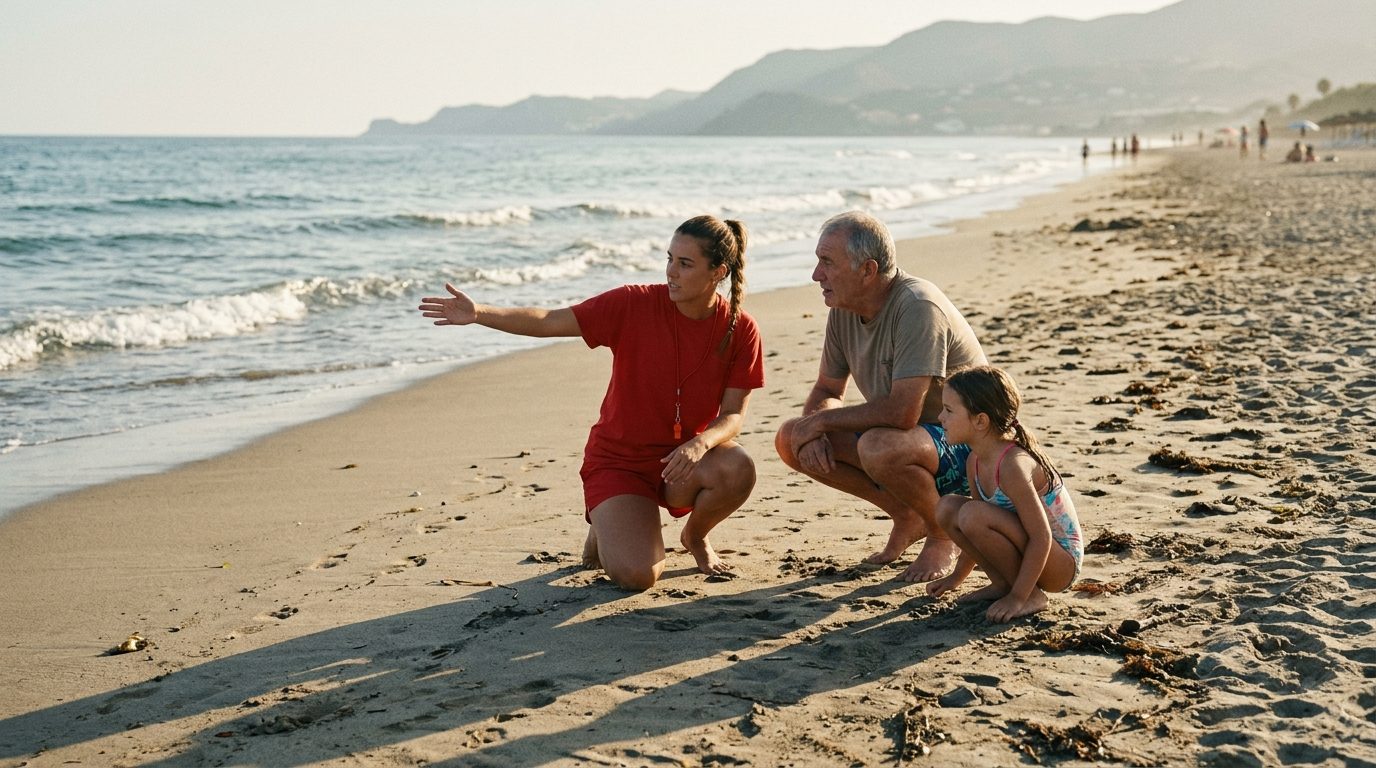
Living near the sea is one of the best parts of life in Spain, but the Mediterranean and the Atlantic both deserve respect. This guide is for newcomers who swim, paddle or take their children to the beach regularly. You will learn what the flags mean, when lifeguards are on duty, how to escape a rip current, what to do about jellyfish and other stings, and how to handle the strong Spanish sun. For emergency numbers and general safety, see our guide to safety and emergencies in Spain.
Beach flags and what they mean
On supervised beaches, lifeguards raise a flag on the lifeguard tower or a pole near the main access each day. The basic system is the same all over Spain:
Online pharmacy & parapharmacySkincare, vitamins, baby care and more – delivered in SpainShop now
Vivid BusinessA business account for freelancers and companies in SpainOpen your account online, with sub-accounts and cards for your team.Learn more →(ad)
Buying a home in Spain? Simulate your mortgageSee your monthly payment with Banco Sabadell’s mortgage simulator.Try the simulator →(ad)
A bank account for autónomos in SpainCuenta Clara Autónomos: no commissions, free debit and credit cards, opened online.See the account →(ad)
A European bank you open from your phonebunq: an EU-licensed bank with debit cards, managed fully in the app. Sign up in about five minutes.Get started →(ad)
A mobile bank account with no commissionsB100, the mobile bank from Abanca: everyday account and free debit card, all in the app.Get the app →(ad)
| Flag | Meaning | What to do |
|---|---|---|
| Green | Calm conditions, bathing allowed | Swim normally, but still stay within your depth if you are not a strong swimmer |
| Yellow | Caution: waves, currents or other hazards | Stay close to the shore, do not go out of your depth, keep children next to you |
| Red | Bathing prohibited | Do not go in the water at all; local fines can apply |
Some municipalities add extra flags or signs, for example to warn of jellyfish or water quality problems. Read the information panel at the beach entrance; many have pictograms that work in any language. If there is no flag at all, assume no lifeguard is watching.
Lifeguard seasons and swimming outside them
Lifeguard services are organised by each town hall, so dates and hours vary. Typically, popular beaches have lifeguards every day during the main summer season, and some add cover at Easter or on weekends in late spring and early autumn. Outside those periods, and early in the morning or in the evening, most beaches are unguarded, even in big resorts. Check your town hall website for the exact dates for your beach.
Many residents swim all year round, and on a calm autumn day the sea can be lovely. Spain still records hundreds of drownings a year: the annual national drowning report counted 514 deaths in 2025, concentrated on unsupervised beaches and in natural areas, and around four in five victims were men. If you swim outside the season:
- Never swim alone, and tell someone on land where you are going.
- Swim parallel to the beach, not straight out to sea.
- Use a brightly coloured swim buoy so boats and other people can see you.
- Avoid swimming after heavy meals or alcohol, and get out if you feel cold or tired.
- Check the wave forecast; rough seas after a storm can stay dangerous for days.
Rip currents: how to spot and escape them
A rip current (corriente de retorno or resaca) is a narrow, fast channel of water flowing from the shore out to sea. According to the Spanish Red Cross, rip currents are one of the main hazards on Mediterranean beaches, and they often appear after a period of big waves, when the sea already looks calm again. Signs include a gap in the breaking waves, darker or murkier water, or foam and debris moving out to sea.
If you are caught in one:
- Do not fight it by swimming straight back to the beach; you will tire quickly.
- Stay calm and float, letting the current carry you. Rip currents lose strength further out.
- Swim sideways, parallel to the shore, until you are out of the current and waves help push you back in.
- Raise an arm and shout to signal for help.
If you see someone else in trouble on an unguarded beach, do not jump in unless you are trained and equipped. Throw them something that floats, keep your eyes on the spot where you last saw them, and call 112.
Jellyfish and other stings
Jellyfish (medusas) appear on many Spanish coasts in summer, especially after periods of warm water and onshore wind. Most stings are painful but not dangerous. First aid, based on advice from Spanish paediatricians and consumer organisation OCU:
- Get out of the water and go to the lifeguard or first-aid post if there is one; staff know the local species.
- Do not rub the skin with a towel or sand.
- Rinse with seawater or saline, not fresh water, which can make the stinging cells release more venom.
- Remove any tentacles with tweezers or the edge of a plastic card, never with bare hands.
- Apply cold for about 15 minutes, with ice inside a plastic bag so it does not touch the skin.
Avoid vinegar, ammonia and urine unless a lifeguard tells you otherwise: with some species they can make things worse. Get medical help quickly if the person feels sick, dizzy, has cramps, difficulty breathing, or if a child, an older person or someone with allergies has been stung.
Weever fish and sea urchins
- Weever fish (pez araña): they hide in the sand in shallow water and sting the soles of the feet, causing intense pain. Soak the area in water as hot as you can comfortably bear for at least 30 minutes; the venom breaks down with heat. Do not use ice. See a doctor afterwards.
- Sea urchins (erizos): common on rocky shores. Wear water shoes, and remove spines carefully with tweezers. See a doctor if spines stay in or the wound gets worse.
Sun safety
The UV index in southern Spain regularly reaches very high levels in summer, and sunburn can happen even on cloudy or breezy days. AEMET publishes a daily UV forecast, where 8–10 is “very high” and 11 or more is “extreme”.
- Avoid direct sun in the middle of the day, roughly from 12:00 to 17:00 in summer.
- Use a high-factor sunscreen and reapply after swimming and every couple of hours.
- Bring a parasol, hat, sunglasses and plenty of water.
- Enter the water gradually after a long time in the sun, especially if you are older or have heart problems.
Keeping children safe
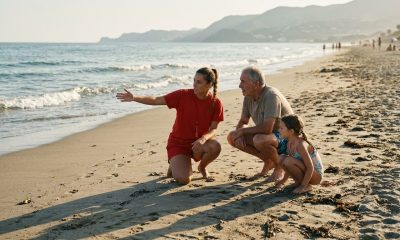
- Constant supervision: one adult should always be watching, without a phone. Lifeguards do not replace parents.
- Within arm’s reach: keep toddlers and weak swimmers close in the water, and use approved swimming aids rather than inflatable toys.
- Agree a meeting point: beaches get crowded. Pick a lifeguard tower or a beach bar as the place to go if they get lost, and write your phone number on a wristband.
- Shade and water: babies should stay out of direct sun, and children need regular drinks and breaks.
Looking for a beach to call home? See our guides to Fuengirola and Marbella, and make sure you know how to use the Spanish healthcare system before you need it.
Useful links
- Spanish Red Cross: how to act in an emergency at sea (Spanish)
- Spanish Red Cross: preventing drowning in summer (Spanish)
- OCU: jellyfish, weever fish and sea urchin stings (Spanish)
- AEMET: UV index forecast explained
- Safety and emergencies in Spain
- Hospitals in Spain
FAQ: beach safety in Spain
Can I swim when the red flag is up?
No. A red flag means bathing is prohibited, lifeguards will call you out of the water and some towns can fine you. Wait for conditions to improve or choose a sheltered beach with a green or yellow flag.
Should I put vinegar on a jellyfish sting?
Not as a rule. Spanish health advice is to rinse with seawater, avoid fresh water and rubbing, remove tentacles carefully and apply wrapped ice. Use vinegar only if a lifeguard recommends it for the local species.
When are lifeguards on duty?
Each town hall sets its own season and hours, usually covering the main summer months on the busiest beaches. Outside those dates most beaches are unguarded, so check locally.
Who do I call if someone is in trouble in the sea?
Alert the nearest lifeguard if there is one, and call 112. Throw something that floats and keep watching the person until help arrives.
Disclaimer: This article is general information only and is not medical advice. Lifeguard seasons, beach rules and conditions change – always follow lifeguards, local signs and the emergency services.



 Ad
 A sea-view escape in MallorcaThe Donna Portals – stay by the sea with views over the Mediterranean.See prices →

 Vivid BusinessA business account for freelancers and companies in SpainOpen your account online, with sub-accounts and cards for your team.✓ For autónomos and companies
✓ Sub-accounts for budgets and taxes
✓ Cards for your teamLearn more →(ad)
 A European bank you open from your phoneSign up with bunq in about five minutes.Get started →(ad)


Power cuts in Spain: how to be prepared at home

Visa and residency options in Spain: which one fits you?

Business bank accounts for autónomos in Spain: what to look for

Andalucía guide: cities, culture and life in southern Spain

Understanding the tax system in Spain

Marbella guide: areas, beaches and everyday life






-

 Tourist Info2 years ago
Andalucía guide: cities, culture and life in southern Spain
-
Banking & Finances2 years ago
Understanding the tax system in Spain
-
Tourist Info2 years ago
Marbella guide: areas, beaches and everyday life
-
Cost of Living2 years ago
Living on a small salary in Spain in 2026
-
Spanish System2 years ago
How the Spanish government works: state, regions, provinces and town halls
-
Cost of Living2 years ago
Family living costs in Spain in 2026: monthly budget and moving-in money
-
Tourist Info2 years ago
Benalmádena explained: Pueblo, Arroyo de la Miel and the coast
-
Insurance2 years ago
Understanding insurance in Spain: a 2026 guide for expats