Healthcare
Private blood tests and health check-ups in Spain: how they work
Public vs private blood tests in Spain: how to book, common tests, fasting, reading results and when to see a GP.








In your home country you might have had a yearly check-up with blood tests as a matter of routine. In Spain it usually works differently. In the public system, your family doctor orders tests when there is a reason. Many residents also use private labs for a quick general check, a specific test, or when they are not yet registered with a public GP. This guide explains both routes, how to book, what the common tests are, and when your results should go to a doctor.
Blood tests in the public system
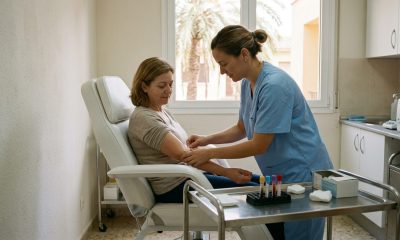
If you are registered with the public health service, blood tests (análisis de sangre, often just called una analítica) are free and ordered by your GP (médico de familia) or a specialist. The usual steps are:
- Your doctor requests the tests and gives you instructions, for example whether you need to fast.
- You get an appointment for the blood draw (extracción), usually early in the morning at your health centre (centro de salud).
- The results go to your doctor, who discusses them with you at a follow-up appointment.
In Andalusia, you can also see your lab results online in ClicSalud+ or the Salud Andalucía app, under “Pruebas analíticas”. You can view, print or download them as a PDF. According to the Andalusian Health Service, the report only appears once all results are ready, and your doctors may see them before you do. Other regions have their own patient portals.









Not registered yet? Our guide to healthcare in Spain for foreign residents explains how to get access to the public system.
Screening the public system offers
Spain does not offer a general yearly “MOT” blood test for everyone. It does run population screening programmes that are part of the common public health services. According to the Ministry of Health, these are:
- Breast cancer: a mammogram every two years for women aged 50 to 69.
- Colorectal (bowel) cancer: a faecal occult blood test every two years for men and women aged 50 to 69.
- Cervical cancer: screening for women aged 25 to 65, at intervals of three to five years.
Regions send invitations by letter or text message, so make sure your address and phone number are up to date at your health centre. Your GP can also check your blood pressure, weight and risk factors and decide whether you need blood tests.
Private labs and health check-ups
Private labs and clinics sell tests directly to the public, so you can book and pay without going through the public system. People use them to:








- get a general check while waiting for their health card,
- repeat a test faster than the public waiting time,
- check something specific, such as cholesterol, thyroid or vitamin levels,
- get a sexual health test privately.
Some options let you book online. Mi Diagnóstico (ad) is an online network of clinics across Spain for diagnostic tests such as scans and lab tests, with appointments and results online. Vivolabs (ad) is a Madrid-based laboratory that offers health tests with home sample kits or clinic visits, including blood profiles for general health.
If you have private health insurance, check your policy first. Lab tests are often covered when a doctor in the insurer’s network requests them.
Typical tests in a general check
A basic blood test package usually includes some of these. The names on a Spanish request form are in brackets.
- Full blood count (hemograma): red and white blood cells and platelets, for example to look for anaemia.
- Blood sugar (glucosa): and sometimes HbA1c (hemoglobina glicada) for longer-term sugar levels.
- Cholesterol and triglycerides (perfil lipídico).
- Kidney and liver function (perfil renal, perfil hepático).
- Thyroid (TSH), iron stores (ferritina) and vitamin D or B12, if there is a reason to check them.
How to prepare for a blood test
- Fasting: tests such as blood sugar and cholesterol often need a fast, usually of 8 to 12 hours. Your doctor or the lab will tell you the exact time. An early-morning appointment makes this easier.
- Water: plain water is normally allowed and makes the blood draw easier. Coffee, juice and other drinks are not.
- Medicines: do not stop any medicine unless a doctor tells you to. Tell the lab about vitamins and supplements, as some can affect results.
- Bring: your ID, your health card or insurance card, and the request form if you have one.
Your local pharmacy can also help with simple questions, and many measure blood pressure. See our guide to pharmacies in Spain.
Reading your results and when to see a GP
Spanish lab reports show your value next to a reference range (valores de referencia), and values outside the range are often marked with an asterisk or in bold. A value slightly outside the range does not automatically mean you are ill. Ranges differ between labs, and results depend on your age, sex, medicines and whether you fasted.
Take private results to a doctor if any values are flagged, if you have symptoms, or if you take regular medication. Your public GP can add private results to your record and decide on follow-up tests. If you feel unwell, see a doctor rather than ordering more tests yourself. In an emergency, call 112.
FAQ: blood tests in Spain
Can I get a blood test in Spain without a doctor’s referral?
In the public system, a doctor orders the tests. Private labs and clinics sell tests directly to the public, so you can book and pay yourself.
How long should I fast before a blood test?
Usually 8 to 12 hours for tests such as blood sugar or cholesterol, but follow the instructions from your doctor or the lab. Plain water is normally fine.
Where can I see my public lab results in Andalusia?
In ClicSalud+ or the Salud Andalucía app, under “Pruebas analíticas”. You need a digital certificate or electronic ID to log in.
Does Spain offer free health check-ups?
Not a general yearly check for everyone. Public screening covers breast, bowel and cervical cancer for certain age groups, and your GP orders other tests when needed.
Useful links
- Ministry of Health: cancer screening in the common services portfolio (PDF, Spanish)
- Andalusian Health Service: how to get your lab results (PDF, Spanish)
- MedlinePlus: fasting before blood tests (Spanish)
Disclaimer: This article is general information, not medical advice. Rules and prices change, so check with the official source or your doctor before you decide. Links marked “(ad)” are affiliate links – NewInSpain may earn a commission at no extra cost to you.