Pets
Processionary caterpillars in Spain: a danger to dogs
Pine processionary caterpillars can seriously injure dogs. When the risk is highest, the symptoms and what to do if your dog touches one.








Updated: October 2026
Every year Spanish vets warn dog owners about the pine processionary caterpillar (oruga procesionaria). The caterpillars live in pine trees all over Spain, including parks, gardens and urbanisations on the Costa del Sol, and their hairs can cause serious injuries to dogs – and rashes in people. Here is what to look for, when the risk is highest and what to do if your dog touches one.
What is the processionary caterpillar?
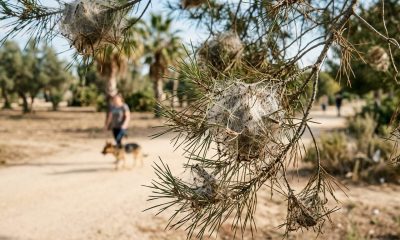
The pine processionary (Thaumetopoea pityocampa) is a moth whose caterpillars spend the winter in white, silky nests in pine trees, and sometimes cedars. When they are ready to bury themselves in the ground, they leave the tree and walk nose-to-tail in long lines – the “procession” that gives them their name.









When is the risk highest?
The nests appear in pine trees in autumn and winter. The dangerous period is when the caterpillars come down to the ground, usually from late winter into spring. In warm areas such as the Costa del Sol this can start as early as January, and a mild winter can bring it forward. Keep an eye out from the turn of the year until the end of spring.
Why it is dangerous for dogs
Each caterpillar is covered in thousands of tiny hairs containing a toxin. Dogs are curious and sniff, lick or pick up the caterpillars, and the hairs break off and stick to the mouth, tongue and eyes. Even dead caterpillars and empty nests can be harmful.
Signs to watch for:
- Heavy drooling and pawing at the mouth
- A swollen or discoloured tongue or lips
- Vomiting
- Red, itchy skin or eyes
- Restlessness or difficulty breathing
What to do if your dog touches one
- Go to a vet straight away. This is an emergency – the tongue can be permanently damaged within hours.
- Rinse, do not rub. On the way, rinse the mouth and affected area gently with plenty of water. Rubbing breaks the hairs and releases more toxin.
- Protect yourself. Use gloves if you can, so the hairs do not get on your skin.
- Keep the dog calm and stop it licking or rubbing its face.
How to prevent it
- Walk your dog on a lead near pine trees from January to spring, and avoid pine woods and parks with nests.
- Look up: white silk “bags” in pine branches mean nests.
- Never touch nests or caterpillars, and teach children not to either.
- If you have pines in your garden, ask a gardening or pest-control company to remove nests safely in autumn or early winter. Some town halls treat trees in public areas – report nests in parks to the town hall.
Looking for a gardener on the Costa del Sol? Find local companies in our Find a Business directory. More pet guides: Pets in Spain.








FAQ: processionary caterpillars
Are processionary caterpillars dangerous to people?
The hairs can cause itchy rashes, eye irritation and, rarely, allergic reactions. Wash the skin with water and see a doctor if symptoms are strong or affect the eyes.
Can cats be affected?
Yes, although cats are usually more careful than dogs. The symptoms and the first aid are the same.
Should I remove nests myself?
No. Let a professional do it with protective equipment. Disturbing a nest can spread the hairs.
Disclaimer: This article is general information, not veterinary advice. If your pet shows symptoms, contact a vet immediately.