Tourist Info
Fuengirola for newcomers: areas, beaches, transport and international life
Why so many foreigners settle in Fuengirola: the neighbourhoods, the long beach front, the end-of-line train to Málaga, schools, health, markets and fairs.









Updated: October 2026
Walk along Fuengirola’s seafront and you will hear Spanish, English, Swedish, Finnish, Norwegian and a dozen other languages within a few minutes. Few towns in Spain are as international, and that makes it one of the easiest places on the Costa del Sol to start a new life. This guide is for people weighing up a move or a long stay: how the town is laid out, how to get around and what everyday life involves.
Why newcomers choose Fuengirola
- Flat and walkable: unlike many coastal towns, most of Fuengirola is on level ground between the sea and the hills.
- Train at the door: it is the western end of the Cercanías C1 line, so you get a direct link to the airport and Málaga.
- Year-round life: shops, bars and services stay open in winter thanks to a large resident population.
- Established communities: Nordic, British and many other groups have clubs, churches and associations here.
Neighbourhoods at a glance
The centre stretches from the port to Plaza de la Constitución, with the main shopping streets, the bus station and the main train station. It is convenient but busy.









Los Boliches, to the east, was once a separate fishing village. It has its own train station, a strong Scandinavian presence and a more local, relaxed feel.
Torreblanca and Carvajal, further east, climb the hillside towards Benalmádena. Views are good, but the streets are steep. Both have Cercanías stations.
El Castillo and Los Pacos, at the western end near the Sohail castle and the river, are more residential, with newer blocks and family homes.
Just inland, Las Lagunas belongs to neighbouring Mijas but feels like part of the same town. It is often a little cheaper. Rents in Fuengirola itself are high by Andalusian standards, and good long-term flats go quickly. See our guide to renting in Spain as a foreigner.








The beach front
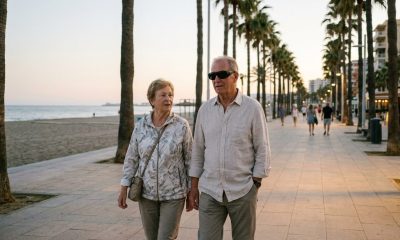
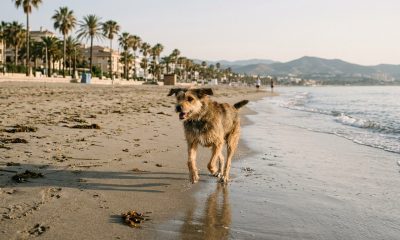
Fuengirola’s beaches run almost without a break from Carvajal in the east to the Sohail castle in the west, linked by a long paseo marítimo that is busy with walkers, runners and cyclists all year. The eastern beaches near Los Boliches and Torreblanca tend to be calmer; the central stretch near the port is the liveliest, with beach bars and water-sports rental. At the far west, the beach beside the castle and the river mouth is a favourite for an evening walk.
Getting there and getting around
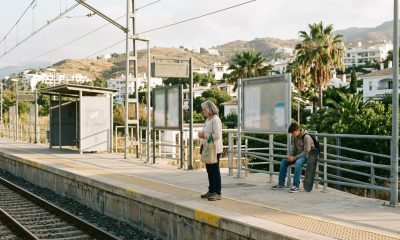
The Cercanías C1 stops at Carvajal, Torreblanca, Los Boliches and Fuengirola. According to Aena, the trip from the airport to Fuengirola takes about 34 minutes, and the same line continues to Málaga city centre. Trains usually run every 20 minutes.
The bus station in the centre is the hub for interurban buses to Mijas Pueblo, La Cala, Calahonda and Marbella. Paying with the Consorcio transport card is cheaper than buying single tickets, and the same card works on the Cercanías. Many residents live happily without a car; if you do drive, the A-7 and the AP-7 toll motorway pass just above the town.
Schools and healthcare
Alongside Spanish public schools, the Fuengirola area has long had schools serving the Nordic communities, and there are British and other international schools within driving distance on the coast. Public school places depend on your padrón address, so register at the town hall first. Our guide to types of schools in Spain explains the options.
Primary care is provided at local public health centres. Fuengirola is part of the Costa del Sol health area, whose reference hospital is Hospital Universitario Costa del Sol near Marbella. Many residents also take out private insurance; read our guide to healthcare for foreign residents.
Things to do and the local calendar
- Sohail castle: a restored fortress on a hill by the river mouth, used for concerts in summer, with a park around it.
- Bioparc Fuengirola: a zoo in the town centre focused on conservation and naturalistic tropical habitats. It is open every day of the year; see Bioparc’s website for tickets.
- Markets: the large weekly market and the Saturday flea market are held at the fairground. Both are suspended during the town’s big fair weeks.
- Feria de los Pueblos: around the start of May, dozens of countries set up stands with food, music and dance. Read our full guide to the International Feria de los Pueblos.
- Feria del Rosario: the town’s traditional October fair, with flamenco dresses, horses and casetas. In 2026 the town hall listed it from 6 to 12 October.
For day trips, Mijas Pueblo is up the hill, La Cala de Mijas is along the coast and Málaga city is at the other end of the train line.
Useful links
- Ayuntamiento de Fuengirola
- Aena: Málaga airport by train
- Consorcio de Transporte: travel card
- Bioparc Fuengirola
- International Feria de los Pueblos
- Mijas Pueblo guide
FAQ: moving to Fuengirola
How long is the train from Málaga airport to Fuengirola?
About 34 minutes on the Cercanías C1, with trains usually every 20 minutes.
Can I get by in Fuengirola without Spanish?
For daily life, often yes, because English and Nordic languages are widely used. For official paperwork and to feel at home, learning Spanish makes a big difference.
Is Las Lagunas part of Fuengirola?
No. Las Lagunas belongs to Mijas, so the padrón and local taxes go through the Mijas town hall, even though it borders Fuengirola.
When is the Feria de los Pueblos?
Usually for several days around the start of May. Check the official dates each year.
Disclaimer: This article is general information only. Fair dates, market days, timetables and prices can change – always check with the official source before you act.