Cultural
What to wear to a Spanish wedding
Day or evening, colours to avoid, suits, shoes and the bank-transfer gift: a guest’s guide to dressing for a wedding in Spain.









Being invited to a Spanish wedding is a sign that you have really arrived. It is also a long day: the ceremony, a drinks reception, a big meal and dancing that often goes on well past midnight. Spanish guests dress up more than many newcomers expect, and there are a few unwritten rules about colours, hats and gifts. This guide helps you get it right.
Start with the invitation
The couple sets the tone, and the invitation is your first clue. Look at:
- The time: a ceremony at midday with a lunch is a day wedding. A ceremony in the late afternoon or evening with dinner is an evening wedding. The dress rules are different.
- The place: a church, a country estate (finca or cortijo), a hotel or the beach all suggest a different level of formality.
- A dress code: if the invitation says chaqué (morning coat) or etiqueta (black tie), follow it. If there is no dress code, smart and elegant is the safe choice.
If in doubt, ask the couple or a Spanish friend who is also going. Nobody minds the question.











Day wedding or evening wedding
Spanish wedding guides make a clear difference between day and evening.
- Day weddings: lighter colours and fabrics. Traditionally, women wear short or midi dresses, and long dresses are kept for the evening. Smart jumpsuits and trouser suits also work. Large hats (pamelas) are a day accessory.
- Evening weddings: darker colours and more formal outfits. Long dresses are common, and a little sparkle is fine. The later the event, the smaller the headpiece.
- Midi dresses: a mid-calf or ankle-length dress works for both, which is useful if you are not sure.
Keep in mind that the celebration usually lasts many hours. In summer, outdoor receptions in Andalusia can be hot until late in the evening, while winter weddings in a country estate can turn cold after dark. A wrap or jacket is useful.
Colours to avoid
- White and close shades: ivory, cream, beige and champagne are for the bride, unless the couple has asked guests to wear white. Small white details in a print are usually fine.
- All black: many Spaniards still link black with mourning, especially at a day wedding or a traditional church wedding. At an evening wedding it is more accepted.
- Anything that steals the show: very deep necklines, high slits or neon colours.
What men wear
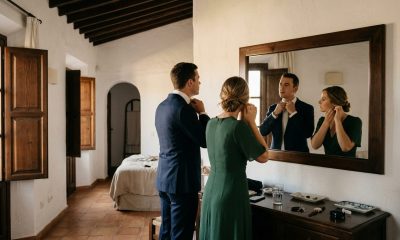
For men, a well-fitted suit is the standard. Shorts, polo shirts and trainers are not appropriate unless the couple says so.
- Day: light or medium tones such as mid blue, grey or soft brown. Linen or lightweight wool in summer.
- Evening: darker suits, such as navy, charcoal or dark grey.
- Chaqué or esmoquin: only if the invitation asks for it. The morning coat is for very formal day weddings, and the dinner jacket for black-tie events.
- Tie: a plain or discreetly patterned tie is the safe choice for traditional and church weddings. A bow tie goes with a dinner jacket. At informal summer weddings the tie can sometimes be dropped.
- Avoid: an all-white or cream suit unless the couple asks for it, and very loud colours.
A crisp shirt makes a big difference to a suit. If you need a new one, specialists such as The Shirt Company (ad) sell shirts and dresses online.









Shoes, hats and bags
- Women’s shoes: closed shoes are the most formal, but elegant sandals are fine, especially in summer. Choose heels you can walk and dance in for many hours. Gravel paths and lawns at country estates are hard on thin heels, so a block heel can be a smart choice.
- Men’s shoes: polished dark leather shoes, such as Oxfords or Derbies, in black or brown to match the suit.
- Hats and headpieces: pamelas (wide-brimmed hats) are for day weddings and are usually taken off later in the celebration. Smaller headpieces (tocados) suit both day and evening.
- Bag: a small clutch. The more formal the event, the smaller the bag.
Online shops such as Spartoo (ad) have a wide range of shoes and bags if you cannot find what you need locally. Order in good time so you can return or exchange it if it does not fit.
The gift: “la cuenta” and the bank transfer
In Spain, the usual wedding gift is money. Envelopes have largely given way to bank transfers: many couples give their guests a bank account number, and guests send the money there. Gift lists in shops still exist, but money is now the main gift.
- When: it is common to transfer the money before the wedding, as the couple often pays many costs in advance.
- How much: there is no fixed amount. The old unwritten rule was that your gift should at least “cover your place” (cubrir el cubierto), meaning the cost of your meal. Today guests also consider how close they are to the couple and whether they have to pay for travel and a hotel.
- Add your name: write your name in the transfer reference so the couple knows who it is from.
- Envelope: if you prefer, you can still give cash in an envelope with a card on the day.
Weddings are also a great way to see Spanish social life up close. The meal starts later than many newcomers expect, see our guide to opening hours, siesta and mealtimes in Spain. For more on local customs, read Spanish culture: what newcomers should know about daily life and why social life matters for expats in Spain.
FAQ: what to wear to a Spanish wedding
Can I wear black to a wedding in Spain?
At an evening wedding, black is increasingly accepted. At a day wedding or a traditional church wedding, it is better to choose a colour, as many people still link black with mourning.
Can women wear a long dress to a day wedding?
Traditionally, long dresses are for evening weddings, and short or midi dresses for day weddings. A midi dress is a safe choice for both.
Do men have to wear a morning coat?
Only if the invitation asks for chaqué. Otherwise a well-fitted suit, a shirt and a tie is the standard.
How do I give the wedding gift?
Most guests transfer money to the account number the couple shares, usually before the wedding, with their name in the reference. Cash in an envelope with a card is also fine.
Useful links
- Bodas.net: how male guests should dress (in Spanish)
- ¡Hola!: guest protocol for evening weddings (in Spanish)
- Marie Claire Spain: how wedding guests should dress (in Spanish)
Disclaimer: This article is general information, not legal or financial advice. Rules and prices change, so check with the official source before you decide. Links marked “(ad)” are affiliate links – NewInSpain may earn a commission at no extra cost to you.