


























































Spanish Cuisine
Olive oil harvest season: visiting an almazara in Andalucía
When the olive harvest happens in Andalucía, what you see inside an almazara, and where to visit a working olive oil mill near the Costa del Sol.























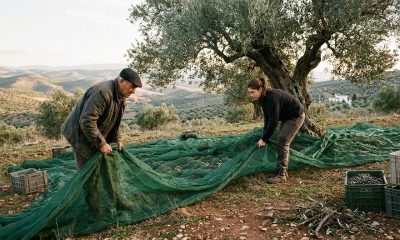
From late autumn into winter, the olive groves of Andalucía are busy. Nets go down under the trees, trailers full of olives queue outside the mills, and the first oil of the season, often cloudy and green, appears in local shops. Visiting an almazara (olive oil mill) during the harvest is one of the best food experiences you can have in southern Spain, and you do not need to travel far from the Costa del Sol to do it.
We have a broader region-by-region guide to Spanish cheese and olive oil. This article focuses on the harvest season and how to visit a working mill.
When is the olive harvest in Andalucía?
The season starts in early autumn with the verdeo, the picking of green olives, mainly for table olives. Andalucía’s official tourism site places this between September and November. Olives for oil are picked later, as they ripen.


 Vivid BusinessA business account for freelancers and companies in SpainOpen your account online, with sub-accounts and cards for your team.Learn more →(ad)

 Buying a home in Spain? Simulate your mortgageSee your monthly payment with Banco Sabadell’s mortgage simulator.Try the simulator →(ad)

 A bank account for autónomos in SpainCuenta Clara Autónomos: no commissions, free debit and credit cards, opened online.See the account →(ad)


 A European bank you open from your phonebunq: an EU-licensed bank with debit cards, managed fully in the app. Sign up in about five minutes.Get started →(ad)


 A mobile bank account with no commissionsB100, the mobile bank from Abanca: everyday account and free debit card, all in the app.Get the app →(ad)
 Online pharmacy & parapharmacySkincare, vitamins, baby care and more – delivered in SpainShop now
















For the Antequera protected designation of origin, near Málaga, the official specification sets the harvest from November to March. That means November, December and January are good months to see mills in full production.
The harvest traditionally ends with a celebration called the botifuera (also known as remate or botijuela), when the landowner invited the pickers and their families to a meal in the countryside.
What happens inside an almazara
The word almazara comes from Arabic and refers to a press. Today most mills are modern, clean facilities, and a guided visit usually follows the olives through each step:
- Reception: trailers unload the olives, and leaves and twigs are removed.
- Washing and crushing: the olives are washed and ground into a paste, stones included.
- Mixing: the paste is slowly stirred so the oil droplets can join together.
- Separation: machines separate the oil from water and solids by mechanical means only.
- Storage: the oil rests in stainless steel tanks before bottling.
Speed matters. The Antequera designation, for example, only accepts healthy olives picked straight from the tree that reach the mill within 24 hours of harvest.










Olive oil close to the Costa del Sol
The nearest protected designation to the coast is Aceite de Antequera. It covers 18 municipalities in the Antequera area of Málaga province, including Antequera, Archidona, Fuente de Piedra and Teba, plus Palenciana in Córdoba province. Only extra virgin olive oil can carry the label, and the main variety is hojiblanca, which makes up more than 90% of the area’s groves.
Closer still, Aceites Molisur in Alhaurín el Grande is listed on Andalucía’s official tourism site as an almazara that welcomes visitors. The listing mentions a guided tour of the production area from a raised walkway, an oil mill from 1910 that still works, oil tastings and a local breakfast, with activities lasting from about 45 minutes to 3 hours. Check the current programme and book through the listing or the mill itself.
Antequera is also an easy day out from Málaga. See our guide to day trips from Málaga for transport options.
Going further: Jaén and Córdoba
Jaén and Córdoba are Andalucía’s biggest olive oil producers. If you want to make a weekend of it, they are the places to go.
- Jaén: the provincial tourism office promotes olive oil tourism under the Oleotour Jaén name, with mill visits, tastings, walks through the groves and stays in traditional farmhouses. In the Sierra Sur area there is a network of mills that work as olive oil interpretation centres, including one in Valdepeñas de Jaén.
- Córdoba: the other leading olive oil province. Ask the local tourist office which mills take visitors, and combine a visit with the city itself using our Córdoba guide.
Tips for your visit
- Book ahead: mills are working businesses and are very busy in harvest season. Most visits need a reservation.
- Ask about language: some tours are only in Spanish. Ask if an English-speaking guide is available.
- Wear closed shoes: floors in the production area can be slippery.
- Taste properly: in a tasting you warm the oil in a small cup, smell it, then sip. A bitter or peppery feel at the back of the throat is normal in fresh extra virgin oil.
- Buy at the source: most mills have a shop. Store oil in a dark, cool place and use it within the season.
Can’t get to a mill? Spanish delicatessens also sell olive oil from different regions. La Mallorquina (ad) is an online shop for Spanish food products. Look for the harvest year and the variety on the label. For more on cooking with it, see the Spanish kitchen.
FAQ: visiting an almazara
What is the best month to visit an olive oil mill?
November to January is usually the busiest part of the oil harvest, so you are likely to see the mill working. Exact dates depend on the year and the area, so ask the mill.
Can I visit a mill outside the harvest?
Many mills offer visits and tastings all year, but outside the season the machinery will usually be standing still.
What does DOP mean on olive oil?
DOP stands for denominación de origen protegida. The oil must come from a defined area and follow the rules in the official specification, for example on varieties and how the olives are picked and processed.
Is it suitable for children?
Often yes, but check with the mill. Production areas have machinery, and some tours ask children to stay close to an adult.
Useful links
- Andalucía tourism: the olive harvest, from the verdeo to the botifuera
- Andalucía tourism: Almazara Aceites Molisur, Alhaurín el Grande
- Ministry of Agriculture: DOP Aceite de Antequera specification (Spanish, PDF)
- Jaén tourism: olive oil mills in the Sierra Sur
Disclaimer: This article is general information, not legal or financial advice. Rules and prices change, so check with the official source before you decide. Links marked “(ad)” are affiliate links – NewInSpain may earn a commission at no extra cost to you.


 A European bank you open from your phoneSign up with bunq in about five minutes.Get started →(ad)







 Ad
 A sea-view escape in MallorcaThe Donna Portals – stay by the sea with views over the Mediterranean.See prices →
Vivid BusinessA business account for freelancers and companies in SpainOpen your account online, with sub-accounts and cards for your team.✓ For autónomos and companies
✓ Sub-accounts for budgets and taxes
✓ Cards for your teamLearn more →(ad)













Olive oil harvest season: visiting an almazara in Andalucía

Train travel in Spain: AVE, Avlo, Ouigo and Iryo explained

Flu and COVID vaccines in Andalucía 2026/27: who can get them and how to book

Andalucía guide: cities, culture and life in southern Spain

How the Spanish government works: state, regions, provinces and town halls

Living on a small salary in Spain in 2026











-

 Tourist Info2 years ago
Andalucía guide: cities, culture and life in southern Spain
-
Spanish System2 years ago
How the Spanish government works: state, regions, provinces and town halls
-
Cost of Living2 years ago
Living on a small salary in Spain in 2026
-
Tourist Info2 years ago
Marbella guide: areas, beaches and everyday life
-
Banking & Finances2 years ago
Understanding the tax system in Spain
-
Cost of Living2 years ago
Family living costs in Spain in 2026: monthly budget and moving-in money
-
Tourist Info2 years ago
Benalmádena explained: Pueblo, Arroyo de la Miel and the coast
-
Insurance2 years ago
Understanding insurance in Spain: a 2026 guide for expats