












































Healthcare
Dental care in Spain for expats
What the Spanish public system covers at the dentist, the expanded care for children and other groups, private clinics, dental insurance and emergencies.







Updated: October 2026
Dental care is one of the few areas where Spain’s public health system covers relatively little, so most adults pay a private dentist. This guide explains what is free, which groups now get extra public cover, how private clinics and dental insurance work, and what to do if you have toothache at the weekend.
What the public system covers
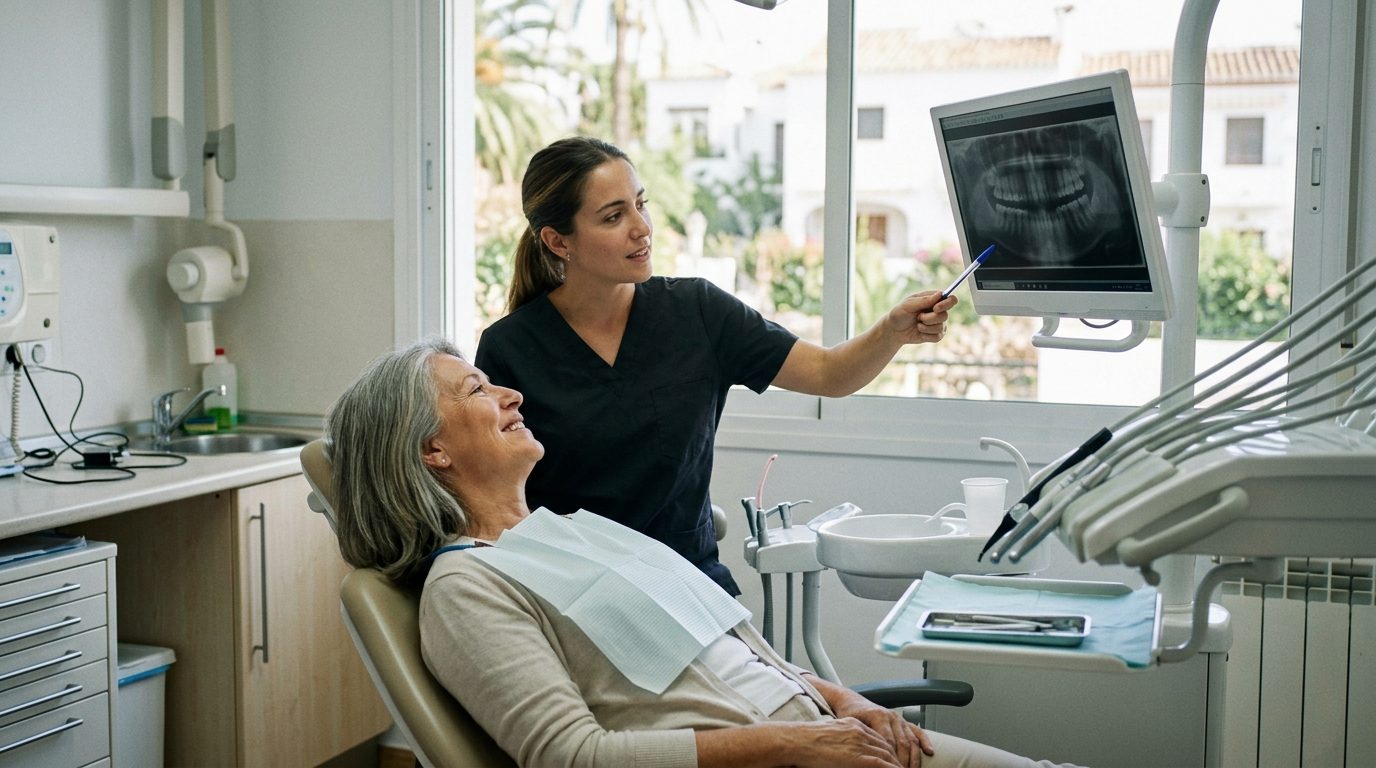
If you are registered with the public health system (see our guide to healthcare for foreign residents), your health centre can refer you to a public dentist (odontólogo). For most adults the public service is limited to:


- Examinations and advice: check-ups and oral health information.
- Acute problems: treatment of infections, pain and injuries in the mouth, including prescriptions.
- Extractions: removing teeth that cannot be saved.
Fillings, root canals, crowns, implants, orthodontics and cosmetic work are generally not covered for adults, which is why most people use private clinics.
Expanded cover for children and other groups
Since an expansion of the national dental package approved in December 2021, the regions are gradually extending free public dental care to specific groups. According to the Ministry of Health, the groups covered are:
- Children aged 0 to 14
- Pregnant women
- People with a recognised disability of 33% or more
- People diagnosed with cancer of the head and neck area
- People over 65: included for the first time in the 2025 funding round, with a smaller share of the budget
In practice, what each group receives depends on the region and how far it has rolled out the plan. Typical services for children include check-ups, sealants, fluoride and fillings in permanent teeth. Andalusia has long run its own child dental programme (PADI), under which children can be seen by a public dentist or a participating private one. Ask at your health centre what applies to your family.
Private dentists and costs
Private dental clinics are everywhere in Spain, from small family practices to large chains. On the Costa del Sol and in big cities many dentists speak English or other languages. Prices are set freely by each clinic, so they vary a lot by town, clinic and materials used. A few tips:





- Ask for a written quote (presupuesto): it should list each treatment, the materials and the total. You do not have to accept it on the spot.
- Get a second opinion for big jobs such as implants or full-mouth work.
- Be careful with financing: some clinics offer to finance treatment through a loan. Read the terms, and avoid paying the full price in advance for long treatments.
- Check credentials: dentists must be registered with the regional dental association (Colegio de Dentistas), which you can ask about.
- Keep your invoices: you will need them for insurance claims or complaints.
Dental insurance
Dental insurance in Spain usually works differently from what many expats know from home. Common types are:
- Dental plans with a price list: a low monthly fee covering basic items such as check-ups, cleaning and X-rays, with fixed discounted prices (franquicias) for other treatments at partner clinics.
- Dental cover inside a health policy: many private health insurers include a basic dental module or offer it as an add-on.
- Reimbursement policies: rarer and more expensive, they refund a percentage of what you pay any dentist.
Compare what is actually included, the network of clinics near you and any waiting periods before cover starts. Our guide to insurance in Spain explains how to compare policies.
Dental emergencies
For severe pain, swelling or an infection outside opening hours, you can go to a primary care emergency point or a hospital A&E (urgencias). They can treat pain and infection, and prescribe antibiotics, but will not do restorative work such as fillings. Many private clinics in tourist areas offer emergency appointments, sometimes at weekends. For serious facial injuries or swelling that affects breathing or swallowing, call 112. See our overview of hospitals in Spain.
EU visitors can use the European Health Insurance Card for necessary care in the public system, which in dentistry usually means emergency treatment only. Travel insurance may cover emergency dental pain relief up to a limit.
Useful links
- Ministry of Health: expanded public dental care (September 2025, Spanish)
- Salud Andalucía app for health centre appointments
- European Commission: what the EHIC covers
- Healthcare in Spain for foreign residents
- Understanding insurance in Spain
FAQ: dentists in Spain
Is going to the dentist free in Spain?
For most adults only check-ups, treatment of acute problems and extractions are free in the public system. Children, pregnant women and some other groups get wider cover, depending on the region.
Are my children’s fillings covered?
Under the expanded national plan, children up to 14 are a priority group, and many regions cover fillings in permanent teeth. Ask your health centre what your region offers.
Do I need a referral for a private dentist?
No. You can book directly with any private clinic. A referral is only needed for the public dentist at your health centre.
What can I do if I am unhappy with a treatment?
First complain in writing to the clinic and ask for the official complaint form (hoja de reclamaciones). You can also contact your local consumer office or the regional dental association.
Disclaimer: This article is general information only and is not medical advice. Coverage, prices and services can change and vary by region – always check with your health centre or dentist before you act.
Healthcare
Private blood tests and health check-ups in Spain: how they work
Public vs private blood tests in Spain: how to book, common tests, fasting, reading results and when to see a GP.

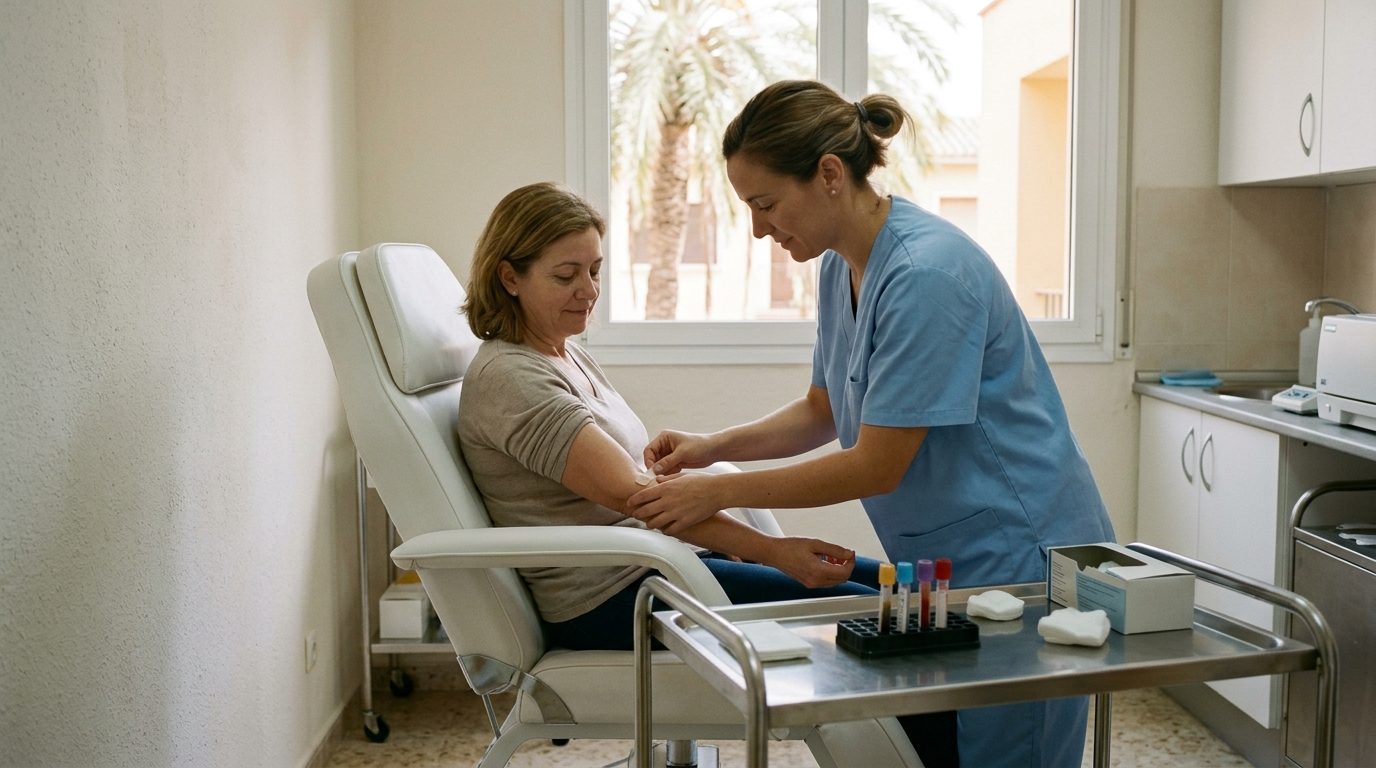
In your home country you might have had a yearly check-up with blood tests as a matter of routine. In Spain it usually works differently. In the public system, your family doctor orders tests when there is a reason. Many residents also use private labs for a quick general check, a specific test, or when they are not yet registered with a public GP. This guide explains both routes, how to book, what the common tests are, and when your results should go to a doctor.
Blood tests in the public system
If you are registered with the public health service, blood tests (análisis de sangre, often just called una analítica) are free and ordered by your GP (médico de familia) or a specialist. The usual steps are:
- Your doctor requests the tests and gives you instructions, for example whether you need to fast.
- You get an appointment for the blood draw (extracción), usually early in the morning at your health centre (centro de salud).
- The results go to your doctor, who discusses them with you at a follow-up appointment.
In Andalusia, you can also see your lab results online in ClicSalud+ or the Salud Andalucía app, under “Pruebas analíticas”. You can view, print or download them as a PDF. According to the Andalusian Health Service, the report only appears once all results are ready, and your doctors may see them before you do. Other regions have their own patient portals.
Not registered yet? Our guide to healthcare in Spain for foreign residents explains how to get access to the public system.
Screening the public system offers
Spain does not offer a general yearly “MOT” blood test for everyone. It does run population screening programmes that are part of the common public health services. According to the Ministry of Health, these are:
- Breast cancer: a mammogram every two years for women aged 50 to 69.
- Colorectal (bowel) cancer: a faecal occult blood test every two years for men and women aged 50 to 69.
- Cervical cancer: screening for women aged 25 to 65, at intervals of three to five years.
Regions send invitations by letter or text message, so make sure your address and phone number are up to date at your health centre. Your GP can also check your blood pressure, weight and risk factors and decide whether you need blood tests.
Private labs and health check-ups
Private labs and clinics sell tests directly to the public, so you can book and pay without going through the public system. People use them to:
- get a general check while waiting for their health card,
- repeat a test faster than the public waiting time,
- check something specific, such as cholesterol, thyroid or vitamin levels,
- get a sexual health test privately.
Some options let you book online. Mi Diagnóstico (ad) is an online network of clinics across Spain for diagnostic tests such as scans and lab tests, with appointments and results online. Vivolabs (ad) is a Madrid-based laboratory that offers health tests with home sample kits or clinic visits, including blood profiles for general health.
If you have private health insurance, check your policy first. Lab tests are often covered when a doctor in the insurer’s network requests them.
Typical tests in a general check
A basic blood test package usually includes some of these. The names on a Spanish request form are in brackets.
- Full blood count (hemograma): red and white blood cells and platelets, for example to look for anaemia.
- Blood sugar (glucosa): and sometimes HbA1c (hemoglobina glicada) for longer-term sugar levels.
- Cholesterol and triglycerides (perfil lipídico).
- Kidney and liver function (perfil renal, perfil hepático).
- Thyroid (TSH), iron stores (ferritina) and vitamin D or B12, if there is a reason to check them.
How to prepare for a blood test
- Fasting: tests such as blood sugar and cholesterol often need a fast, usually of 8 to 12 hours. Your doctor or the lab will tell you the exact time. An early-morning appointment makes this easier.
- Water: plain water is normally allowed and makes the blood draw easier. Coffee, juice and other drinks are not.
- Medicines: do not stop any medicine unless a doctor tells you to. Tell the lab about vitamins and supplements, as some can affect results.
- Bring: your ID, your health card or insurance card, and the request form if you have one.
Your local pharmacy can also help with simple questions, and many measure blood pressure. See our guide to pharmacies in Spain.
Reading your results and when to see a GP
Spanish lab reports show your value next to a reference range (valores de referencia), and values outside the range are often marked with an asterisk or in bold. A value slightly outside the range does not automatically mean you are ill. Ranges differ between labs, and results depend on your age, sex, medicines and whether you fasted.
Take private results to a doctor if any values are flagged, if you have symptoms, or if you take regular medication. Your public GP can add private results to your record and decide on follow-up tests. If you feel unwell, see a doctor rather than ordering more tests yourself. In an emergency, call 112.
FAQ: blood tests in Spain
Can I get a blood test in Spain without a doctor’s referral?
In the public system, a doctor orders the tests. Private labs and clinics sell tests directly to the public, so you can book and pay yourself.
How long should I fast before a blood test?
Usually 8 to 12 hours for tests such as blood sugar or cholesterol, but follow the instructions from your doctor or the lab. Plain water is normally fine.
Where can I see my public lab results in Andalusia?
In ClicSalud+ or the Salud Andalucía app, under “Pruebas analíticas”. You need a digital certificate or electronic ID to log in.
Does Spain offer free health check-ups?
Not a general yearly check for everyone. Public screening covers breast, bowel and cervical cancer for certain age groups, and your GP orders other tests when needed.
Useful links
- Ministry of Health: cancer screening in the common services portfolio (PDF, Spanish)
- Andalusian Health Service: how to get your lab results (PDF, Spanish)
- MedlinePlus: fasting before blood tests (Spanish)
Disclaimer: This article is general information, not medical advice. Rules and prices change, so check with the official source or your doctor before you decide. Links marked “(ad)” are affiliate links – NewInSpain may earn a commission at no extra cost to you.
Healthcare
Pharmacies in Spain: how they work and what they can help with
How Spanish pharmacies work: finding one open at night, prescriptions, what you pay after the 2026 co-payment reform and when to ask the pharmacist.
Updated: October 2026
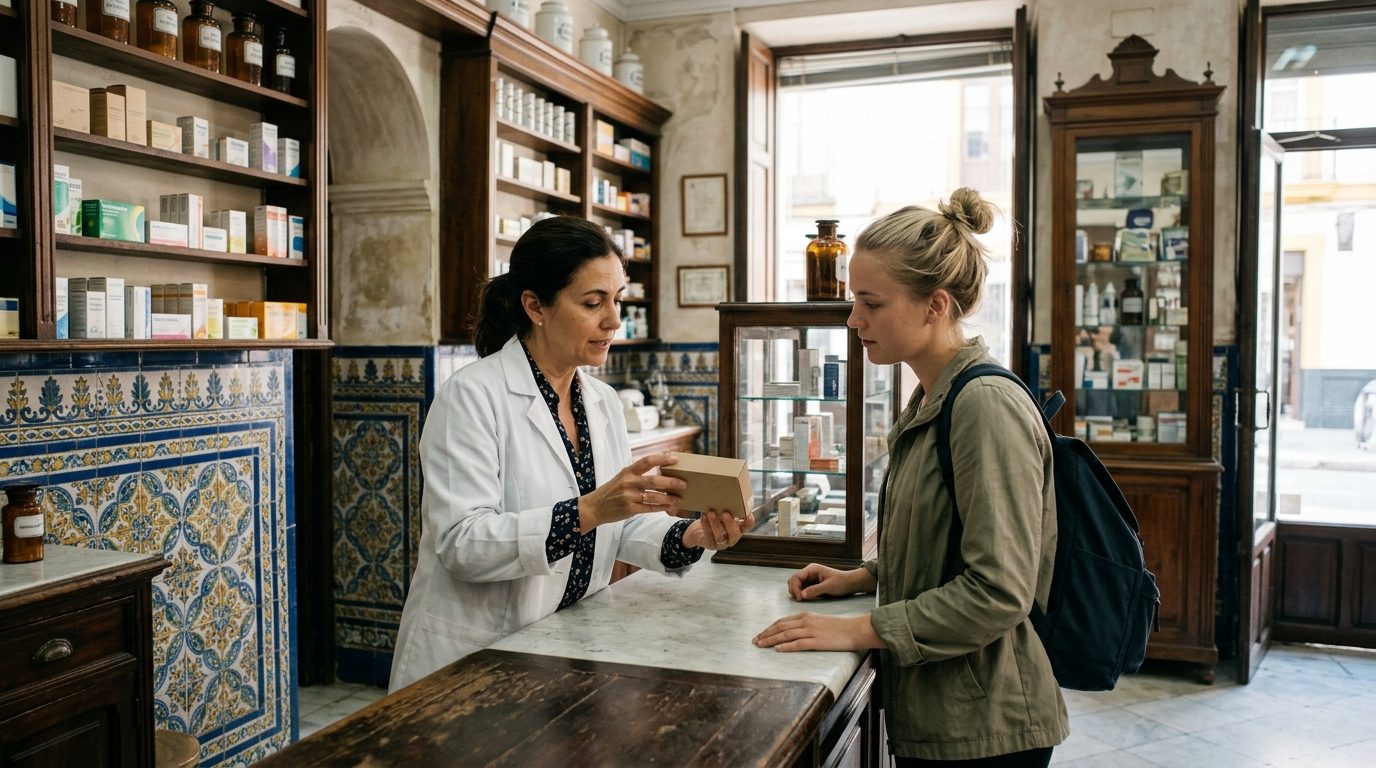
The green cross of the farmacia is one of the first things newcomers notice in Spain – there seems to be one on every corner. Spanish pharmacies do much more than fill prescriptions, and for many small health problems they are the quickest place to get help. This guide explains how pharmacies work, how to find one at night, what you pay for medicines and when the pharmacist can help you without a doctor’s visit.
How pharmacies work in Spain
Pharmacies in Spain are privately owned, but they are tightly regulated and work closely with the public health system. Every pharmacy is run by a qualified pharmacist, and only pharmacies are allowed to sell medicines – including everyday painkillers such as paracetamol and ibuprofen. You will not find them on supermarket shelves.
- Farmacia: sells prescription and non-prescription medicines, plus health and baby products. Marked with a green cross, often lit up.
- Parafarmacia: sells skincare, supplements and hygiene products, but no medicines. Useful for sun cream or baby formula, not for treating an infection.
- Opening hours: many pharmacies follow normal shop hours, often with a midday break in smaller towns. Some in cities open 12 or 24 hours a day.
Finding a pharmacy at night or on a holiday
Every area has a rota of on-duty pharmacies (farmacias de guardia) that stay open at night, on Sundays and on public holidays. To find the nearest one:
- Look at the door or window of any pharmacy – closed pharmacies post the current on-duty list.
- Check the website or app of the official college of pharmacists for your province (Colegio Oficial de Farmacéuticos), which publishes the rota.
- Search for “farmacia de guardia” plus your town name, or check your town hall’s website or local newspaper.
At night, on-duty pharmacies often serve customers through a small hatch or window rather than letting you inside. In a real emergency, call 112 or go to the emergency department (urgencias) – the pharmacy is not a substitute for urgent care.
Prescriptions: public, private and foreign
Public healthcare prescriptions
If you are in the public system, your doctor’s prescription is electronic (receta electrónica). You simply hand over your regional health card (tarjeta sanitaria) at any pharmacy in your region and the pharmacist sees what you can collect. For long-term treatment, repeat medicines are released automatically at set intervals. Our guide to healthcare for foreign residents explains how to get your health card.
Private prescriptions
A private doctor gives you a paper or digital private prescription. The pharmacy will dispense the medicine, but you pay the full price – private insurance does not usually cover pharmacy costs unless your policy says so.
Prescriptions from abroad
Spain takes part in the EU electronic prescription system, so pharmacies in participating regions can dispense e-prescriptions issued in several other EU countries, such as Portugal, Poland and Finland. The list of countries keeps growing, so check the Ministry of Health page below. A prescription from outside the EU, including the UK, normally needs to be rewritten by a doctor in Spain before you can get prescription-only medicines.
Brand names often differ between countries. Bring the packaging or write down the active ingredient (principio activo) and dose – this is what Spanish pharmacists work with.
What you pay for medicines
With a public prescription you pay a share of the price (copago) that depends on your income and whether you are working or a pensioner. A reform (Real Decreto-ley 11/2026) in force since 14 May 2026 changed the income bands:
| Annual income | Working age | Pensioners |
|---|---|---|
| Under €9,000 | 40%, max €8.23/month | 10%, max €8.23/month |
| €9,000–17,999 | 40%, max €18.52/month | 10%, max €8.23/month |
| €18,000–34,999 | 45%, max €61.75/month | 10%, max €13.37/month |
| €35,000–59,999 | 45%, no cap | 10%, max €13.37/month |
| €60,000–99,999 | 50%, no cap | 10%, max €18.52/month |
| €100,000 or more | 60%, no cap | 60%, max €61.75/month |
Some groups pay nothing, including people receiving the minimum income scheme (ingreso mínimo vital) or a non-contributory pension, unemployed people who no longer receive benefits and families receiving the child supplement. If you pay more than your monthly cap, your region refunds the difference. Without a public prescription you pay the full price, but prices of medicines funded by the public system are set nationally, so they are the same in every pharmacy.
What the pharmacist can help with
Spanish pharmacists are highly trained and used to giving advice. Before you book a doctor’s appointment, it is often worth asking at the counter about:
- Minor ailments: colds, sore throats, allergies, mild stomach problems, insect bites, sunburn and small skin issues.
- Health checks: many pharmacies measure blood pressure and some offer blood glucose or cholesterol tests.
- Emergency contraception: the morning-after pill is available without a prescription.
- Medicine questions: how to take a medicine, interactions, and Spanish equivalents of what you used at home.
- Disposing of old medicines: pharmacies have collection points for expired medicines and empty packaging.
What the pharmacist cannot do is sell you prescription-only medicines without a prescription. That includes antibiotics, which are strictly prescription-only in Spain. If the pharmacist thinks your symptoms need a doctor, they will tell you – and that advice is worth following. In summer, ask them about heat and sun protection too; our guide to staying safe in a heatwave has more tips.
For non-prescription products such as vitamins, skincare and everyday health items, you can also order online. Liki24 (ad) delivers health, wellbeing and personal care products from several countries in one order, which can help if you are looking for a brand you used at home.
Useful phrases at the pharmacy
- ¿Tiene algo para…? – Do you have something for…?
- Tengo dolor de cabeza / garganta / estómago – I have a headache / sore throat / stomach ache
- Soy alérgico/a a… – I am allergic to…
- ¿Necesito receta? – Do I need a prescription?
- ¿Cuántas veces al día? – How many times a day?
Useful links
- Ministry of Health: EU e-prescriptions in Spain
- OCU: the 2026 changes to prescription co-payments (Spanish)
- GOV.UK: healthcare for UK nationals living in Spain
- Healthcare in Spain for foreign residents
- Diabetes care in Spain for expats
FAQ: pharmacies in Spain
Can I buy antibiotics without a prescription in Spain?
No. Antibiotics are prescription-only, and pharmacies will not sell them without a valid prescription.
How do I find a pharmacy open at night?
Look for the list of on-duty pharmacies (farmacias de guardia) on the door of any pharmacy, or check the website of the college of pharmacists for your province.
Will a Spanish pharmacy accept my prescription from home?
E-prescriptions from some EU countries can be dispensed in participating regions. Prescriptions from outside the EU, including the UK, usually need to be rewritten by a doctor in Spain.
Do pensioners pay for medicines in Spain?
Most pay 10% of the price with a monthly cap that depends on income, from €8.23 to €18.52 for most pensioners. Some low-income pensioners pay nothing.
Disclaimer: This article is general information only and is not medical advice. Always follow the advice of your doctor or pharmacist, and in an emergency call 112. Prices and co-payment rules can change – check with your regional health service.
Updated: October 2026
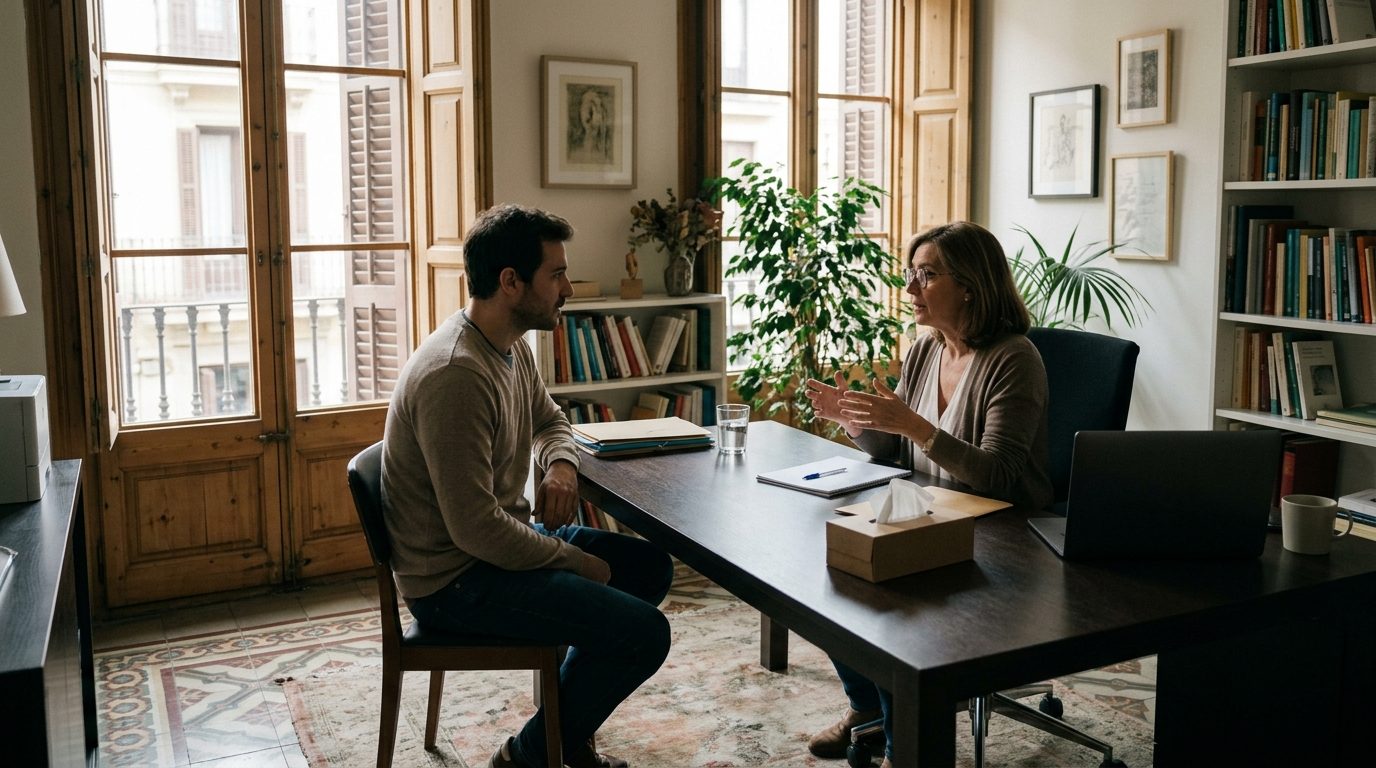
Moving to a new country can be exciting, but it also brings challenges that can affect your mental health. Many expats in Spain experience periods of loneliness, stress, or anxiety—especially during the first months. The good news is that Spain offers a growing range of mental health resources, both public and private, and there are many ways to get support as a foreigner. Here’s what you need to know about looking after your mental well-being in Spain.
Common mental health challenges for expats
- Loneliness and homesickness
- Culture shock and language barriers
- Stress from bureaucracy or job searches
- Relationship and family pressures
- Adjustment to new routines and environments
Where to find help in Spain
- Public health system: You can access a psychologist or psychiatrist through your local health center (centro de salud), though waiting times can be long.
- Private therapists: Many English-speaking psychologists work in major cities. Try menteAmente in Madrid or Therapy in Barcelona.
- Online therapy: Platforms like BetterHelp and Talkspace offer sessions in English and other languages.
- Support groups: Many expat communities run peer support groups, both in person and online (check Facebook or Meetup).
- Emergency help: For urgent mental health support, call 112 or visit the nearest hospital’s emergency department.
Tips for protecting your mental health as an expat
- Stay connected with friends and family back home.
- Join clubs, sports, or volunteering to build a local network.
- Learn Spanish—it helps you feel more in control and less isolated.
- Maintain healthy routines: eat well, sleep enough, and exercise.
- Don’t hesitate to seek professional help—mental health is just as important as physical health.
Useful links
- English-speaking psychiatrists and psychologists in Madrid (menteAmente)
- Therapy in Barcelona
- Spanish public health centers (official directory)
- BetterHelp – online therapy
- Talkspace – online therapy
FAQ: expat mental health in Spain
Can I see an English-speaking therapist in Spain?
Yes, especially in larger cities and online. Check the links above for options.
Is mental health care free in Spain?
Public health care covers basic mental health services, but waiting times can be long. Private care is faster but paid.
How do I find expat support groups?
Search Facebook or Meetup, or ask at international schools and expat centers.
What should I do in a mental health emergency?
Call 112 or go to the nearest hospital emergency department.
Are there therapists who speak other languages?
Yes, many private therapists offer sessions in English, French, German and other languages.
How can I reduce loneliness as an expat?
Get involved in local activities, join clubs and keep in touch with loved ones.
Can I use online therapy from Spain?
Yes – services like BetterHelp and Talkspace are available to residents in Spain.
How do I get a referral for public mental health care?
Visit your local health center (centro de salud) and ask your GP for a referral.
What if I don’t speak Spanish well?
Look for English-speaking professionals, or bring a friend to help with translation.
Disclaimer: This article is for informational purposes only. Always contact a professional for specific mental health advice.


 Ad
✓ Sub-accounts for budgets and taxes
✓ Cards for your teamLearn more →(ad)

Private blood tests and health check-ups in Spain: how they work

Renting a car in Spain: what to check before you sign

Rebajas: when the sales start in Spain and your rights

Andalucía guide: cities, culture and life in southern Spain

Understanding the tax system in Spain

Marbella guide: areas, beaches and everyday life




-
 Tourist Info2 years ago
Andalucía guide: cities, culture and life in southern Spain
-
 Banking & Finances2 years ago
Understanding the tax system in Spain
-
 Tourist Info2 years ago
Marbella guide: areas, beaches and everyday life
-

 Cost of Living2 years ago
Living on a small salary in Spain in 2026
-

 Spanish System2 years ago
How the Spanish government works: state, regions, provinces and town halls
-

 Tourist Info2 years ago
Benalmádena explained: Pueblo, Arroyo de la Miel and the coast
-

 Cost of Living2 years ago
Family living costs in Spain in 2026: monthly budget and moving-in money
-

 Insurance2 years ago
Understanding insurance in Spain: a 2026 guide for expats