





















































Events
Halloween by the Beach in Benalmádena on 31 October
A multicultural Halloween party by the beach in Benalmádena on 31 October: DJ, costume competition, prizes, family- and dog-friendly. Registration required.

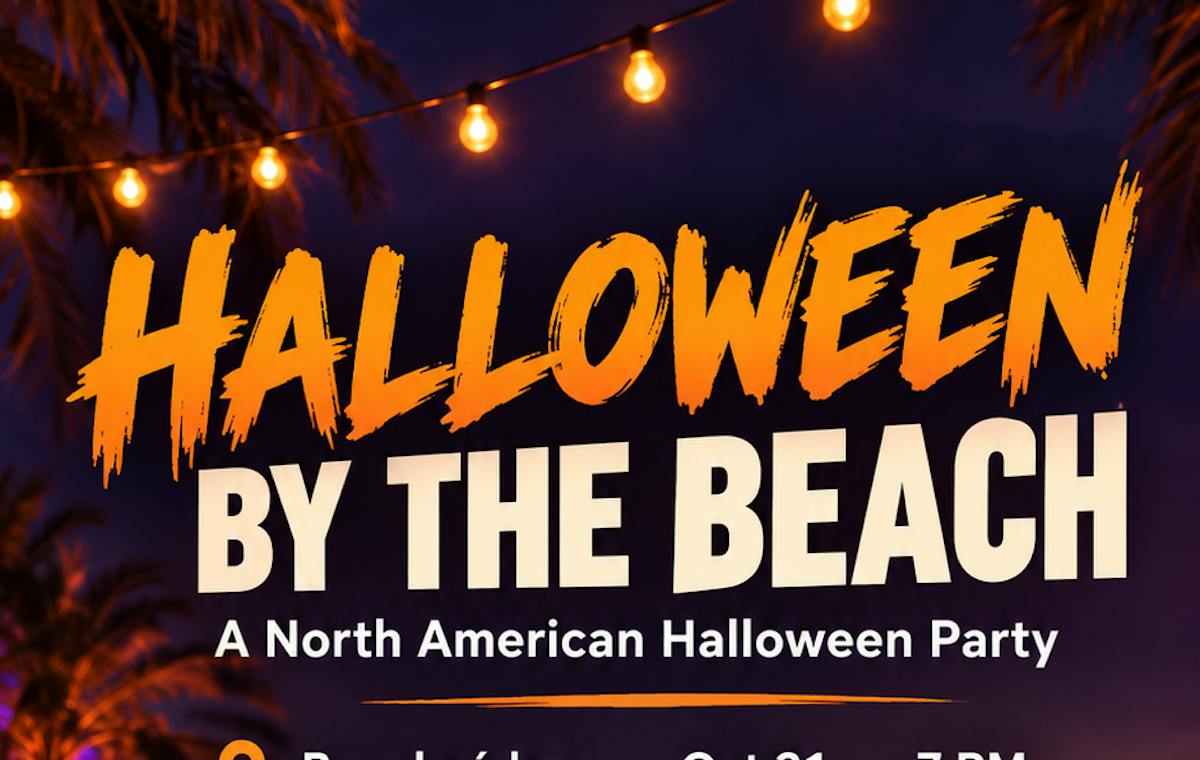








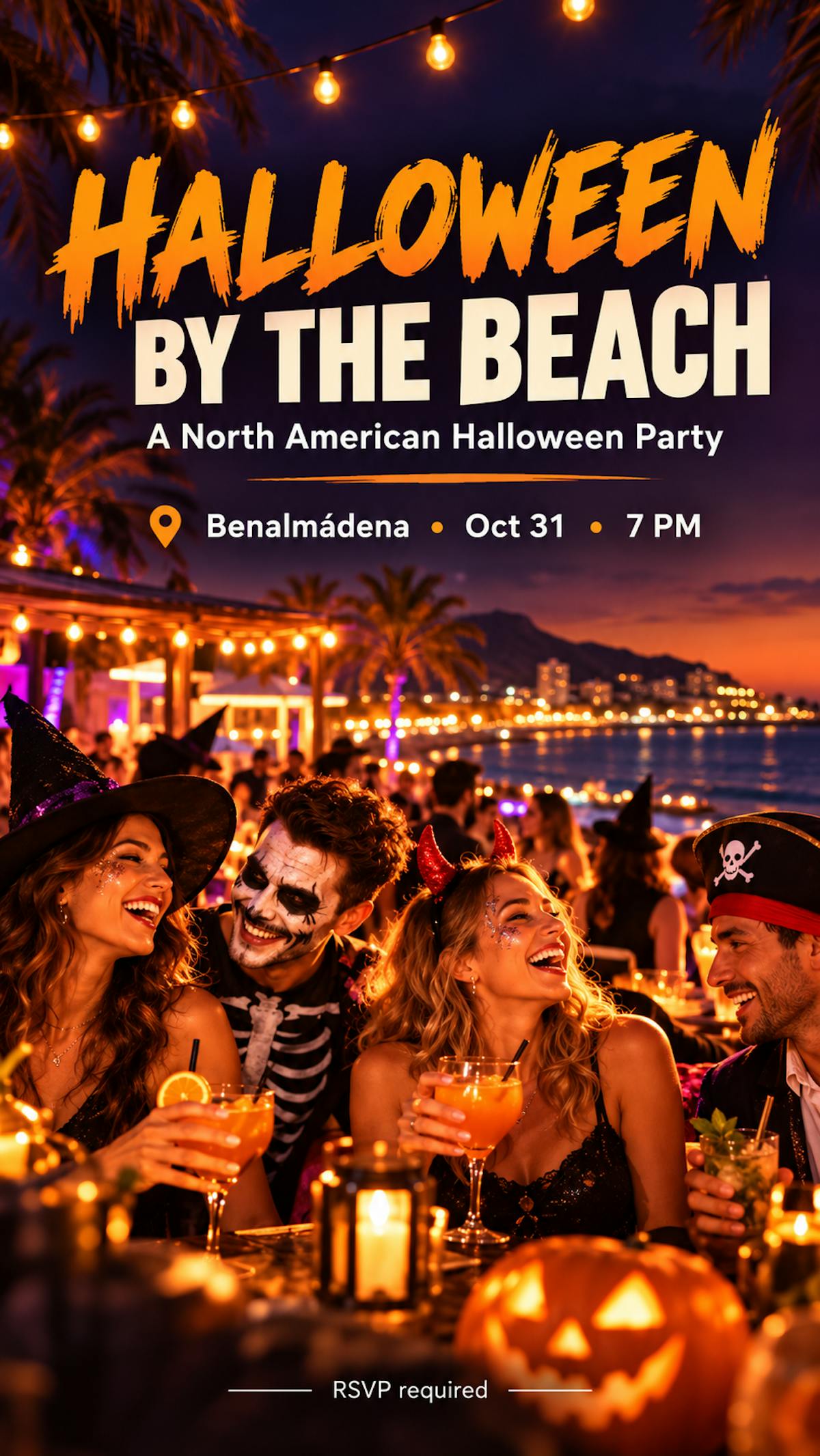
Looking for Halloween plans on the Costa del Sol? On Saturday 31 October, the Canadian Cultural Association of Málaga and Spain is hosting Halloween by the Beach in Benalmádena – a North American-style Halloween party that brings Canadians, Americans, Spaniards and other international residents together by the sea.
The essentials
- When: Saturday 31 October 2026, 7 pm sharp
- Where: Mack’s on the Beach, Benalmádena
- Price: adults €10, children €5, paid in cash at the door. Food and drinks are sold separately.
- Registration: required in advance – you cannot just turn up. Places are limited.
- Languages: English, French and Spanish
- Who can come: everyone – the party is family-friendly and friendly dogs are welcome
What to expect
Expect a DJ, dancing, games, a costume competition with prizes and plenty of chances to meet new people. Costumes are encouraged, so dig out your witch’s hat or skeleton make-up. It is a relaxed way to celebrate Halloween the North American way and to make new friends in the international community on the coast.
How to register
Registration is done through Partiful: register for Halloween by the Beach. You can also follow the organisers on Instagram at @canadiansinmalaga, where the registration details are linked in the bio.









 Online pharmacy & parapharmacySkincare, vitamins, baby care and more – delivered in SpainShop now
Vivid BusinessA business account for freelancers and companies in SpainOpen your account online, with sub-accounts and cards for your team.Learn more →(ad)
 Buying a home in Spain? Simulate your mortgageSee your monthly payment with Banco Sabadell’s mortgage simulator.Try the simulator →(ad)
 A bank account for autónomos in SpainCuenta Clara Autónomos: no commissions, free debit and credit cards, opened online.See the account →(ad)
 A European bank you open from your phonebunq: an EU-licensed bank with debit cards, managed fully in the app. Sign up in about five minutes.Get started →(ad)
 A mobile bank account with no commissionsB100, the mobile bank from Abanca: everyday account and free debit card, all in the app.Get the app →(ad)


Getting there
Benalmádena is on the Cercanías train line between Málaga and Fuengirola, and parking near the beach fills up quickly on a Saturday night. Our guide to public transport on the Costa del Sol explains the options. New to the town? Read our guide to Benalmádena.
For more things to do this week, see our What’s on guide.
Event details are provided by the organiser and may change. Check the registration page before you go.







Cultural
Concerts, festivals and events on the Costa del Sol: where to find them and buy tickets
The main concert venues, yearly highlights, free events and safe ticket channels on the Costa del Sol – from Starlite to the Feria de Málaga.

Updated: October 2026
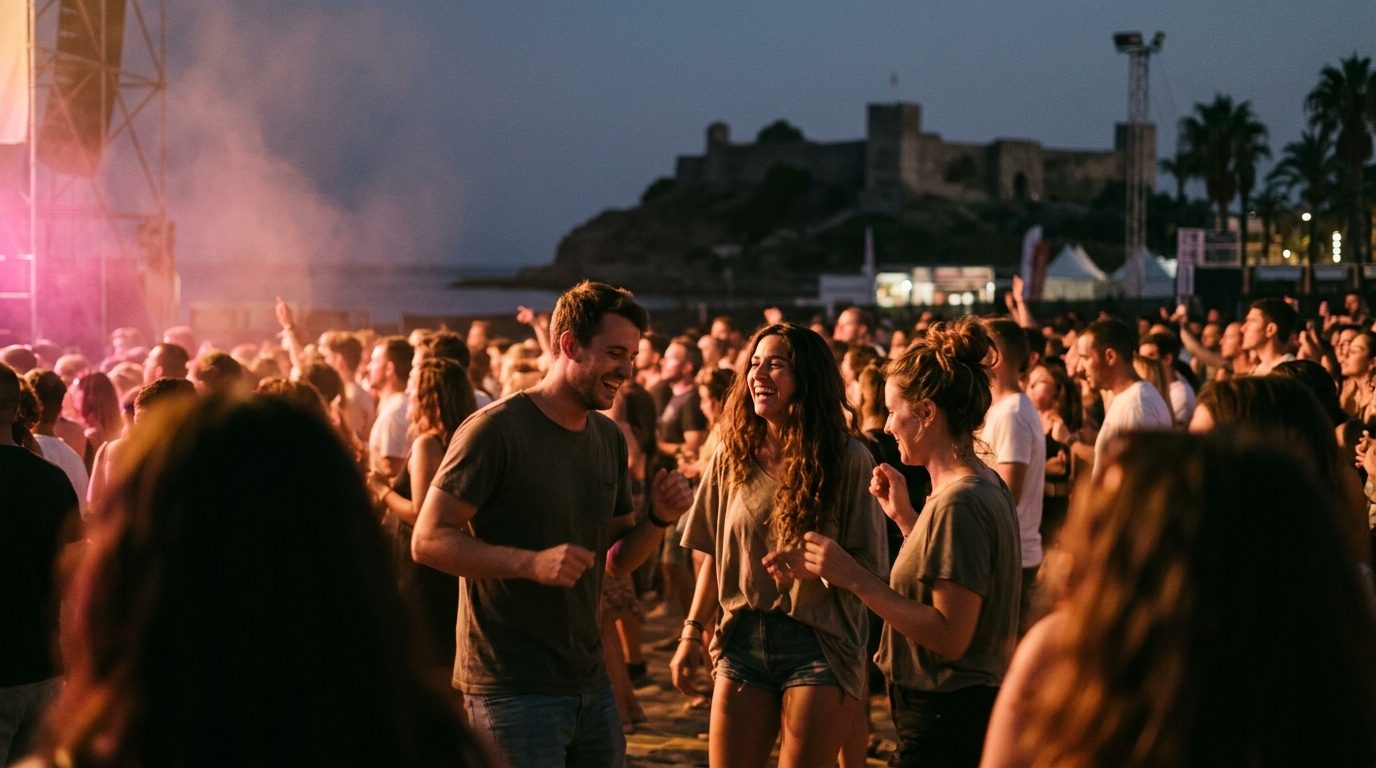
The Costa del Sol has a packed events calendar all year round, from big-name summer concerts by the sea to Holy Week processions and free fairs that fill the streets. This guide is for newcomers who want to know where the main venues are, which events come round every year, how to find free things to do and where to buy tickets safely.
The main venues
Starlite, Marbella
Starlite is one of the best-known summer festivals in Spain. It is held in an open-air auditorium built into a former quarry, the Cantera de Nagüeles, in the hills above Marbella. The season runs from June to August with international and Spanish artists, plus restaurants and bars on site that make it a full night out. According to its official website, tickets are sold through its official ticketing partner and several authorised sellers. Prices range from standard seats to premium boxes, so compare before you buy.
Online pharmacy & parapharmacySkincare, vitamins, baby care and more – delivered in SpainShop now
Vivid BusinessA business account for freelancers and companies in SpainOpen your account online, with sub-accounts and cards for your team.Learn more →(ad)
Buying a home in Spain? Simulate your mortgageSee your monthly payment with Banco Sabadell’s mortgage simulator.Try the simulator →(ad)
A bank account for autónomos in SpainCuenta Clara Autónomos: no commissions, free debit and credit cards, opened online.See the account →(ad)
A European bank you open from your phonebunq: an EU-licensed bank with debit cards, managed fully in the app. Sign up in about five minutes.Get started →(ad)
A mobile bank account with no commissionsB100, the mobile bank from Abanca: everyday account and free debit card, all in the app.Get the app →(ad)
Marenostrum, Fuengirola
Marenostrum Fuengirola is an open-air concert venue beside Sohail Castle, right by the sea. Its season usually runs from spring to late summer and mixes pop, rock, flamenco and smaller festivals. The 2027 line-up is already taking shape: at the time of writing, the official site lists Take That on 11 July 2027, David Bisbal on 22 July 2027 and Bryan Adams on 22 August 2027, among others. Line-ups can change, so always check the venue’s own page before booking travel.
Teatro Cervantes, Málaga
Málaga’s main municipal theatre, in the historic centre, hosts theatre, opera, dance, classical and contemporary music. It is also the main venue of the Málaga Spanish Film Festival each spring and of a long-running theatre festival in winter. Tickets are sold through the theatre’s own website and at its box office.
Palacio de Deportes José María Martín Carpena, Málaga
Home to Málaga’s basketball team, this large indoor arena in the west of the city also hosts big concerts, shows and family events, especially in the cooler months when open-air venues are closed.
Cortijo de Torres, Málaga
Cortijo de Torres is the city’s fairground, south of the centre. It is best known as the home of the Feria de Málaga at night, with casetas, rides and a municipal auditorium where free concerts are held during the fair week. The site is also used for other large open-air events through the year.



Seasonal highlights through the year
| When | Event | What to expect |
|---|---|---|
| March or April | Semana Santa (Holy Week) | Processions through Málaga and every town; in 2027 Holy Week runs from Palm Sunday 21 March to Easter Sunday 28 March |
| Spring | Málaga Film Festival | Premieres and red carpets around Teatro Cervantes |
| Late April or early May | Feria Internacional de los Pueblos, Fuengirola | Food, music and dance from dozens of countries at the town’s fairground |
| Night of 23 June | Noche de San Juan | Beach bonfires, the burning of figures (júas) at midnight and a traditional dip in the sea |
| June to September | Summer concert seasons | Starlite, Marenostrum and many town-hall summer programmes |
| Mid-August | Feria de Málaga | A week-long fair starting around 15 August, with a day fair in the centre and a night fair at Cortijo de Torres |
| Late November to early January | Christmas lights on Calle Larios | Free light and music shows several times each evening |
The Feria de Málaga opens with fireworks over the beach on the night before 15 August. During the day, Calle Larios and the old town fill with flamenco, music and drinks; at night the party moves to Cortijo de Torres. Exact dates for 2027 had not been announced at the time of writing.
The Christmas lights on Calle Larios are among the most visited in Spain. In 2025 they were switched on on 28 November, with free shows at 18:30, 20:30 and 22:00. The 2026 switch-on date is usually confirmed in November, and weekends get very busy, so go early or on a weekday.
For more on traditional celebrations, read our guide to Spanish festivals and how expats can join in and our article on the International Feria de los Pueblos in Fuengirola.
Free events and how to find them
Many of the best events on the coast cost nothing. Town halls in Málaga, Fuengirola, Marbella, Benalmádena, Torremolinos and Mijas all run cultural programmes with free concerts, outdoor cinema, flamenco and children’s activities, especially in summer and around local fiestas.
- City hall agendas: check the culture or events section of your town hall’s website and its social media pages.
- Tourism offices: Málaga’s official tourism site, Visita Málaga, publishes an events agenda, and local tourist offices hand out monthly programmes.
- Beach and plaza concerts: many towns hold free summer concerts on the seafront or in the main square, often linked to their patron saint’s fiesta.
- Ferias and processions: attending local ferias, Semana Santa processions and the San Juan celebrations is free; you only pay for food and drinks.
- Museums: several museums in Málaga offer free entry at certain times, often on Sunday afternoons – check each museum’s own page.
Where to buy tickets safely
For paid events, start with the venue or festival’s own website. It will either sell tickets directly or link to its official ticketing partner. For larger concerts, tickets are also sold through major platforms such as Ticketmaster, El Corte Inglés, Entradas.com and Vivaticket, depending on the event.
- Find the event on the official venue or artist website.
- Follow the link to the official or authorised seller listed there.
- Sign up for newsletters if you want presale access – popular summer concerts can sell out within hours.
- Check whether tickets are named or digital, and what ID you need at the door.
- Keep your confirmation email until after the event.
Be careful with resale websites and social media sellers. Prices can be far above face value and fake tickets do circulate. If an event is sold out, check the official seller for returned tickets first.
Practical tips for event nights
- Getting there: the Cercanías train line between Málaga and Fuengirola is the easiest way to reach Marenostrum and many coastal events. For Starlite, plan taxis or shuttles in advance.
- Timing: concerts in Spain often start later than in northern Europe – 21:30 or 22:00 is common in summer.
- Heat: bring water and a light layer; summer nights are warm, but hill venues can cool down after midnight.
- Accommodation: prices rise sharply during Feria week and Semana Santa, so book early if friends are visiting.
Events are also one of the easiest ways to meet people. See our tips on building a social life in Spain.
Useful links
- Starlite Occident – official website
- Marenostrum Fuengirola – official website
- Best Spanish festivals and how expats can join in
- International Feria de los Pueblos in Fuengirola
- How to build a social life in Spain
FAQ: events on the Costa del Sol
When is the Feria de Málaga?
It takes place every August, starting around 15 August and lasting about a week. Check the city’s official announcements for the exact dates each year.
Are the Calle Larios Christmas lights free?
Yes. The lights and the music and light shows on Calle Larios are free to watch. Arrive early on weekends to get a good spot.
Is it safe to buy concert tickets on resale sites?
It is risky. Prices are often inflated and fake tickets exist. Buy from the venue’s official website or the authorised sellers it lists.
What happens on the Noche de San Juan?
On the night of 23 June, people gather on the beaches for bonfires, music and picnics. At midnight, figures called júas are burned and many people take a dip in the sea. Some towns set rules for bonfires, so check local notices.
Disclaimer: This article is general information only. Line-ups, dates, prices and ticket sellers can change – always check the official venue or organiser before you buy or travel.
Updated: October 2026
Spain is world-famous for its vibrant festivals – from wild street parties to solemn processions and everything in between. For expats, joining in these celebrations is one of the best ways to experience Spanish culture, meet locals, and make lifelong memories. Here’s your guide to the most popular Spanish festivals in 2026, plus tips on how foreigners can join the fun.
Why festivals matter in Spain
Festivals (fiestas) are at the heart of Spanish life. Each town, city, and region has its own unique celebrations, often rooted in history, religion, or local traditions. These events bring communities together, break down barriers, and create unforgettable experiences for everyone – locals and newcomers alike.
Online pharmacy & parapharmacySkincare, vitamins, baby care and more – delivered in SpainShop now
Vivid BusinessA business account for freelancers and companies in SpainOpen your account online, with sub-accounts and cards for your team.Learn more →(ad)
Buying a home in Spain? Simulate your mortgageSee your monthly payment with Banco Sabadell’s mortgage simulator.Try the simulator →(ad)
A bank account for autónomos in SpainCuenta Clara Autónomos: no commissions, free debit and credit cards, opened online.See the account →(ad)
A European bank you open from your phonebunq: an EU-licensed bank with debit cards, managed fully in the app. Sign up in about five minutes.Get started →(ad)
A mobile bank account with no commissionsB100, the mobile bank from Abanca: everyday account and free debit card, all in the app.Get the app →(ad)
Top Spanish festivals in 2026
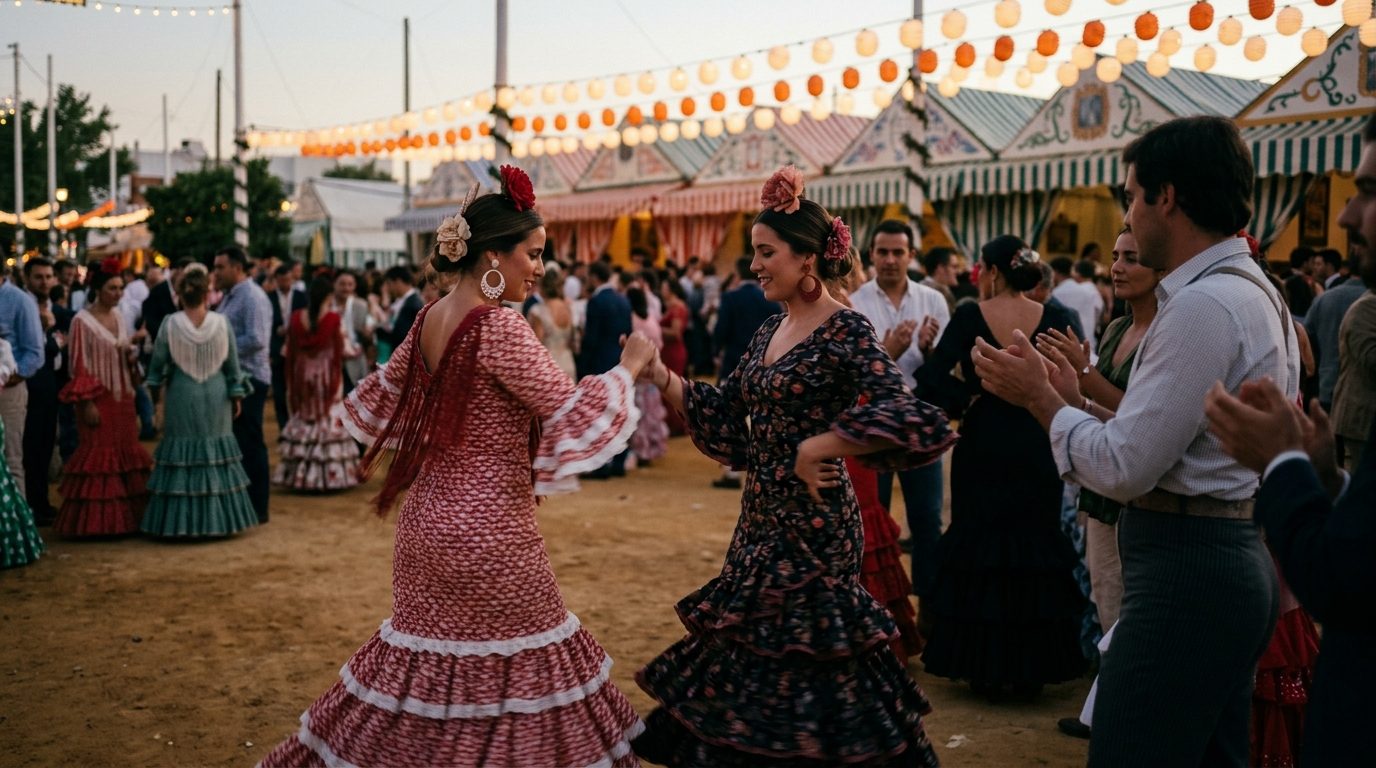
- La Feria de Abril (Seville): A week of flamenco, horses, and casetas. Join in by renting a traditional costume and dancing until dawn.
- San Fermín (Pamplona): Famous for the running of the bulls. Expats can watch safely from balconies or join the parades and concerts.
- La Tomatina (Buñol): The world’s biggest tomato fight! Tickets are required – book early – they sell out fast.
- Las Fallas (Valencia): Giant sculptures, fireworks, and street parties. Volunteer to help build a falla or join a local group.
- Semana Santa (nationwide): Dramatic Easter processions in cities like Málaga, Seville, and Granada. Respectful participation is welcome.
- Feria de los Países (Fuengirola): Celebrate global cultures with food, music, and dance – perfect for expats!
- Fiesta de San Juan (coastal towns): Bonfires and beach parties on the shortest night of the year. Bring friends and jump the flames for luck.
How expats can join in
- Check your local town hall or tourist office for festival dates and activities.
- Look for expat groups or language exchanges organizing group visits.
- Volunteer for setup or events – many festivals welcome extra hands.
- Respect local customs and dress codes, especially for religious events.
- Bring cash, comfortable shoes, and a sense of adventure!
Useful links
FAQ
Can foreigners participate in local festivals?
Yes! Most festivals are open to everyone, and locals love to welcome newcomers.
Do I need to buy tickets for festivals?
Some events are free, but big ones like La Tomatina require advance tickets.
What should I wear to a Spanish festival?
Dress comfortably, but check if traditional clothing is encouraged or required.
Are festivals family-friendly?
Most are, but some (like San Fermín) can be very crowded or wild.
How can I find out about festivals in my area?
Check your town hall’s website, local Facebook groups, or Spain.info.
Can I volunteer at festivals?
Yes, many festivals welcome volunteers for setup, parades, or food stalls.
Is it safe to join big festivals?
Generally yes, but always follow local advice and keep an eye on your belongings.
Do I need to speak Spanish to enjoy festivals?
Not necessarily, but learning a few phrases helps you join in.
Are there festivals all year round?
Yes, there’s something happening every month somewhere in Spain.
Where can I see photos and videos from festivals?
Search YouTube, Instagram, or Spain.info for galleries and highlights.
Disclaimer: This article is for informational purposes only. Always check official sources for dates and details before attending.
International Feria de los Pueblos in Fuengirola
Updated: October 2026
Every spring, Fuengirola on the Costa del Sol transforms into one of Spain’s most vibrant showcases of international culture. The International Feria Fuengirola—also known as Feria de los Países—brings together more than 30 countries for five unforgettable days of music, food, dance, and friendship. Every year, the fairground welcomes tens of thousands of visitors, expats and locals alike, for a true celebration of diversity, unity, and joy.
A festival for everyone
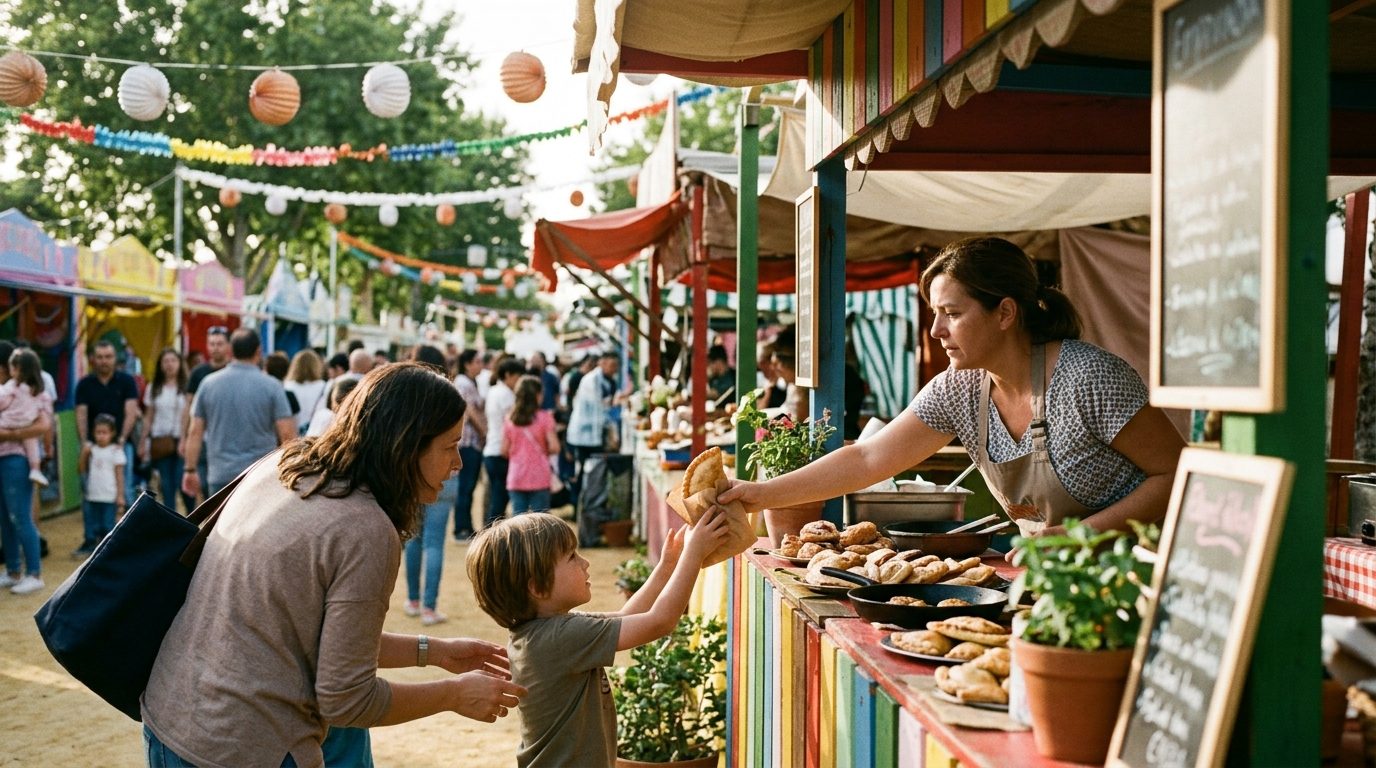
The Feria is much more than just an event—it’s a living symbol of how people from all over the world can come together in Spain and create something unique. With more than 30 national pavilions, you can stroll from Spanish flamenco to Argentinian tango, from Finnish sauna culture to Peruvian ceviche, all in a single afternoon. The atmosphere is pure happiness: families, friends, and strangers laughing, dancing, and sharing experiences with almost no trouble or conflict—just five fantastic days of community spirit.
Online pharmacy & parapharmacySkincare, vitamins, baby care and more – delivered in SpainShop now
Vivid BusinessA business account for freelancers and companies in SpainOpen your account online, with sub-accounts and cards for your team.Learn more →(ad)
Buying a home in Spain? Simulate your mortgageSee your monthly payment with Banco Sabadell’s mortgage simulator.Try the simulator →(ad)
A bank account for autónomos in SpainCuenta Clara Autónomos: no commissions, free debit and credit cards, opened online.See the account →(ad)
A European bank you open from your phonebunq: an EU-licensed bank with debit cards, managed fully in the app. Sign up in about five minutes.Get started →(ad)
A mobile bank account with no commissionsB100, the mobile bank from Abanca: everyday account and free debit card, all in the app.Get the app →(ad)
Highlights from around the world
Each country’s stand is a mini-embassy of culture. Spain’s own pavilion is always a crowd-pleaser, with regional food, live flamenco, and artisan crafts. The Argentinian stand draws crowds for its sizzling steaks and passionate tango shows, while Chile’s booth offers pisco sours and lively cueca dancing. Germany’s beer garden is a social hub, with bratwurst and folk music, while the UK and Ireland stands serve up fish & chips, Guinness, and live rock bands. Peru’s pavilion is a must for foodies, with ceviche and pisco cocktails, and Finland surprises many with smoked salmon, reindeer snacks, and even a pop-up sauna.
Beyond food and drink, each stand hosts cultural performances—traditional dances, live concerts, costume parades, and workshops for kids and adults. It’s not just about watching; visitors are encouraged to join in, try a dance, sample a dish, or learn a few words in a new language.
Family-friendly fun
The Feria is designed for all ages. There are children’s workshops, face painting, international games, and plenty of open space to run and play. Many families make a day of it, sampling treats from different countries and enjoying the colorful parades that wind through the fairground each afternoon.
Peaceful, positive atmosphere
What makes the International Feria Fuengirola truly special is its peaceful, inclusive vibe. Despite the crowds and the many different languages and cultures represented, there’s virtually no trouble—just people enjoying life together. It’s a powerful example of how multicultural Spain really is, and how expats and locals can celebrate side by side.
Practical tips for visiting
- Dates: usually five days around 1 May – check the official website for next year’s dates. The fair is held annually, usually around the same dates.
- Location: Fuengirola Fairground (official site), easily reached by train, bus, or car.
- Admission: Entry is free. Food, drinks, and some activities are paid per item.
- Opening hours: Stands typically open from midday to late evening.
- Family tips: Arrive early for easier parking and less crowded stands. Bring cash for food and souvenirs.
- Accessibility: The fairground is flat and accessible to wheelchairs and strollers.
- What to bring: Comfortable shoes, sunscreen, and an open mind!
Useful links
- Official Feria website
- Sur in English – Feria news
- YouTube: Feria de los Pueblos 2024 walking tour
- MamaMalaga – Feria review
Gallery: authentic moments from International Feria Fuengirola

FAQ: International Feria Fuengirola
When is the Feria held?
Usually in early May. The feria is usually held for five days around 1 May. Check the official website for next year’s dates.
Is the Feria suitable for children?
Yes, there are activities, workshops, and plenty of space for families.
How much does it cost to enter?
Entry to the fairground is free. Food, drinks, and some activities are paid per item.
Can I buy tickets in advance?
No ticket needed for entry, but some shows or tastings may require advance booking.
Are pets allowed?
Pets are generally not allowed due to crowds and noise, but check official info for exceptions.
How do I get there?
The fairground is in central Fuengirola, close to the train station and with good parking options.
Can I volunteer or participate as a performer?
Contact the organizers via the official site for info on participation.
Is the event accessible for people with disabilities?
Yes, the fairground is flat and accessible for wheelchairs and strollers.
Which countries are represented?
Over 30 countries, including Spain, Argentina, Chile, Germany, UK, Ireland, Peru, Finland, and many more.
Where can I find more photos and videos?
Visit the official Feria gallery or search “Feria de los Países Fuengirola” on YouTube and Instagram.
Disclaimer: This article is for informational purposes only. All photos and screenshots are credited to their original creators. Please contact us if you would like your images featured or credited.




 Ad
 A sea-view escape in MallorcaThe Donna Portals – stay by the sea with views over the Mediterranean.See prices →

 Vivid BusinessA business account for freelancers and companies in SpainOpen your account online, with sub-accounts and cards for your team.✓ For autónomos and companies
✓ Sub-accounts for budgets and taxes
✓ Cards for your teamLearn more →(ad)
 A European bank you open from your phoneSign up with bunq in about five minutes.Get started →(ad)


Visa and residency options in Spain: which one fits you?

Business bank accounts for autónomos in Spain: what to look for

Visiting a home in Mijas? Ask for a photo of the entrance

Andalucía guide: cities, culture and life in southern Spain

Understanding the tax system in Spain

Marbella guide: areas, beaches and everyday life








-

 Tourist Info2 years ago
Andalucía guide: cities, culture and life in southern Spain
-
Banking & Finances2 years ago
Understanding the tax system in Spain
-
Tourist Info2 years ago
Marbella guide: areas, beaches and everyday life
-
Cost of Living2 years ago
Living on a small salary in Spain in 2026
-
Spanish System2 years ago
How the Spanish government works: state, regions, provinces and town halls
-
Tourist Info2 years ago
Benalmádena explained: Pueblo, Arroyo de la Miel and the coast
-
Insurance2 years ago
Understanding insurance in Spain: a 2026 guide for expats
-
Cost of Living2 years ago
Family living costs in Spain in 2026: monthly budget and moving-in money