





























Cultural
Joining local clubs and associations: the key to integrating in Spain
From neighbourhood associations and peñas to choirs, hiking groups and international clubs, here is how expats find and join local groups in Spain.







Updated: October 2026
Spain has a rich tradition of associations, and joining one is one of the most reliable ways for a newcomer to become part of local life. This guide is for expats who want to move beyond their first few contacts and find a group that meets regularly around a shared interest. You will learn which kinds of clubs exist, where to find them, how joining works and how to start your own group if you cannot find the right one.
Why clubs matter so much in Spain
Many Spaniards keep the same friends from school and family for life, so it can take time to break into existing circles. Clubs and associations solve that problem: they give you a regular reason to meet the same people, a shared activity to talk about and a role to play. Over time, members become friends, and friends introduce you to their wider networks.




Types of clubs and associations
- Neighbourhood associations (asociaciones de vecinos): they organise local fiestas, cultural activities and campaigns about the area. A great way to meet your actual neighbours.
- Peñas: social clubs built around a shared passion, such as a football team, flamenco, a fiesta or simply eating together.
- Cultural groups: choirs, theatre groups, photography clubs, painting workshops, book clubs and dance schools.
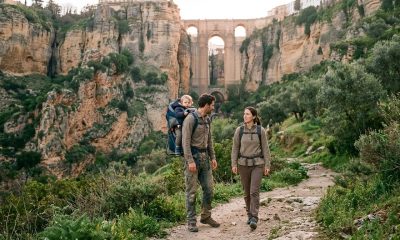
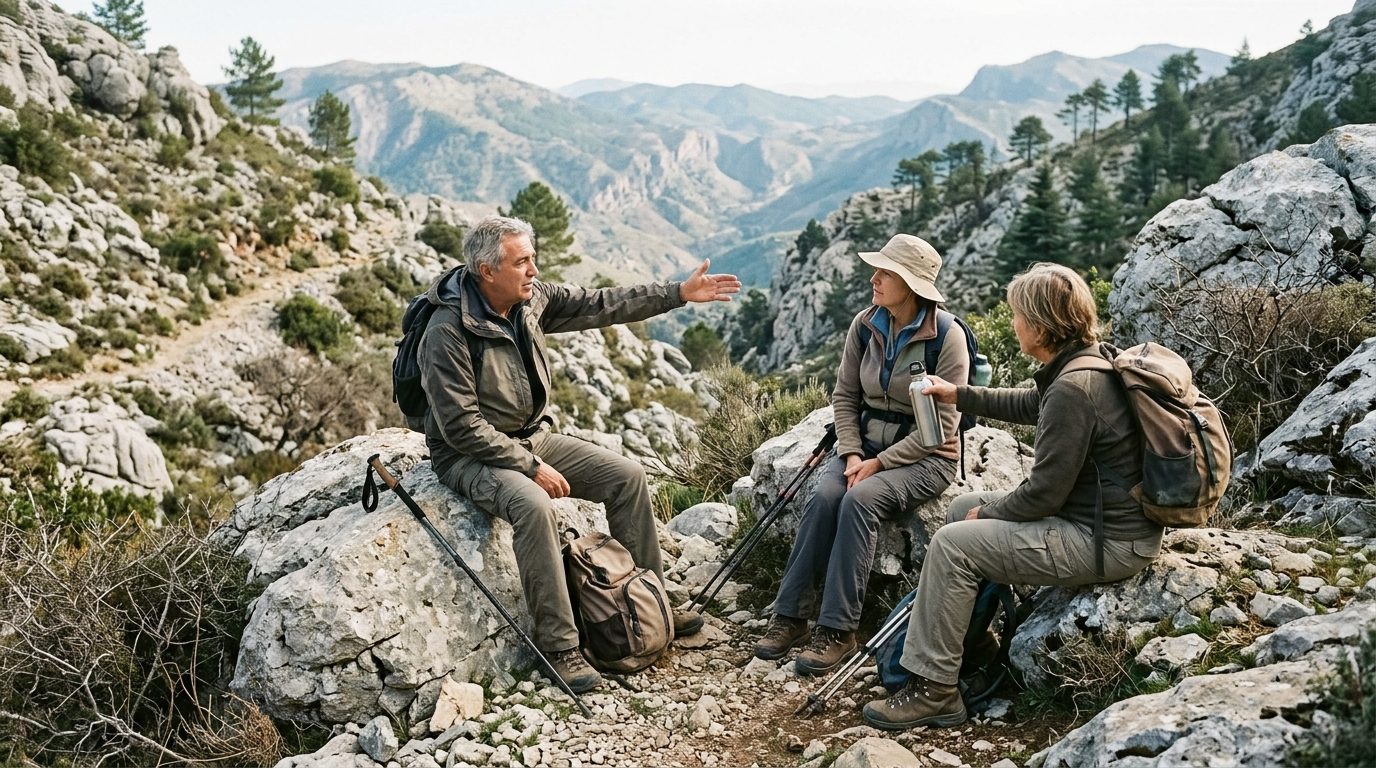
- Outdoor and sports clubs: hiking clubs, cycling groups, running clubs and sailing clubs.
- Language exchanges (intercambios): regular meetings where Spanish speakers and foreigners practise each other’s languages, often in a bar or café.
- Volunteer organisations: Cruz Roja, food banks, animal shelters and environmental groups.
- Professional and business networks: chambers of commerce, entrepreneurs’ associations, coworking communities and service clubs.
- Clubs for older residents: many towns run senior centres with courses, outings and dances for retired residents. Ask at the town hall about the age and residence requirements.
- International clubs: in areas with many foreign residents, there are clubs run by and for international residents, plus nationality-based associations. They are helpful at first, but try to combine them with mixed or Spanish groups.
Where to find the right group
- Ask your town hall. Most ayuntamientos keep a municipal register of associations, often under “participación ciudadana”, and some publish a searchable list online.
- Visit the cultural centre and library. Notice boards list workshops, clubs and courses, and staff know who organises what.
- Check municipal courses. Many towns offer low-cost adult courses through cultural centres or a “universidad popular”, which often lead to informal groups.
- Search online. Meetup and local Facebook groups list language exchanges, hiking groups and social events in English and Spanish.
- Ask people you already know. Colleagues, neighbours and your children’s school parents are good sources of tips.
How joining works
Joining is usually simple. Many groups let you attend once or twice before you become a member (socio). Formal associations normally ask you to fill in a membership form and pay an annual or monthly fee, which varies a lot; many activities are free or pay as you go. Foreign residents have the same right to join associations as Spanish citizens.
- Introduce yourself to the organiser and explain what you are interested in.
- Go regularly for at least a couple of months before deciding if it is right for you.
- Offer to help with something small, such as setting up an event or translating a poster. Contributing makes you part of the group quickly.
- Join the group’s WhatsApp chat; this is where most plans are made.
Starting your own association
If you cannot find what you are looking for, you can start an informal group through Meetup or social media. To create a formal non-profit association, Spanish law requires at least three founding members, a founding act and statutes, and registration with the relevant register of associations, which is national or regional depending on where the association will be active. Registration gives the group legal status, for example to open a bank account or apply for municipal grants or rooms.
For more ideas, read our guides on how to build a social life in Spain, joining a sports team and volunteering in Spain.
Useful links
- Meetup – groups and events in Spanish cities
- Cruz Roja Española – volunteering and local activities
- Málaga for digital nomads – coworking and community in Málaga
- Mental health support for expats in Spain
FAQ: clubs and associations in Spain
Do I need to speak Spanish to join a club?
Not always. International clubs and language exchanges work in English, while Spanish clubs are a great way to practise. Most members are patient with beginners.
Can foreigners join or start an association?
Yes. Foreign residents have the right of association in Spain and can be members, board members or founders.
How much does membership cost?
It varies widely. Neighbourhood associations and many cultural groups charge a modest annual fee, while private sports or social clubs can be much more expensive. Ask before you join.
What if I feel nervous going alone?
That is completely normal. Arrive a little early, introduce yourself to the organiser and choose activities with a shared task, such as a walk or a workshop, which make conversation easier.
Disclaimer: This article is general information only and is not legal advice. Membership rules, fees and registration procedures vary – always check with the club, your town hall or the official register before you act.





Cost of Living
Rebajas: when the sales start in Spain and your rights
When the January and summer sales start in Spain, how discounts must be shown, and your rights on returns and warranties.

Updated: October 2026
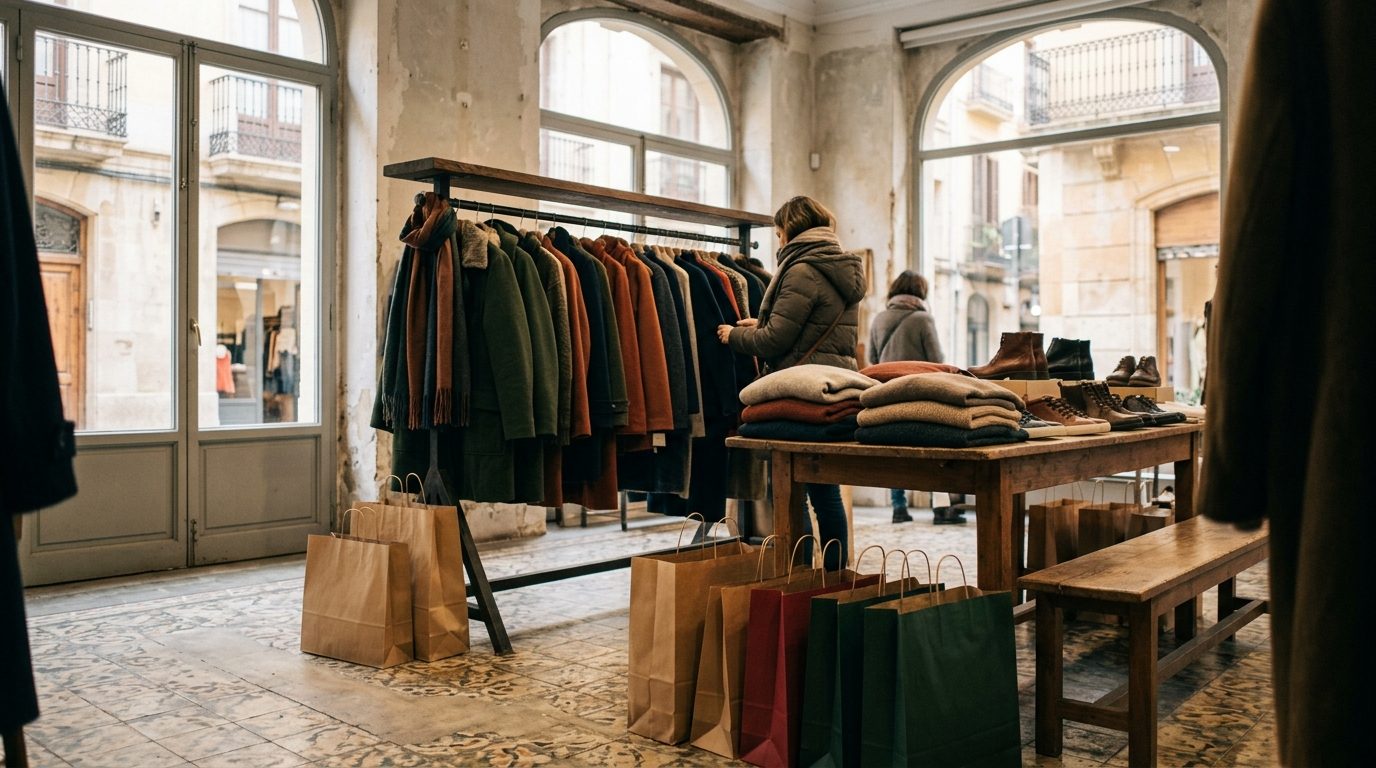
Spain’s sales – las rebajas – are a national event. Shops are packed on the first day, discounts grow week by week, and many people plan big purchases around them. Here is when the sales happen, how they work and what your rights are.
When are the sales in Spain?
Since 2012, shops in Spain have been free to decide when and for how long they hold sales. In practice, most still follow the traditional calendar:
- Winter sales: start around 7 January, the day after Three Kings (Reyes), and run into February or early March. Some chains start online on 6 January or even earlier.
- Summer sales: start around 1 July and run through August.
- Black Friday (the last Friday of November) and Cyber Monday have become big too, often stretched over a whole week.
- Mid-season sales (mid-season or “segundas rebajas”) with extra discounts come towards the end of each sales period.
Your rights when you buy on sale
- Real discounts: when a shop shows a price reduction, the “before” price must be the lowest price it charged in the previous 30 days. This rule comes from EU law and stops fake discounts.
- Same warranty: sale items have the same three-year legal guarantee as full-price items. A shop cannot refuse to deal with a faulty item because it was on sale.
- Returns: in a physical shop, returning an item you simply do not want is a goodwill policy, and shops may have different rules during sales – ask before paying. Online purchases always have 14 days to withdraw.
- Card payments: a shop that normally accepts cards must also accept them during sales.
- Keep the receipt (ticket or factura) – you need it for returns and warranty claims.
If something goes wrong, you can complain with an official complaint form (hoja de reclamaciones), which every shop must have. See also our guide to your rights when buying electronics.
Tips for the rebajas
- Make a list before you go – the first days are crowded and it is easy to overspend.
- Check prices a few weeks before so you can spot real bargains.
- Shop online from the evening before: many retailers open their sales online first. Online shops such as Spartoo (ad) and adidas (ad) run their own sales on shoes, fashion and sportswear.
- Look at the final weeks for the deepest discounts, if you do not mind smaller choice of sizes.
Not sure what to buy for the season? Read what to wear in Spain, season by season.
FAQ: sales in Spain
When do the January sales start in Spain?
Traditionally on 7 January, right after Three Kings. Shops are free to start earlier, and many begin online a day before.
Can I return sale items?
Faulty items, always. For items you just do not want, it depends on the shop’s policy – ask before you pay. Online purchases have a 14-day withdrawal right.
Are sale prices really lower?
They should be: the reference price shown must be the lowest price of the last 30 days.
Disclaimer: This article is general information, not legal advice. Shop policies vary. Links marked “(ad)” are affiliate links – NewInSpain may earn a commission at no extra cost to you.
Cultural
Christmas gift ideas from Spanish shops, and when to give them
When Spaniards give presents, from Nochebuena to Three Kings, plus gift ideas from Spanish shops and tips for ordering in time.
Updated: October 2026
Your first Christmas in Spain comes with a few surprises: the big present day for children is often 6 January, not 25 December, offices hold a Secret Santa called amigo invisible, and a hamper of ham, cheese and turrón is a classic gift. This guide explains when Spaniards give presents and suggests gift ideas from Spanish shops, so your parcels arrive on time and feel local.
When people give presents in Spain
- Nochebuena and Christmas Day (24–25 December): more and more families give presents now, often brought by Papá Noel.
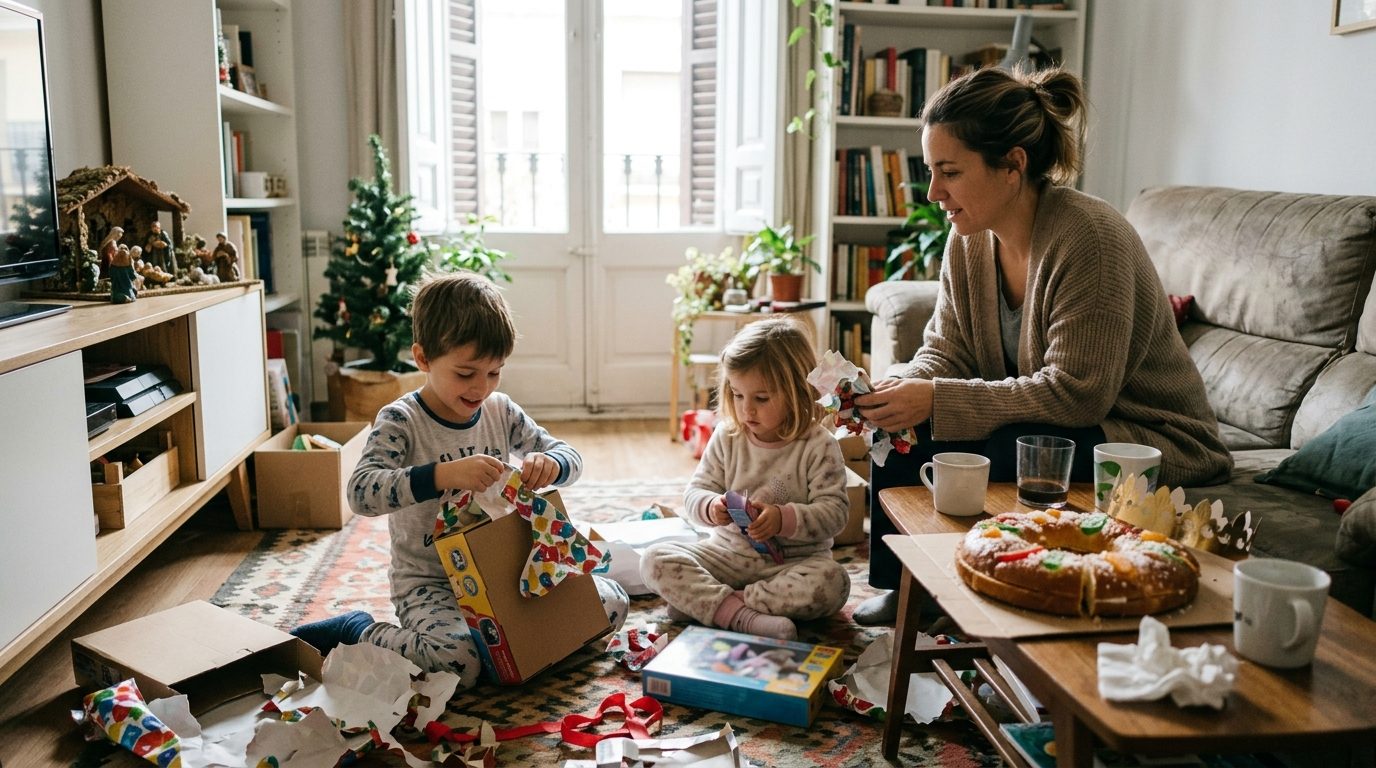
- Three Kings’ Day (6 January): the traditional day for children’s presents. The Kings arrive with parades (cabalgatas) on the evening of 5 January, and children wake up to gifts the next morning.
- Amigo invisible: the Spanish Secret Santa, common at work and among friends, usually with a price limit.
- Cesta de Navidad: many employers still give staff a Christmas hamper with wine, ham, cheese and sweets.
Read more about El Gordo, the Three Kings and other customs in our guide to Christmas in Spain.
Gift ideas from Spanish shops
Experiences instead of things. Gift boxes with a spa visit, a dinner, a wine tasting or an adventure activity are popular in Spain and easy to send by email. Disfrutabox (ad) has boxes for couples, families and friends, which also work well as a last-minute present.
Spanish wine. A bottle from Rioja, Ribera del Duero or a smaller region is a safe gift for hosts and colleagues. Online wine shops such as Petit Celler (ad) deliver mixed cases and gift packs across Spain.
Personalised gifts. Handmade items with a name or date feel personal and are good for grandparents and godchildren. Ohana Details (ad) is a Spanish brand making personalised, handmade gifts.
For the new home. If friends have just moved, quality bed linen, towels or a throw are always useful. La Mallorquina (ad), a Barcelona home textile company founded in 1947, sells linen and textiles online.
Shoes and clothes. Winter boots, slippers and trainers are classic Three Kings presents. Spartoo (ad) has a large range of shoes and fashion brands with delivery in Spain.
For the sporty ones. A new padel racket, balls or a court booking makes a great gift in Spain. See our padel guide for beginners for what to choose, and compare rackets at Padel ProShop (ad).
Ordering in time
- Order early in December. Couriers in Spain are very busy between Black Friday and Three Kings, and delivery times grow.
- For presents for 6 January, aim to order by mid-December. Many shops publish last order dates for Reyes.
- Check whether the shop delivers to the Canary Islands, Ceuta or Melilla if you are sending gifts there – extra customs paperwork and costs can apply.
- Keep receipts: when you buy online from a shop in the EU, you normally have 14 days to withdraw from the purchase, and many shops extend returns over Christmas.
FAQ: Christmas gifts in Spain
When do children get presents in Spain?
Traditionally on 6 January, Three Kings’ Day. Many families now also give some presents on 24 or 25 December.
What is amigo invisible?
The Spanish version of Secret Santa. Each person draws a name and buys one present for that person, usually within a set budget.
What is a typical gift for a host in Spain?
A good bottle of wine, cava, turrón or a box of pastries from a local bakery is always welcome.
Can I return presents bought online?
When you buy online from a shop in the EU, you normally have 14 days from delivery to withdraw from the purchase. Check each shop’s Christmas returns policy, as many give longer.
Disclaimer: This article contains affiliate links marked (ad). If you buy through them, NewInSpain may earn a small commission at no extra cost to you. Prices, ranges and delivery times are set by each shop.
Cultural
All Saints’ Day (Todos los Santos) in Spain: traditions and what to expect
What happens on Todos los Santos in Spain: cemetery visits, chestnuts and sweets, regional customs, and which regions have Monday 2 November 2026 off.

Updated: October 2026
On 1 November Spain celebrates Todos los Santos, All Saints’ Day. For many Spanish families it is a quiet, important day for remembering relatives who have died, rather than a party. This guide explains what happens, the food and regional customs you will notice, and how the holiday works in 2026, when 1 November falls on a Sunday.
What All Saints’ Day means in Spain
All Saints’ Day is a Catholic feast honouring all saints, and the next day, 2 November, is All Souls’ Day (Día de los Difuntos), dedicated to the dead. In everyday Spanish life the two have merged into one tradition: in the days around 1 November, families visit the cemetery to clean and decorate the graves of their loved ones.
Even people who are not religious often take part, because it is as much about family as faith. Relatives travel back to their home town, meet at the cemetery, then share a meal. If you have Spanish neighbours, friends or a partner, you may be invited along. It is a respectful occasion, so dress neatly and follow their lead.
Is it a public holiday in 2026?
Yes. 1 November is a national public holiday every year. In 2026 it falls on a Sunday, so each region could choose whether to move the day off to Monday 2 November. According to the official 2026 holiday calendar published in the BOE, nine regions did so:
- Monday 2 November is a holiday in: Andalusia, Aragón, Asturias, the Canary Islands, Castilla-La Mancha, Castilla y León, Extremadura, Madrid and Navarra.
- Normal working day in: the other regions, including Catalonia, the Valencian Community, the Balearic Islands, Galicia, Murcia and the Basque Country, which used that holiday elsewhere in their calendar.
So on the Costa del Sol and in the rest of Andalusia you get a long weekend from Saturday 31 October to Monday 2 November. Expect public offices, banks and health centres to be closed on the Monday. In Andalusia, larger shops are allowed to open on 2 November, as it is on the regional list of authorised trading days. For the full calendar, see our guide to public holidays in Spain in 2026.
Cemetery visits: what to expect
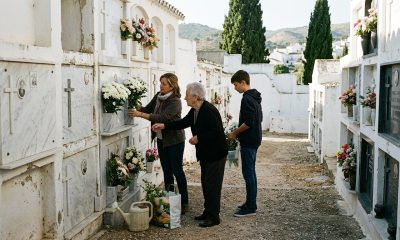
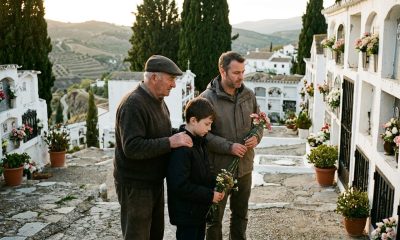
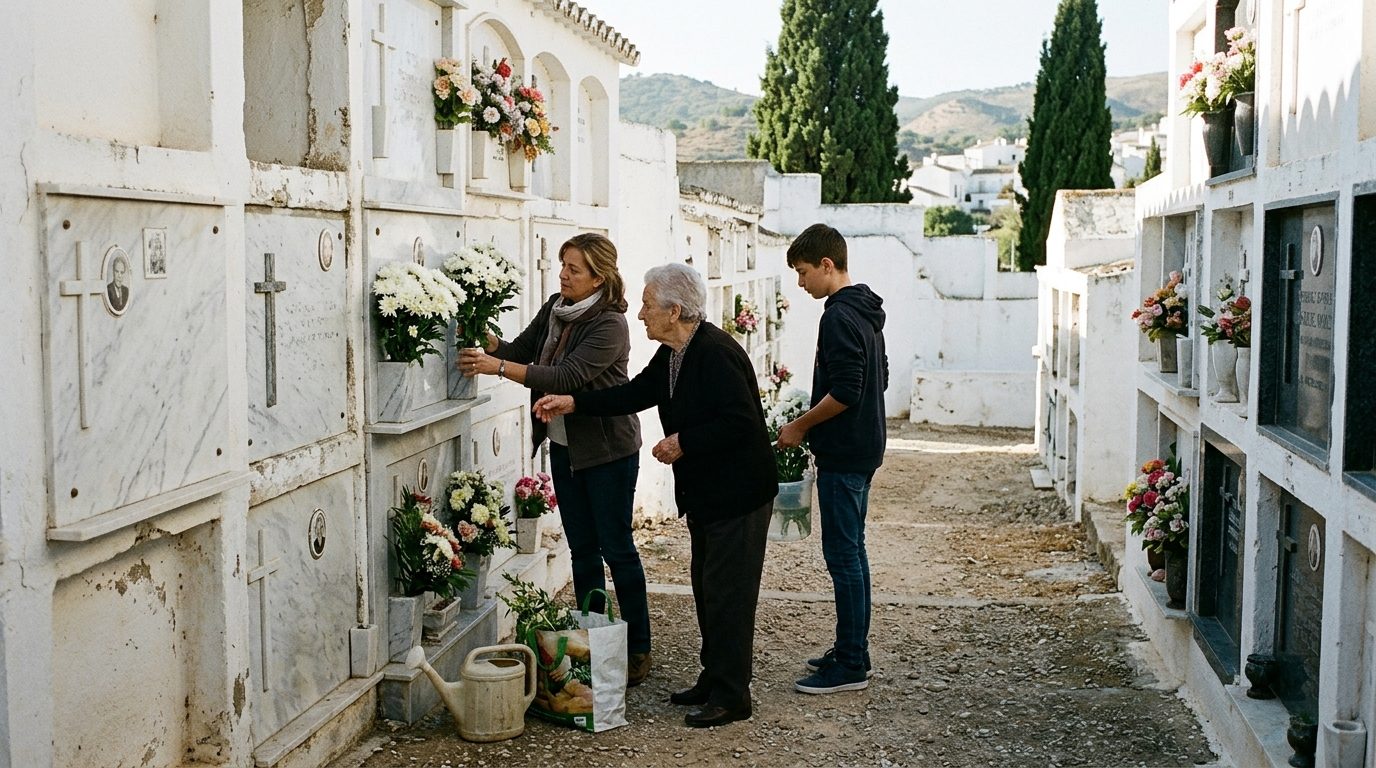
Cemeteries are at their busiest in the last days of October and on 1 November. In Spain many people are buried in nichos, wall niches stacked several rows high, so you will see families on ladders cleaning marble fronts and placing fresh flowers.
- Flowers: chrysanthemums, carnations and gladioli are the classic choices. Florists and market stalls are very busy, so buy a few days before if you can.
- Opening hours and transport: many town halls extend cemetery hours and add extra buses or traffic controls around the holiday. Check your ayuntamiento website for local arrangements.
- Behaviour: keep your voice low, do not take photos of other families and keep children close. Some cemeteries also hold Masses on the day.
- Traffic: roads near cemeteries and to inland villages get congested over the long weekend, so allow extra time.
Food and sweets of the season
Bakeries fill up with seasonal sweets in the weeks before 1 November. Look out for:
- Huesos de santo: “saints’ bones”, small rolls of marzipan filled with sweet egg yolk cream or other fillings.
- Buñuelos de viento: light fried dough balls, often filled with cream or chocolate.
- Roasted chestnuts: street sellers with smoking chestnut carts appear in town centres as the weather cools, often with roasted sweet potatoes too.
- Panellets: small almond sweets covered in pine nuts, typical in Catalonia.
Regional customs worth knowing
Spain’s regions mark the season in their own ways, and some of these customs are fun for families and newcomers.
- Catalonia – La Castanyada: on the eve of All Saints, families eat roasted chestnuts, sweet potatoes and panellets, often with sweet wine.
- Galicia and the north-west – Magosto: an autumn chestnut festival with bonfires, roasted chestnuts and new wine, held in many villages around this time.
- Cádiz – Tosantos: in the days before 1 November, stalls in the city’s food markets are decorated with comic scenes made from fruit, vegetables, fish and meat, a tradition with a long local history.
- Cocentaina (Alicante) – All Saints’ Fair: one of Spain’s oldest fairs, dating back to the 14th century, with markets, crafts and livestock. Spain’s official tourism site lists it around 1 November.
- Don Juan Tenorio: theatres in many cities stage José Zorrilla’s 19th-century play about the legendary seducer around this date, a long-standing tradition.
Halloween on 31 October has become very popular in Spain too, especially with children and young people. You will see costume parties, decorated bars and trick-or-treating in some urban areas, side by side with the traditional cemetery visits. For more autumn events, see our guides to Spanish festivals for expats and events on the Costa del Sol.
Practical tips for newcomers
- Check whether Monday 2 November is a holiday in your region and in the town where you work, before booking appointments.
- Do your food shopping before the weekend. Smaller supermarkets may close or open shorter hours.
- Book travel and hotels early if you plan a trip, as many Spaniards travel home or take a short break.
- Keep an eye on the weather. Late autumn can bring heavy rain, so read our guide to DANA storms and weather warnings.
- If a colleague or neighbour mentions visiting the cemetery, a simple, kind word is appreciated. It is a day of remembrance, not mourning in public.
Useful links
- BOE resolution with the 2026 holiday calendar (copy on Granada City Council website)
- Sundays and holidays when shops may open in 2026 (Ministry, PDF)
- Festivals in Spain in November (Spain’s official tourism site)
- Public holidays in Spain 2026
- Spanish festivals and how expats can join in
FAQ: All Saints’ Day in Spain
Is Monday 2 November 2026 a holiday in Málaga?
Yes. Andalusia moved the All Saints’ holiday from Sunday 1 November to Monday 2 November in 2026, so it is a day off across the region.
Is 2 November always a holiday in Spain?
No. All Souls’ Day on 2 November is not a public holiday in its own right. It only becomes one when a region moves the 1 November holiday because it falls on a Sunday, as happens in nine regions in 2026.
Do Spaniards celebrate Halloween?
Increasingly, yes, especially children and young adults in cities. It sits alongside the older tradition of cemetery visits and family meals on 1 November.
What are huesos de santo?
Small marzipan rolls shaped like bones and filled with sweet cream, sold in bakeries around All Saints’ Day.
Disclaimer: This article is general information only. Holiday dates are set by the State, regions and town halls, and local events and opening hours can change – always check the official source for your area before you plan.



 Ad
✓ Sub-accounts for budgets and taxes
✓ Cards for your teamLearn more →(ad)

Private blood tests and health check-ups in Spain: how they work

Renting a car in Spain: what to check before you sign

Rebajas: when the sales start in Spain and your rights

Andalucía guide: cities, culture and life in southern Spain

Understanding the tax system in Spain

Marbella guide: areas, beaches and everyday life



-
 Tourist Info2 years ago
Andalucía guide: cities, culture and life in southern Spain
-
 Banking & Finances2 years ago
Understanding the tax system in Spain
-
 Tourist Info2 years ago
Marbella guide: areas, beaches and everyday life
-

 Cost of Living2 years ago
Living on a small salary in Spain in 2026
-

 Spanish System2 years ago
How the Spanish government works: state, regions, provinces and town halls
-

 Tourist Info2 years ago
Benalmádena explained: Pueblo, Arroyo de la Miel and the coast
-

 Cost of Living2 years ago
Family living costs in Spain in 2026: monthly budget and moving-in money
-
 Insurance2 years ago
Understanding insurance in Spain: a 2026 guide for expats