



























































Tourist Info
Torremolinos guide: beaches, districts and living by the airport
Torremolinos for newcomers and visitors: its four beaches, the districts to live in, train links to the airport and Málaga, schools, health and local tips.







Updated: October 2026
Torremolinos was the first big holiday resort on the Costa del Sol, and in the 1950s and 60s it drew film stars and jet-setters. Today it is a compact town of high-rise seafront, older streets on the hill and a well-known LGBTQ+ scene. For people moving to the coast, its biggest selling point is simple: the airport is minutes away and the train runs straight into Málaga.
Torremolinos in brief
| Topic | What to expect |
|---|---|
| Feel | Busy resort town, lively all year, mixed Spanish and international population |
| Beaches | Four main beaches, three with Blue Flag status |
| Train | Several Cercanías C1 stations along the town |
| Best for | Frequent flyers, people working in Málaga, those who want a town without needing a car |
| Less good for | Anyone looking for a quiet village atmosphere |
Districts: where people live
The centre and El Calvario are built around Calle San Miguel, the pedestrian shopping street, and the La Nogalera square. You are close to shops, bars and the main train station, but evenings can be loud.






El Bajondillo drops down the cliff from the centre to the sea. Steep streets and lifts connect the two levels, and the seafront is lined with apartment blocks.
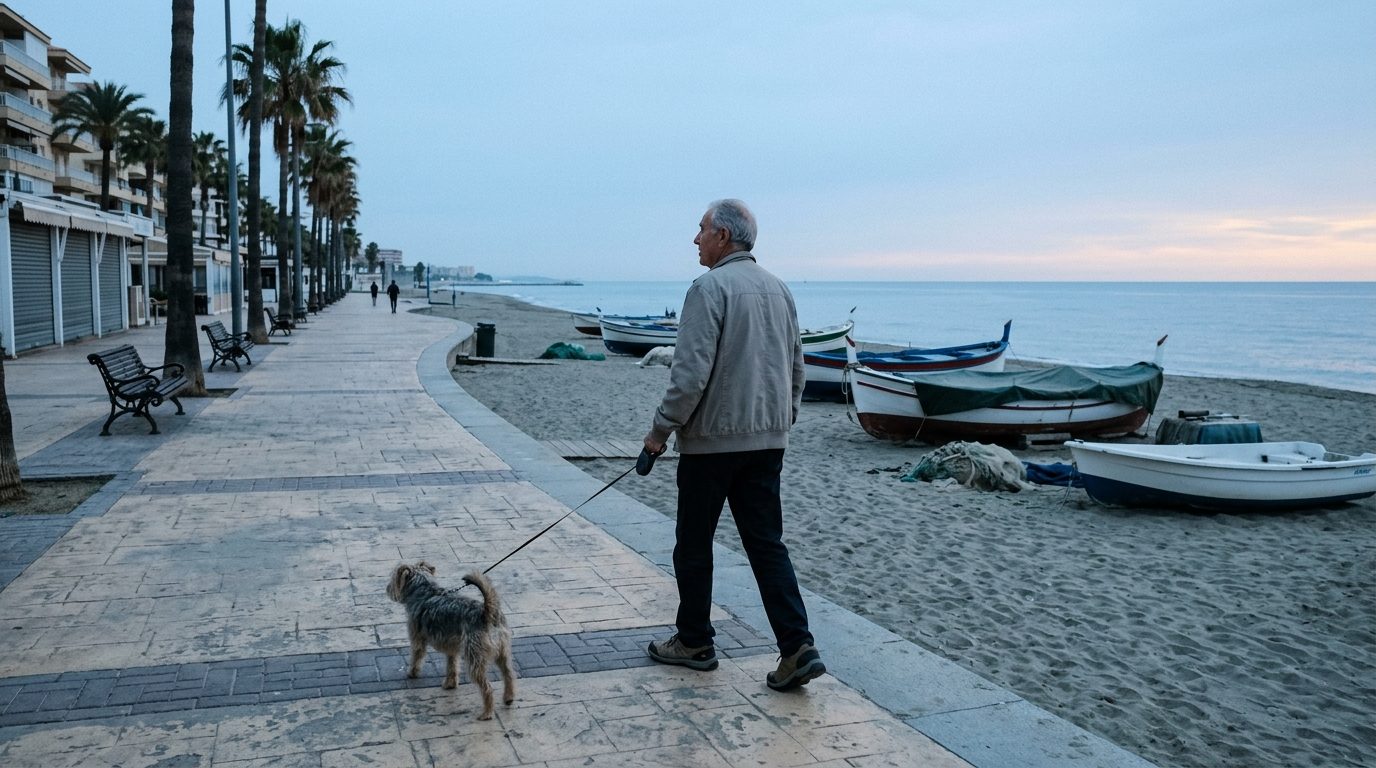
La Carihuela, the old fishermen’s quarter at the western end, is known for its seafood restaurants and long promenade leading towards Benalmádena’s marina. It mixes holiday flats with long-term residents.
Montemar and El Pinillo are more residential, with low-rise houses, small blocks and their own train stations. They suit families who want to be near the town without living in it.
Playamar and Los Álamos, at the eastern end towards Málaga, have large apartment complexes, beach clubs and easy road access to the airport.





Rents are high for the coast because of demand from tourists and airport workers. Long-term contracts can be hard to find in summer, when many owners switch to holiday lets. See our guide to renting in Spain as a foreigner.
The four beaches
The town’s tourism office describes the coastline from west to east like this:
- La Carihuela: more than 2 km of sand, traditional beach bars and water sports.
- El Bajondillo: about 1 km right below the centre, with a section popular with the LGBTQ+ community. Blue Flag.
- Playamar: one of the busiest stretches, with windsurfing, paddle board and beach clubs. Blue Flag.
- Los Álamos: a more relaxed beach near the Málaga border, with chill-out clubs and kitesurfing. Blue Flag.
Getting there and moving around
Few towns on the coast are as well connected. The Cercanías C1 line between Málaga and Fuengirola stops at Los Álamos, La Colina, Torremolinos, Montemar-Alto and El Pinillo, so most homes are within walking distance of a station. The airport station is on the same line, only a couple of stops away, and trains run roughly every 20 minutes for most of the day. Check times on the Renfe Cercanías Málaga site.
Torremolinos also has its own urban buses and interurban lines to Málaga, Benalmádena and Mijas Pueblo. The rechargeable Consorcio transport card works on the town buses, interurban buses and Cercanías trains and lowers the fare on each trip.
Schools, health and daily services
There are several public infant and primary schools across the town, as well as private options. Sunny View School, a long-established British school, is in the Torremolinos-Benalmádena area. Our guide to types of schools in Spain explains public, concertado and private schools.
For public healthcare, residents register with their local centro de salud. Torremolinos belongs to the Costa del Sol health area. Its reference hospital is Hospital Universitario Costa del Sol near Marbella, with the high-resolution hospital in neighbouring Benalmádena closer for many outpatient services. In an emergency, call 112. More detail in our guide to healthcare for foreign residents.
Things to do beyond the beach
- Molino de Inca botanical garden: nearly a thousand plant types, a maze and a Japanese garden, built around the town’s old mills.
- Casa de los Navajas: a 1925 neo-Mudéjar mansion on the cliff above El Bajondillo.
- Parque de la Batería: a family park near Montemar with a lake, a carousel and a viewing tower.
- Torre Pimentel: the medieval tower that gave the town its name, at the top of the steps down to the beach.
- Pride: Torremolinos holds one of the best-known Pride celebrations on the coast, usually in early summer.
Málaga city is one train ride away for museums and concerts; see our Málaga city guide. Heading west, Benalmádena starts where La Carihuela ends, and Fuengirola is at the end of the line.
Tips from the ground
- Flight paths pass close to parts of the eastern districts. Listen out before you sign.
- The town is built on two levels. Check how steep the walk is from a flat to the shops and the station.
- Winter is noticeably calmer, and many seafront restaurants keep shorter hours.
- Register on the padrón at the town hall once you have a fixed address.
Useful links
- Turismo Torremolinos: beaches
- Renfe Cercanías Málaga
- Aena: Málaga airport by train
- Consorcio de Transporte: travel card
- Málaga city guide for newcomers
- Benalmádena guide
FAQ: Torremolinos
How close is Torremolinos to Málaga airport?
Very close. The airport station is a few stops from Torremolinos on the Cercanías C1 line, and the drive is short outside rush hour.
Which beach is best for families?
Playamar and Los Álamos are wide and well equipped. La Carihuela is popular for its promenade and restaurants.
Can I live in Torremolinos without a car?
Yes. With several train stations, town buses and links to Málaga, many residents manage without one.
Disclaimer: This article is general information only. Beach awards, timetables and opening times can change – always check with the official source before you act.
Tourist Info
Things to do with kids on the Costa del Sol: parks, beaches and rainy-day ideas
Animal parks, the Benalmádena cable car, child-friendly beaches and indoor ideas for rainy days between Málaga and Estepona.

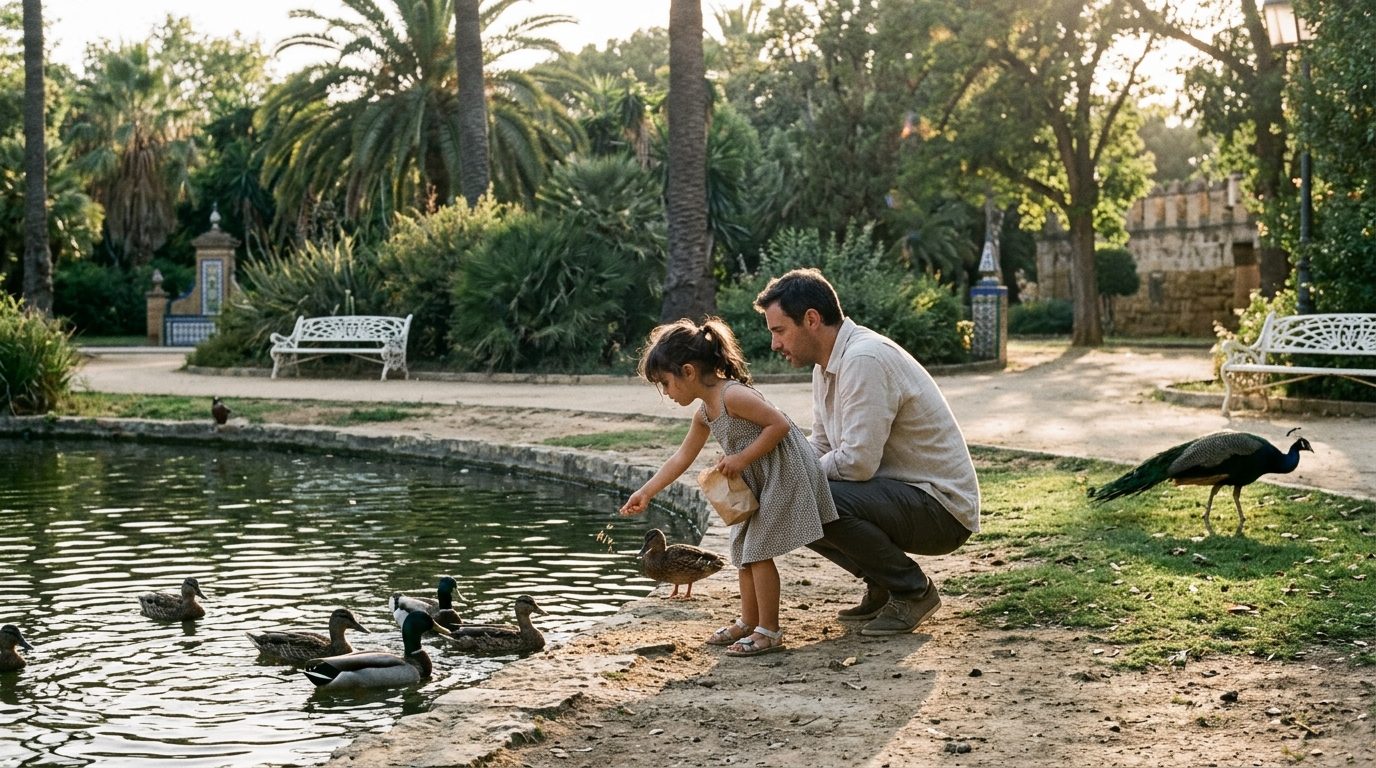
The Costa del Sol is an easy place to keep children busy. Between Málaga and Estepona you will find animal parks, a cable car, a butterfly house, a science centre and plenty of calm beaches, most of them reachable by train or bus. This guide covers the main options, what each is best for and which ones still work when the weather turns.
Opening hours and ticket prices change by season, so always check the official website before you go. Many attractions sell tickets online, and some charge less online than at the gate.
Animal parks and zoos
Animal parks are the classic family day out on this coast, and there are several to choose from.
- Bioparc Fuengirola: a compact zoo in the centre of Fuengirola, behind the town hall. It recreates tropical forest habitats from Madagascar, Equatorial Africa, Southeast Asia and the Indo-Pacific, with natural-style enclosures instead of cages. It is walkable from the Fuengirola train station, so you can easily make a day of it.
- Selwo Aventura (Estepona): a large wildlife and adventure park with more than 2,000 animals spread over four zones, including lions, rhinos, zebras, cheetahs and a big walk-through aviary. Older children can also do zip lines, suspension bridges and archery. Plan a full day and bring a car, as the park is outside the town.
- Selwo Marina (Benalmádena): a marine park inside Parque de la Paloma with dolphins, sea lions, penguins and an Amazon zone with tropical fish, frogs and spiders. Dolphin and bird shows run at set times, so check the timetable when you arrive.
- Crocodile Park (Torremolinos): large Nile crocodiles, hatchlings and a small museum, right next to Aqualand. It suits children who like something a bit different.
A day out in Benalmádena
Benalmádena has more family attractions close together than anywhere else on the coast. You can easily fill a whole day, or even a weekend. Our guide to Benalmádena’s different areas explains how the town is laid out.
- Parque de la Paloma: a free public park with a lake, play areas, cafés and free-roaming animals such as rabbits and peacocks. It is a good, cheap place to let small children run around.
- Teleférico de Benalmádena: the cable car climbs to the top of Monte Calamorro, about 800 metres above sea level, in roughly 15 minutes. At the top there are walking trails, viewpoints and bird of prey displays. On clear days you can see as far as Gibraltar and the African coast. Wear proper shoes, as the paths are rocky.
- Sea Life Benalmádena: an aquarium at Puerto Marina with sharks, sea turtles and seahorses, plus feeding sessions during the day. A visit usually takes under two hours.
- Mariposario de Benalmádena: a tropical butterfly house in a Thai-temple-style building, with more than 1,500 butterflies. Young children usually love it, and it is under cover.
Newcomers often ask about Tivoli World, the old amusement park in Arroyo de la Miel. It has been closed since 2020. Plans to reopen it have been reported in the local press, but there is no confirmed date, so don’t plan a visit around it.
Beaches and water parks
For younger children, look for wide sandy beaches with lifeguards, toilets and a chiringuito nearby. Fuengirola, Benalmádena and Torremolinos all have long, easy beaches next to the promenade. Our list of the best beaches on the Costa del Sol covers the options from Manilva to Nerja.
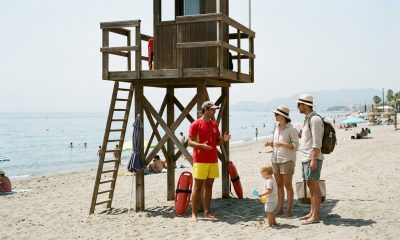
- Lifeguards and flags: lifeguard cover is strongest in summer. Teach children what the coloured flags mean before they go in: green is safe, yellow means take care and red means no swimming.
- Aqualand Torremolinos: the big water park on the coast. It is seasonal and usually opens in spring and closes around the end of October, so check the calendar before you go.
- Summer-only extras: inflatable floating water parks appear on some beaches in summer, and small fairground rides are common along the promenades in the evenings.
Ideas for rainy or cold days
It does rain on the Costa del Sol, mostly between autumn and spring. These options are mainly indoors:
- Centro de Ciencia Principia (Málaga): a hands-on science centre near the La Rosaleda stadium, with dozens of interactive exhibits, live science demonstrations and a planetarium.
- MIMMA – Museo Interactivo de la Música (Málaga): a music museum with about 400 instruments from around the world, where visitors are invited to play some of them. It works well for children who struggle to stay quiet in a normal museum.
- Sea Life and the Mariposario: both are largely indoors, so they make good backup plans in Benalmádena.
- Shopping centres: the large centres along the coast often have play areas, cinemas and bowling, which is useful for an afternoon when nothing else works.
Getting around without a car
The Cercanías C1 train between Málaga and Fuengirola stops at the airport, Torremolinos and Benalmádena (Arroyo de la Miel). That makes Bioparc, Parque de la Paloma, Selwo Marina and the cable car realistic without a car. Selwo Aventura and the mountain villages are easier to reach by car. See our guide to public transport on the Costa del Sol for trains, buses and travel cards.
Tips that save money and stress
- Book online: several attractions sell cheaper or timed tickets on their own websites.
- Combined tickets: some parks owned by the same group sell combined tickets. Check the official sites before buying separately.
- Resident offers: town halls and parks sometimes run offers for local residents. It is worth asking at your town hall or tourist office.
- Avoid the heat: in July and August, go in the morning or late afternoon and bring water, hats and sun cream.
- Gift a day out: for birthdays or Christmas, an experience box can be a nice alternative to toys. Disfrutabox (ad) is a Spanish company that sells experience gift boxes.
FAQ: things to do with kids on the Costa del Sol
Is Tivoli World in Benalmádena open?
No. The park has been closed since 2020. Reopening plans have been reported, but there is no confirmed opening date.
Which attractions can I reach by train from Málaga?
The C1 Cercanías line takes you to Torremolinos, Benalmádena and Fuengirola. From there you can walk or take a short bus or taxi ride to Bioparc, Parque de la Paloma, Selwo Marina, Sea Life and the cable car.
Is Aqualand open all year?
No. Aqualand Torremolinos is a seasonal water park. It usually runs from spring until around the end of October. Check the official calendar for this year’s dates.
What can we do with kids when it rains?
Good indoor options are the Principia science centre and the MIMMA music museum in Málaga, and Sea Life and the butterfly house in Benalmádena.
Useful links
- Benalmádena tourism – cable car
- Andalucía tourism – Mariposario de Benalmádena
- Spain.info – Selwo Aventura Estepona
- Andalucía tourism – Centro de Ciencia Principia
Disclaimer: This article is general information, not legal or financial advice. Rules and prices change, so check with the official source before you decide. Links marked “(ad)” are affiliate links – NewInSpain may earn a commission at no extra cost to you.
Pets
Dog beaches on the Costa del Sol: where your dog is allowed
Where dogs are allowed on beaches in Málaga province, the rules on dog beaches and how to keep your dog safe by the sea.
Updated: October 2026
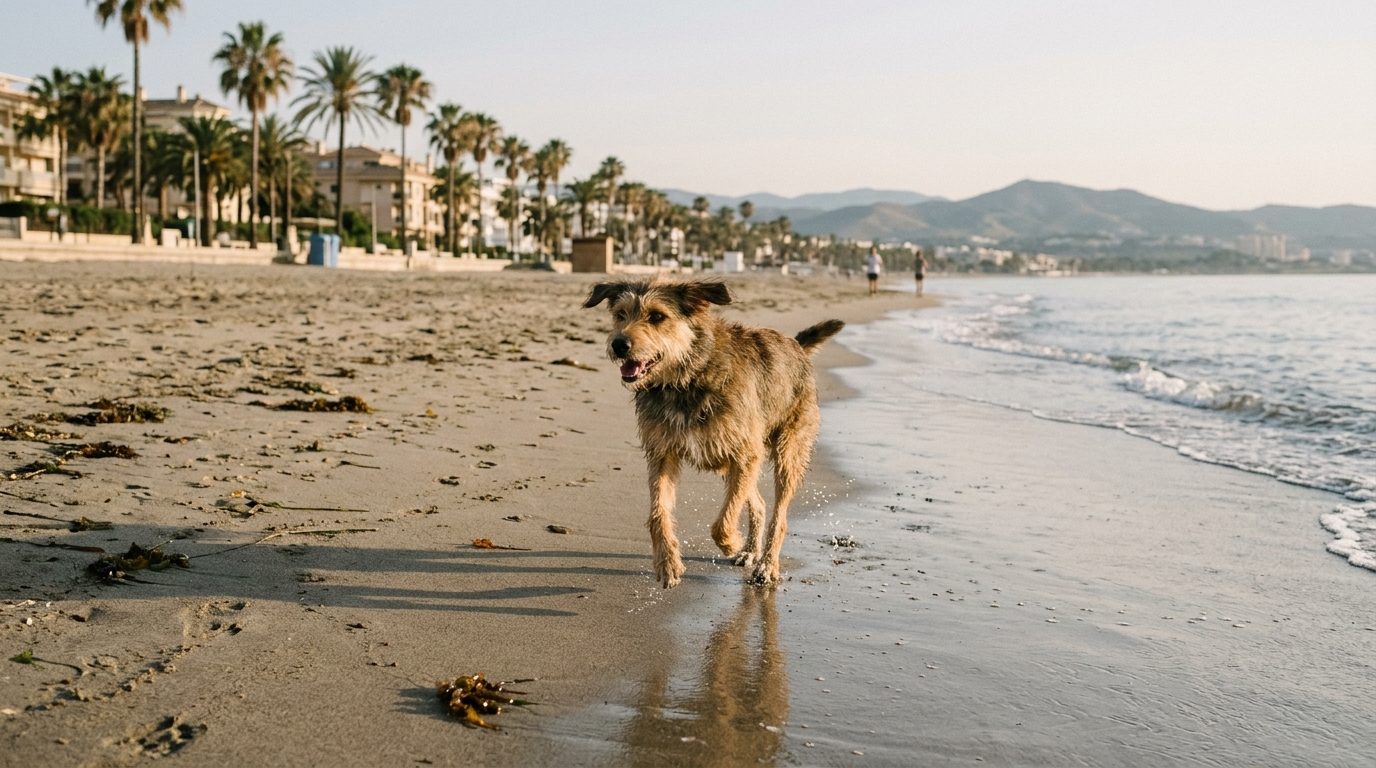
Taking your dog to the beach is one of the joys of living on the Costa del Sol – but on most Spanish beaches dogs are not allowed, at least not in the bathing season. The good news: several towns have designated dog beaches (playas caninas), and outside the summer some local rules are more relaxed. Here is where you can go and what the rules are.
The basic rule: no dogs on normal bathing beaches
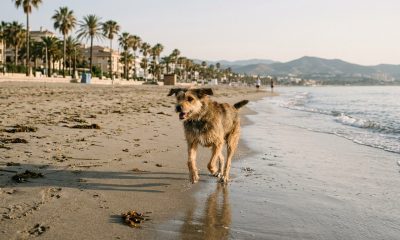
Town halls set the beach rules through local bylaws (ordenanzas). On almost every beach in Málaga province, dogs are banned during the bathing season, which usually runs from around June to September, and many towns keep the ban all year. Fines can be issued by the local police. Always check the signs at the beach entrance – they show the local rule.
Dog beaches in Málaga province
These dog beaches were listed as operating in 2026. Rules, opening periods and even locations change from year to year, so check the town hall’s website before you go.
- Málaga / Rincón de la Victoria – Arroyo Totalán, near La Araña, east of Málaga city.
- Vélez-Málaga – dog beach in Torre del Mar.
- Torrox – Torrox dog beach.
- Benalmádena – El Carvajal area. The former Arroyo Hondo dog beach has been closed.
- Fuengirola – next to Sohail Castle.
- Marbella – El Pinillo and Ventura del Mar.
- Casares – Piedra Paloma.
Mijas’ former dog beach has been closed for years, so dog owners in Mijas usually go to Fuengirola or Benalmádena.
Rules on dog beaches
- Your dog must be microchipped, vaccinated and registered – carry the documents or the pet passport.
- Keep the dog under control at all times; some beaches require a lead, and many require a muzzle for dogs over 20 kg or classed as potentially dangerous.
- Pick up after your dog – bags and bins are usually provided.
- Sick, aggressive or female dogs in heat are not allowed.
- Many dog beaches are marked as not suitable for human bathing.
Keeping your dog safe at the beach
- Heat: sand and promenades get very hot in summer. Go early in the morning or in the evening, bring shade and fresh water.
- Salt water: stop your dog drinking sea water and rinse the coat with fresh water afterwards.
- Jellyfish and weever fish: both sting. If your dog yelps after stepping in shallow water or picking something up, rinse with sea water and call a vet.
- Leishmaniasis: sandflies are most active at dusk in the warm months. Ask your vet about a vaccine or a repellent collar.
If your dog causes damage or an accident, third-party liability insurance helps. Providers such as Petplan (ad) offer pet insurance in Spain – see our guide to pet insurance.
Dog-friendly alternatives
- Dog parks (parques caninos) in most towns, often with fenced areas for off-lead play.
- Riverbeds and paths inland, for example in the hills above Mijas, Benalmádena and Marbella.
- Many beach bars (chiringuitos) and terraces welcome well-behaved dogs – ask first.
More pet guides and a list of local shelters: Pets in Spain.
FAQ: dogs on Costa del Sol beaches
Can I take my dog on the beach in winter?
It depends on the town. Some allow dogs outside the bathing season, many ban them all year. Check the sign at the beach entrance or the town hall’s bylaw.
Is there a dog beach in Málaga city?
The nearest is at Arroyo Totalán, on the border between Málaga and Rincón de la Victoria, east of the city.
Do I need a muzzle on a dog beach?
For potentially dangerous breeds, yes. Many dog beaches also require a muzzle for dogs over 20 kg. Follow the rules on the sign.
Disclaimer: Beach rules are set by each town hall and change. This article is general information – check the current rules with the town hall before you go. Links marked “(ad)” are affiliate links – NewInSpain may earn a commission at no extra cost to you.
Tourist Info
The best beaches on the Costa del Sol, from Manilva to Nerja
The best Costa del Sol beaches from west to east: family beaches, dunes, snorkelling coves, train-friendly options and 2026 Blue Flags.
Updated: October 2026
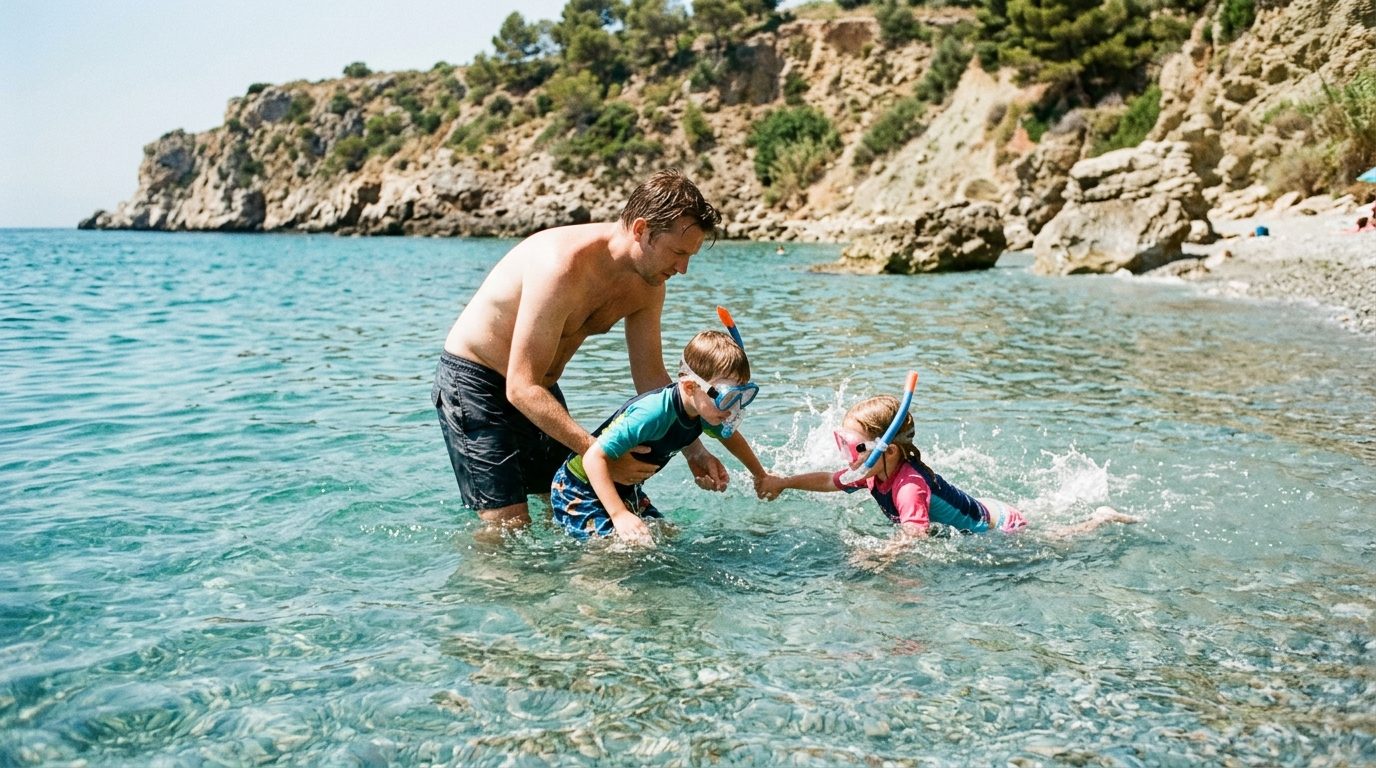
The Costa del Sol stretches along the coast of Málaga province, from Manilva in the west to Nerja in the east. This guide is for newcomers and residents who want to know which beaches are worth the trip, which suit families, and which are quieter. We go from west to east and also explain the Blue Flag awards for 2026.
What to expect from Costa del Sol beaches
Most beaches here have grey or golden sand rather than white, and many are urban beaches with a promenade, beach bars (chiringuitos) and sunbed hire. The water is calmer than on the Atlantic side, but it can be cooler than people expect, especially in the west near the Strait of Gibraltar. East of Málaga the coast becomes rockier, with small coves and clearer water.
Lifeguards, toilets and accessible bathing points are usually in place during the main bathing season. Outside that season, services are reduced. Read our beach and sea safety guide for flags, currents and jellyfish before you swim.
Western Costa del Sol: Manilva to Marbella
- Sabinillas (Manilva): a relaxed town beach with a promenade and a local feel, on the 2026 Blue Flag list.
- El Cristo (Estepona): a small sheltered bay next to the port with calm water, a favourite with families. Estepona also has the long central La Rada beach and quieter dune beaches to the east – see our Estepona guide.
- Nagüeles and El Cable (Marbella): broad beaches close to the Golden Mile and the centre, both Blue Flag in 2026.
- La Fontanilla and El Faro (Marbella): central beaches along the promenade, easy to reach on foot from the old town.
- Cabopino (Marbella): by a small marina east of town, backed by the Artola dunes – one of the more natural-looking beaches on this stretch, with a naturist section.
More on the area in our Marbella guide.
Central Costa del Sol: Mijas to Torremolinos
- La Cala and El Bombo (Mijas): wide beaches in front of the village of La Cala de Mijas, with a long boardwalk connecting the coast. Both are on the 2026 Blue Flag list. See our La Cala de Mijas guide.
- Fuengirola and Castillo (Fuengirola): busy town beaches below the Sohail castle, with everything within walking distance.
- Carvajal (Fuengirola/Benalmádena): a calmer beach on the border between the two towns, popular with families.
- Torrebermeja-Santa Ana and Fuente de la Salud (Benalmádena): smaller beaches near the marina and the coast road.
- La Carihuela (Torremolinos): the old fishing quarter, famous for fried fish and sardine skewers (espetos) in the beach restaurants.
- El Bajondillo and Playamar (Torremolinos): long, lively beaches with plenty of services, close to the train line.
This central stretch is the easiest to reach without a car, because the Cercanías train runs from Málaga through Torremolinos and Benalmádena to Fuengirola. Read more in our guides to Fuengirola and Torremolinos.
Málaga city beaches
Málaga city renewed the Blue Flag in 2026 for seven urban beaches: La Malagueta, La Caleta, Pedregalejo, El Palo, El Dedo, La Misericordia and San Andrés, according to the city council.
- La Malagueta: the city beach a short walk from the centre and the port – convenient rather than quiet.
- Pedregalejo and El Palo: former fishing districts with small sheltered bays, a seafront path and some of the best espeto restaurants in the city.
- La Misericordia: west of the centre, wide and usually less crowded than La Malagueta.
Eastern Costa del Sol: Vélez-Málaga to Nerja
- Torre del Mar (Vélez-Málaga): a long, family-friendly beach with a broad promenade and a strong Spanish holiday atmosphere.
- El Morche and Ferrara (Torrox): relaxed beaches with a village feel, both on the 2026 Blue Flag list.
- Burriana (Nerja): Nerja’s best-known beach, with restaurants along the back and good facilities.
- Torrecilla (Nerja): a town beach close to the centre and the Balcón de Europa viewpoint.
- Maro (Nerja): a small beach below the village of Maro, at the edge of the protected Maro–Cerro Gordo cliffs, with clear water for snorkelling and kayaking. Access is on foot down a steep path.
For life in this part of the province, read our guide to Nerja, Torrox and the Axarquía.
Best beach by what you want
| If you want | Try |
|---|---|
| Calm water for small children | El Cristo (Estepona), Carvajal, Pedregalejo |
| Beach plus easy train access | Torremolinos, Benalmádena, Fuengirola |
| Natural scenery and dunes | Cabopino (Marbella), the dune beaches east of Estepona |
| Snorkelling and clear water | Maro and the coves around Nerja |
| Fish restaurants on the sand | La Carihuela, El Palo, Burriana |
| A city beach after work | La Malagueta, La Misericordia |
About the Blue Flag in 2026
The Blue Flag (Bandera Azul) is an international award for beaches that meet standards on water quality, safety, services and environmental information. In Spain the list is published each spring by ADEAC. According to the 2026 list as reported in May 2026, Málaga province has more than 40 Blue Flag beaches, including those in Málaga city, Marbella, Mijas, Fuengirola, Torremolinos, Benalmádena, Manilva, Torrox, Vélez-Málaga and Nerja.
A beach without a Blue Flag is not automatically worse – some towns choose other quality certificates or do not apply. The award is reviewed every year, so check the current list before you rely on it.
Practical tips
- Go early in July and August: parking near popular beaches fills up by late morning.
- Watch the wind: strong levante (east) or poniente (west) winds can make the sea rough and change the water temperature from one day to the next.
- Respect local rules: many towns have bylaws on dogs, barbecues, camping and smoking on the beach, with fines for breaking them.
- Protect yourself from the heat: the midday sun is strong from May to October – see our heatwave safety guide.
Useful links
- Málaga City Council: Blue Flag 2026 for seven city beaches (Spanish, PDF)
- El Español: Blue Flag beaches in Málaga province 2026 (Spanish)
- Beach and sea safety in Spain
- Benalmádena explained
- East Málaga guide: Nerja, Torrox and the Axarquía
FAQ: Costa del Sol beaches
Which Costa del Sol beach is best for families?
Sheltered beaches with calm water and good services, such as El Cristo in Estepona, Carvajal between Fuengirola and Benalmádena, and Pedregalejo in Málaga, are good choices for small children.
Can I reach the beaches without a car?
Yes, between Málaga and Fuengirola the Cercanías train stops close to many beaches. Further west and east you depend on buses, which are slower.
When is the sea warm enough to swim?
Most people find the water comfortable from around June to October. Temperatures vary from year to year and can drop suddenly when the wind changes.
Where can I check the current Blue Flag list?
The list is published each spring by ADEAC, the Spanish organisation behind the Blue Flag, and town halls usually announce their awards. Check before the summer season, as awards change every year.
Disclaimer: This article is general information only. Beach awards, services and local rules can change – always check with the town hall or the official source before you go.




 Ad

✓ Sub-accounts for budgets and taxes
✓ Cards for your teamLearn more →(ad)

Things to do with kids on the Costa del Sol: parks, beaches and rainy-day ideas

Private blood tests and health check-ups in Spain: how they work

Renting a car in Spain: what to check before you sign

Andalucía guide: cities, culture and life in southern Spain

Understanding the tax system in Spain

Marbella guide: areas, beaches and everyday life






-
 Tourist Info2 years ago
Andalucía guide: cities, culture and life in southern Spain
-
 Banking & Finances2 years ago
Understanding the tax system in Spain
-
 Tourist Info2 years ago
Marbella guide: areas, beaches and everyday life
-

 Cost of Living2 years ago
Living on a small salary in Spain in 2026
-

 Spanish System2 years ago
How the Spanish government works: state, regions, provinces and town halls
-

 Tourist Info2 years ago
Benalmádena explained: Pueblo, Arroyo de la Miel and the coast
-

 Cost of Living2 years ago
Family living costs in Spain in 2026: monthly budget and moving-in money
-

 Insurance2 years ago
Understanding insurance in Spain: a 2026 guide for expats