



























































Tourist Info
Antequera day trip: dolmens, El Torcal and the old town
Plan a day in Antequera from the coast: the UNESCO dolmens, the Ruta Verde at El Torcal, the old town, local food and how to get there.




























Antequera sits in the north of Málaga province, where the roads from Málaga, Granada, Córdoba and Seville meet. It is an easy day trip from the coast, and it packs a lot into one day: prehistoric tombs on the UNESCO World Heritage List, the strange limestone landscape of El Torcal and a hilltop old town full of churches. Winter is a good time to go, as the inland air is clear and the sites are quiet. Antequera is one of the places in our overview of day trips from Málaga; this guide goes into detail.
Getting to Antequera
- By car: the A-45 motorway links Málaga with Antequera. A car is the most practical option if you want to see the dolmens, El Torcal and the town in one day, as the three are several kilometres apart.
- By bus: ALSA runs buses from Málaga to Antequera. From town, you need a taxi to reach El Torcal, as the official access information from the Junta de Andalucía points out.
- By train: Antequera has a high-speed station, Antequera-Santa Ana, outside the town, and a station in town on the conventional line. Check Renfe for current connections from Málaga.
If you do not have your own car, you can compare rental offers at VIP Cars (ad), a car rental comparison site. Read our checklist on renting a car in Spain before you sign, especially the fuel policy and the insurance excess.
The Antequera dolmens
The Antequera Dolmens Site was added to the UNESCO World Heritage List on 15 July 2016. According to the Spanish government, it is made up of three megalithic monuments, the Menga dolmen, the Viera dolmen and the Tholos of El Romeral, and two natural monuments, the Peña de los Enamorados and El Torcal. The tombs were built in the Neolithic and Bronze Age from huge stone blocks and covered with earth mounds. Their origins go back to the first half of the fourth millennium BC.


 Vivid BusinessA business account for freelancers and companies in SpainOpen your account online, with sub-accounts and cards for your team.Learn more →(ad)

 Buying a home in Spain? Simulate your mortgageSee your monthly payment with Banco Sabadell’s mortgage simulator.Try the simulator →(ad)

 A bank account for autónomos in SpainCuenta Clara Autónomos: no commissions, free debit and credit cards, opened online.See the account →(ad)


 A European bank you open from your phonebunq: an EU-licensed bank with debit cards, managed fully in the app. Sign up in about five minutes.Get started →(ad)


 A mobile bank account with no commissionsB100, the mobile bank from Abanca: everyday account and free debit card, all in the app.Get the app →(ad)
 Online pharmacy & parapharmacySkincare, vitamins, baby care and more – delivered in SpainShop now





















- Menga: the most famous of the three, built from enormous stone slabs. It faces the Peña de los Enamorados, the mountain that looks like a face lying on its back.
- Viera: a short walk from Menga, with a long, narrow corridor leading to the burial chamber.
- El Romeral: a few kilometres away on the other side of town. Instead of flat roof slabs it has a false dome, a different building tradition.
Menga and Viera share a site with a visitor centre and parking at the edge of town on the Málaga side. Entry has been free, and the site is closed on Mondays and on some holidays. Opening hours change with the season, so check the official page of the Conjunto Arqueológico Dólmenes de Antequera before you go.
El Torcal: walking among the rocks
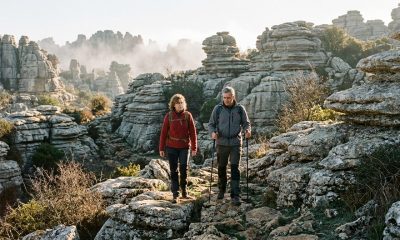
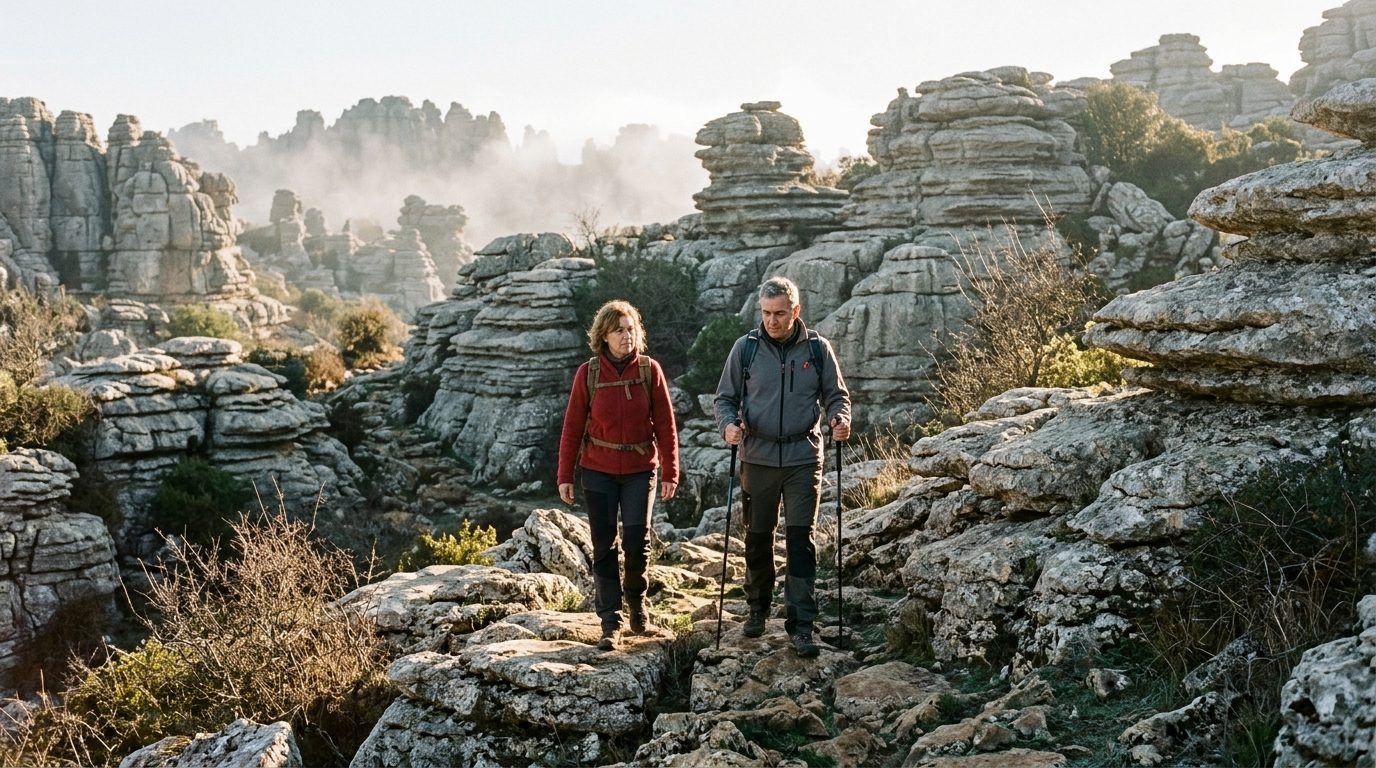
El Torcal de Antequera is a protected natural area (paraje natural) of limestone rocks shaped by wind and water into stacks, towers and mazes. It is one of the most unusual landscapes in Andalucía.
The Junta de Andalucía describes the main route, the Ruta Verde, as a 1.4 km circular path that takes about 45 minutes, with a medium-low difficulty level. The path runs between 1,185 and 1,226 metres above sea level and has little shade. It starts at the parking area by the Torcal Alto visitor centre, which you reach from the A-7075 road towards Villanueva de la Concepción, turning off after the Puerto de la Boca del Asno onto a paved forest track. There are also longer routes, such as the Ruta Amarilla.
- Dress for the mountains: at over 1,000 metres it is much colder than on the coast in winter, and fog can roll in quickly.
- Wear good shoes: the rock is slippery when wet. The Junta recommends non-slip footwear.
- Stay on the marked paths: it is easy to get lost among the rocks, and collecting plants or fossils is not allowed.
- Emergencies: call 112.
The old town
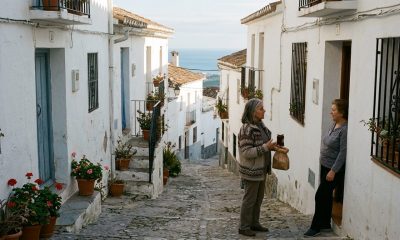
Antequera’s historic centre climbs up a hill to the Alcazaba, a Moorish fortress with views over the plain and the Peña de los Enamorados. Next to it is the Real Colegiata de Santa María la Mayor, a large Renaissance church, and the Arco de los Gigantes, the old gateway to the upper town. Below, the streets are lined with churches, convents and palaces, as Antequera has an unusually large number of them for a town of its size.










Some monuments charge entry and have their own opening hours, so check with the tourist office when you arrive. The walk up to the Alcazaba is steep but short.
What to eat
- Mollete: a soft, flat white bread roll from Antequera, eaten at breakfast with olive oil, tomato or ham.
- Porra antequerana: a thick, cold tomato and bread soup, similar to salmorejo, usually topped with ham and egg.
- Bienmesabe: a traditional almond dessert sold in local cake shops and convents.
A suggested day plan
- Morning: drive up to El Torcal first, while the light is good and before any afternoon fog. Walk the Ruta Verde.
- Lunch: head down to the town for lunch in the centre.
- Afternoon: walk up to the Alcazaba and the Colegiata.
- Late afternoon: visit Menga and Viera on your way out of town towards Málaga. Check the closing time, as it is earlier on Sundays and holidays.
Without a car, you can still enjoy the town and the dolmens on foot or by local bus and taxi. See our guide to public transport on the Costa del Sol for travel cards and connections.
FAQ: Antequera day trip
Do I need to pay to see the dolmens?
Entry to the dolmens has been free. The site is closed on Mondays, and opening hours vary by season, so check the official page before your visit.
How long is the walk at El Torcal?
The main route, the Ruta Verde, is a 1.4 km loop that takes about 45 minutes, according to the Junta de Andalucía. Longer routes are also available.
Can I visit Antequera without a car?
Yes. ALSA buses and trains connect Málaga with Antequera. To reach El Torcal you will need a taxi or an organised tour.
Is Antequera worth visiting in winter?
Yes, as long as you dress warmly. Winter days are often clear and the sites are quieter, but El Torcal can be cold, windy or foggy.
Useful links
- La Moncloa: Antequera Dolmens Site declared World Heritage
- Junta de Andalucía: El Torcal, Ruta Verde and access (Spanish)
- Renfe: train times to Antequera
Disclaimer: This article is general information, not legal or financial advice. Rules and prices change, so check with the official source before you decide. Links marked “(ad)” are affiliate links – NewInSpain may earn a commission at no extra cost to you.


 A European bank you open from your phoneSign up with bunq in about five minutes.Get started →(ad)








 Ad
 A sea-view escape in MallorcaThe Donna Portals – stay by the sea with views over the Mediterranean.See prices →
Vivid BusinessA business account for freelancers and companies in SpainOpen your account online, with sub-accounts and cards for your team.✓ For autónomos and companies
✓ Sub-accounts for budgets and taxes
✓ Cards for your teamLearn more →(ad)


















Antequera day trip: dolmens, El Torcal and the old town

Snow chains and winter driving in Spain: Sierra Nevada and mountain roads

Your Spanish payslip (nómina) explained, including the pagas extra

Andalucía guide: cities, culture and life in southern Spain

How the Spanish government works: state, regions, provinces and town halls

Living on a small salary in Spain in 2026











-

 Tourist Info2 years ago
Andalucía guide: cities, culture and life in southern Spain
-
Spanish System2 years ago
How the Spanish government works: state, regions, provinces and town halls
-
Cost of Living2 years ago
Living on a small salary in Spain in 2026
-
Tourist Info2 years ago
Marbella guide: areas, beaches and everyday life
-
Banking & Finances2 years ago
Understanding the tax system in Spain
-
Cost of Living2 years ago
Family living costs in Spain in 2026: monthly budget and moving-in money
-
Insurance2 years ago
Understanding insurance in Spain: a 2026 guide for expats
-
Tourist Info2 years ago
Benalmádena explained: Pueblo, Arroyo de la Miel and the coast