





















































Healthcare
Hearing tests and hearing aids in Spain
How to get your hearing tested in Spain, who gets public funding for hearing aids, and what to check before you buy privately.




























Hearing loss often comes on slowly, and many people only notice it when conversations in a busy Spanish bar become hard to follow or the TV keeps getting louder. If you live in Spain, you can get your hearing checked through the public health system or privately. This guide explains the warning signs, how the public route works, who gets public funding for hearing aids, and what to check before you buy privately.
Signs that it is time for a hearing test
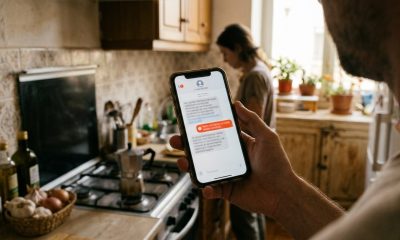
The World Health Organization lists some common warning signs:
- Ringing in the ears (tinnitus).
- Missing parts of conversations more often than before.
- Turning up the volume on the TV, radio or phone more than you used to.
The WHO says people exposed to loud sound, people taking medicines that can harm hearing, and people over 60 are at higher risk and should check their hearing regularly. Learning a new language makes things harder too: if you already struggle with Spanish, mild hearing loss can make it even more tiring.


 A European bank you open from your phonebunq: an EU-licensed bank with debit cards, managed fully in the app. Sign up in about five minutes.Get started →(ad)


 A mobile bank account with no commissionsB100, the mobile bank from Abanca: everyday account and free debit card, all in the app.Get the app →(ad)
 Online pharmacy & parapharmacySkincare, vitamins, baby care and more – delivered in SpainShop now






 Vivid BusinessA business account for freelancers and companies in SpainOpen your account online, with sub-accounts and cards for your team.Learn more →(ad)

 Buying a home in Spain? Simulate your mortgageSee your monthly payment with Banco Sabadell’s mortgage simulator.Try the simulator →(ad)

 A bank account for autónomos in SpainCuenta Clara Autónomos: no commissions, free debit and credit cards, opened online.See the account →(ad)










A first step can be the free hearWHO app from the WHO. It uses a digits-in-noise test, where you listen for spoken numbers against background noise, and it stores your results so you can track them over time. It is a screening tool, not a diagnosis.
The public route: GP and ear specialist
If you are registered with the public health system, start with your GP (médico de familia) at your health centre. If you are not yet registered, see our guide to healthcare in Spain for foreign residents.
- See your GP: explain your symptoms. The GP can look at your ears and, if needed, refer you to a specialist.
- Ear, nose and throat specialist: the otorrinolaringólogo (ENT) can examine your ears and order hearing tests to find out what type of hearing loss you have and why.
- Treatment plan: depending on the cause, this might be medical treatment, a hearing aid, an implant or simply monitoring.
Waiting times for specialist appointments vary by area. If you suddenly lose hearing in one ear, do not wait for a routine appointment; get medical help quickly.
Are hearing aids free in Spain?
Hearing aids are part of the national health system’s list of orthoprosthetic products (prestación ortoprotésica), but public funding is limited by age.










- Children and young people: in 2019 the Ministry of Health announced that the age limit for publicly funded hearing aids would rise step by step from 16 to 26. Reports from 2025 and 2026 describe public funding as ending at age 26.
- Adults over 26: in general, adults pay for hearing aids themselves. Some regions run separate social aid schemes, so ask your health centre or regional social services what applies where you live.
- Cochlear implants: these are also part of the public portfolio when a specialist decides they are needed.
In Andalucía, products in the orthoprosthetic catalogue must be prescribed by a hospital or specialist doctor. With the prescription, you go to the Unidad de Prestaciones at your health centre. It gives you the original prescription, an information sheet about the product and a list of approved suppliers (gabinetes técnicos). Some products also need an authorisation stamp (visado) before they are supplied. The Junta’s information line is 012 or 955 012 012.
Buying hearing aids privately
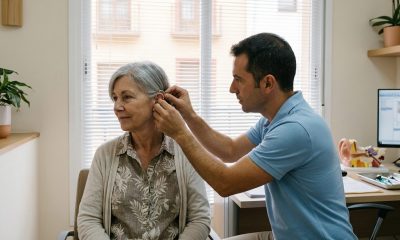
Most adults in Spain buy hearing aids from a private hearing centre (centro auditivo). The person who fits them is usually an audioprotesista, a professional trained to fit, programme and check hearing aids. In Spain the formal qualification is the higher vocational diploma Técnico Superior en Audiología Protésica.
- Get a medical check first: a hearing centre test is useful, but it does not replace a doctor’s diagnosis, especially if the loss is sudden, in one ear only, or comes with pain, dizziness or discharge.
- Ask for a written quote: it should include the device, fitting, follow-up visits, warranty and what happens if the aid needs repair.
- Ask about a trial period: find out in writing whether you can try the aids and return them, and on what terms.
- Compare more than one centre: prices and aftercare packages differ, so it is worth getting a second quote.
- Check your insurance: private health insurance policies differ, and some may cover specialist visits or hearing tests, so read your policy or ask your insurer. Our guide to private health check-ups in Spain explains how private tests work.
Your consumer rights
Spain’s consumer rules matter here, because hearing aids are often adapted to you:
- Shops are not obliged to take returns: according to the Ministry of Consumer Affairs, physical shops do not have to accept returns. If they do, they must state the conditions on signs, the receipt or the invoice. This is why a written trial agreement is important.
- Online purchases: distance purchases normally have a 14-day withdrawal period from delivery, but this does not apply to goods made to your specifications or clearly personalised, such as custom ear moulds.
- Keep paperwork: keep your invoice, warranty and any audiogram results, as you may need them for repairs, a new centre or an insurance claim.
Living with hearing aids in Spain
- Plan follow-up visits: hearing aids usually need adjustments after the first weeks.
- Heat, sand and sea: ask your centre how to protect your aids at the beach and in summer heat.
- Keep supplies: keep spare batteries or your charger with you, and ask your centre where to buy domes and filters.
- Tell people: ask friends and colleagues to face you when they speak. In Spanish, “¿Puede hablar más despacio, por favor?” means “Could you speak more slowly, please?”
FAQ: hearing tests and hearing aids in Spain
Does the Spanish public health system pay for hearing aids for adults?
In general, no. Public funding for hearing aids is described as ending at age 26, so most adults pay privately. Some regions have separate social aid schemes, so ask your health centre.
Do I need a referral to see an ear specialist?
In the public system, yes. Your GP refers you to the otorrinolaringólogo. Privately, you can book a specialist directly.
Can I return hearing aids if they do not work for me?
Only if the centre offers it. Shops are not legally required to accept returns, and the online withdrawal right does not cover personalised products. Agree a trial period in writing before you pay.
Is an online hearing test enough?
No. Apps such as hearWHO are useful for screening and tracking changes, but a proper diagnosis needs a doctor and clinical hearing tests.
Useful links
- Junta de Andalucía: orthoprosthetic benefits (in Spanish)
- World Health Organization: the hearWHO app
- Ministry of Consumer Affairs: returns and the right of withdrawal (PDF, in Spanish)
- Imserso: hearing aids and implants fact sheet (PDF, in Spanish)
Disclaimer: This article is general information, not legal or financial advice. Rules and prices change, so check with the official source before you decide.


 A European bank you open from your phoneSign up with bunq in about five minutes.Get started →(ad)



 Ad
 A sea-view escape in MallorcaThe Donna Portals – stay by the sea with views over the Mediterranean.See prices →
Vivid BusinessA business account for freelancers and companies in SpainOpen your account online, with sub-accounts and cards for your team.✓ For autónomos and companies
✓ Sub-accounts for budgets and taxes
✓ Cards for your teamLearn more →(ad)













Hearing tests and hearing aids in Spain

Registering with your embassy or consulate in Spain: why and how

Homeschooling in Spain: what the law says

Andalucía guide: cities, culture and life in southern Spain

How the Spanish government works: state, regions, provinces and town halls

Living on a small salary in Spain in 2026





-

 Tourist Info2 years ago
Andalucía guide: cities, culture and life in southern Spain
-
Spanish System2 years ago
How the Spanish government works: state, regions, provinces and town halls
-
Cost of Living2 years ago
Living on a small salary in Spain in 2026
-
Tourist Info2 years ago
Marbella guide: areas, beaches and everyday life
-
Cost of Living2 years ago
Family living costs in Spain in 2026: monthly budget and moving-in money
-
Banking & Finances2 years ago
Understanding the tax system in Spain
-
Insurance2 years ago
Understanding insurance in Spain: a 2026 guide for expats
-
Tourist Info2 years ago
Benalmádena explained: Pueblo, Arroyo de la Miel and the coast