





































































Buy properties
Buying a new-build or off-plan home in Spain: guarantees and snagging
How Spanish law protects off-plan deposits, the 1, 3 and 10-year guarantees on new homes, and how to do a proper snagging inspection.




























New developments are going up all along the Costa del Sol, and many buyers reserve a home before it is finished, sometimes before the first brick is laid. Buying new or off-plan (sobre plano) has real advantages: modern insulation, a fresh warranty and often a payment plan. It also has its own risks. This guide explains how Spanish law protects your money during construction, which guarantees you get after handover and how to do a proper snagging inspection.
New-build or off-plan: what is the difference?
- New-build (obra nueva): the home is finished or almost finished. You can see it, inspect it and usually complete the purchase within weeks or months.
- Off-plan (sobre plano): you buy from plans, a show flat and a specification list. You pay in instalments during construction and complete when the building is finished.
The general buying process is the same as for any property. See our guide to buying property in Spain step by step. New homes are taxed differently from resales, with VAT instead of transfer tax, as explained in buying costs in Spain.
Protecting the money you pay before completion
When you pay a developer before the home is finished, Spanish law requires that money to be protected. The rules are in the first additional provision of the building law (Ley 38/1999 de Ordenación de la Edificación), as amended by Ley 20/2015 with effect from 1 January 2016. From the moment the developer obtains the building licence, it must:


 Vivid BusinessA business account for freelancers and companies in SpainOpen your account online, with sub-accounts and cards for your team.Learn more →(ad)

 Buying a home in Spain? Simulate your mortgageSee your monthly payment with Banco Sabadell’s mortgage simulator.Try the simulator →(ad)

 A bank account for autónomos in SpainCuenta Clara Autónomos: no commissions, free debit and credit cards, opened online.See the account →(ad)


 A European bank you open from your phonebunq: an EU-licensed bank with debit cards, managed fully in the app. Sign up in about five minutes.Get started →(ad)


 A mobile bank account with no commissionsB100, the mobile bank from Abanca: everyday account and free debit card, all in the app.Get the app →(ad)
 Online pharmacy & parapharmacySkincare, vitamins, baby care and more – delivered in SpainShop now





















- Guarantee your payments: either with a surety insurance policy (seguro de caución) from an authorised insurer or with a joint bank guarantee (aval solidario) from a credit institution. According to the Banco de España, the guarantee covers everything you have paid in advance, including taxes, plus legal interest, until the planned delivery date.
- Use a special account: your payments must be received through a bank or credit institution and paid into a special account (cuenta especial), kept separate from any other funds belonging to the developer.
In practice, ask for these before you pay anything beyond a small reservation fee:
- Written proof that your payments are covered: a copy of the insurance policy or bank guarantee, or a certificate from the insurer or bank naming you.
- The account details of the special account, and pay only into that account.
- A copy of the building licence (licencia de obras).
- The specification list (memoria de calidades), the plans and the agreed delivery date in the contract.
An independent lawyer can check these documents and the land registry entry before you sign. This is worth doing, as the reservation contract often commits you to the schedule.
Guarantees after you get the keys
The same building law (article 17) sets three liability periods for material damage. They run from the formal acceptance of the finished works (recepción de la obra), which is recorded in a signed document, or from when any defects noted at that point are fixed. That date is usually some time before you get the keys, so ask the developer for it.
- 10 years: damage caused by defects in the foundations, supports, beams, slabs, load-bearing walls or other structural elements that directly affect the strength and stability of the building.
- 3 years: damage caused by defects in construction elements or installations that mean the building no longer meets the law’s habitability requirements.
- 1 year: defects in finishes, which the builder must repair.
For buildings that are mainly residential, the ten-year structural guarantee is compulsory, usually as ten-year insurance (seguro decenal). Ask for a copy of the policy at completion, and keep it with your deeds. The law also says the documentation of the finished building, the libro del edificio, must be handed to the end users. Ask for your copy.










Snagging: how to inspect a new home
Snagging means checking the finished home for defects and getting the developer to fix them. Do it before completion if you can, and again during the first months of living there.
- Book a professional: an independent arquitecto técnico or snagging company knows what to look for and can test installations properly.
- Check everything that moves: doors, windows, shutters, taps, drains, toilets and the air conditioning.
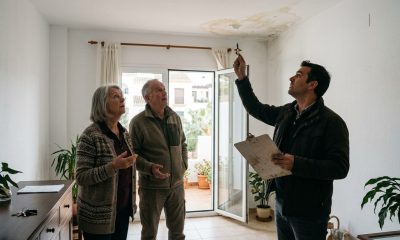
- Look for water: stains on ceilings, around windows and on terraces, especially after rain.
- Test the electrics: every socket, light and the fuse box.
- Compare with the specification: floors, kitchen, bathrooms and appliances should match the memoria de calidades.
- Document it: take dated photos, write a numbered list and send it to the developer in writing, keeping proof of delivery.
Small snags are normal in new buildings. The point is to get them on record early, so they are fixed within the guarantee periods.
Paying for it: mortgages on new homes
With off-plan homes you usually pay the instalments from savings and take a mortgage at completion. Banks value the finished property, so the final valuation may differ from the price you agreed. Some developers offer to let you take over their development loan (subrogación); compare it with other offers before you accept.
Our guide to getting a mortgage in Spain explains the basics. If you want help comparing banks as a foreign buyer, Habeno (partner) is a mortgage broker that works with international buyers.
FAQ: buying a new-build or off-plan home
What happens if the developer goes bankrupt?
If construction does not start or finish on time, the developer must refund your payments. According to the Banco de España, if the developer does not pay within 30 days you can claim from the bank or insurer that gave the guarantee. Act quickly: a bank guarantee expires if you do not claim rescission and repayment within two years of the developer’s breach. Get legal advice as soon as delays start.
Does the reservation fee have the same protection?
Ask the developer and your lawyer in writing how the reservation fee is treated and when it becomes part of the guaranteed payments. Do not assume it is covered.
Who do I contact about defects after I move in?
Contact the developer (promotor) in writing first, list the defects with photos and keep proof that they received it. If they do not respond, get advice from a lawyer or a consumer office.
Can I visit the site during construction?
Building sites are restricted for safety, but many developers arrange visits for buyers. Ask for regular progress updates and photos in writing.
Useful links
- Banco de España: guarantees for payments on homes under construction (Spanish)
- Congreso: Ley 38/1999 de Ordenación de la Edificación, text as published in 1999 (Spanish, PDF)
Disclaimer: This article is general information, not legal or financial advice. Rules and prices change, so check with the official source before you decide. Links marked “(partner)” go to a NewInSpain partner, and NewInSpain may earn a commission at no extra cost to you.


 A European bank you open from your phoneSign up with bunq in about five minutes.Get started →(ad)








 Ad
 A sea-view escape in MallorcaThe Donna Portals – stay by the sea with views over the Mediterranean.See prices →
Vivid BusinessA business account for freelancers and companies in SpainOpen your account online, with sub-accounts and cards for your team.✓ For autónomos and companies
✓ Sub-accounts for budgets and taxes
✓ Cards for your teamLearn more →(ad)


















Buying a new-build or off-plan home in Spain: guarantees and snagging

Life insurance with a Spanish mortgage: is it required?

Invoicing as an autónomo in Spain in 2026: the rules, Verifactu and e-invoicing

Andalucía guide: cities, culture and life in southern Spain

How the Spanish government works: state, regions, provinces and town halls

Living on a small salary in Spain in 2026











-

 Tourist Info2 years ago
Andalucía guide: cities, culture and life in southern Spain
-
Spanish System2 years ago
How the Spanish government works: state, regions, provinces and town halls
-
Cost of Living2 years ago
Living on a small salary in Spain in 2026
-
Tourist Info2 years ago
Marbella guide: areas, beaches and everyday life
-
Cost of Living2 years ago
Family living costs in Spain in 2026: monthly budget and moving-in money
-
Banking & Finances2 years ago
Understanding the tax system in Spain
-
Insurance2 years ago
Understanding insurance in Spain: a 2026 guide for expats
-
Tourist Info2 years ago
Benalmádena explained: Pueblo, Arroyo de la Miel and the coast