








































Events
New Year’s Eve in Spain: the 12 grapes and how to celebrate on the Costa del Sol
How the twelve grapes work at midnight, other Nochevieja customs and practical tips for New Year’s Eve on the Costa del Sol.




























New Year’s Eve (Nochevieja) is one of the nights when Spain really goes out. Families have a long dinner, everyone eats twelve grapes at midnight and then the party starts, often lasting until breakfast. If this is your first New Year in Spain, the customs can feel a bit mysterious, especially the grapes. This guide explains how the twelve grapes work, what people eat and drink, and how to plan the night on the Costa del Sol. For the rest of the season, see our guide to Christmas in Spain: El Gordo, Three Kings and other traditions.
The twelve grapes: how it works
At midnight on 31 December, people in Spain eat one grape for each of the twelve chimes of the clock. The idea is that each grape brings luck for one month of the coming year. If you finish all twelve before the last chime, you start the year well.
The chimes most people follow are those of the clock on the Real Casa de Correos at the Puerta del Sol in Madrid, shown live on Spanish TV. You can follow them at home, in a bar or restaurant with a TV, or in a town square where the chimes are shown or rung.


 Vivid BusinessA business account for freelancers and companies in SpainOpen your account online, with sub-accounts and cards for your team.Learn more →(ad)

 Buying a home in Spain? Simulate your mortgageSee your monthly payment with Banco Sabadell’s mortgage simulator.Try the simulator →(ad)

 A bank account for autónomos in SpainCuenta Clara Autónomos: no commissions, free debit and credit cards, opened online.See the account →(ad)


 A European bank you open from your phonebunq: an EU-licensed bank with debit cards, managed fully in the app. Sign up in about five minutes.Get started →(ad)


 A mobile bank account with no commissionsB100, the mobile bank from Abanca: everyday account and free debit card, all in the app.Get the app →(ad)
 Online pharmacy & parapharmacySkincare, vitamins, baby care and more – delivered in SpainShop now























A few tips so you do not get caught out:
- Wait for the real chimes: Before midnight there is a series of quarter chimes (los cuartos). Do not start eating on those. The twelve chimes for the grapes come after them.
- Choose small grapes: Seedless grapes make life easier. Supermarkets sell ready-prepared packs and small tins of peeled, seedless grapes (uvas de la suerte) in the days before New Year.
- Count them out first: Put twelve grapes in a bowl or glass for each person before midnight, so nobody is counting in a panic.
- Keep it fun: Almost everyone ends up with a mouth full of grapes and laughing. That is part of the tradition.
Where the tradition comes from
Historians do not agree on a single origin. According to National Geographic, Madrid newspapers already mentioned eating grapes at New Year in the 1880s, when people gathered at the Puerta del Sol for the chimes. Another explanation links the custom to a large grape harvest in 1909, when producers sold “lucky grapes” in packs of twelve. The two stories may well be connected, and by the early twentieth century the custom was spreading around Spain.
Other New Year customs
Apart from the grapes, you may notice a few other habits:
- A big family dinner: Nochevieja dinner is usually at home or in a restaurant, often with seafood, lamb or other festive dishes, and starts late by northern European standards.
- Cava at midnight: After the grapes, people toast with cava or another sparkling wine. Some people drop a gold ring or other gold item into their glass for luck.
- Red underwear: Wearing something red on New Year’s Eve is a popular custom said to bring luck in love.
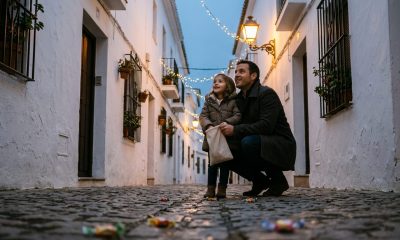
- Cotillón: Party hats, streamers and noise-makers, sold in bags called cotillón, are part of many dinners and parties.
- Hot chocolate and churros: For people who party all night, churros with chocolate early on 1 January is a classic way to end the night.
Celebrating on the Costa del Sol
The Costa del Sol has many ways to see in the New Year, from quiet family dinners to big parties. A few things to know:










- Town hall celebrations: Many towns organise free celebrations with music and the chimes in a main square. Programmes are usually published by the town hall in December, so check the official website or social media of your town hall for the 2026 plans.
- Restaurant menus: Many restaurants and hotels offer a special New Year’s Eve menu, often with grapes and cava included. These menus are set in advance and popular places fill up early, so book well ahead and ask whether the price includes drinks.
- Parties and tickets: Clubs and hotels sell tickets for New Year parties. Buy from the venue or a well-known ticket seller and be careful with resale offers on social media.
- Getting home: Taxis are in high demand after midnight. Plan your route home in advance, check whether there are special night services on local buses or trains, and never drive after drinking.
- Fireworks: Some towns have fireworks and many people set off their own. If you have a dog or cat, keep them indoors with the windows closed.
Remember that 1 January is a public holiday. In Andalusia’s official 2027 holiday calendar, 1 January 2027 (Friday) is New Year’s Day and 6 January 2027 (Wednesday) is Epiphany. Many shops and services are closed on 1 January, so do your shopping on 31 December, when some supermarkets close earlier than usual.
Drinks for the night
Cava is the classic choice at midnight, but any sparkling wine works. If you want to learn more about Spanish wines before you buy, see our guides to Spanish wine labels and Spanish drinking culture. If you prefer to have bottles delivered rather than carry them home, an online wine shop such as Petit Celler (ad) delivers in Spain. Order in good time, as delivery around the holidays can take longer.
Make sure there are good non-alcoholic options too, for drivers, children and anyone who does not drink. Sparkling grape juice works perfectly with the grapes.
FAQ: New Year’s Eve in Spain
When do I start eating the grapes?
Start with the first of the twelve chimes at midnight, not with the quarter chimes (los cuartos) that come before. Eat one grape for each chime.
Can children take part in the twelve grapes?
Yes, many children do, but whole grapes can be a choking risk for small children. Cut grapes into small pieces for young children or let them join in with something else.
Are shops open on 1 January?
1 January is a national public holiday, and most shops and services are closed. Some bars, restaurants and tourist businesses open, but check in advance.
Do I need to book a restaurant for New Year’s Eve?
For a special New Year’s Eve menu, yes. Popular restaurants on the Costa del Sol often sell out, so book early and check what the menu price includes.
Useful links
- BOJA: Andalusia’s official holiday calendar for 2027 (Spanish)
- National Geographic: why Spain eats twelve grapes (Spanish)
- Andalucía official tourism website
Disclaimer: This article is general information, not legal or financial advice. Rules and prices change, so check with the official source before you decide. Links marked “(ad)” are affiliate links – NewInSpain may earn a commission at no extra cost to you.


 A European bank you open from your phoneSign up with bunq in about five minutes.Get started →(ad)





 Ad
 A sea-view escape in MallorcaThe Donna Portals – stay by the sea with views over the Mediterranean.See prices →
Vivid BusinessA business account for freelancers and companies in SpainOpen your account online, with sub-accounts and cards for your team.✓ For autónomos and companies
✓ Sub-accounts for budgets and taxes
✓ Cards for your teamLearn more →(ad)


















New Year’s Eve in Spain: the 12 grapes and how to celebrate on the Costa del Sol

El Gordo 2026: how the Spanish Christmas lottery works

Pets and fireworks: keeping dogs and cats calm at Christmas and New Year

Andalucía guide: cities, culture and life in southern Spain

How the Spanish government works: state, regions, provinces and town halls

Living on a small salary in Spain in 2026









-

 Tourist Info2 years ago
Andalucía guide: cities, culture and life in southern Spain
-
Spanish System2 years ago
How the Spanish government works: state, regions, provinces and town halls
-
Cost of Living2 years ago
Living on a small salary in Spain in 2026
-
Tourist Info2 years ago
Marbella guide: areas, beaches and everyday life
-
Cost of Living2 years ago
Family living costs in Spain in 2026: monthly budget and moving-in money
-
Insurance2 years ago
Understanding insurance in Spain: a 2026 guide for expats
-
Banking & Finances2 years ago
Understanding the tax system in Spain
-
Tourist Info2 years ago
Benalmádena explained: Pueblo, Arroyo de la Miel and the coast